
The dashboard is often the first part of a car that creates a bond with its driver. The dashboard isn’t just a collection of gauges and switches: it’s the command center that sets your heart racing before you even turn the key. While we spend countless hours admiring curves, chrome, and paintwork from the outside, the real magic happens inside, where designers crafted environments that made every drive feel like an occasion.
You may not think it’s as important as car’s headlights or lines, but think about it: you spend more time looking at your dashboard than any other part of your car. The best designers understood this, creating interiors that were equal parts functional art and purposeful engineering. From the machine-turned aluminum of pre-war classics to the space-age cockpits of the ’60s, these dashboards tell the story of automotive design at its most intimate.
Finding Beauty Inside the Car
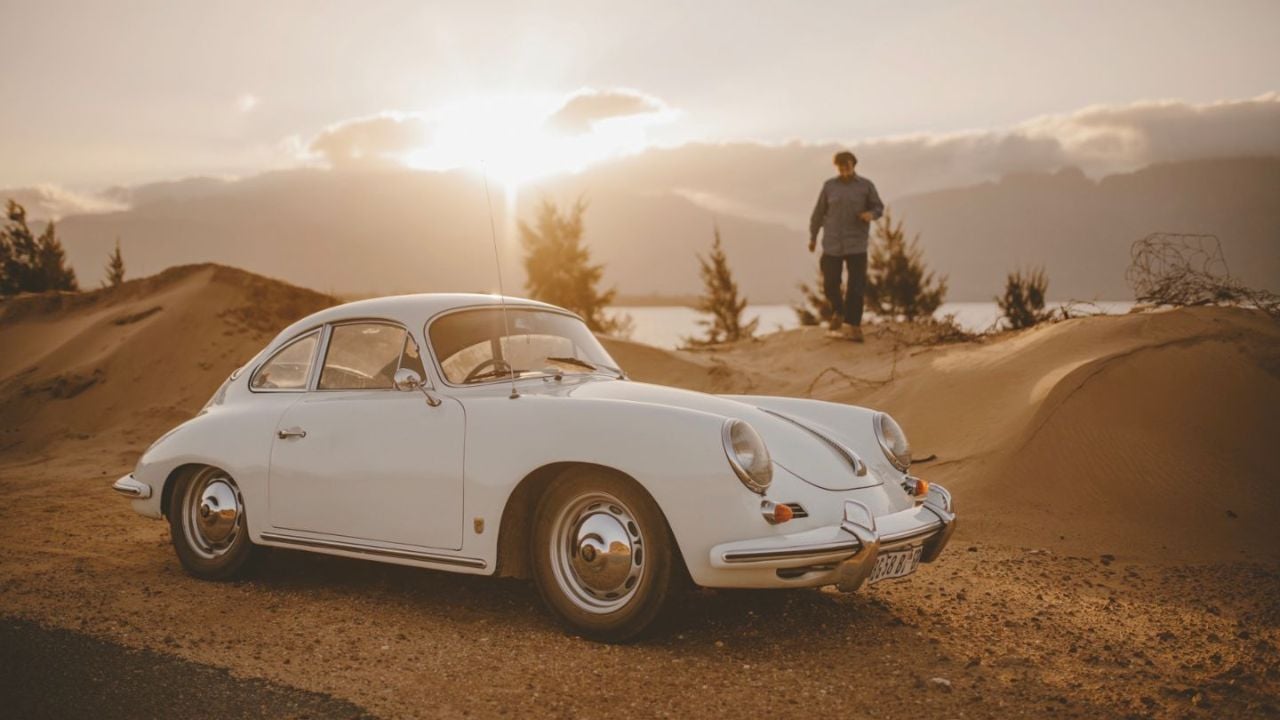
Let’s talk about what separates a memorable dashboard from just a collection of information. The greatest examples share a few key traits that car enthusiasts still obsess over decades later.
First, there’s the material quality. We’re talking about real walnut burl veneers with book-matched grain, not vinyl appliqués. Hand-polished aluminum that was actually machined, not stamped plastic trying to look metallic. Leather that was stitched by craftsmen who understood that details matter. These materials age gracefully, developing character instead of just wearing out.
Then there’s the layout philosophy. The best dashboards organize everything with purpose, your primary gauges are exactly where your eyes naturally fall, secondary controls are within easy reach but don’t clutter the view, and every switch has weight and precision that makes you smile when you use it. It’s like a well-designed workshop where every tool has its perfect place.
But here’s what really matters: emotional impact. A great dashboard makes you pause the first time you see it, and it still impresses you on the thousandth drive. These interiors create a sense of occasion, making even a trip to the grocery store feel like you’re heading to Monaco.
1936 Cord 810

Let’s start with a car that was so far ahead of its time, it practically invented the modern dashboard. The Cord 810 wrote new rules entirely.
Gordon Buehrig and his team at Auburn created something that looked like it belonged in 1950, not 1936. The centerpiece was that incredible engine-turned aluminum panel, and yes, it was actually machine-turned, not fake. Each panel took hours to create, with concentric circles machined into the metal surface that caught light like ripples on water. Under showroom lights or morning sun, it literally shimmered.
But here’s what made it brilliant: those five round gauges weren’t just scattered across the panel. They were arranged in perfect symmetry, with the speedometer taking center stage flanked by equally-sized companions for oil pressure, water temperature, fuel, and ammeter. The typography was pure Art Deco elegance: each number and marking looked like it belonged on expensive jewelry.
The real innovation was those toggle switches arranged in military precision below the gauges. While other cars still used primitive knobs and levers, Cord borrowed from aircraft design, giving drivers controls that clicked with satisfying authority. Every switch was clearly labeled, and the layout made sense, lighting controls together, engine functions grouped logically.
About 1,174 Cord 810s were built for the 1936 model year. Total Cord 810/812 production across 1936–1937 was about 2,972 cars. Values have climbed steadily, with restored examples bringing $100,000 to $150,000 at auction. But beyond the money, the 810’s dashboard established design principles that influenced automotive interiors for decades. It proved that function could be beautiful, and that drivers deserved better than utilitarian afterthoughts.
1953 Porsche 356

While American cars were getting flashier and more complicated, Ferdinand Porsche’s team in Stuttgart was perfecting a completely different philosophy. The 356’s dashboard embodied everything great about German design: purposeful, elegant, and built to last forever.
Walking up to a 356, you might notice the subtle body curves or those distinctive headlight shapes. But slip inside, and you’re greeted by an interior that feels like precision engineering made friendly. The dashboard swept across in one clean line, often painted to match the exterior: a detail that made the cabin feel integrated with the whole car rather than tacked on afterward.
The instrument cluster was pure genius in its simplicity. The 356’s dashboard is famously simple, using clear round gauges, typically a prominent speedometer and other supporting instruments, but the exact gauge layout varied by year and version; for fuel level, oil temperature, and oil pressure provided critical engine data without overwhelming the display. The white-on-black graphics were crystal clear, even at a quick glance.
But here’s what made 356 owners fall in love: that steering wheel. Thin-rimmed and large in diameter, it connected you to the car in a way that modern power-assisted systems can’t match. The horn button carried the Porsche crest, reminding you that this wasn’t just transportation, it was a connection to racing heritage that was already legendary.
Toggle switches were logically scattered around the dash, each substantial enough to be operated with driving gloves. No hunting for tiny buttons or confusing controls. The heater lever, lights, and wipers were exactly where your hand expected to find them.
Between 1948 and 1965, Porsche built over 76,000 examples of the 356 in various forms. Today, even rough project cars command serious money, with restored coupes reaching $80,000 to $120,000 depending on year and specification. The dashboard’s timeless design is a big part of why these cars remain so desirable – it looks as modern today as it did 70 years ago.
Alfa Romeo 2600 Spider

Alfa Romeo has always understood something that many manufacturers miss: driving should engage your emotions, not just your destination-reaching needs. The 2600 Spider’s dashboard was designed by people who believed every journey should feel like an occasion worth celebrating.
Built by Carrozzeria Touring using their famous Superleggera construction, the 2600 Spider was Alfa’s flagship spider during the early ’60s. About 2,255 Alfa Romeo 2600 Spiders were built. (The Alfa Romeo 2600 range ran from 1962–1968.), making them rare gems today. The dashboard reflected the car’s exclusive nature with materials and craftsmanship that rivaled much more expensive machines.
The layout followed classic Italian principles: form and function dancing together in perfect harmony. Six round gauges were arranged in a gentle arc across the dash, each chrome-rimmed dial catching light like expensive watches. The speedometer and tachometer took center stage, flanked by oil pressure, water temperature, fuel level, and clock – because Italians understood that time matters when you’re enjoying the journey.
What really set the 2600 Spider apart was the attention to sensory details. Toggle switches clicked with mechanical precision, their chrome levers moving through positive detents that felt expensive in your fingers. The steering wheel featured a polished wood rim that warmed to your touch, connected to thin metal spokes that looked delicate but felt reassuringly solid.
The dashboard pad was often leather-wrapped, aged to that perfect patina that only comes from years of Mediterranean sun and careful use. Controls were logically clustered: lights on the left, engine functions in the center, and accessories on the right. Nothing felt random or aftermarket.
Driving a 2600 Spider meant entering a space designed around the assumption that you were already passionate about cars. The dashboard didn’t try to hide the mechanical nature of the machine, it celebrated it. You could hear the Weber carburetors breathing through their air cleaners, watch oil pressure fluctuate through corners, and monitor water temperature during spirited drives.
Today, restored 2600 Spiders bring $60,000 to $100,000 at auction, with the dashboard condition being a critical factor in value. Original, uncracked dashes are becoming incredibly rare, making well-preserved examples especially precious to collectors who understand their significance.
1955 Mercedes-Benz 300SL Gullwing

Some cars transcend their era to become permanent icons, and the 300SL Gullwing stands alone in this regard. But while everyone remembers those incredible doors and that distinctive grille, the dashboard deserves equal recognition as a masterpiece of functional design.
Mercedes built just 1,400 Gullwing coupes between 1954 and 1957, making them among the most coveted classics ever created. Each one started life as a purpose-built sports car designed to win races, then evolved into the world’s fastest production car. The dashboard reflected this dual nature perfectly: serious about performance, but elegant enough for the world’s most sophisticated drivers.
The layout was all about the driver. Two large, perfectly round gauges dominated the view: a 260 km/h speedometer on the left and an 8,000 RPM tachometer on the right. Both featured clear white graphics on black backgrounds that remained readable even during high-speed runs on the Autobahn. Between them, a smaller clock reminded you that precision extended beyond mere timekeeping; this was German engineering at its finest.
But here’s what made the 300SL dashboard special: every surface was crafted with the same attention as the engine or suspension. TThe 300 SL used aluminum for several body panels (notably including parts such as the hood and door skins), but describing the dashboard ‘framework’ as aluminum is too specific without a factory engineering citation, saving weight while providing a perfect foundation for the instruments. Chrome bezels were polished to mirror brightness, and the overall fit and finish matched the car’s stunning exterior.
The steering wheel deserves special mention. Large and thin-rimmed like the Porsche 356, it featured a distinctive horn ring that let you sound the horn without taking your hands off the wheel; crucial during high-speed driving. The Mercedes three-pointed star sat prominently in the center, reminding you that this wasn’t just fast, it was prestigious.
Controls were arranged with typical German logic. The light switch fell naturally into the hand on the left, while the ignition key was positioned on the right side of the dashboard, a location that became a Mercedes trademark. Even the windshield wiper control was substantial enough to operate easily while wearing driving gloves.
Today, a well-preserved 300SL Gullwing is worth $1.5 million or more, with original, unrestored dashboards commanding premium prices. The combination of rarity, racing pedigree, and timeless design ensures that these cars remain among the most desirable classics ever built.
Jaguar E-Type

When Jaguar unveiled the E-Type at the 1961 Geneva Motor Show, it caused such a sensation that The E-Type is often attributed with a compliment from Enzo Ferrari calling it the ‘most beautiful car in the world,’ but the quote is secondhand and not supported by a primary recorded source. But step inside, and you discover that the interior is just as revolutionary as the exterior.
The E-Type’s dashboard represented a perfect marriage of British craftsmanship and modern design thinking. Unlike the traditional wood-and-leather approach of previous Jaguars, the E-Type’s interior looked forward, creating a cockpit that felt more like a jet fighter than a gentleman’s touring car.
The instrument panel stretched across the dashboard in one continuous sweep, housing an impressive array of gauges that provided comprehensive information about the car’s vital signs. The primary instruments – speedometer and tachometer – were large and deeply recessed, with bold white markings on black backgrounds that remained clearly readable even in bright sunlight. Secondary gauges monitored oil pressure, water temperature, fuel level, and oil temperature, giving enthusiast drivers all the data they needed to extract maximum performance from the 3.8-liter inline-six.
But here’s what made E-Type owners fall in love with their dashboards: those toggle switches. Arranged in perfect symmetry across the center console, they looked like they belonged in an aircraft cockpit. Each switch clicked through positive detents with mechanical precision, controlling everything from headlights to windshield wipers to the optional overdrive. The satisfying action of these switches became part of the E-Type ownership experience: even simple tasks like turning on the lights felt special.
The steering wheel was another masterpiece. Thin-rimmed and perfectly proportioned, it featured three delicate spokes that looked almost too delicate but proved surprisingly strong in practice. The horn button carried the leaping Jaguar emblem, reminding you that this was a car with genuine racing heritage – E-Types dominated sports car racing throughout the 1960s.
Clean examples now bring $150,000 to $300,000 depending on condition and configuration, with the interior condition being a critical factor in determining value. Original dashboards that haven’t been cut up for aftermarket stereos or modifications are becoming increasingly rare and valuable.
Corvette C2 Sting Ray

This Chevrolet Corvette Sting Ray brought with it one of the most iconic dashboards of the era. The split-window coupe gained fame for its exterior, yet inside, the dashboard carried equal significance. The design surrounded the driver with dual pods, one in front of the wheel and one angled toward the
When Chevrolet introduced the C2 Corvette in 1963, it marked a major redesign of America’s sports car and introduced a dramatically more cockpit-like interior layout: they invented a completely new approach to dashboard design that influenced American car interiors for decades.
The Sting Ray’s dashboard was pure space-age optimism, reflecting an era when Americans believed technology could solve any problem and make everything better. But unlike some period designs that prioritized style over substance, the Corvette’s interior actually worked brilliantly, creating an environment that enhanced the driving experience rather than just looking futuristic.
The centerpiece was that distinctive dual-pod design. Instead of spreading gauges across a flat panel like most cars, Chevrolet created two sculptured housings that curved toward the driver. The left pod contained the speedometer, reading to an optimistic 160 MPH, while the right pod housed the tachometer with its bold red-line at 6,500 RPM. Both gauges were large, clear, and positioned exactly where your eyes naturally fell.
But the real innovation was in the details. Secondary gauges for oil pressure, water temperature, and fuel level were clustered in the center of the dashboard, easily visible but not competing with the primary instruments for attention. Toggle switches controlled various functions; their positive action borrowed from aircraft design but adapted for automotive use.
The interior also featured another American first: a center console that ran from the dashboard all the way to the rear bulkhead. This wasn’t just styling, it actually improved the car’s structural rigidity while creating a cockpit-like environment that made the driver feel connected to the machine.
Between 1963 and 1967, Chevrolet built 117,964 C2 Corvettes, but split-window 1963 coupes are the most valuable today. Clean examples regularly bring $100,000 to $150,000, with numbers-matching cars commanding even higher prices. The unique dashboard design is a major part of their appeal, it looks as futuristic today as it did sixty years ago.
Rolls-Royce Corniche

While other manufacturers were embracing plastic and cost-cutting, Rolls-Royce continued building interiors the traditional way: by hand, using the finest materials available, with no compromise on quality or craftsmanship.
The Corniche represented Rolls-Royce at its peak, combining the company’s traditional values with subtle updates for modern driving. The Corniche line began in 1971; Corniche I–IV production concluded in 1995 (with the later Corniche V produced 2000–2002), the Corniche was always intended as the ultimate grand touring car, a machine capable of crossing continents in supreme comfort while making every mile feel effortless.
The dashboard reflected this philosophy perfectly. Instead of flashy chrome or space-age plastics, Rolls-Royce craftsmen created surfaces from carefully selected walnut veneers. Each piece of wood was hand-matched for grain and color, then French-polished to a deep luster that seemed to glow from within. The result was furniture-quality woodwork that improved with age, developing character and patina that no modern manufacturing process can duplicate.
Into this wooden framework, jewel-like instruments were set with precision that rivaled expensive watches. The speedometer read to just 100 MPH – after all, this was a car for crossing continents in comfort, not setting speed records. Additional gauges monitored fuel level, oil pressure, and water temperature, providing essential information without cluttering the serene environment.
Controls were arranged according to decades of experience building cars for the world’s most demanding customers. Everything fell naturally to hand, from the light switch to the climate controls to the electric window switches. Each control moved with smooth precision, providing tactile feedback that reminded you this was a hand-built machine crafted by people who understood that details matter.
The steering wheel was another work of art: large in diameter but thin in section, wrapped in leather so soft it felt like silk. The Rolls-Royce Spirit of Ecstasy stood proudly in the center, reminding you that this wasn’t just transportation but membership in a very exclusive club.
Today, well-maintained Corniche convertibles bring $80,000 to $150,000 depending on condition and provenance. The interior condition is absolutely critical to value, original wood that hasn’t been
Ferrari 250 GT Lusso

Ferrari has built many legendary cars, but the 250 GT Lusso might be the most perfectly balanced of them all. Not as hardcore as the GTO, not as flashy as later supercars, the Lusso represented Ferrari at their most sophisticated – and the dashboard embodied everything great about Italian design philosophy.
Built from 1962 to 1964, 351 Ferrari 250 GT Lussos were produced (some references round this to ‘about 350’), making them among the rarest and most coveted Ferraris ever created. Each one was essentially hand-built at the Maranello factory, with bodywork by Pininfarina that remains timelessly beautiful today. The interior received the same careful attention as the mechanical components.
The Lusso’s dashboard was a masterclass in purposeful elegance. Five round gauges were arranged across the panel in perfect symmetry, each chrome-bezeled dial providing essential information without overwhelming the driver. The speedometer and tachometer took center stage, flanked by gauges for water temperature, oil pressure, and fuel level. The typography was pure Ferrari: bold, clear, and unmistakably Italian.
But here’s what made the Lusso special: every surface was crafted with the attention usually reserved for custom coachwork. The dashboard was leather-wrapped, stitched by hand with precision that matched the finest Italian shoes or handbags. Chrome accents were polished to mirror brightness, and the overall fit and finish were simply beyond criticism.
The steering wheel deserves special mention. Thin-rimmed and perfectly proportioned, it featured three delicate spokes connected to a chrome horn button bearing the prancing horse emblem. The wood rim was selected from the finest available stock, finished to a luster that improved with use. In your hands, it felt alive, connected directly to the road through precise rack-and-pinion steering that provided feedback modern cars can’t match.
Controls were arranged with typical Italian logic: everything you needed was within easy reach, nothing unnecessary cluttered the pristine environment. Toggle switches for lights, wipers, and accessories clicked with mechanical precision, their chrome levers moving through positive detents that felt expensive in your fingers.
Today, a well-preserved 250 GT Lusso is worth $2 million or more, making it among the most valuable classic Ferraris. The interior condition is absolutely critical to value; original dashboards that haven’t been modified or poorly restored command significant premiums over cars with compromised interiors.
A Gallery Inside Every Drive

Looking at these classics today, it’s clear that great dashboard design follows timeless principles that transcend any particular era or style. The best examples share certain qualities: they use genuine materials that age gracefully, they organize controls logically based on how drivers actually use them, and they create emotional connections that make every drive feel special.
Modern cars offer capabilities these classics could never match: navigation systems, climate control precision, and connectivity features that keep us plugged into the digital world. But something has been lost in the transition to mass production and cost optimization. Today’s dashboards are undeniably more functional, but they rarely inspire the same emotional response as these hand-crafted masterpieces.
The great dashboards remind us that cars are more than just transportation devices, they’re spaces where we spend significant portions of our lives, environments that can either enhance or diminish our daily experiences. The designers who created these interiors understood that details matter, that materials have character, and that every control should feel substantial and purposeful.
For those of us who appreciate automotive artistry, these dashboards represent something precious: proof that mass-produced objects can still carry individual character and soul. They remind us why we fell in love with cars in the first place, and why the best examples continue to captivate new generations of enthusiasts.
Which of these dashboards speaks to you? Do you prefer the space-age optimism of the Corvette, the understated elegance of the Porsche, or the hand-crafted luxury of the Rolls-Royce? Every choice reveals something about how we connect with machines, and why the greatest cars become more than the sum of their parts.