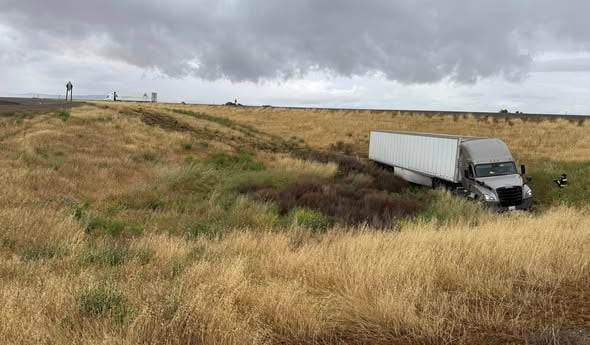
The California Highway Patrol says a commercial truck driver ended up in a field after leaving the roadway while driving under the influence.
According to CHP, the driver was operating at roughly six times the legal blood alcohol concentration limit for commercial motor vehicle operators. While the standard legal limit for most drivers is 0.08%, commercial drivers are held to a stricter 0.04% threshold.
Based on that, a BAC around 0.24% would put the driver not just over the legal limit, but far beyond what is considered safe to operate any vehicle, let alone a fully loaded commercial truck.
Thankfully, no injuries were reported. But the outcome could have been significantly worse given the size and weight of a commercial vehicle and the potential for a multi-vehicle crash at highway speeds.
What That Bac Level Means
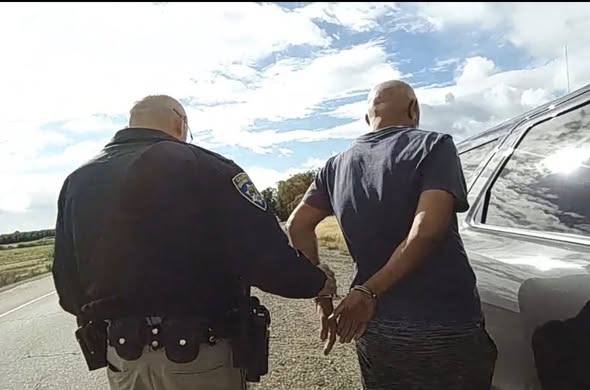
Impairment begins well before a driver reaches the legal limit. At a BAC approaching 0.24%, drivers can experience severe impairment, including slowed reaction times, poor coordination, and significantly reduced judgment.
In a passenger vehicle, that is already dangerous. In a commercial truck, where stopping distances are longer and the margin for error is smaller, the risk increases dramatically.
Missing Details From Chp Post Raise Questions
While CHP Tracy shared the basics of the incident, the original Facebook post left out several details typically associated with DUI arrests.
No information was provided about the driver’s identity, any formal charges beyond the DUI allegation, or the driver’s custody status. There was also no clarification on whether additional citations were issued.
That kind of limited information is not unusual in early social media updates, but it does leave gaps, especially in a case involving a commercial driver and a reported BAC at this level.
It also comes at a time when commercial driver licensing standards and enforcement are part of a broader national conversation. Questions around training, oversight, and accountability have been getting more attention, particularly as incidents involving large commercial vehicles continue to draw public scrutiny.
Without additional details from CHP, those broader issues remain separate from this specific case. But the lack of information in the initial post has not gone unnoticed.
Public Reaction: Concern, Confusion, and Some Dark Humor
The CHP post quickly drew a wave of reactions, with many commenters focusing on how serious the situation could have been.
Several pointed to the BAC level itself, with one noting that “.24% is wild even for driving a regular vehicle, let alone a commercial vehicle.”
Others emphasized how fortunate it was that the truck ended up in a field rather than striking other vehicles, with multiple comments pointing out that the outcome could have been far worse.
There was also noticeable confusion around the legal limits. Some commenters incorrectly suggested the commercial limit is zero, while others debated the numbers. Several users stepped in to clarify that the legal threshold for commercial drivers is 0.04%, reinforcing just how far beyond that limit this incident appears to be.
At the same time, the comment section carried a layer of dark humor, with repeated variations of “you can’t park there” and similar remarks about the truck ending up off the roadway.
The Part That Matters
No one was hurt this time. That is not a reason to soften the conversation.
A driver operating at this level in a commercial vehicle is not a close call. It is a failure that just happened to stop short of tragedy.
If that is unsettling, it should be. Because outcomes like this often come down to luck rather than safeguards. That is why accountability matters at every level. Laws and penalties only work if they have enough bite to deter this kind of behavior in the first place.
And while individual responsibility is central, it does not stop there. Questions about hiring practices, oversight, and how risks like this are allowed to develop are part of the broader picture. Because the next time, it may not end in a field.