What started as a standard civil matter ended in one of the more shocking sequences of events in recent California law enforcement history. On a Thursday morning in Porterville, Tulare County deputies arrived at a home to assist with serving an eviction notice. Within minutes, 59-year-old David Morales opened fire on officers, setting off a chaotic, hours-long standoff that would cost a deputy his life and end with a scene unlike most people have ever heard described at a press conference.
Detective Randy Hoppert, 35, was one of the deputies who responded after Morales fired on the initial officers at the scene. Hoppert had spent six years with the Tulare County Sheriff’s Department and previously served as a Navy corpsman from 2010 to 2015. He was shot while exchanging gunfire with Morales and was rushed to the hospital by paramedics, but he did not survive. Hoppert leaves behind a wife who is four months pregnant.
The incident quickly spiraled beyond the immediate neighborhood. Authorities cleared a four-block radius around the scene, and the Porterville Unified School District placed three schools on lockdown, including Westfield Elementary, Sequoia Middle School, and Monache High School. Videos circulated on social media showing deputies pinned down by gunfire as Morales moved between multiple homes in camouflage clothing, reportedly even shooting down a law enforcement drone.
Negotiators and family members both tried to talk Morales into surrendering peacefully. It did not work. When officers in an armored vehicle spotted him in an area where he had been hiding, they made a decision that would later become the talk of the internet.
The Press Conference Moment That Went Viral
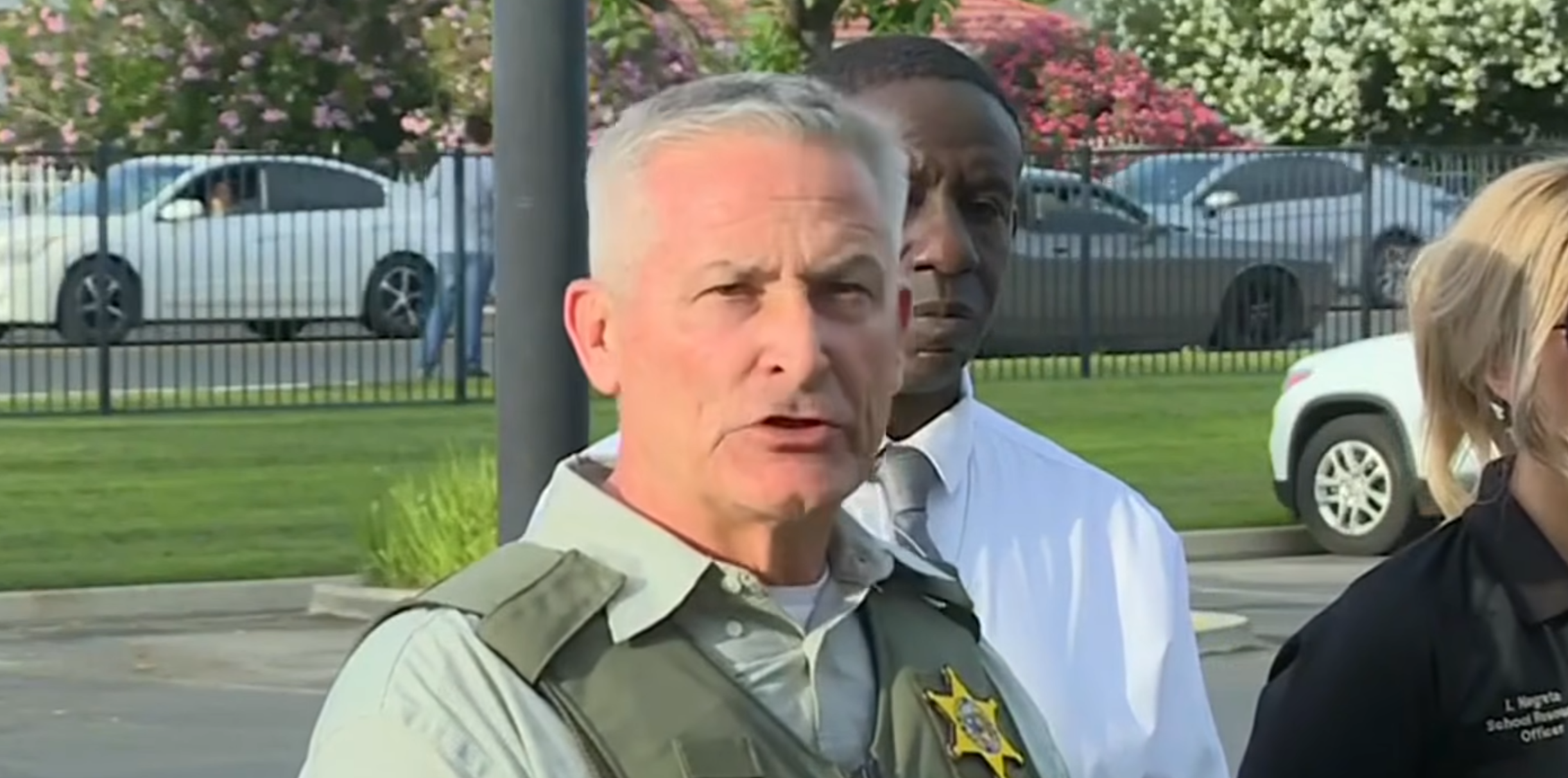
Tulare County Sheriff Mike Boudreaux was mid-press conference when he had to step away. When he returned to the podium, he had news: the standoff was over, and Morales was dead. Not shot, as many might have expected after hours of gunfire. He had been run over by a sheriff’s armored vehicle.
When a reporter asked directly whether that was intentional, Boudreaux did not dance around it.
“We intentionally ran him over,” he said, adding plainly that anyone who shoots at law enforcement should expect the same treatment. “He got run over. He got what he deserved.”
The clip made the rounds quickly, and weeks later it is still going viral. It is not every day that a sheriff uses a press conference to deliver what amounts to a public service announcement via armored vehicle. Boudreaux was unapologetic and laser-focused on where he felt the story actually belonged.
“This story is not about him,” the sheriff said. “This story is about our officer.”
Who Was David Morales?
What makes this case particularly puzzling is that Morales had no known criminal history. He was 59 years old and had 18 firearms legally registered to his name, most of them handguns. The rifle he used during the standoff, however, was reportedly not among those registered weapons and was powerful enough to take down a drone mid-flight.
Investigators have not released a clear motive for why Morales responded to an eviction notice with deadly force. Sheriff Boudreaux summed it up bluntly: “This situation went from a civil order of removal to our officer being shot and killed. This is senseless.”
The fact that someone with no prior record and legally owned firearms escalated a civil dispute into a mass law enforcement response, killed a decorated officer, and then was killed by an armored vehicle is a sequence that raises serious questions about what can push someone to that point and whether anything could have prevented it.
What This Incident Reminds Us About the Dangers Officers Face Every Day
Eviction calls are not typically considered among the most dangerous assignments in law enforcement, but this case is a sobering reminder that officers face unknowns on virtually every call they respond to. A civil matter became a crime scene in a matter of seconds, and a deputy who showed up to help did not make it home.
Detective Hoppert’s story also carries a particular weight. He served his country as a Navy corpsman, transitioned into law enforcement, and was weeks away from becoming a father. His family has asked for privacy, and that request deserves to be honored. But his story deserves to be told because it represents the very real human cost of a profession that too often asks everything of the people who choose it.
As for Sheriff Boudreaux’s viral statement, people will have varying opinions on the tone, but the message underneath it is hard to argue with. The sheriff was not celebrating a death. He was grieving a deputy and, with the cameras still rolling, making sure no one lost sight of who the victim actually was.