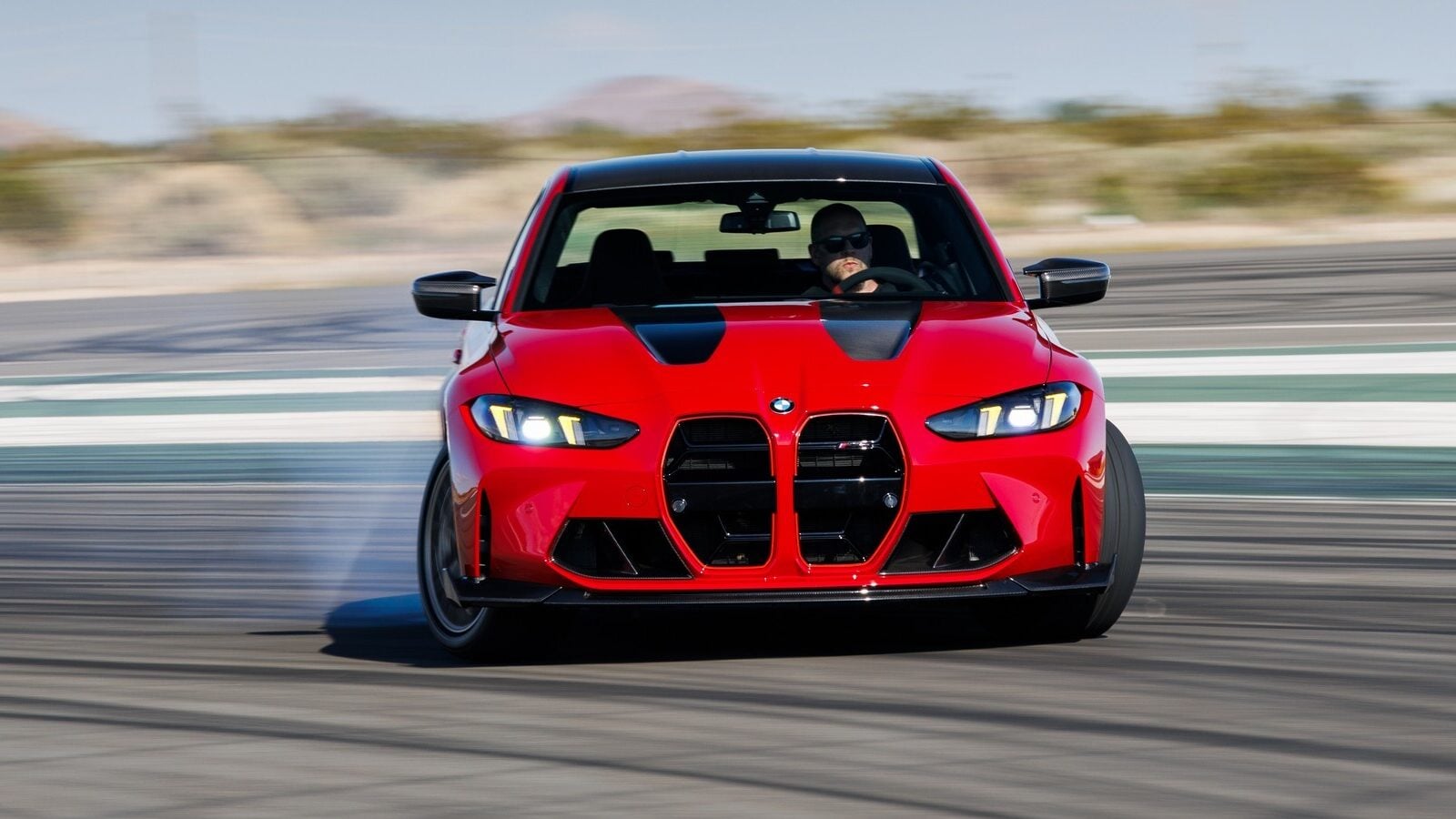
BMW already sells several cars that need little encouragement to send their rear tires up in smoke. Apparently, someone in Munich has been thinking about how to make getting sideways even easier.
A recently published patent describes an unusual way of helping drivers initiate a slide. Rather than simply throwing additional power at the rear wheels, BMW wants the suspension itself to help break traction.
The idea involves briefly reducing the load on the rear axle at precisely the right moment. Less load means less available grip, making it easier for the rear tires to step out without requiring as much torque.
A filing with the German Patent and Trade Mark Office details how BMW believes the system could work. It essentially turns something drivers usually don’t want from their suspension into a feature designed to make drifting easier.
BMW Wants To Give The Rear Wheels A Little Hop
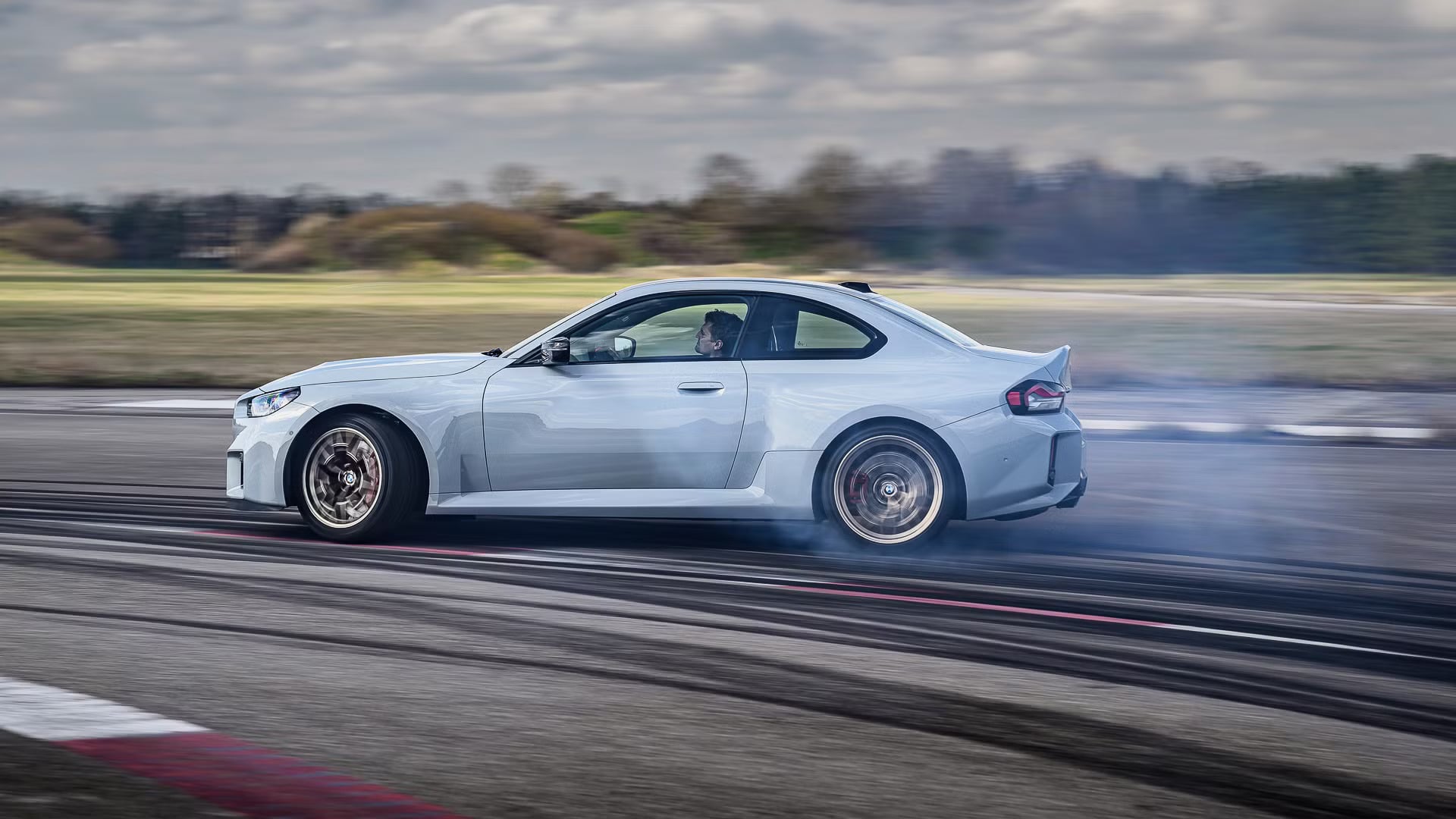
According to BMW’s patent, the system would rapidly move the vehicle’s unsprung mass upward, temporarily reducing the load carried by the rear axle. In simpler terms, the suspension could give the rear wheels a carefully controlled upward jolt to help them lose traction.
It sounds somewhat like deliberately introducing the kind of axle hop drivers normally try to avoid during hard acceleration. In this case, however, the movement would be intentional and precisely timed to make initiating a drift require less effort.
BMW says adaptive suspension or an active roll-control system could potentially produce the necessary movement. The patent even discusses applying the principle to the front axle, opening up the rather bizarre possibility of assisting a reverse drift.
The Car Would Know When You Want To Slide
BMW doesn’t envision the suspension bouncing the rear end around randomly. The German Patent and Trade Mark Office filing describes using vehicle information to determine when the driver intends to initiate a drift before activating the system.
Steering angle, speed, and the vehicle’s trajectory could all help determine whether intervention is appropriate. The system could also store steering-angle parameters to establish conditions where drift assistance would or wouldn’t be available.
There is even the possibility of the driver explicitly telling the car that a drift is intended. Once the system recognizes the request and determines the conditions are suitable, it could momentarily unload the rear tires and make breaking traction easier.
BMW Already Likes Helping Drivers Go Sideways
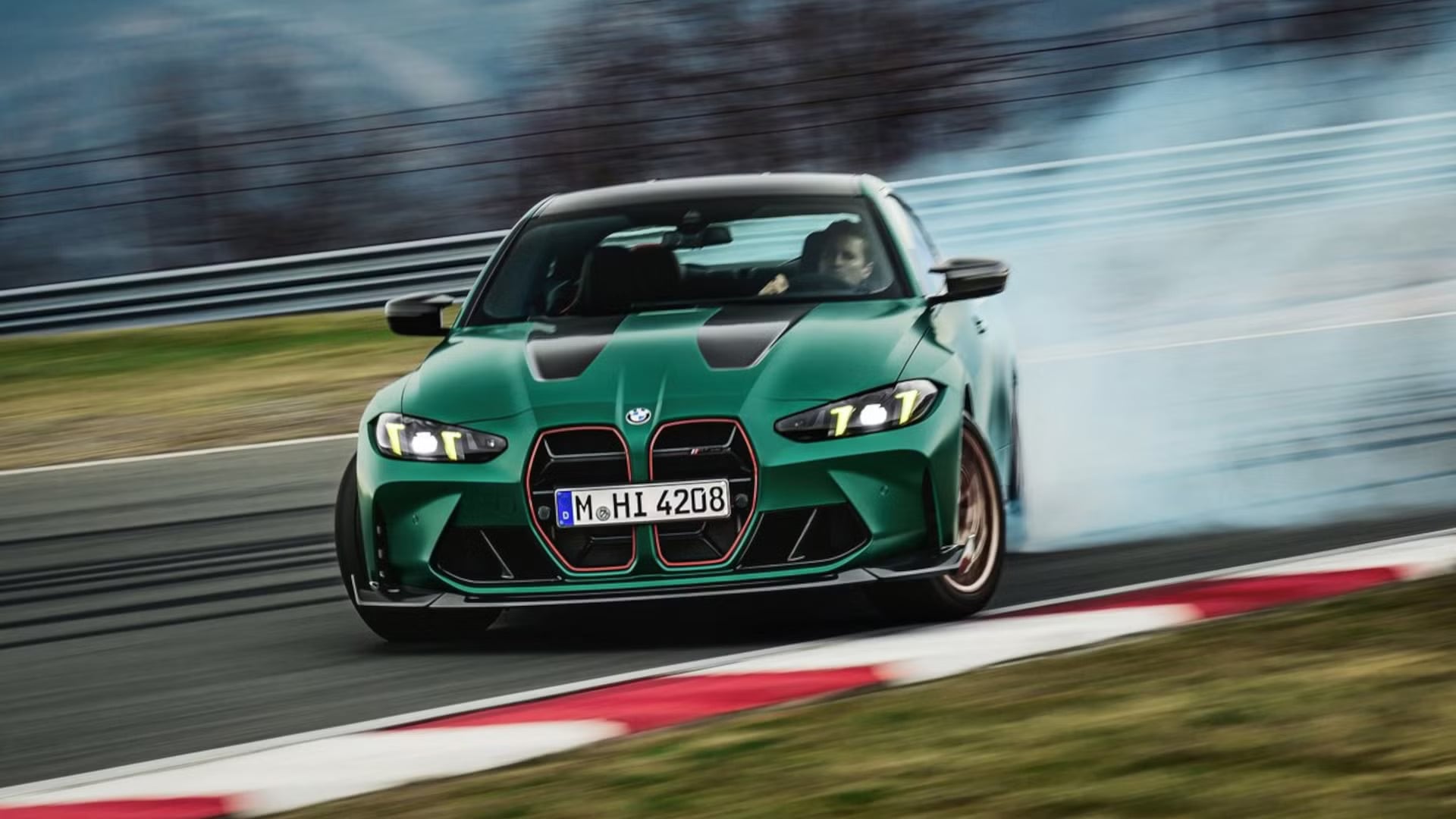
Such a feature wouldn’t feel completely out of character for BMW M. The company already offers its M Drift Analyzer, which scores a driver’s slides, while cars such as the M2, M3 and M4 provide enough rear-driven power to make sideways driving readily accessible in the appropriate settings.
Adding active suspension assistance could take that philosophy considerably further. Instead of merely measuring a drift after you’ve initiated it, the car could actively help get the rear end moving in the first place.
Of course, this is the kind of technology that belongs on a closed circuit rather than your neighborhood roundabout. If BMW ever puts it into production, restricting its operation to suitable environments would make plenty of sense.
A Patent Doesn’t Mean It’s Coming
There is currently no confirmation that BMW intends to install this technology in a production vehicle. Automakers routinely patent ideas to protect intellectual property, including concepts that never progress beyond the development stage.
Still, the German Patent and Trade Mark Office filing provides an intriguing glimpse into how BMW is thinking about active suspension technology. In an era when performance cars are becoming increasingly computerized, BMW appears interested in using some of that intelligence for a wonderfully old-fashioned objective: getting the tail out.