
Ultra-rare hypercars usually live very private lives. Many are seen only at exclusive events, private collections, or carefully controlled displays, which means most enthusiasts never get to experience them outside of photos and videos.
That is part of what makes the Lamborghini Sesto Elemento so fascinating. The track-focused carbon-fiber hypercar was built in extremely small numbers and quickly became one of Lamborghini’s most extreme modern creations.
When YouTuber Magnacars encountered one in the wild, it presented a rare opportunity to ride in a machine most enthusiasts will likely only ever see in pictures or video.
Lamborghini Sesto Elemento: A Special Car With a Special Story

The car in question is a Lamborghini Sesto Elemento, widely regarded as one of the most extreme special-edition Lamborghinis ever produced. The name Sesto Elemento, or “Sixth Element,” refers to carbon, the sixth element on the periodic table, and highlights the extensive use of carbon fiber throughout the car’s construction.
But not just any carbon fiber. The Sesto Elemento introduced Lamborghini’s forged carbon composite technology, a material Lamborghini developed in partnership with Callaway Golf. The lightweight material enabled the formation of complex carbon components that traditional carbon fiber could not easily achieve.
Weighing in at just 2,202 pounds (1,000 kg), the Sesto Elemento was built around an obsessive focus on weight reduction. Power comes from a mid-mounted 5.2-liter naturally aspirated V10 derived from the Lamborghini Gallardo Superleggera, producing 562 horsepower and 398 lb-ft of torque. Combined with its extremely low weight and all-wheel-drive system, Lamborghini claimed a 0–62 mph time of about 2.5 seconds.
Lamborghini originally announced plans to produce 20 track-only Sesto Elementos. Some collector discussions have suggested that a smaller number may exist, but Lamborghini’s official materials list a production run of 20 cars.
The example featured in the Magnacars video later underwent a conversion by British engineering firm Lanzante to make it road-legal. Reports surrounding the video describe it as the only street-legal Sesto Elemento currently known to be operating in the United States.
That uniqueness helps explain why Magnacars was thrilled when the car’s owner offered not only a closer look, but also the chance to experience it from the passenger seat.
Why This Billionaire Collector Stands Out

Chris Larsen, a technology entrepreneur with an estimated net worth of more than $12 billion as of 2026, owns the remarkable machine. Unlike many collectors who keep their rare vehicles largely behind closed doors, Larsen appears to enjoy sharing the experience with fellow enthusiasts.
In the video, Larsen speaks openly about the reasons the Sesto Elemento captured his attention. The first was the material science behind the car. Forged carbon technology represented a major step forward in manufacturing carbon components, eliminating the need for the lengthy autoclave curing processes traditionally used in carbon fiber production.
The second reason was the car’s cultural significance. Many enthusiasts became familiar with the Sesto Elemento through video games, films, and online media, but very few have had the opportunity to see one in person.
Finally, Larsen highlighted the driving experience itself. Despite owning multiple high-end performance cars, he described the Sesto Elemento as something entirely different. The car is raw, loud, and extremely direct. He noted that drivers can feel nearly every pebble on the road and that the experience is intense enough that you need to be “in the mood” to drive it.
What It’s Like Riding in a Lamborghini Sesto Elemento
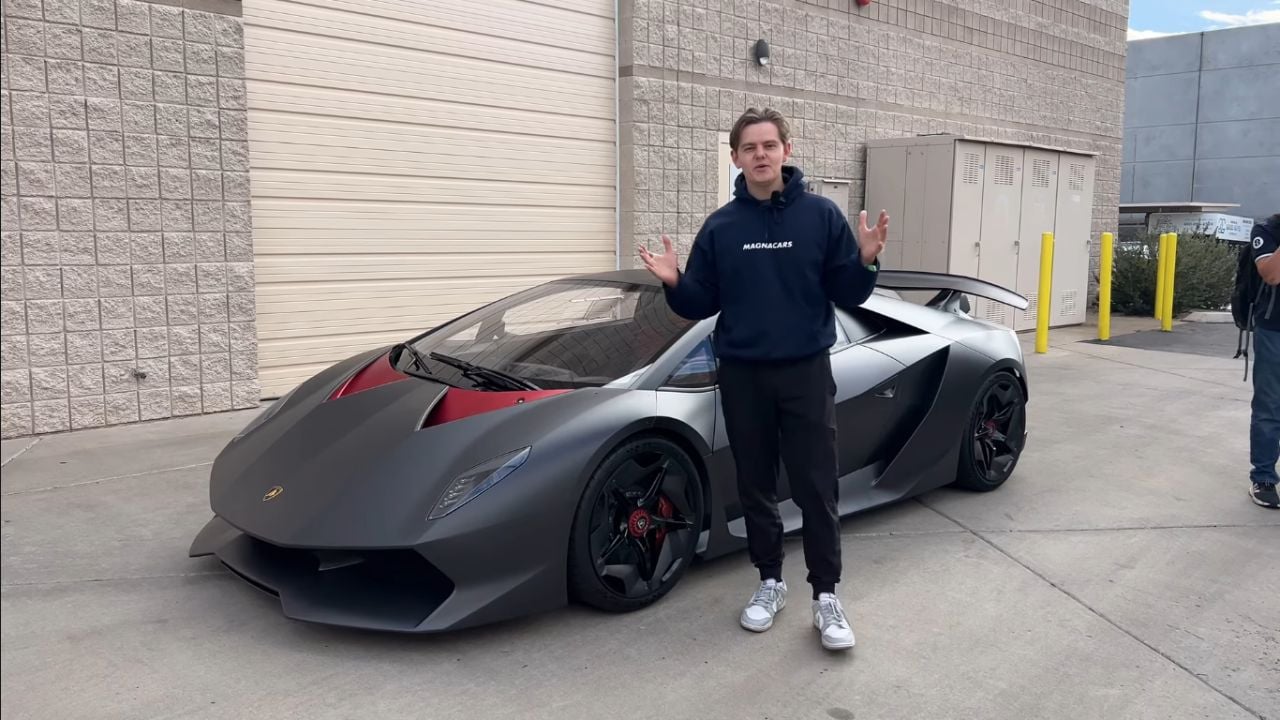
Before heading out for the ride, Larsen and Magnacars took a moment to examine some of the Sesto Elemento’s distinctive design features. The car’s sharp angular lines, hexagonal engine-cover openings, towering rear wing, and exhaust outlets positioned high in the rear all reinforce its track-focused character.
Inside, the minimalism becomes even more obvious. The cockpit is almost entirely carbon fiber, with very little conventional trim. There is no traditional dashboard, and a thin plexiglass panel separates the occupants from the screaming V10 behind them. The seats are molded directly into the carbon tub.
When Larsen fired up the engine and pulled away, Magnacars immediately noticed how raw the experience felt. With almost no sound insulation and minimal interior padding, the V10’s noise fills the cabin. Acceleration presses the passenger firmly into the seat, and every movement of the road surface is transmitted directly through the chassis.
The drive itself remained relatively short and restrained since it took place on public roads. Even so, Magnacars walked away with what few enthusiasts ever get to experience: a ride in one of Lamborghini’s most radical machines.
Why a Road-Legal Sesto Elemento Could Command a Huge Premium
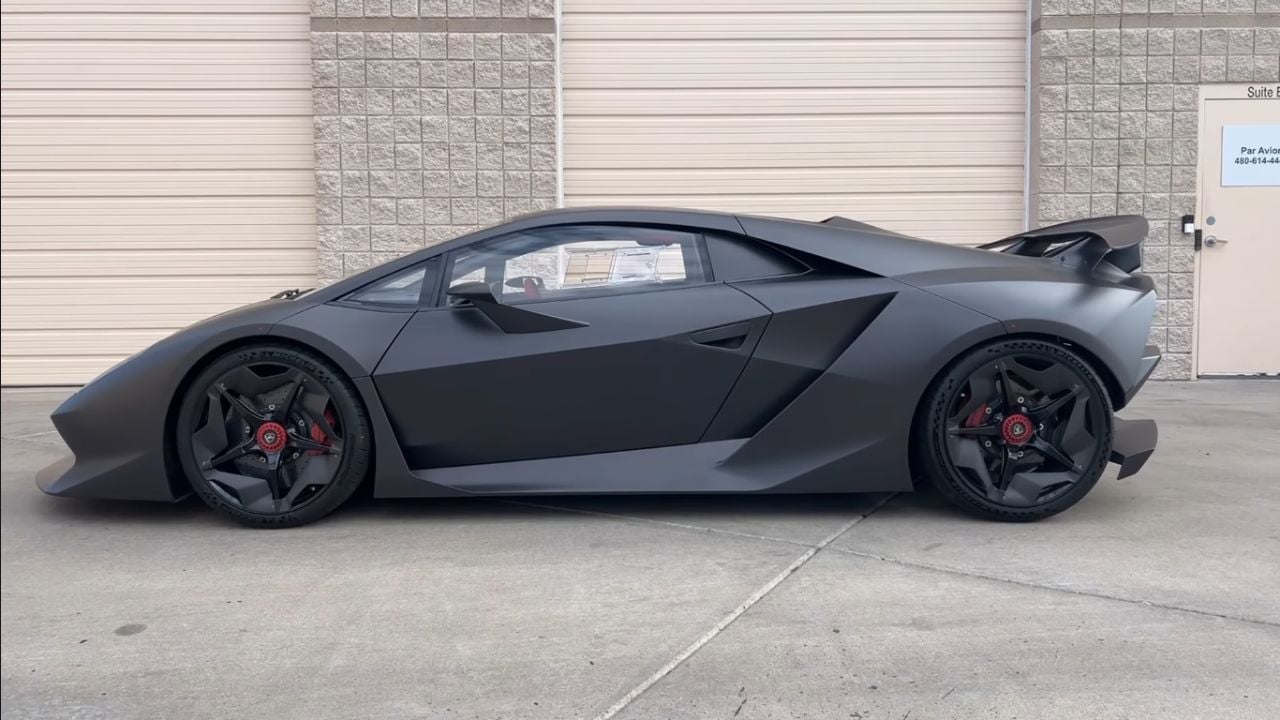
When the Sesto Elemento debuted, its price approached $3 million, making it one of the most expensive Lamborghinis ever produced at the time. With only a handful built, the car immediately became a blue-chip collectible.
More than a decade later, values for ultra-limited hypercars from the early 2010s remain extremely strong. Any well-preserved Sesto Elemento would likely command an enormous price if one were to appear on the open market.
What makes Larsen’s example even more unusual is the Lanzante road-legal conversion. Transforming an extreme track-only hypercar into a machine capable of operating on public roads is an enormously complex engineering task.
Lanzante has prior experience with similar projects, including converting the McLaren P1 GTR and McLaren Senna GTR into road-legal vehicles. That expertise allowed them to navigate the complicated process of adapting the Sesto Elemento while preserving the car’s original design and character.
While collectors often value originality above all else, the ability to drive a hypercar on real roads may expand its appeal to buyers who want the full ownership experience.
However, Larsen does not appear overly concerned with resale value. In the video he emphasizes the joy of actually experiencing the car. For enthusiasts watching online, that approach offers a rare glimpse of an automotive icon doing what it was designed to do — being driven.