
Back in the late 1960s and 1970s, NASCAR’s “stock car” rules required manufacturers to sell street-legal versions of their race cars. At least 500 had to be built to qualify for competition (and the requirement was increased for 1970), creating a unique category of vehicles known as homologation specials.
These cars were often built in limited numbers, featured advanced aerodynamic designs, and directly connected what fans saw on Sunday with what they could (at least in theory) buy on Monday. The result was a series of production cars that remain some of the most fascinating and collectible performance machines ever offered to the public.
1969 Dodge Charger 500
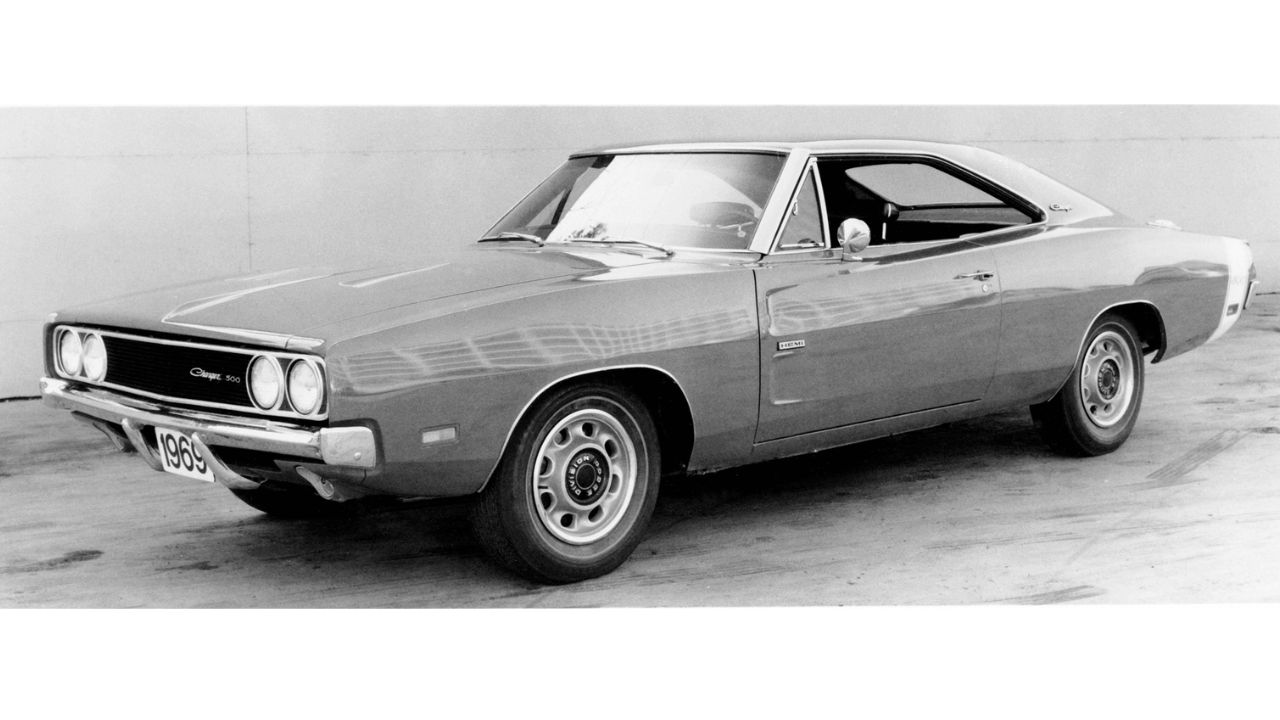
Production Numbers: 392 units
Engine Options: 426 Hemi (425 hp), 440 Magnum (375 hp)
Claim to Fame: NASCAR’s first true aero homologation special
The Charger 500 was Chrysler’s first attempt to improve aerodynamic performance on the superspeedways. Engineers recessed the grille and fitted a flush rear window to reduce drag compared to the standard Charger.
These seemingly small changes made a major difference, and the Charger 500 became the template for the more extreme winged cars that followed. While overshadowed today by the Daytona and Superbird, the Charger 500 deserves recognition as the car that started the aero wars.
Dodge Charger Daytona

Production Numbers: 503 units
Engine Options: 440 Magnum (375 hp) or 426 Hemi (425 hp)
Top Speed: 200+ mph (first NASCAR car to crack 200 mph)
The Dodge Charger Daytona was engineered with one goal in mind: dominating NASCAR’s high-speed oval tracks. Its pointed nose cone and elevated rear wing were designed to reduce drag and increase downforce, giving Dodge a competitive edge on superspeedways like Talladega.
To meet NASCAR’s homologation rules in 1969, Dodge produced 503 street-legal Daytonas. Many were documented carefully when new, and surviving cars are often accompanied by extensive paperwork, underscoring their rarity and connection to motorsport history.
The Daytona made headlines when Buddy Baker became the first driver to lap a closed course at more than 200 mph during a Talladega test session on March 24, 1970. On public roads, the car offered a driving experience unlike anything else at the time. Its race-inspired aerodynamics and bold styling made it instantly recognizable and a true collector’s item today.
Plymouth Superbird

Production Numbers: 1,935 units (NASCAR’s 1970 rule effectively required Plymouth to build about 1,920 to meet the ‘one per two dealers’ requirement)
Engine Options: 440 Six Pack (390 hp) or 426 Hemi (425 hp)
Top Speed: 200+ mph
Chrysler developed the Superbird as the Plymouth counterpart to the successful Dodge Charger Daytona. More than just a copy, the Superbird featured distinct styling elements, including a unique nose cone and a redesigned rear wing angle to suit Plymouth’s body lines. Its creation also had a strategic purpose: bringing Richard Petty back to Plymouth after he defected to Ford in 1969.
On the track, the Superbird proved effective. Petty drove the car to multiple NASCAR victories in 1970, validating the aerodynamic advances that Chrysler’s engineers, aided by aerospace specialists, had put into the design. While the overall season total is sometimes confused with his wins in other cars, the Superbird’s record stands as a testament to its competitive impact.
For the street, just under 2,000 were produced to satisfy homologation rules, making it one of the most recognizable and collectible muscle cars ever built. Its distinctive profile has since become a lasting symbol of NASCAR’s aero wars at their peak.
Ford Torino Talladega

Production Numbers: 754 units
Engine: 428 Cobra Jet (335 hp, but everyone knew it made more)
NASCAR Wins: 29 Grand National wins through the 1970 season
Ford’s approach to NASCAR aerodynamics with the Torino Talladega was more understated than its competitors. Instead of adding prominent wings or nose cones, Ford extended the front end by five inches, creating a sleeker profile that improved airflow and reduced lift at high speeds.
This design featured a unique grille and headlight arrangement that contributed to its aerodynamic efficiency. The Talladega demonstrated that performance gains could be achieved without dramatic styling changes, offering a subtler alternative to the more radical designs of the era.
On the track, drivers like Cale Yarborough and David Pearson helped cement Talladega’s legacy in NASCAR. For street buyers, the car delivered impressive performance in a more reserved package, making it a favorite among enthusiasts who valued capability over flash.
1986–1987 Chevrolet Monte Carlo SS Aerocoupe

Production Numbers: 200 (1986) and 6,052 (1987) (making it relatively ‘common’ on this list)
Engine: 305 V8 (180 hp)
In the mid-1980s, NASCAR placed increasing emphasis on aerodynamics, prompting Chevrolet to develop the Monte Carlo SS Aerocoupe. Its defining feature was a sloped rear window and fastback roofline, designed to reduce drag and improve high-speed stability on the track.
While its 180-horsepower V8 may seem modest by today’s standards, it was competitive for its time, especially during the performance-limited era of the 1980s. The Aerocoupe’s streamlined shape gave it an edge in airflow efficiency compared to more angular competitors.
Dale Earnhardt Sr. helped elevate the Monte Carlo’s profile in NASCAR, driving it to multiple victories and contributing to its legacy. The street version offered enthusiasts a chance to experience a car closely tied to Chevrolet’s racing program, with styling and performance cues drawn directly from the track.
Mercury Cyclone Spoiler II
.jpg)
Production Numbers: 503 units
Engine: 351 Windsor V8
In 1969, Mercury joined the NASCAR aerodynamic race with the Cyclone Spoiler II, a homologation special built to meet NASCAR’s requirement of 500 production units. Its extended front end and flush-mounted grille were designed to reduce drag, while the rear spoiler improved high-speed stability. These features weren’t just stylistic; they were developed through wind tunnel testing to enhance performance on superspeedways.
The Spoiler II was offered in two limited-edition trims: the Dan Gurney Special and the Cale Yarborough Special, each featuring unique paint and interior combinations. While Gurney’s name was used for branding, the car’s NASCAR success came from drivers like Yarborough, who helped establish Mercury’s brief but notable presence in stock car racing.
On the street, the Spoiler II retained much of its race-inspired design while offering more practical features for everyday driving. Today, it stands as one of the rarest muscle cars of the era, a reminder of Mercury’s short-lived venture into high-performance engineering.
Pontiac Grand Prix 2+2 Aero Coupe

Production Numbers: 1,225 units
Engine: 305 V8 (LG4, 165 hp)
In 1986, Pontiac introduced the Grand Prix 2+2 as a limited-production homologation model designed to meet NASCAR’s aerodynamic requirements. Its sloped rear window and extended front fascia were engineered to reduce drag and improve high-speed stability, key advantages on superspeedways like Daytona and Talladega.
With just 165 horsepower, the street version wasn’t a standout in terms of raw performance, but its wind tunnel-tested shape offered real aerodynamic benefits. NASCAR teams leveraged the design to gain a competitive edge, even as the connection between race cars and production models was beginning to fade.
Pontiac produced approximately 1,200 units of the 2+2, making it one of the rarer G-body variants. It marked the end of an era when manufacturers built street-legal versions of their race cars, just before the shift toward front-wheel-drive platforms and more standardized designs.
Closing Laps on a Racing Legacy

These cars come from a time when race cars and street cars shared more than just a name. Manufacturers built specialized vehicles to meet NASCAR’s homologation rules, resulting in street-legal machines that closely reflected their track counterparts.
Modern performance cars may be quicker and more refined, but these homologation specials stand out for their direct connection to motorsport. They offered drivers a rare chance to experience race-developed engineering in a production model.
Their legacy is a reminder that carmakers once prioritized innovation and competition, even when it meant pushing the limits of practicality. When you see one of these aerodynamic icons at a car show, you’re looking at a moment in history when racing regulations shaped road cars and enthusiasts embraced the results.