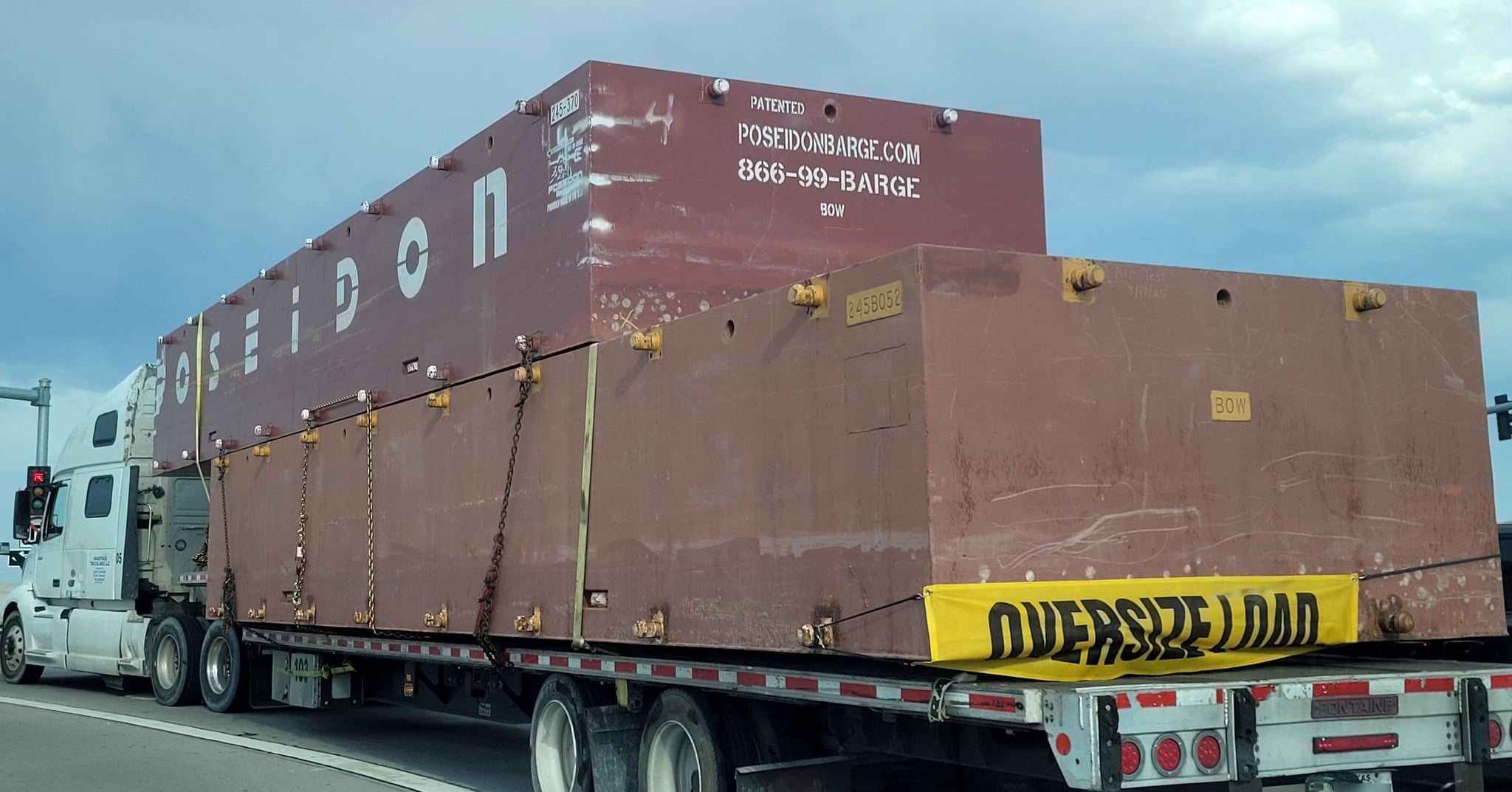
A commercial truck driver apparently decided that permits, registration, functioning brake lights, and a seatbelt were all optional extras on a cross-country run through Arizona. He was wrong.
On May 3, 2026, an Arizona Department of Public Safety Highway Patrol trooper spotted a commercial motor vehicle traveling westbound on Interstate 10 during the morning rush hour. The truck was hauling an oversize load on a route stretching from California to Texas, but it was doing so without the required oversize load permits. That alone would have been enough to ruin the driver’s day. It was not the only problem.
The trooper’s inspection turned up a list of violations that reads less like a citation sheet and more like a checklist of everything you are not supposed to do behind the wheel of a large commercial vehicle. No registration for the truck. No registration for the trailer. A bald tire. No functioning brake lights. The driver was also on his cell phone and not wearing a seatbelt, because apparently there was still room on the list.
The driver received multiple citations and was placed out of service on the spot. The incident was shared by AZDPS on social media as a reminder that commercial vehicle regulations exist for reasons that go beyond paperwork.
What “Out of Service” Actually Means for a CMV Driver
When a commercial motor vehicle is placed out of service, it is not a warning or a suggestion. Under Federal Motor Carrier Safety Administration regulations, an out-of-service order means the vehicle cannot move until the violations that triggered the order are corrected and cleared. For the driver, it can also mean suspension of their commercial driver’s license depending on the severity of the infractions and their record.
The FMCSA maintains specific Out of Service Criteria, updated annually, that enforcement officers use to determine which defects are serious enough to ground a vehicle immediately. Bald tires and non-functioning brake lights are both on that list. A single qualifying defect is enough. This driver offered several.
Oversize Load Permits: Not a Bureaucratic Technicality
Oversize load regulations exist because large commercial vehicles traveling outside of standard size and weight limits create real hazards for infrastructure and other road users. In Arizona, oversize loads generally require a state permit issued through ADOT, and loads crossing state lines require permits from each state along the route. Moving an oversize load from California to Texas without permits for Arizona means the driver skipped that step entirely.
Permits are not just about fees. They dictate approved routes, time-of-day restrictions (which is why traveling during rush hour drew attention), and in some cases require escort vehicles or advance notification to law enforcement. None of that happened here.
Brake Lights and Bald Tires on a Commercial Vehicle: The Math Is Simple
A fully loaded semi-truck can weigh up to 80,000 pounds under federal limits. At highway speeds, stopping distances already far exceed those of passenger vehicles under ideal conditions. Remove functioning brake lights, and the drivers behind the truck lose their primary warning that it is slowing down. Add a bald tire to the equation, particularly on a vehicle carrying an oversize load, and the stopping distance and handling characteristics deteriorate further.
The National Highway Traffic Safety Administration consistently identifies tire condition and brake system failures among the leading mechanical contributors to large truck crashes. These are not fringe cases. They show up in the data year after year, which is why enforcement officers are trained to look for exactly these defects during roadside inspections.
Cell Phone Use and Seatbelt Violations in a CMV: Federal Rules Apply
Commercial drivers are held to a stricter standard on distracted driving than the average motorist. Under FMCSA rules, CMV drivers are prohibited from using a handheld mobile phone while operating their vehicle. The fine structure for violations can reach into the thousands of dollars per offense, and repeat violations can affect a driver’s safety rating and CDL status.
Seatbelt use is also federally mandated for commercial drivers and is separately enforced from state seatbelt laws. The combination of cell phone use and no seatbelt, layered on top of equipment violations and missing permits, suggests this was not a case of someone who forgot to renew a registration. The Arizona trooper’s stop on I-10 was, by any measure, a thorough find.