Greece isn’t just a place, it’s a feeling. It’s where myths breathe through pine-covered hills, marble ruins glow under honey-gold light, and ancient stones still echo with footsteps from thousands of years ago. From the shores that launched epic voyages to mountaintop sanctuaries dedicated to the gods, Greece holds memories older than most civilizations on Earth. Some places feel like destinations; these feel like time machines.
Whether you’re wandering through abandoned theaters carved into mountainsides, exploring forgotten temples lost to wild olive groves, or standing on stones where philosophers once shaped the world, these ancient Greek sites don’t just show you history, they transport you directly into it. Here are 14 of the most powerful, breathtaking ancient sites in Greece that will sweep you centuries back with a single step.
The Acropolis of Athens

The Acropolis is more than a hill, it’s the spiritual heart of Western civilization. Rising above Athens like a marble crown, it draws your eye from nearly every corner of the city. The Parthenon dominates the skyline, its Doric columns glowing like fire when the sun sets behind the mountains. As you climb the pathways worn smooth by millions of footsteps over thousands of years, the modern world begins to fall away. Every breeze, every echo feels ancient.
At the summit, the view opens like a revelation. Temples, altars, and gateways stand in dignified silence, their broken edges reminding you of the wars, victories, and revolutions they’ve survived. Looking over Athens from this sacred rock, you understand why the ancient Greeks believed the gods walked here. It’s impossible not to feel them in the stones beneath your feet.
Delphi – Sanctuary of Apollo
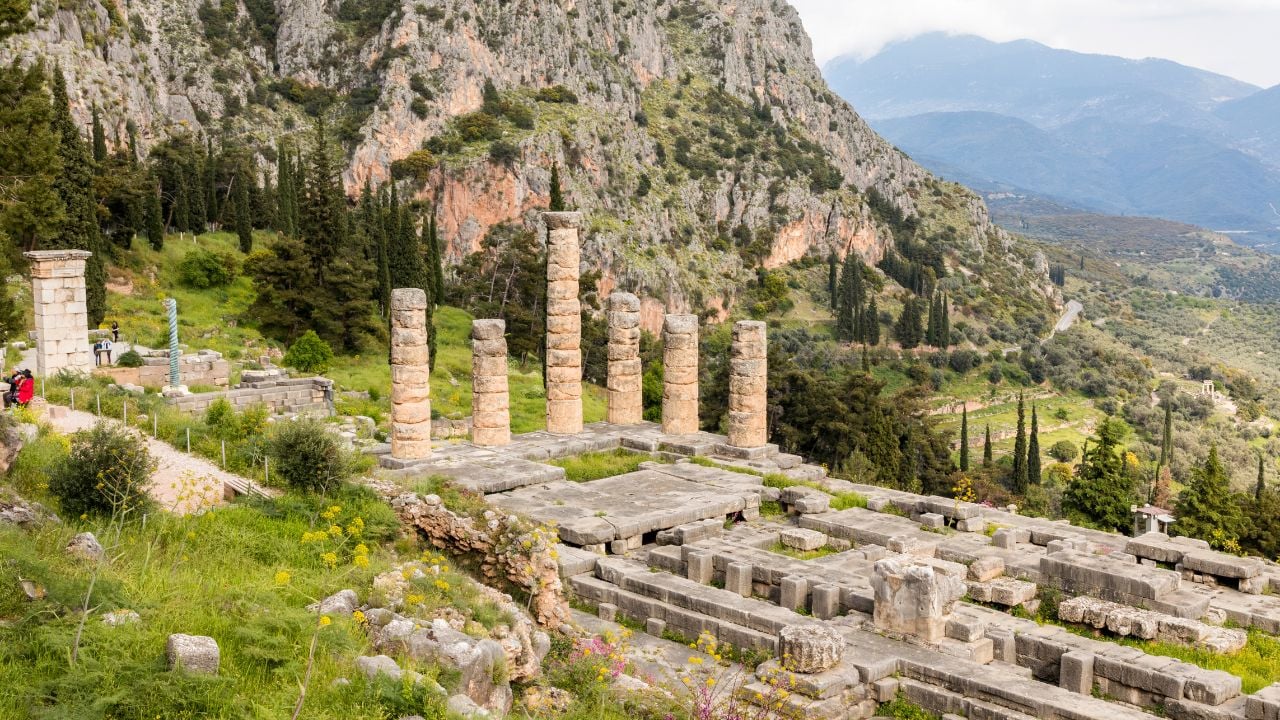
High on the slopes of Mount Parnassus, Delphi feels suspended between earth and sky. This was once the center of the ancient world, the place where kings, philosophers, and warriors came seeking guidance from the Oracle of Apollo. The theater, the treasuries, and the temple itself overlook a valley of olive groves that stretches all the way to the shimmering Gulf of Corinth. The air here is thinner, sharper, almost electric.
Walking along the Sacred Way, you feel the gravity of every offering once left by ancient travelers hoping for wisdom. The ruins glow in the afternoon sun, the stones warm beneath your hands, and the silence is broken only by the wind that whistles through cypress branches. Delphi doesn’t just tell a story, it whispers truths that feel personal, as if the Oracle still speaks through the mountain air.
Epidaurus – The Ancient Theatre
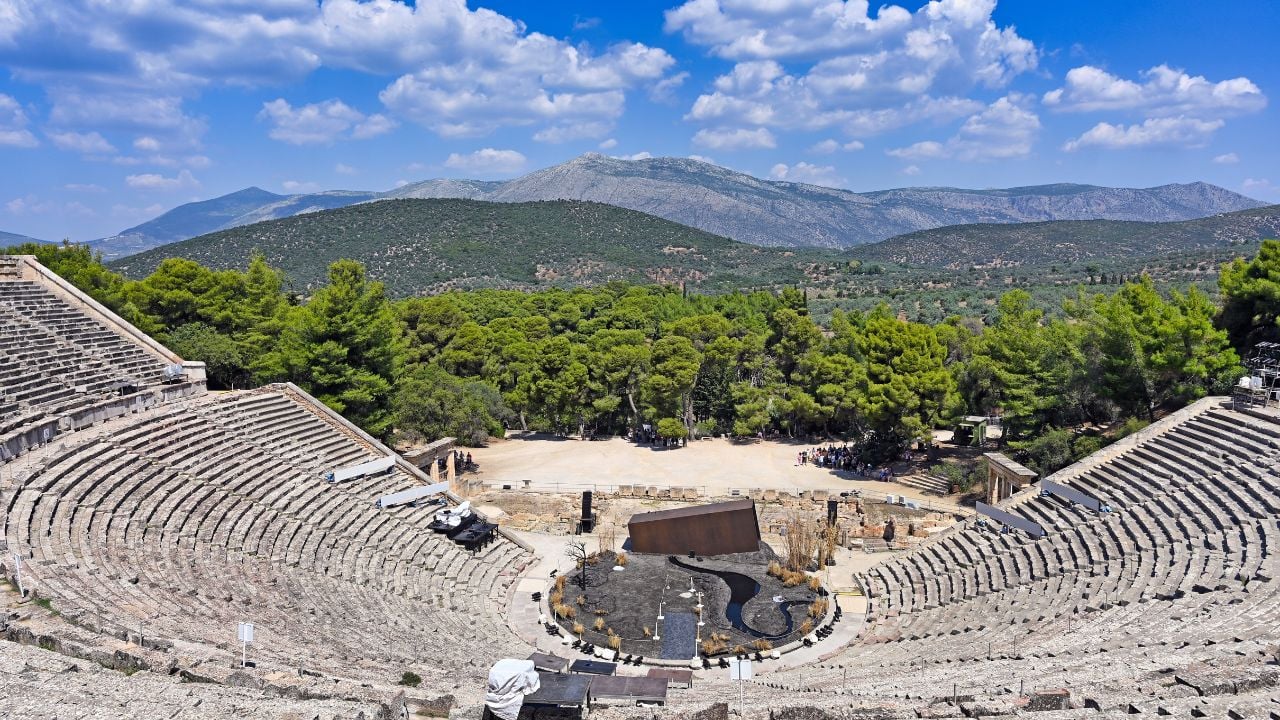
Hidden among rolling hills and fragrant pines, the Theatre of Epidaurus is perhaps the most perfect theater ever built. Its acoustics are legendary, drop a coin at the stage and someone at the top row can hear it. Standing at the center of the orchestra, you feel tiny beneath the sweeping stone arcs, yet strangely connected to every soul that once gathered here for healing and entertainment.
Epidaurus was more than a theatre; it was a sanctuary of Asklepios, god of medicine. Pilgrims slept inside sacred chambers hoping for healing dreams delivered by the divine. Today, the ruins of the sanctuary still breathe serenity. Birds sing, pine needles crackle underfoot, and you can close your eyes and almost hear ancient applause drifting across the ages.
Olympia – Birthplace of the Olympic Games
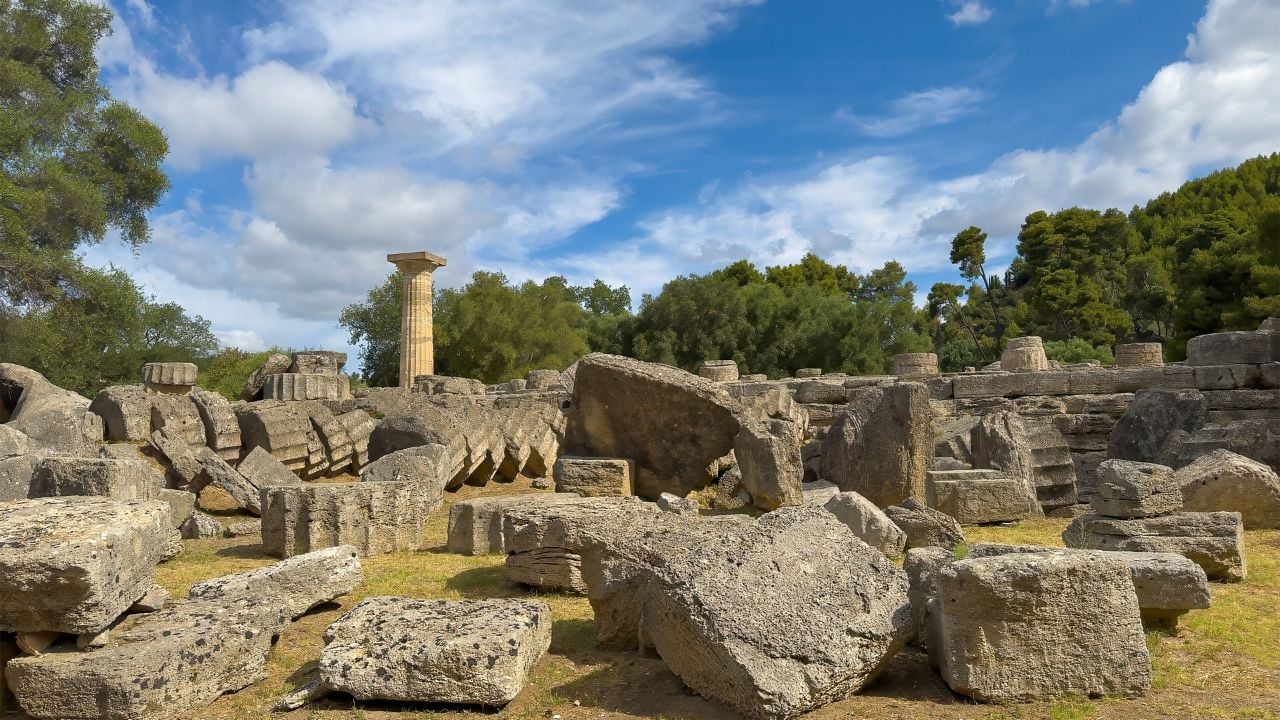
In a quiet valley of the Peloponnese, surrounded by olive trees and distant riverbanks, lies Olympia, the birthplace of a tradition that still unites the world. Though time has softened its edges, the sacred grounds still pulse with the energy of ancient athletes who once ran barefoot beneath the summer sun. The remains of training halls, temples, and race tracks form a vast archaeological landscape.
The Temple of Zeus, once home to one of the Seven Wonders of the Ancient World, still stands in majestic ruins. Wander through the gymnasiums and stadium and you can picture athletes dusting themselves with oil, preparing to compete under the watchful gaze of Zeus. Olympia feels alive, timeless, warm, and full of spirit.
Knossos – Palace of the Minoans
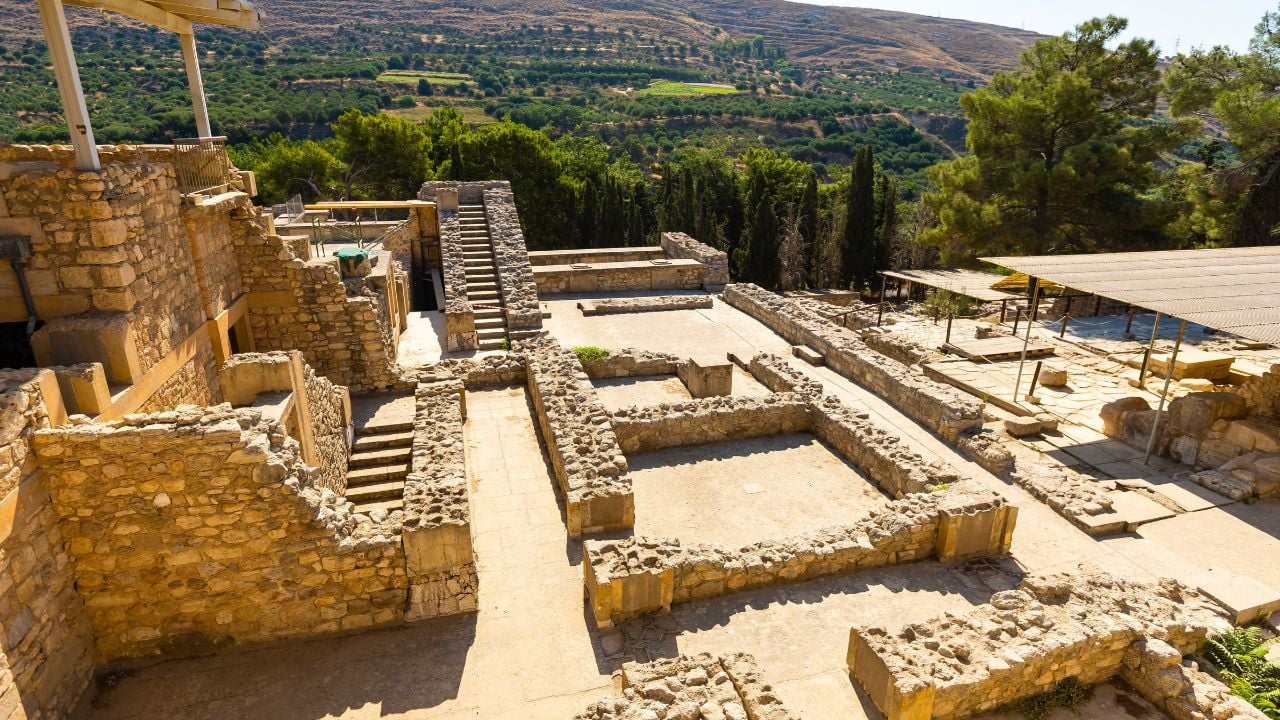
Just outside Heraklion, Crete’s legendary Palace of Knossos lies like a labyrinth unfolded across the earth. This was the seat of King Minos, home of the Minotaur myth, and the heart of Europe’s earliest advanced civilization. Its red columns, frescoed walls, and endless corridors feel strangely modern, as if the Minoans simply stepped out for a moment and might return at any time.
Wander through storerooms, throne rooms, courtyards, and staircases that descend into shadows. The light plays across colorful murals, bull leapers mid-air, dolphins swimming across blue seas, goddesses holding serpents with serene confidence. Knossos feels less like a ruin and more like a rediscovered memory, vivid, mysterious, and haunting in its beauty.
Mycenae – Home of Agamemnon
Mycenae is where epic becomes real. Perched on a rocky hill overlooking dry plains, this fortified citadel was once the kingdom of Agamemnon, the commander of the Trojan War. The Lion Gate, two great stone beasts roaring silently across the centuries, remains one of the most iconic entrances in ancient history. Step under it, and you’re stepping straight into Homer’s world.
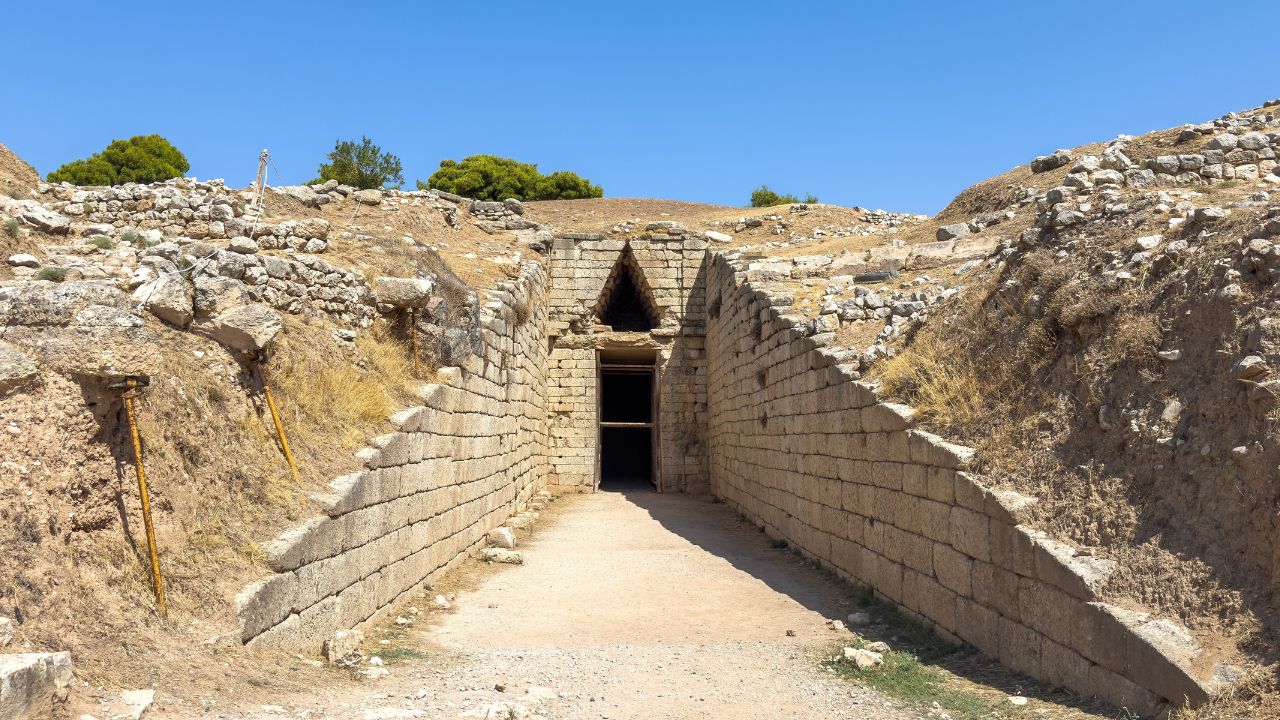
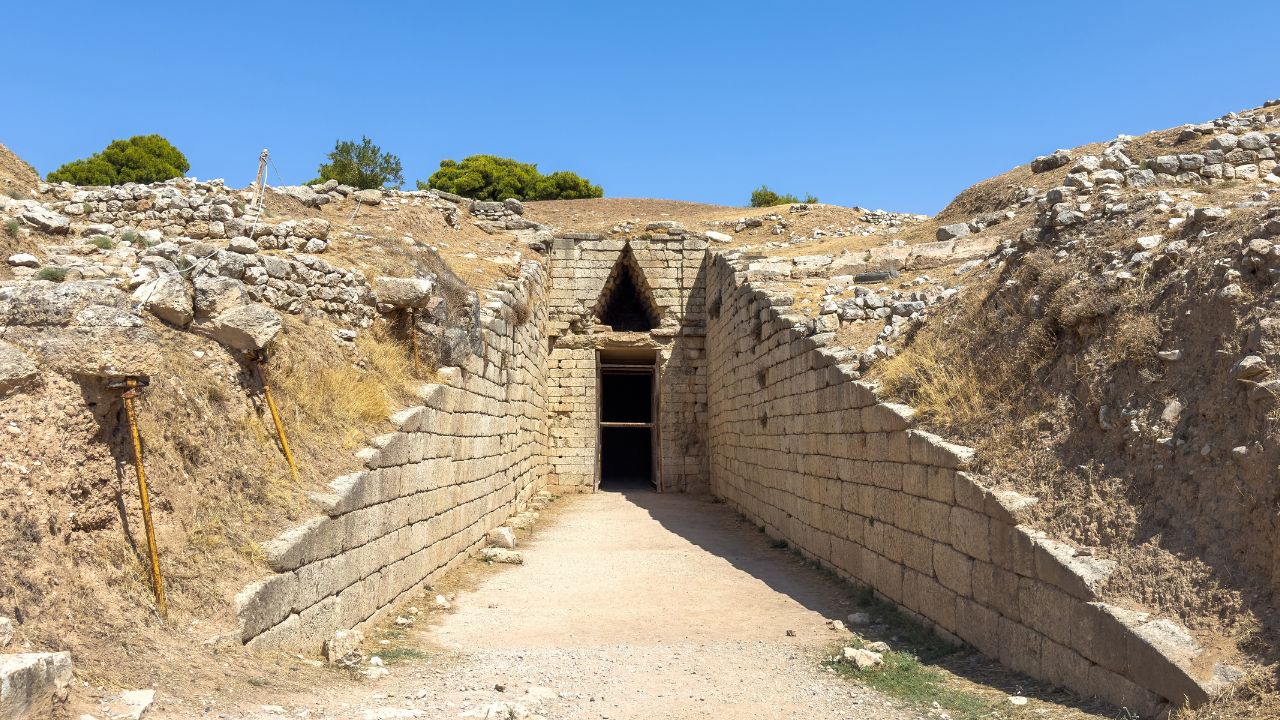
Inside, the ruins echo with myth. Royal tombs, cyclopean walls, and ancient courtyards stretch across the hilltop. The Treasury of Atreus, an astonishing beehive-shaped tomb, stands cool and echoing inside, its stone dome still engineering perfection 3,500 years later. Mycenae feels powerful, solemn, and unforgettable.
Delos – The Sacred Island
In the sparkling waters of the Aegean, a short boat ride from Mykonos, lies Delos, an island so sacred that no one was allowed to give birth or die here in ancient times. Today it’s uninhabited, a sprawling ghost city of temples, mosaics, and marble colonnades shimmering under sun and sea breeze.
The Terrace of the Lions stands guard along the Sacred Way, their ancient stone faces weathered yet noble. You wander through abandoned houses with mosaics of dolphins and gods, and climb Mount Kynthos for a breathtaking panorama of the Cyclades. Delos feels like a dream, bright, silent, and touched by divine stillness.
Mystras – Byzantine Wonder
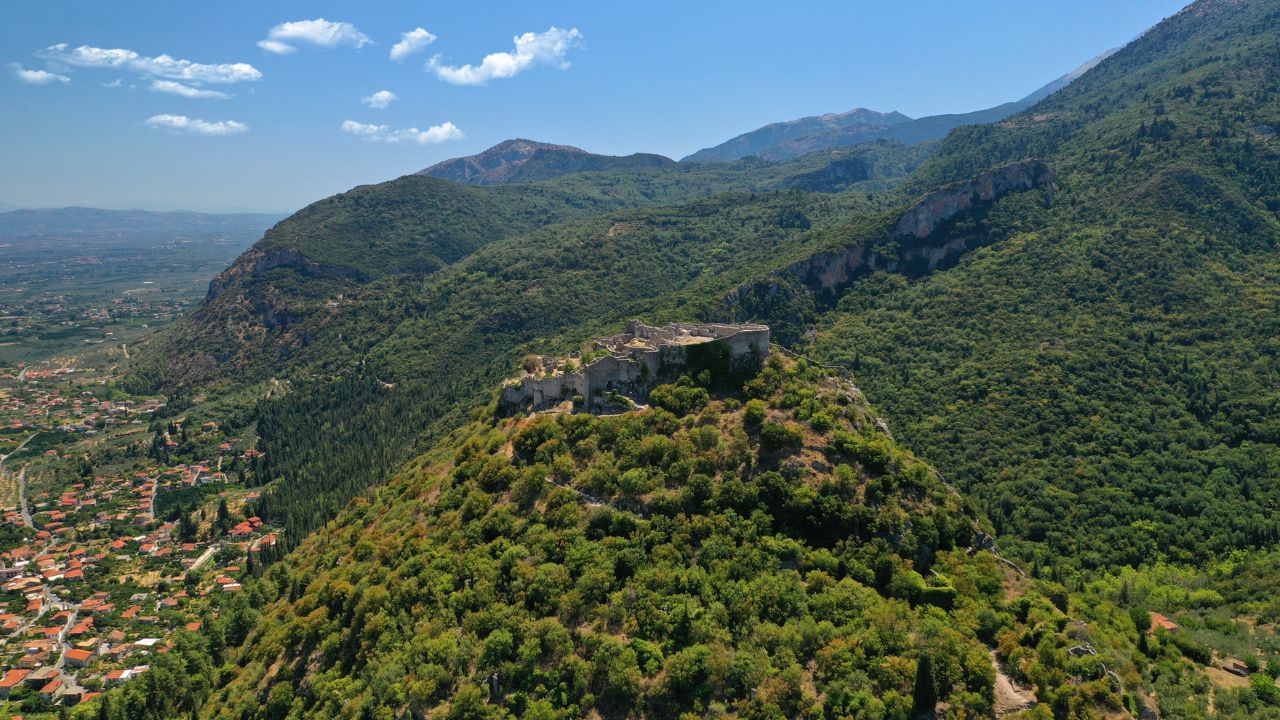
Clinging to the slopes of Mount Taygetos, Mystras is a haunting medieval city frozen in time. Byzantine churches, palaces, and homes spill down the mountain in a cascade of red tiles and faded frescoes. Walking through its quiet streets is like wandering through a forgotten kingdom that somehow survived the centuries intact.
Inside the churches, shimmering mosaics glow in dim light, while the scent of wild thyme floats in the air outside. From the fortress at the summit, the Spartan plains stretch endlessly in gold and green. Mystras is one of Greece’s most fascinating and least expected treasures, a time capsule of the Middle Ages that still hums with spiritual mystery.
Aigai (Vergina) – Royal Tombs of Macedonia
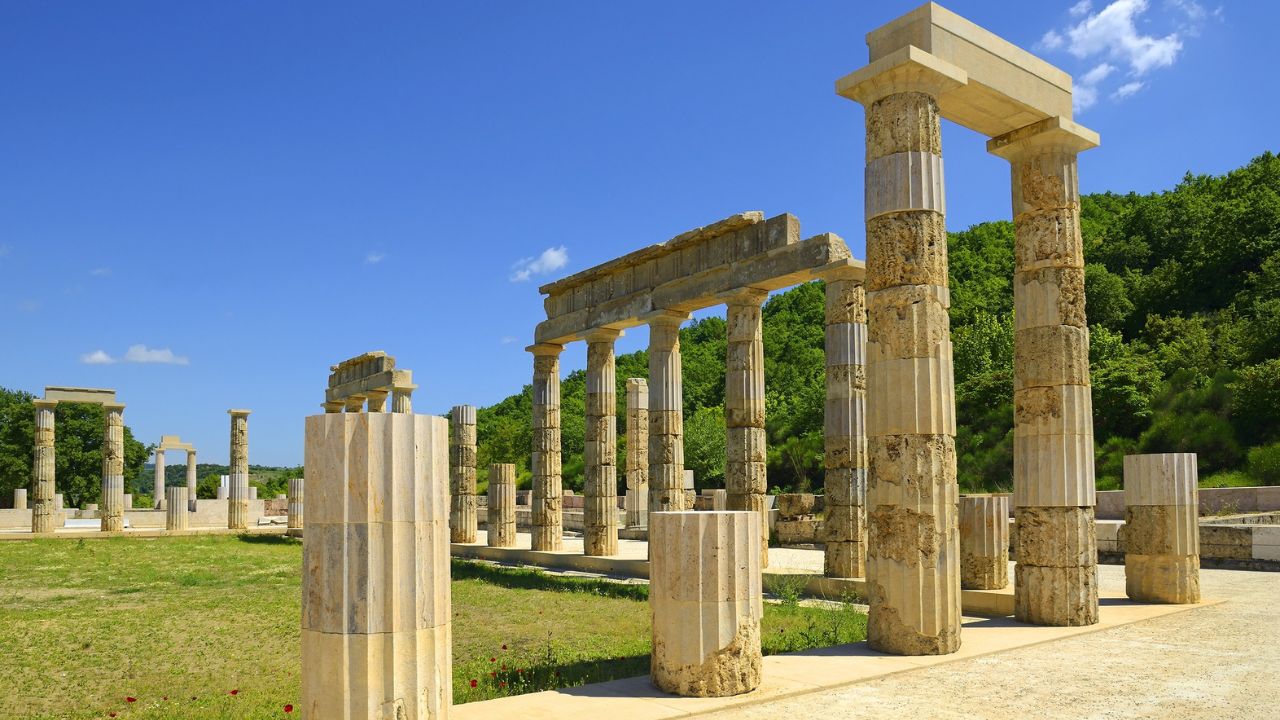
Hidden beneath grassy mounds near modern-day Vergina lies the burial site of Macedonia’s ancient kings, including, many believe, the father of Alexander the Great. The tombs, discovered in the late 20th century, remain one of the most jaw-dropping archaeological finds in Greek history.
Step inside the subterranean museum and you’ll see golden wreaths, ornate weapons, vibrant frescoes, and funerary treasures that feel too vivid to be thousands of years old. The discovery of Aigai reshaped what we know about Greek royalty. It’s not just a site, it’s a revelation.
Dodona – Oracle of Zeus
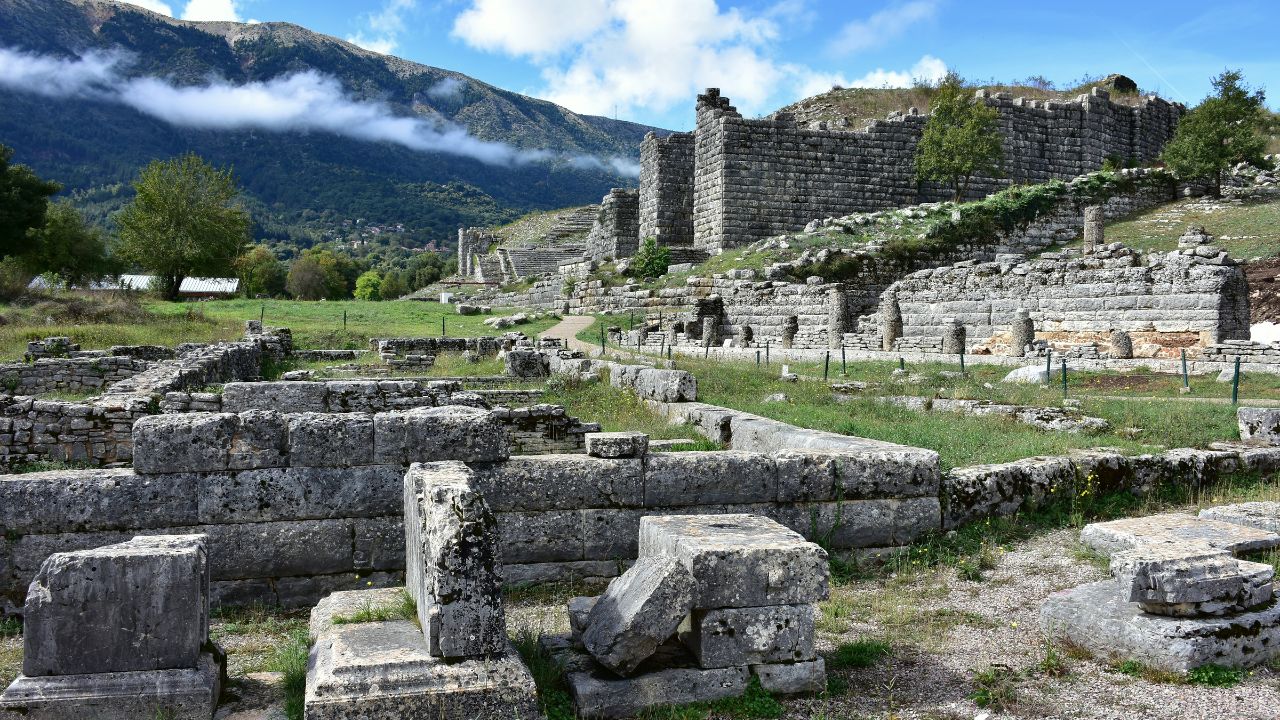
Before Delphi rose to fame, Dodona was the premier oracle of the ancient world. Nestled in a lush valley near Ioannina, this sanctuary dedicated to Zeus was known for its sacred oak tree, whose rustling leaves delivered divine messages. Priests interpreted the whispers of wind as answers from the gods.
The ancient theater, one of the largest in Greece, still curves gracefully into the hillside. You can walk among the ruins of the temples and imagine priests listening for the murmur of Zeus in the branches. Dodona feels intimate, mysterious, and deeply connected to nature, a spiritual refuge untouched by time.
Corinth – Crossroads of the Ancient World
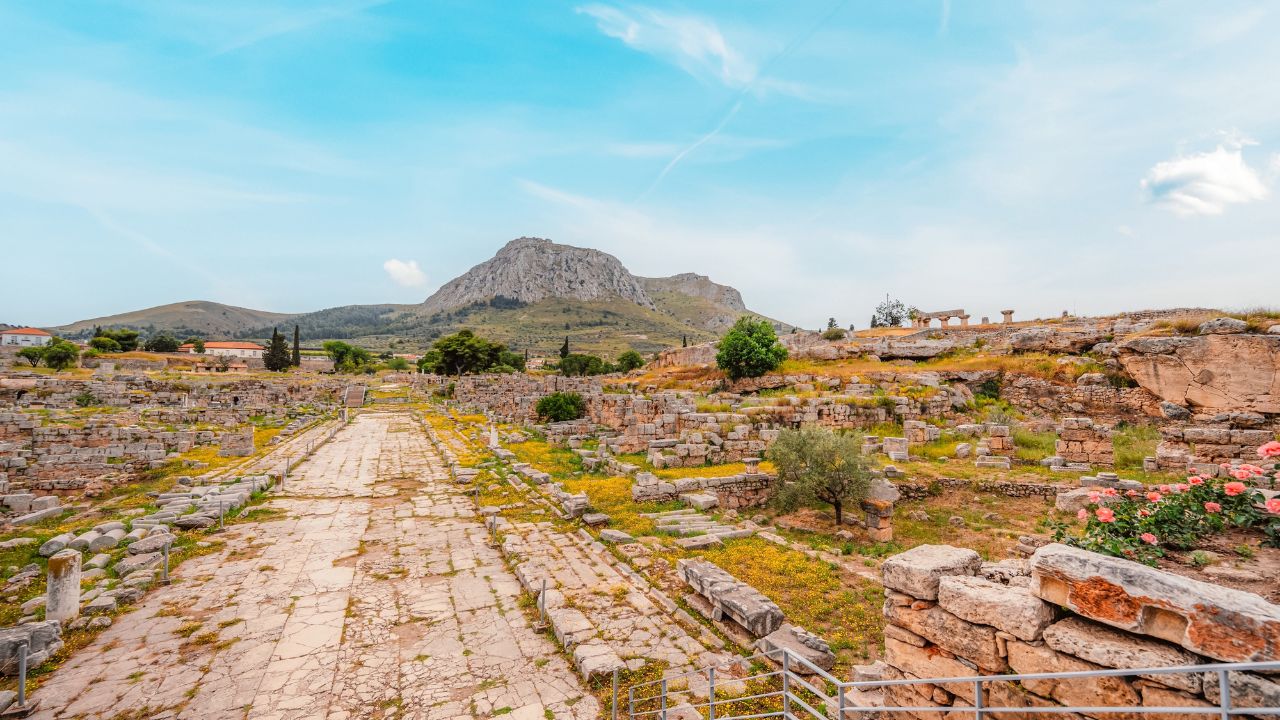
Corinth was once among the most powerful and cosmopolitan cities in ancient Greece. Its strategic position between two seas made it a hub of trade, culture, and political influence. Today, the towering columns of the Temple of Apollo still rise dramatically against the sky, watching over ruins that stretch across a wide plain.
Acrocorinth, the mountain fortress above the city, offers panoramic views of the Peloponnese and the sparkling Corinthian Gulf. Climb to the top and you’ll feel the heartbeat of thousands of years beneath your feet. Corinth is sprawling, sun-bleached, and endlessly fascinating, an ancient crossroad that shaped the ancient world.
The Sanctuary of Artemis at Brauron
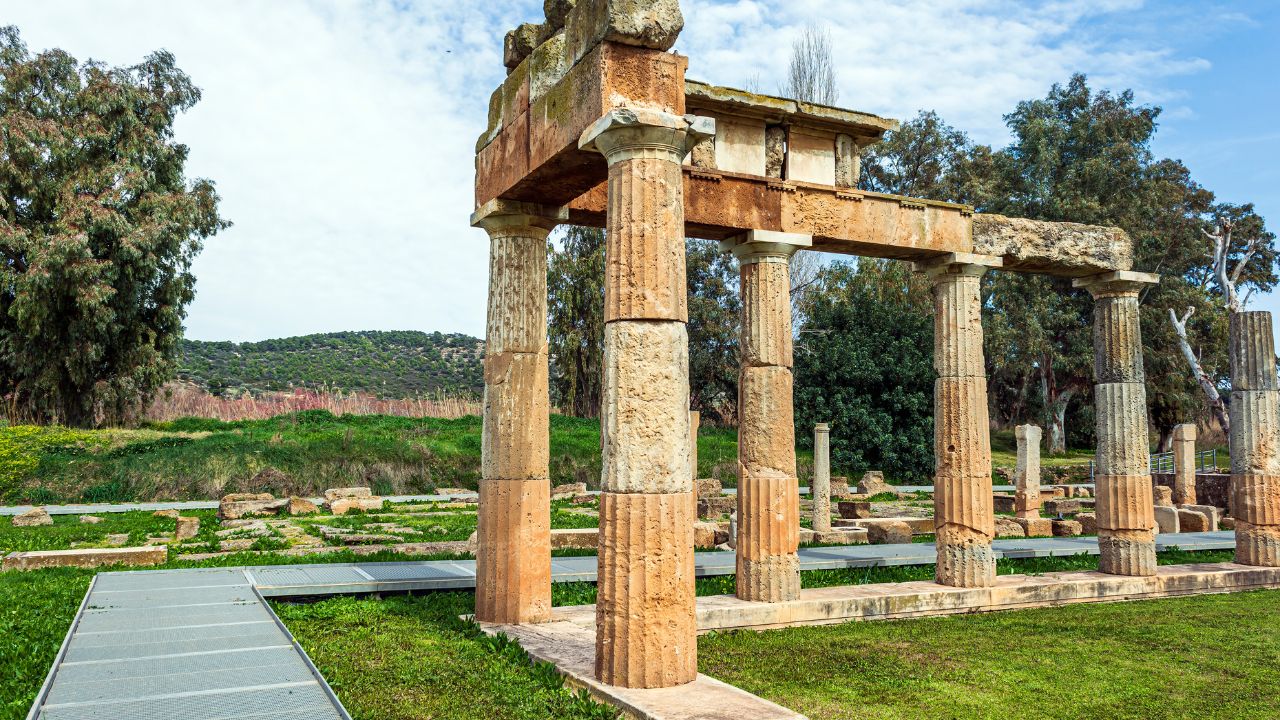
Hidden among reeds, wildflowers, and quiet marshlands outside Athens, Brauron feels like a myth whispered softly. This sanctuary was dedicated to Artemis, protector of children, wild animals, and the moonlit wilderness. Young girls once came here to take part in sacred rituals, preparing for adulthood.
The ruins are peaceful and atmospheric: colonnades reflected in shallow pools, statues half-hidden by greenery, and stone foundations warmed by sunlight. Brauron feels soft, sacred, and deeply feminine, a rare look into the lives of ancient Greek women and the goddess they served.
Nemea – Land of Heroes
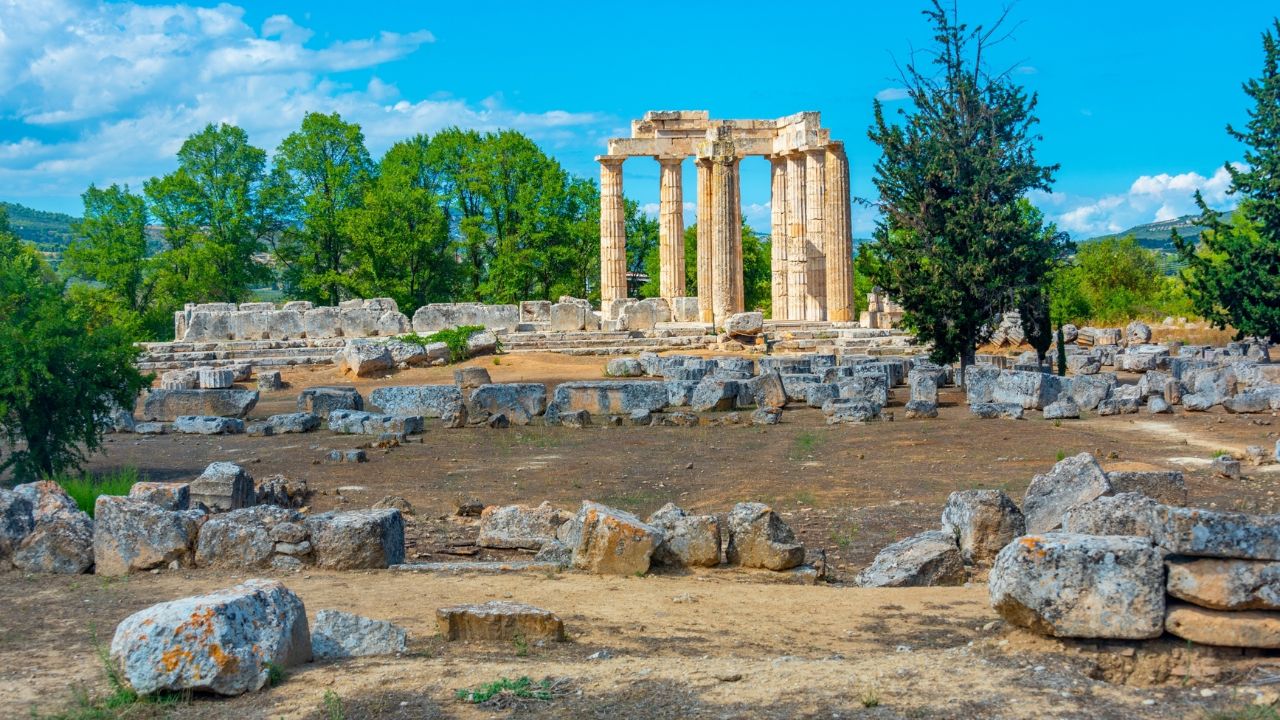
Nemea is where Hercules completed one of his legendary labors, slaying the Nemean lion. Beyond myth, this quiet valley was also home to the ancient Nemean Games, held in honor of Zeus. The impressive Temple of Zeus still stands, its towering columns reaching toward the open sky.
Walk the ancient stadium tunnel, where athletes once entered to cheering crowds, and you’ll feel the lingering pulse of competition. Nemea is peaceful, rustic, and steeped in heroic legend, a place where myth and history walk side by side.
Lindos Acropolis, Rhodes
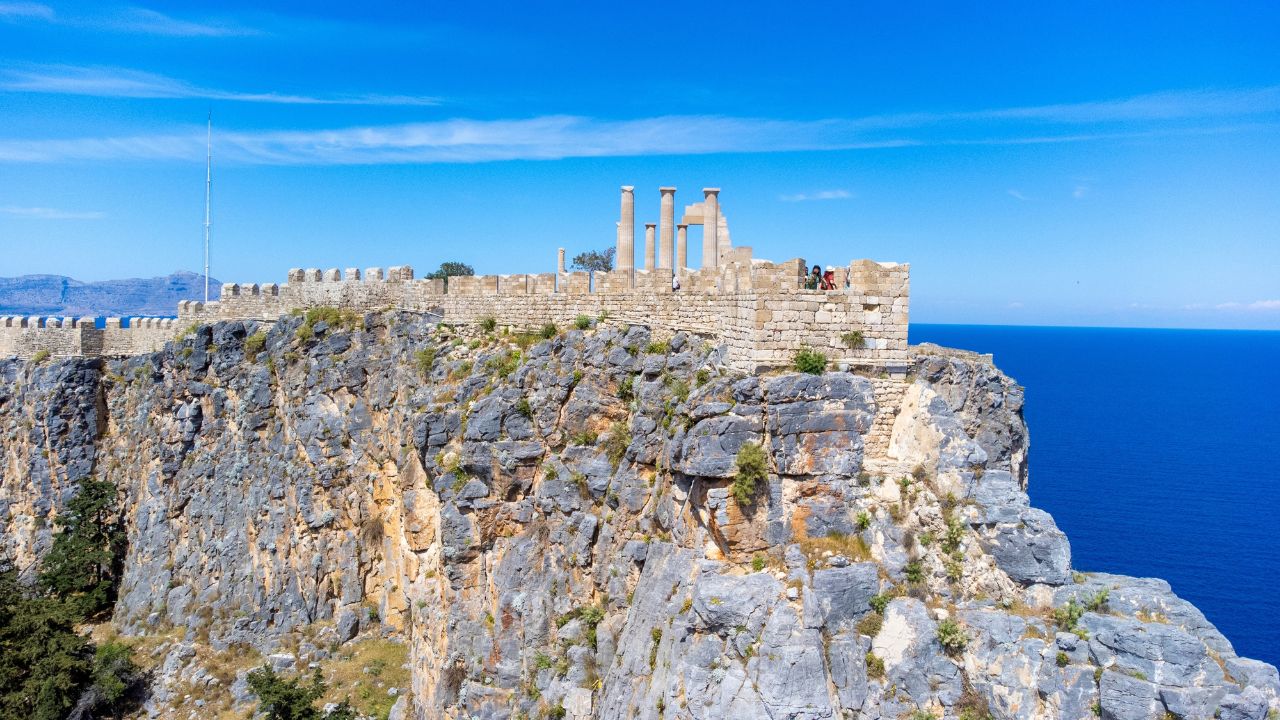
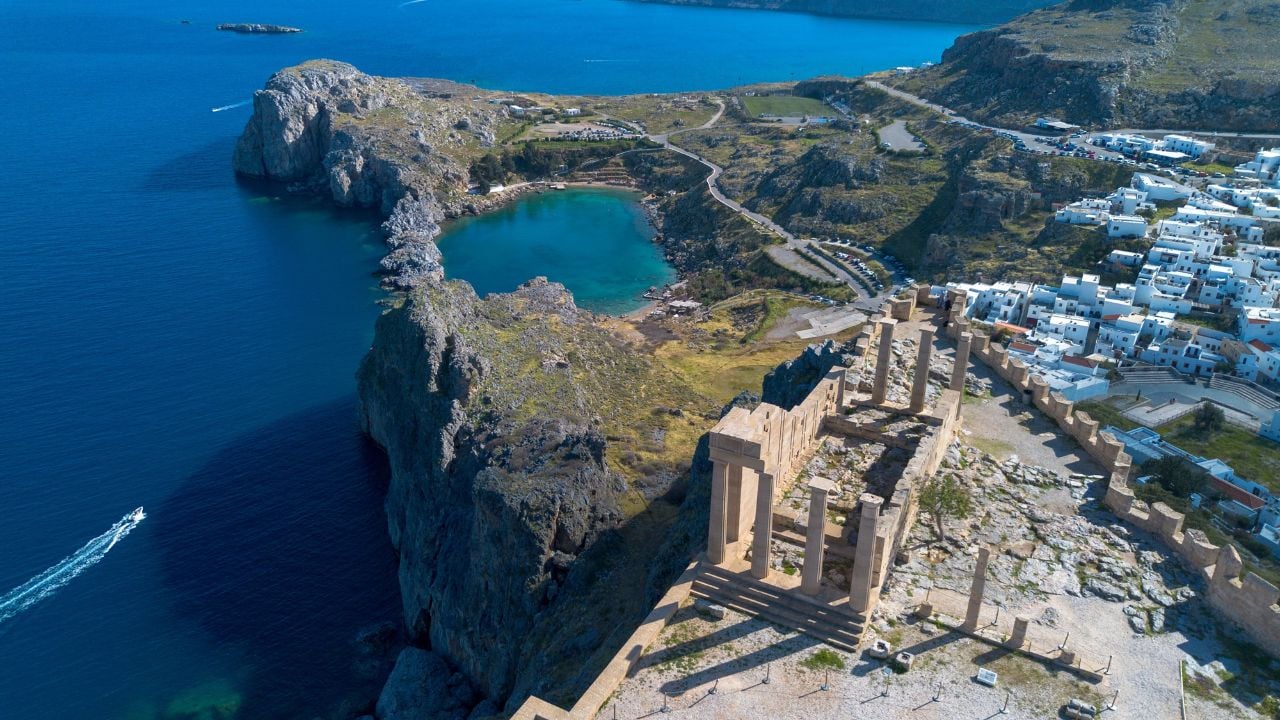
High above the shimmering Aegean, the Acropolis of Lindos offers one of the most breathtaking views in Greece. The ancient temple dedicated to Athena Lindia crowns a rocky cliff that plunges into turquoise waters below. Whitewashed houses tumble down the hillside, framed by bougainvillea and sea breeze.
Climb the winding pathways and you’ll reach ancient staircases, Byzantine walls, and Hellenistic ruins that overlook St. Paul’s Bay. Lindos is shimmering, sun-soaked history, a perfect blend of myth, sea, and timeless island beauty.