
The cars from the Malaise Era (roughly 1973 to 1984) may not possess the raw power or mythic status of their late-’60s predecessors, but they offer something that car enthusiasts can truly appreciate: accessibility.
These vehicles are often more affordable, easier to find, and come with far less pressure to keep them in perfect stock condition. They’re not museum pieces, they’re blank canvases. That means you can modify them without guilt, drive them without fear, and build something personal without feeling like you’re defacing a piece of automotive history.
Done right, a Malaise Era ride can earn as many nods and smiles at a car show as any high-dollar muscle car. Because at the end of the day, car people love cool builds, no matter where they come from — it’s one of the core truths in our Commandments of Car Enthusiasts. Respect all rides, celebrate creativity, and remember that passion counts more than pedigree.
If you’ve always wanted to get into classic car ownership without breaking the bank or worrying about originality, these forgotten icons might be precisely what you need.
So, What Was the Malaise Era, Anyway?
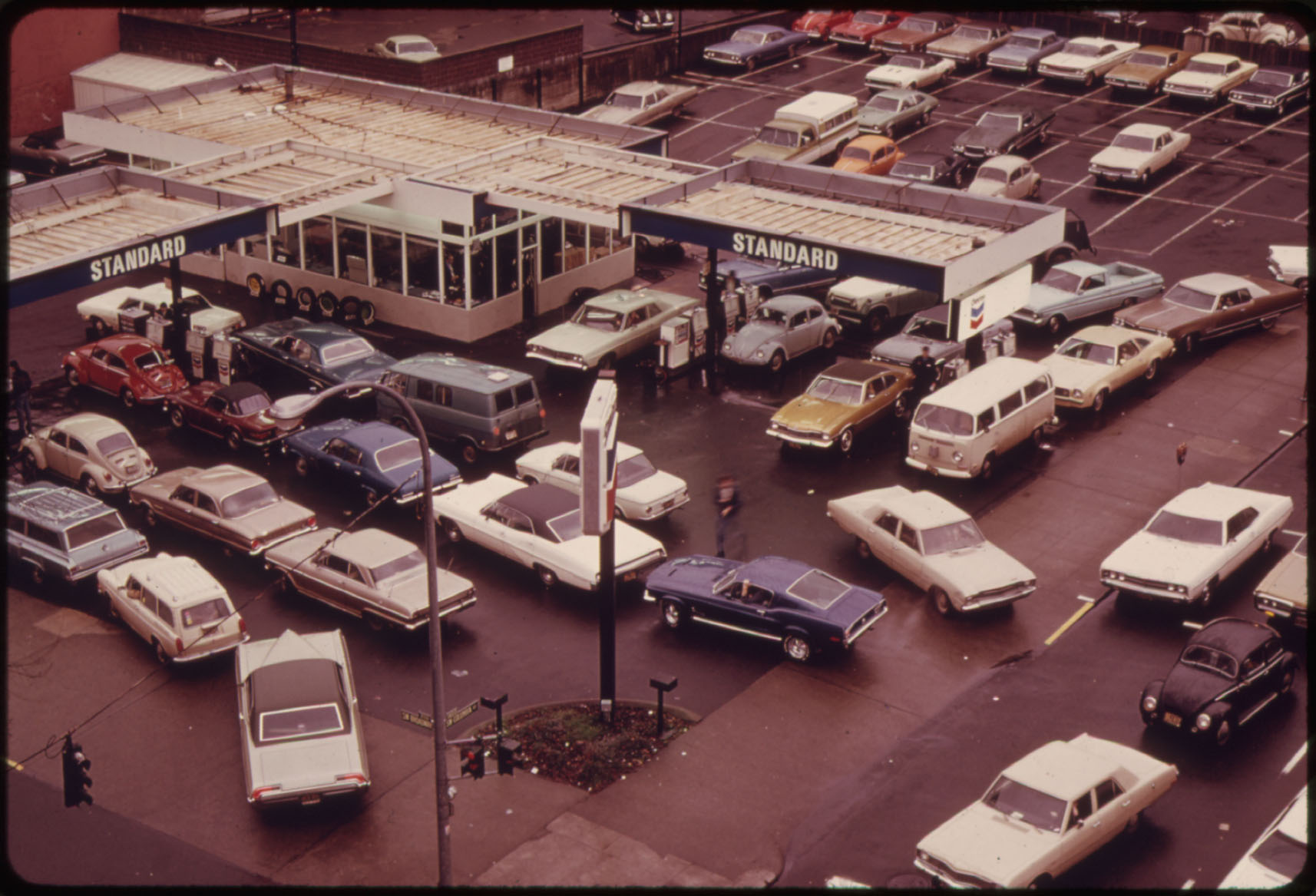
The Malaise Era began in 1973 and lasted through the early 1980s, marking a particularly challenging period for car enthusiasts. It was the result of a brutal combination of:
- The 1973 oil crisis, which made gas prices skyrocket
- New emissions regulations that strangled horsepower
- Safety mandates that added weight and killed styling
- And insurance premiums that made owning a muscle car financially insane
Overnight, high-compression big blocks were replaced with catalytic converters, and car companies scrambled to build vehicles that consumed less gas and passed smog checks. What we got were detuned V8s, plastic bumpers, and, in many cases, some pretty tragic designs.
But even in this automotive gloom, there were bright spots, and that’s exactly what this list is all about.
Why These Cars Made the List
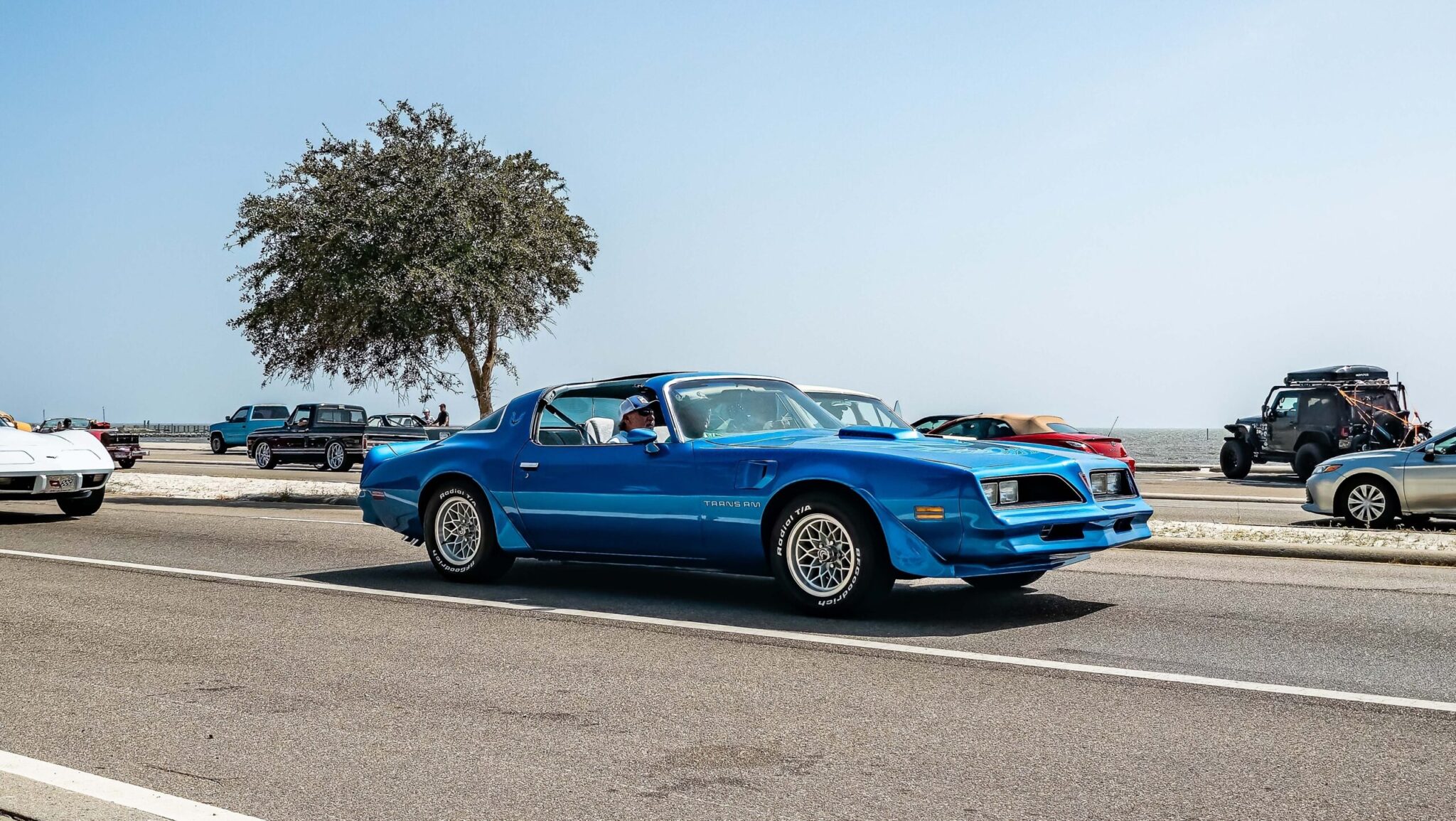
We focused on cars that:
- They were mass-produced and available to regular buyers (so sadly, no ultra-rare Yenko Camaros or dealership-only specials)
- Had something that made them stand out — whether it was performance, styling, cultural impact, or just sheer attitude
- Weren’t just cool then, but still turn heads (or at least raise eyebrows) today
And yes, before you ask, we know the 1977 Chevy Monza Mirage is excellent. It’s got aggressive bodywork, a racing-inspired look, and total Mad Max energy. We wanted to include it. Really. But we couldn’t source quality photos of it, and we didn’t want to half-bake the feature. If you happen to own one (or even have good pictures of one), please reach out — we’d love to give it the spotlight it deserves.
So no, these cars might not have been burning rubber like their ’60s predecessors, but they still had soul. And honestly? That’s what makes them worth remembering.
1974 Chevy Corvette 454
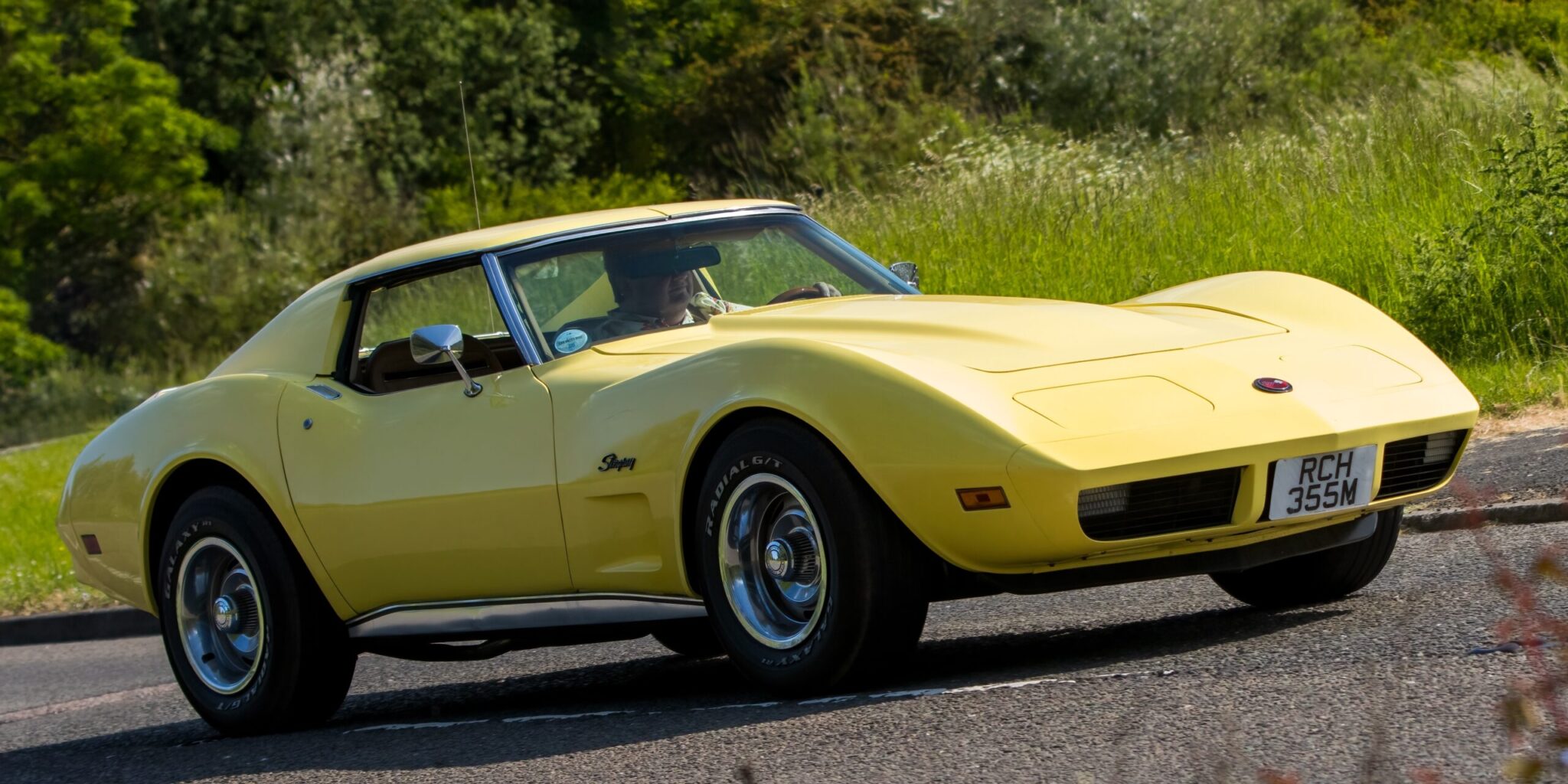
In 1973, Chevrolet continued to offer the Corvette with its 454 LS-4 big-block V8. Pumping out a respectable 275 hp, 15% of ‘Vette buyers were convinced to opt for this massive lump.
All ‘73 454 Vettes also featured a new cowl induction hood, which helped increase power, resulting in faster acceleration. In 1974, the 454 lost some horses, and by 1975, the big block option was off the table.
1973 Pontiac Firebird Trans Am SD-455
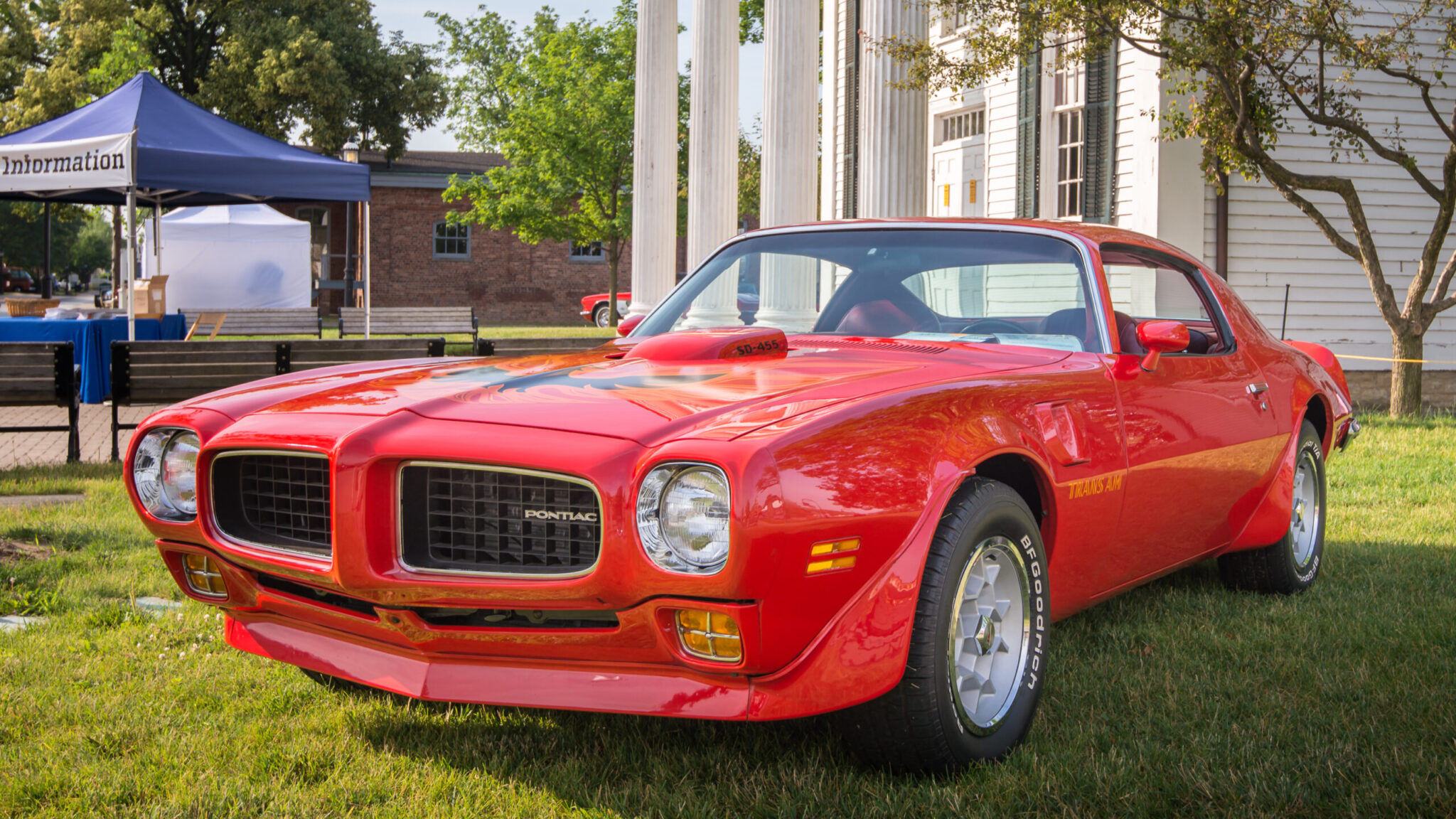
By 1973, the muscle car segment was practically dead, but Pontiac’s Firebird still had some fight left in it. Sales were slow, but GM execs agreed to pump up the Trans Am trim’s power to a more respectable number of horsepower in an attempt to attract customers.
That resulted in the Pontiac Firebird Trans Am SD-455. It wasn’t just the fastest pony car of 1973; this beast packed more power than the Chevy Corvette. Its 290-hp, 455 cu-in mill wasn’t your average run-of-the-mill production engine; this was a race-derived unit stuffed with high-performance parts and the highest-rated Detroit V8 available in 1973 and 1974.
1974 Plymouth Barracuda
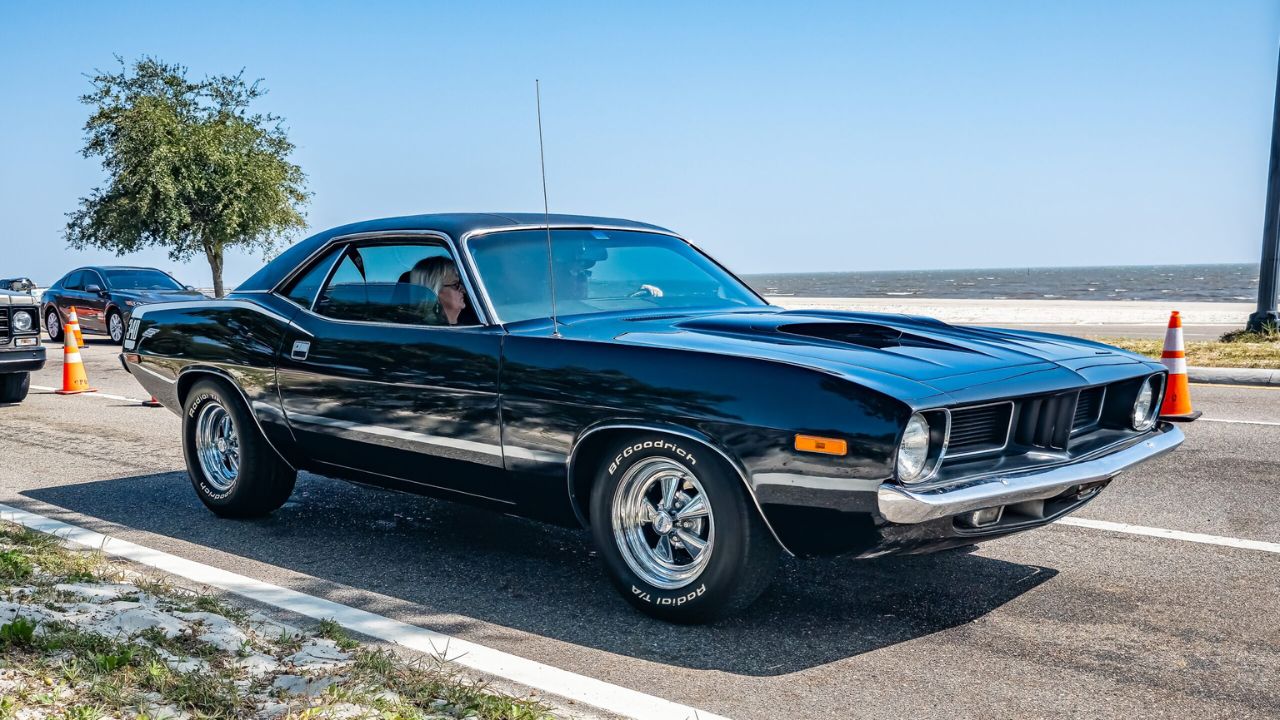
Design-wise, the 1974 Plymouth Barracuda retained its original appearance, and it was still available with V8 engines. Unfortunately, the 426 Hemi and 440 units were nowhere to be found.
Barracuda buyers could choose the standard 150-hp 318 V8, and a 360 with 245 hp was available as the only performance option. At this point, car buyers were moving towards more fuel-efficient models, and Plymouth couldn’t even sell 12,000 ‘Cudas in 1974.
1974 Pontiac GTO
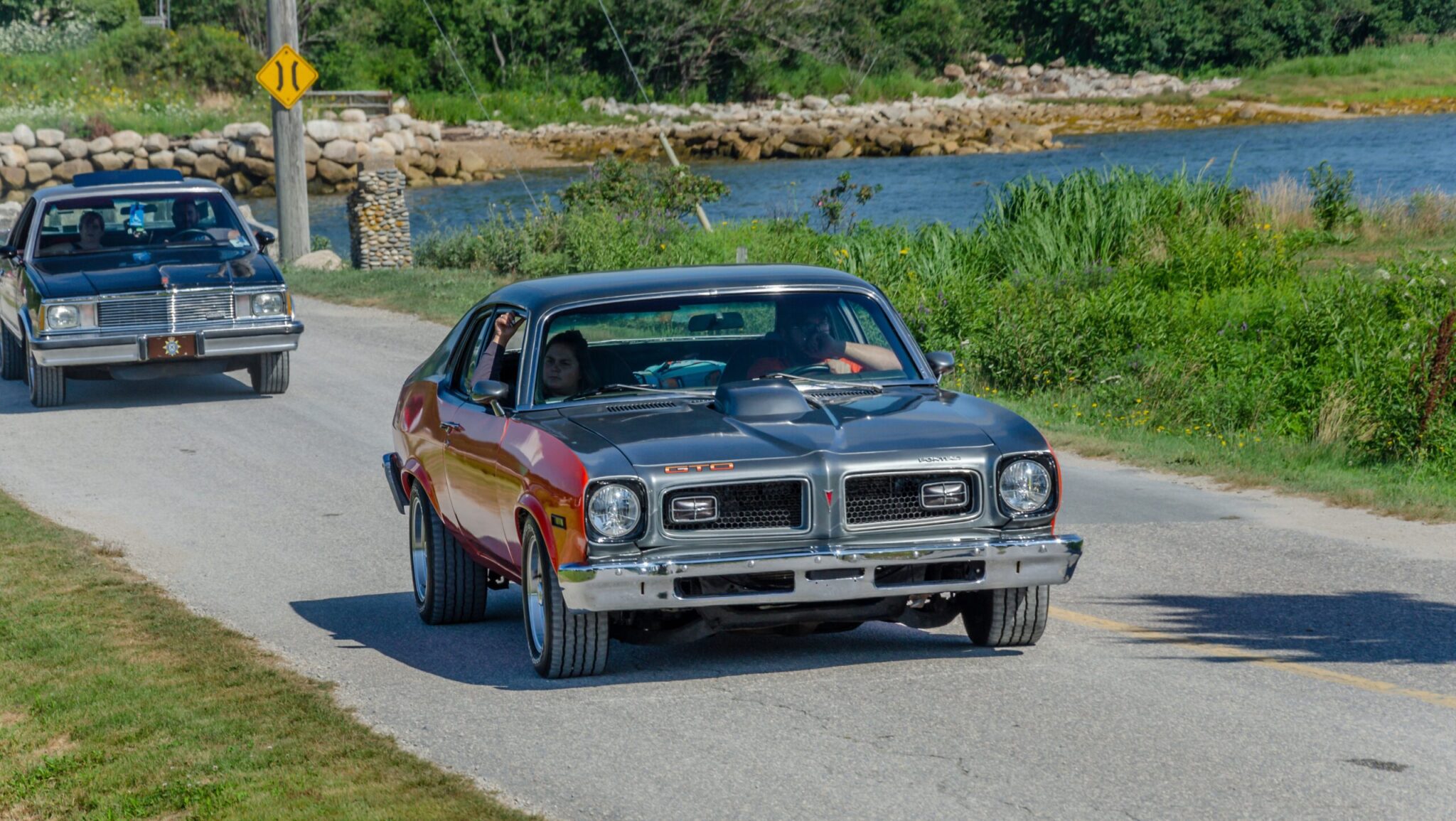
The 1964 Pontiac GTO is usually credited as the car that started the muscle car craze. Just a decade later, the GTO was reduced to a Pontiac Ventura trim level, and the Ventura was just a rebadged Chevy Nova.
It was only available with a 350 V8 that generated 200 hp, and it could be mated to an optional four-speed manual with a Hurst shifter. The Pontiac GTO was discontinued after the 1974 model year, but it did reappear for a couple of years in the mid-2000s as a badge-engineered Holden Monaro.
1974 AMC Javelin

Seeing as most American cars were all show and no go in 1974, manufacturers tried to squeeze every last drop from the once-iconic nameplates. As usual, AMC didn’t play the same game as Detroit’s Big Three and forged its path.
While other manufacturers had mainly discontinued their large V8 units, AMC still sold the Javelin with its top-dog 401 V8 — rated at 255 hp in 1973 and 235 hp in 1974 — long after most rivals had dropped their big engines. It’s fair to say that it chugged gasoline like it was going out of fashion (which it was), but AMC somehow sold 27,696 2nd-gen Javelins in its final year — pretty awesome, right?
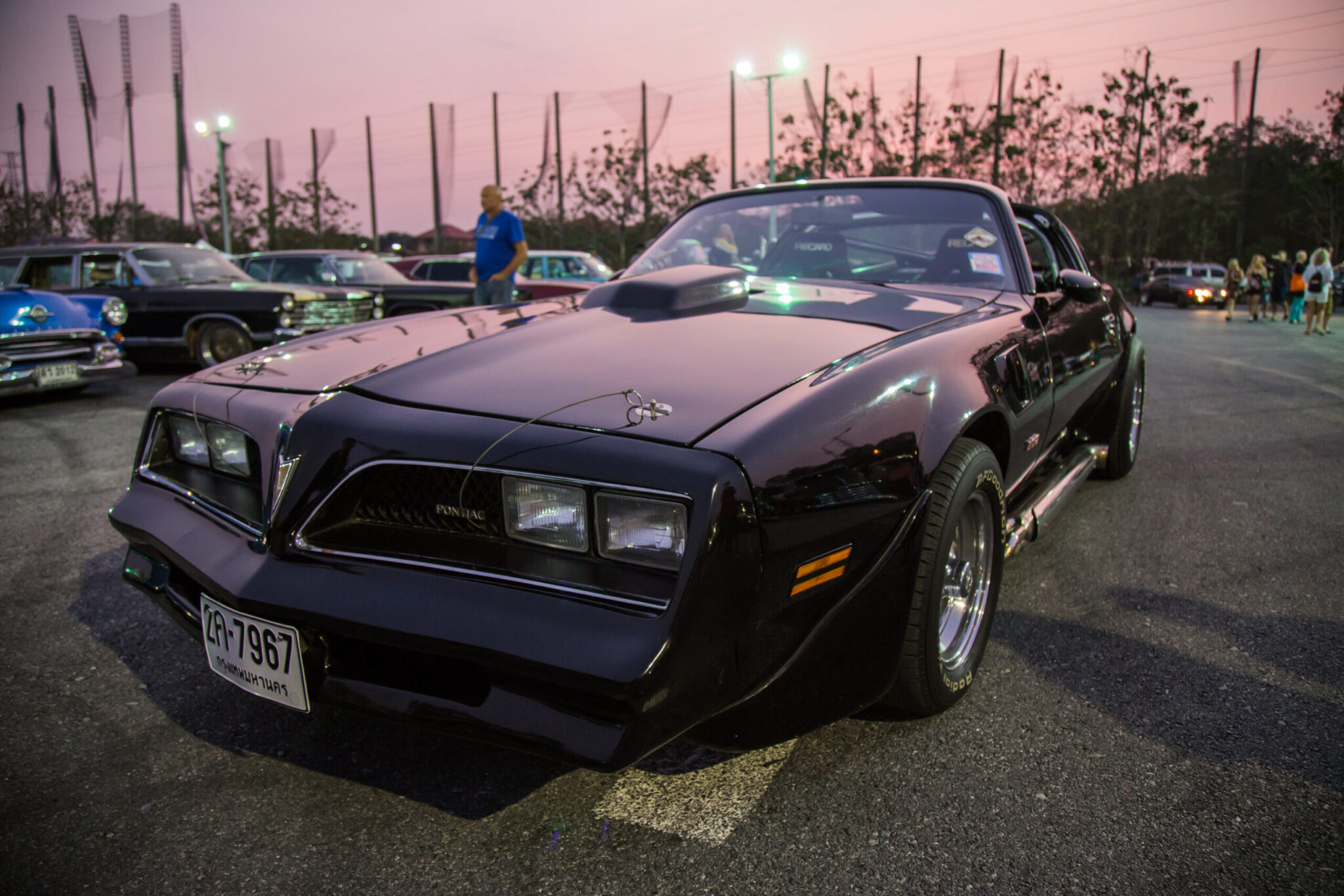
1977 Pontiac Firebird Trans Am SE
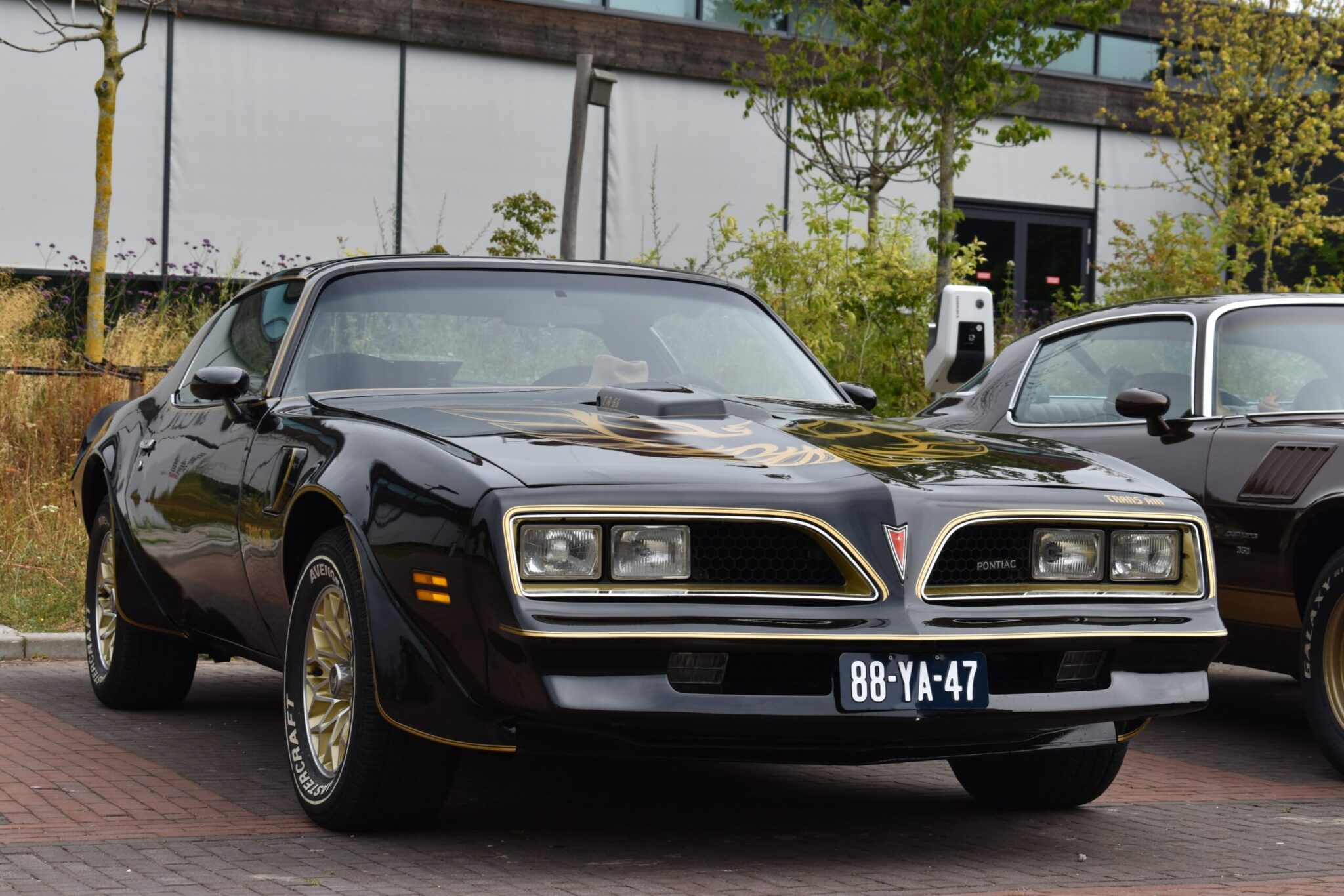
Pontiac somehow managed to build two of its most iconic cars ever during the Malaise Era. We’ve already covered the ‘73 Trans Am SD-455, and then there’s this beauty, the ‘77 Trans Am SE.
Smokey And The Bandit, a cult-classic movie among gearheads, is perhaps the biggest reason why the 1977 Pontiac Firebird Trans Am was so successful. Decked out in black paint with gold details, the Special Edition is one of the coolest-looking American classics ever. It had an L78 400 V8 as standard, but the optional W72 400 was the engine to opt for, as this 6.6-liter mill had higher compression and other components that boosted it to 200 hp.
1978 Mustang King Cobra
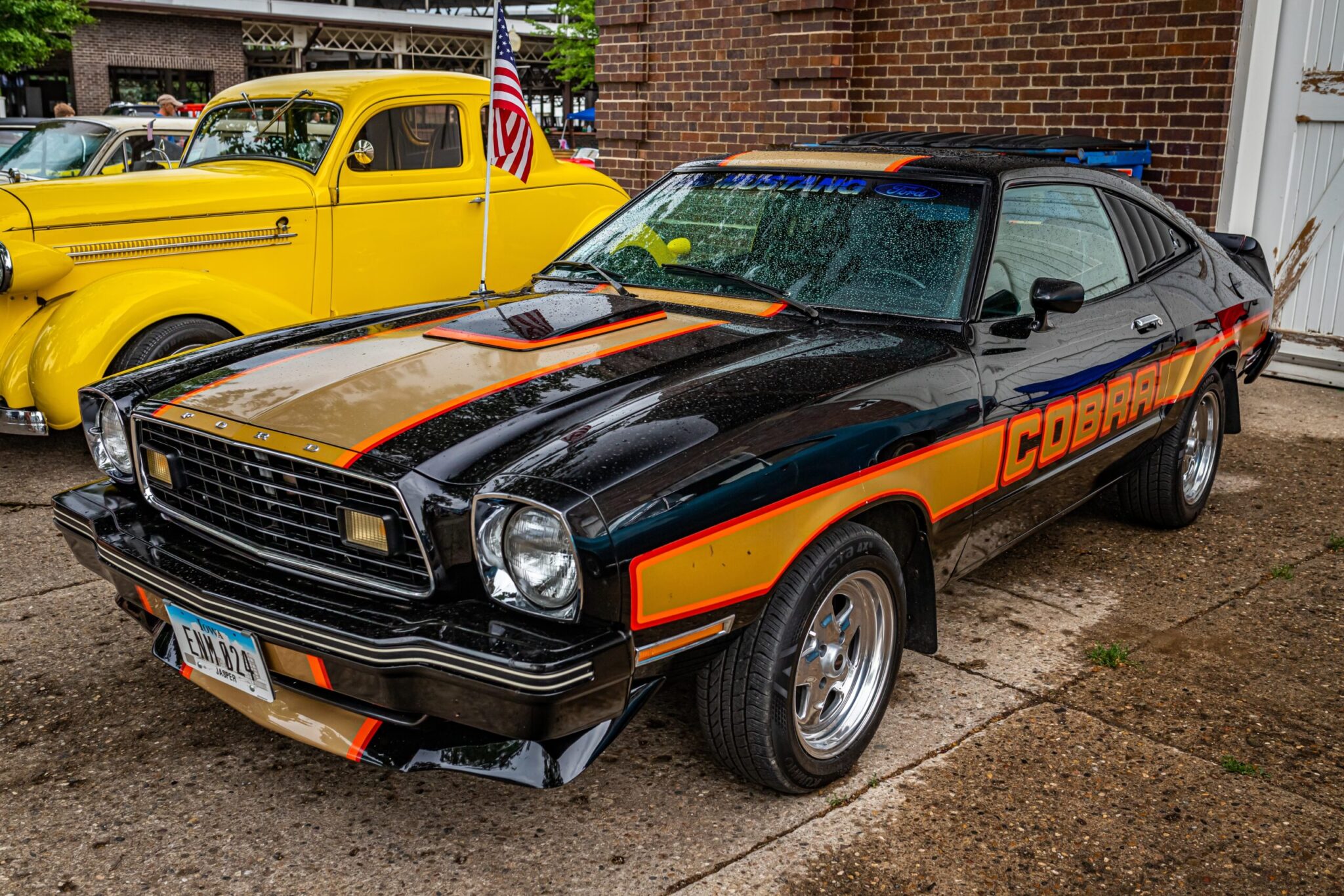
Unlike other classic Mustangs, the Mustang II isn’t what you’d call a sought-after classic. That said, it sold like hotcakes in the 1970s. Not because it was cool, but because it was cheap to buy and carefully sipped fuel. Ford wanted to sell even more Mustangs, so the King Cobra was created to help boost its market share.
The 1978 Mustang King Cobra certainly looked aggressive with its new chin spoiler and different wheels. There was also a large King Cobra decal on the hood, which was nothing but a blatant rip-off of the Trans Am’s screaming chicken. Its performance didn’t match its angry looks, though, as it only had a 139-hp 302 V8 under the hood.
1979 Dodge Lil’ Red Express

Since muscle cars were practically outlawed, Dodge had a stroke of genius and took advantage of a loophole to create a proper muscle truck instead.
As it turned out, pickup trucks didn’t need to adhere to the new emissions standards, so Dodge installed a 360 V8 generating 225 hp under the hood of its D-series truck. This creation known as the Li’l Red Express, was the fastest American-made vehicle on the market in 1978, leaving Corvettes to eat its dust when the lights turned green.
1980 Chevrolet Camaro Z/28
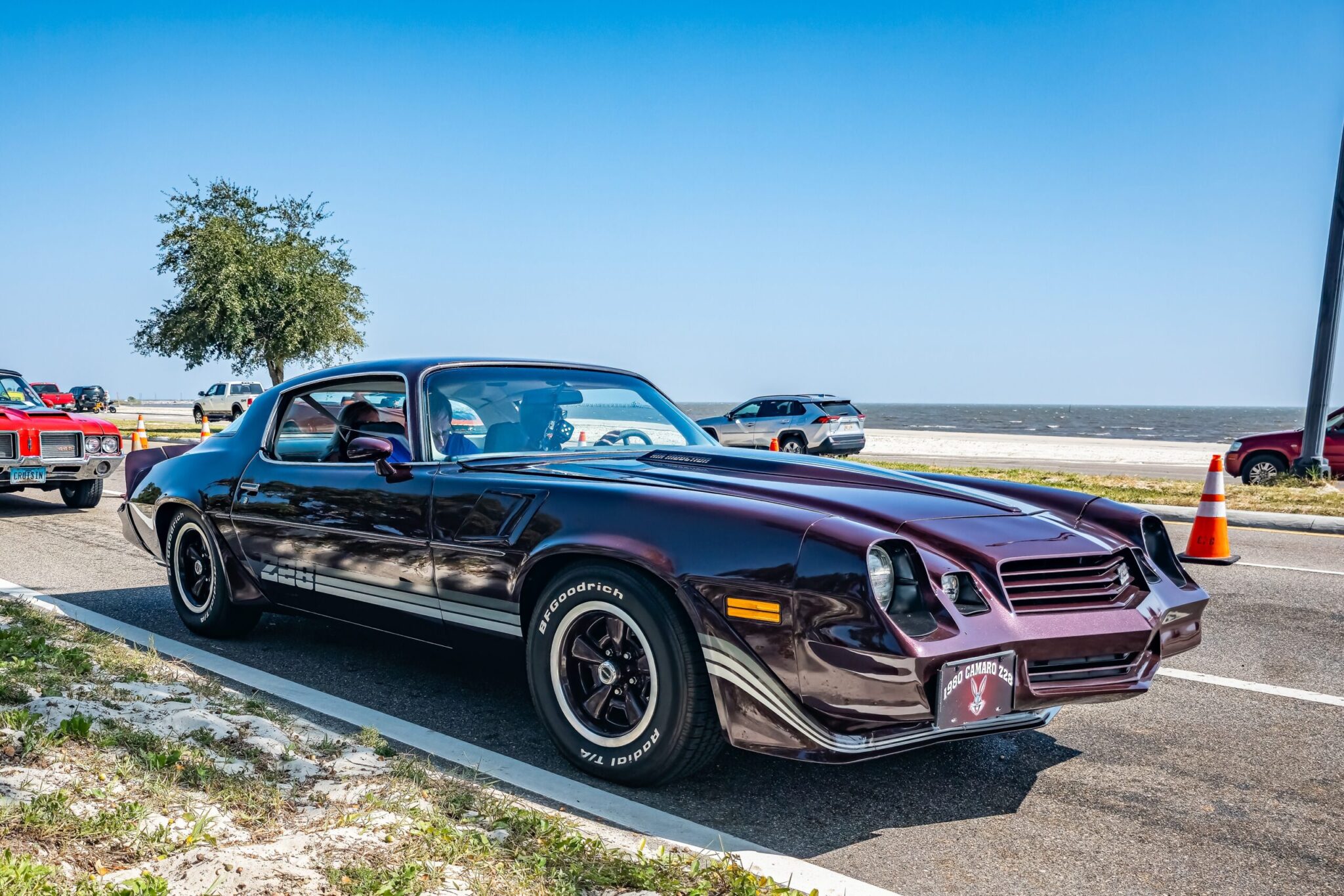
While Ford ditched the old Mustang in favor of the Mustang II, and Dodge scrapped the iconic Challenger, Chevrolet never gave up on the second-generation Camaro, and it remained in production until 1981.
Even the Z/28 performance trim made it into the new decade, and with spoilers, racing stripes, and fancy wheels, it was as gorgeous as ever, although it did lose some ponies along the way. In 1980, the Z/28 featured a 165-hp 305 V8 and was also available with an optional 350 that produced a respectable 190 hp. The following year, the 350 only managed to churn out 175 horses.
1982 Ford Mustang GT
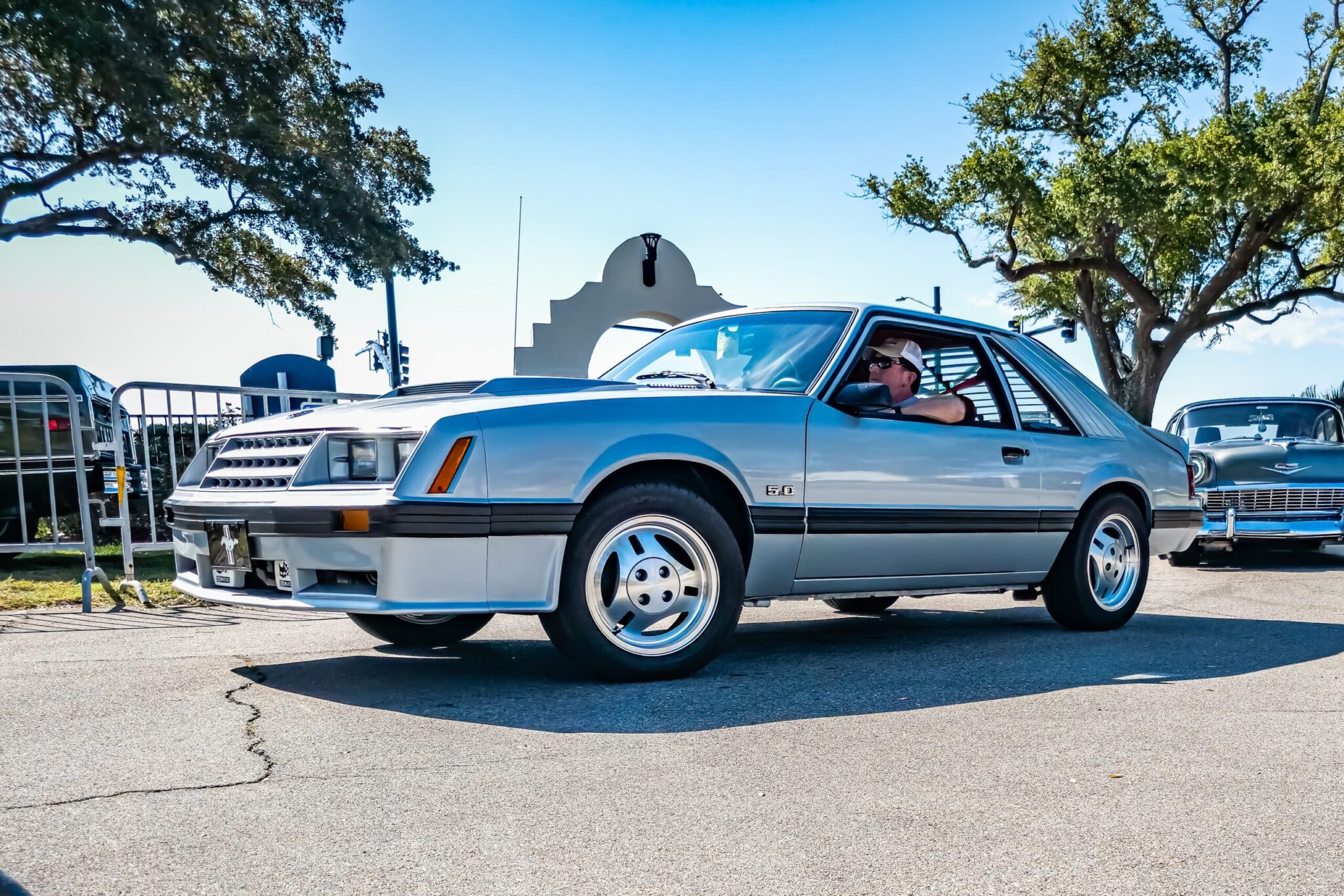
Thankfully, by the end of the 1970s, Ford scrapped the Pinto-based second-gen Mustang and introduced the now-iconic Fox Body ‘Stang. In its early days, it was still severely underpowered, but that gradually improved over the following years.
In 1982, Ford reintroduced the Mustang’s GT trim, and unlike the King Cobra package, the GT came with additional power. This new 5.0 generated 157 all-American ponies, and Ford was just getting started.
1983 Hurst Oldsmobile Cutlass
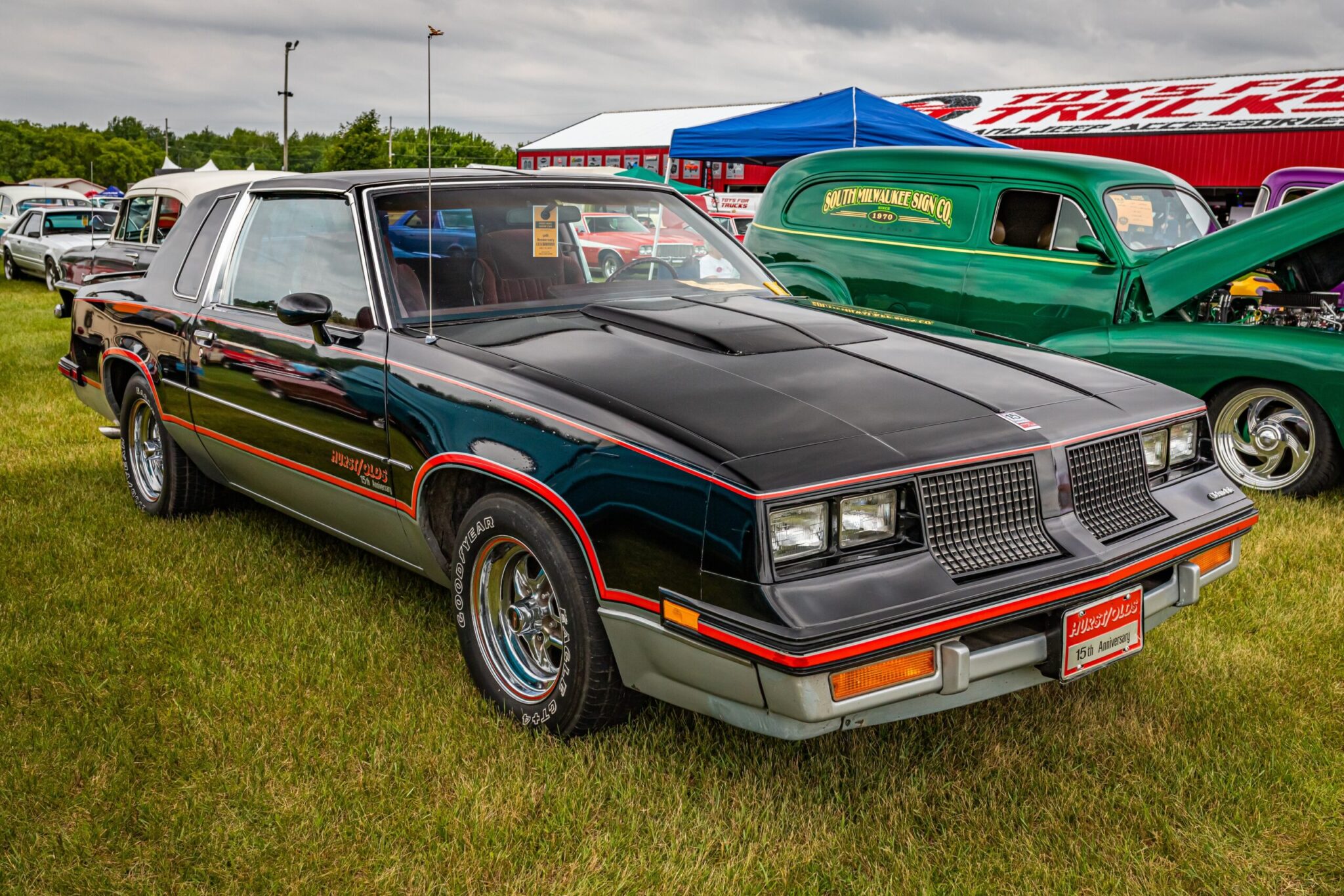
1983 marked the 15th anniversary of the original Hurst/Olds introduced in 1968, and Oldsmobile celebrated by launching an all-black 15th Anniversary Edition. It had a Hurst Lightning Rod floor shifter, 15-inch chrome wheels, silver rocker panels, a power bulge hood, and a rear spoiler.
It wasn’t all show and no go, either, as the ‘83 Hurst/Olds’ 307 V8 sent 180 wild stallions to the wheels via its unique transmission. The car proved to be such a popular option that the original plan to build 2,500 vehicles was scrapped, and 3,001 were sold in ‘83. Olds even brought it back in 1984 and found another 3,500 buyers.
The Malaise Might Be Over, But the Fun’s Just Getting Started
Sure, the Malaise Era gave us some questionable styling choices, smog-choked engines, and more vinyl roofs than anyone asked for, but it also gave us heart, attitude, and a generation of cars that are finally getting their due.
These aren’t just second-chance classics — they’re blank slates with personality. Affordable enough to wrench on, bold enough to stand out, and unloved enough that no one’s going to yell at you for swapping in fuel injection or adding coilovers.
So if you’re looking for a gateway into classic car culture that won’t drain your bank account or land you in preservation jail, maybe it’s time to embrace the malaise. Because the only thing better than finding a car with a story… is building the next chapter yourself.