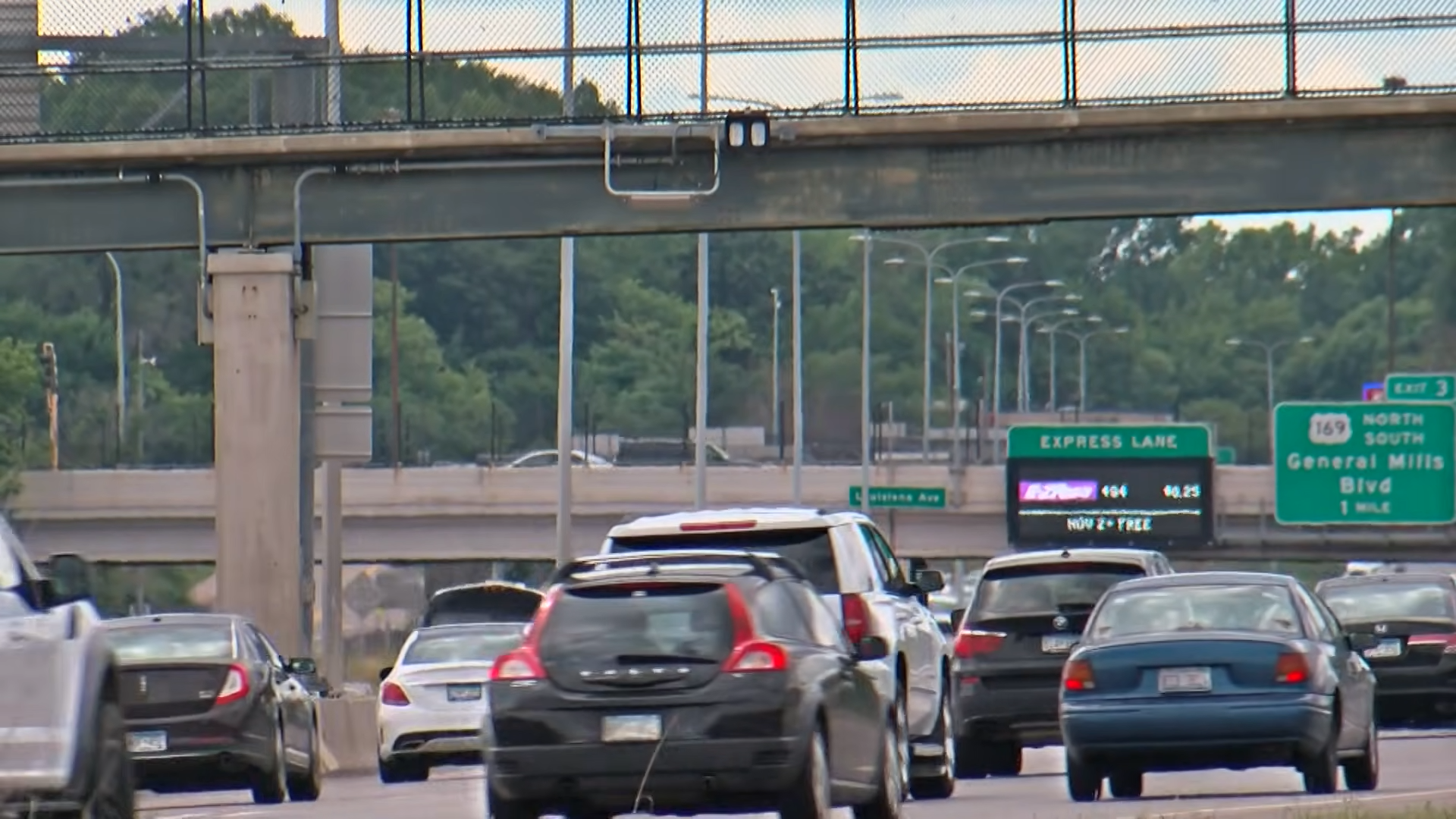
If you have ever sat in bumper-to-bumper traffic on a Twin Cities freeway and watched a stream of cars breeze past in the express lane, you may have suspected something was off. Well, you were right. New data from the Minnesota Department of Transportation confirms what many commuters have quietly wondered: a shocking share of drivers are cruising through E-ZPass lanes without any intention of paying — and the numbers have gotten significantly worse in recent years.
Between October and December of 2025, MnDOT recorded a systemwide violation rate of 46% across the metro’s E-ZPass express lanes. That means nearly one in two vehicles using those lanes had no valid transponder and was not carpooling, the two things that make using the lane legal during peak hours. It is a staggering figure for a system that was designed to reward compliant drivers with a faster, less congested commute.
The situation on Interstate 35W is particularly eye-opening. During evening rush hour at the Lake Street entrance heading into downtown Minneapolis, MnDOT found that the violation rate climbed to nearly 65%. That is not a fringe problem — that is the majority of drivers in that corridor during one of the busiest travel windows of the day essentially ignoring the rules entirely. For anyone who has paid for a transponder and sat behind someone who has not, that statistic stings.
What makes this trend more alarming is how much things have changed in just a few years. When WCCO covered E-ZPass enforcement back in 2021, the violation rate sat at just 16%. Since then, the numbers have more than doubled across the metro. MnDOT says the jump could be tied to higher overall traffic volumes, shifts in commuting patterns since the pandemic, or changing driver behavior. Whatever the cause, the agency is now under pressure to figure out how to actually stop it.
What the E-ZPass System Is — and Who Has to Pay
Minnesota’s E-ZPass lanes, formerly known as MnPASS, operate as High Occupancy Toll lanes on corridors including I-394, I-35W, and I-35E in the Twin Cities metro. The basic concept is straightforward: solo drivers can access the express lanes during peak hours if they have a valid E-ZPass transponder linked to an active account. The toll amount fluctuates with traffic conditions to keep the lanes moving smoothly.
Here is the part a lot of drivers may not fully understand: the lanes are actually free the vast majority of the time. According to MnDOT, express lanes are open to all vehicles at no charge roughly 90% of the time, including nights, weekends, and off-peak hours. Carpools with two or more people, including children and infants, can also use the lanes for free during peak periods with the right transponder setting. Solo drivers only need to pay during weekday rush hours, typically 6 to 10 a.m. and 3 to 7 p.m. So the people racking up violations are breaking the law during a relatively narrow window each day — and increasingly, they know it.
How Enforcement Works (and Why It Cannot Catch Everyone)
Minnesota State Patrol has dedicated troopers who focus specifically on E-ZPass enforcement, and they are not working alone. The lanes are equipped with enforcement beacons that glow amber when a vehicle without a valid transponder passes through. Troopers then use mobile equipment to verify whether a tag is present, whether it is functioning, and whether the linked account is in good standing. They also visually scan for passengers, since a carpool with two or more people gets a free pass regardless.
In 2025, troopers stopped more than 9,600 vehicles for E-ZPass violations. Nearly half of those stops resulted in a citation or warning. The fines are not trivial — depending on the county, an E-ZPass violation can cost up to $300.
But math is not on enforcement’s side. With thousands of violations happening every peak period across multiple corridors, even a well-staffed trooper unit can only pull over so many cars. As one Minneapolis resident put it bluntly when interviewed by local news: “They can’t catch everybody, probably, right?” That sentiment is exactly the problem MnDOT is trying to solve, and it is driving the agency toward more automated solutions.
The Tech Fix MnDOT Is Exploring — and Why It Gets Complicated
MnDOT has confirmed it is researching the use of license plate readers and passenger-detecting cameras that could dramatically expand enforcement coverage without requiring a trooper to be physically present at every corridor. A February 2026 report from consulting firm AECOM laid out how such a system could work in practice, but it also flagged serious obstacles. Automated enforcement would come with a significant price tag, and it could face legal challenges tied to privacy concerns and civil liberties objections, according to Axios Twin Cities.
This is not a small conversation. License plate readers and AI-powered cameras capable of counting vehicle occupants touch on questions about government surveillance that extend well beyond traffic management. Any rollout would almost certainly face scrutiny from advocacy groups and potentially the legislature. MnDOT is aware of this, which is why the agency is still in the research phase rather than announcing a rollout date.
Still, the pressure to act is real. The Axios report noted that even with the current high violation rates, E-ZPass lanes still maintain faster speeds than general traffic lanes and can reduce trip times by up to 10 minutes during peak hours. But the system’s ability to manage congestion depends on a certain percentage of drivers actually following the rules. If violations continue to rise, the integrity of the entire lane system starts to break down.
What This Situation Tells Us About Driver Behavior and Public Infrastructure
The E-ZPass violation surge is not just a Minnesota story. It is a case study in what happens when enforcement is light, fines feel abstract, and enough people decide the risk is worth it. Traffic behavior has always been shaped as much by perceived consequences as by actual rules. When drivers look over and see the lane moving freely with no trooper in sight, the calculus shifts.
There is also a genuine frustration worth acknowledging. Some residents have expressed that they find the lane structure philosophically confusing — one person interviewed by local media questioned why a carpool lane should benefit single drivers who pay rather than reserving the space purely for people actually sharing rides. That sentiment reflects a broader public skepticism that can quietly erode compliance over time.
But the flip side is clear. Drivers who register for E-ZPass, load their accounts, and pay the toll during peak hours are subsidizing the system for everyone who skips it. That is not only unfair — it undermines the financial model that keeps the lanes operational and maintained. With up to $300 on the line per citation, getting caught is genuinely costly. The problem is that right now, too many people are gambling that they will not.
For Minnesota commuters, the message from MnDOT is simple: the amber beacon sees you, the trooper may be closer than you think, and the technology to catch everyone automatically is likely coming. Whether that is enough to turn the tide on a 46% violation rate remains to be seen — but the days of the express lane being a consequence-free shortcut may be numbered.