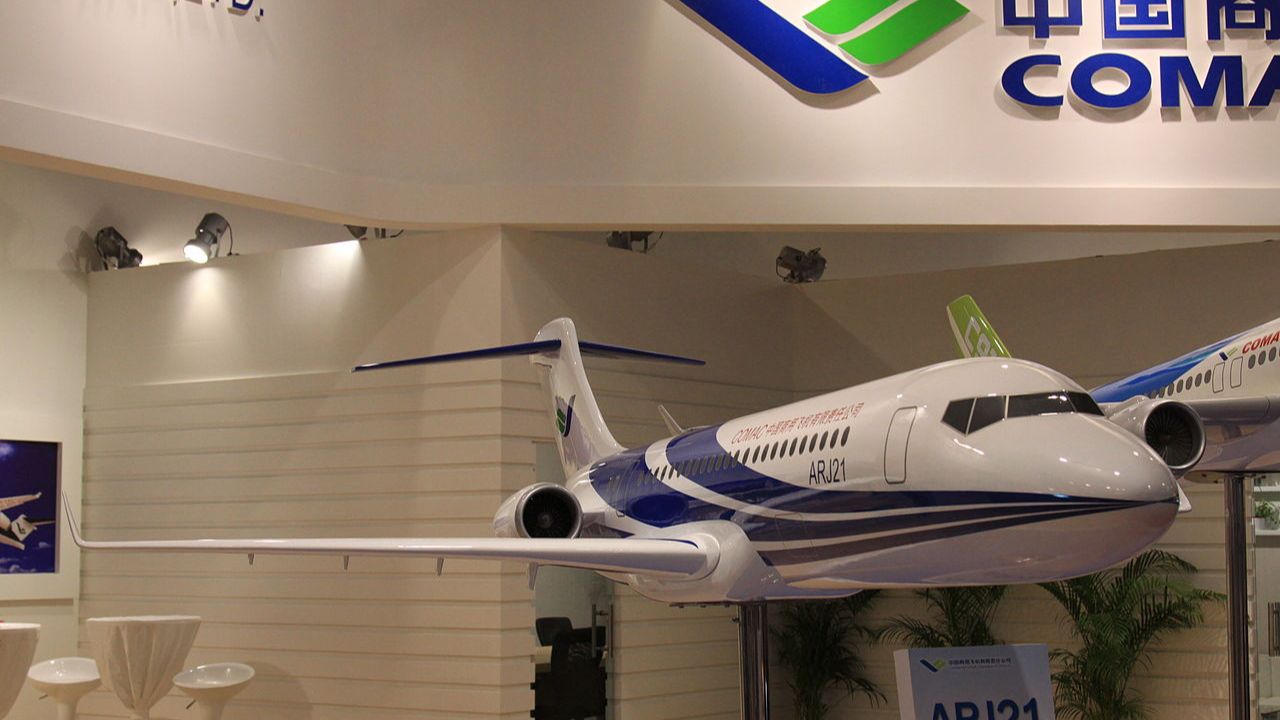

The global aerospace industry has long revolved around two giants: Boeing in the United States and Airbus in Europe. For decades, that pair has controlled roughly 80 percent of the market for commercial passenger aircraft, especially in the lucrative single-aisle segment used for most flights.
That dominance looks increasingly likely to be challenged in the years ahead as China’s state-backed Commercial Aircraft Corporation of China, known as COMAC, pushes its way into what has been a Western duopoly.
Last week at the World Governments Summit in Dubai, Airbus chief executive Guillaume Faury acknowledged openly what many in the industry have known for years; COMAC is not simply an aspirational project on the fringes of aviation.
Not anymore.

It is actively emerging as a competitor capable of reshaping global supply and choice in commercial jets. Faury noted that Chinese aerospace companies are credible players and that aircraft demand is robust enough to support more than two manufacturers at scale.
This acknowledgment mirrors sharp changes in global demand and production realities. China’s domestic aviation market is already on pace to eclipse other regions in sheer size.
Analysts project that by the early 2040s, China will become the world’s largest civil aviation market, needing more than 9,000 new commercial aircraft over the next two decades as passenger traffic grows at roughly 5 percent per year.
A Homegrown Jet with Global Ambition
At the center of China’s push is the COMAC C919, a narrowbody aircraft designed to compete directly with Boeing’s 737 family and Airbus’s A320 series. With seating for about 158 to 192 passengers and a range exceeding 2,500 miles (4,000 km), the C919 is intended for exactly the kind of routes that make up the bulk of global airline schedules.
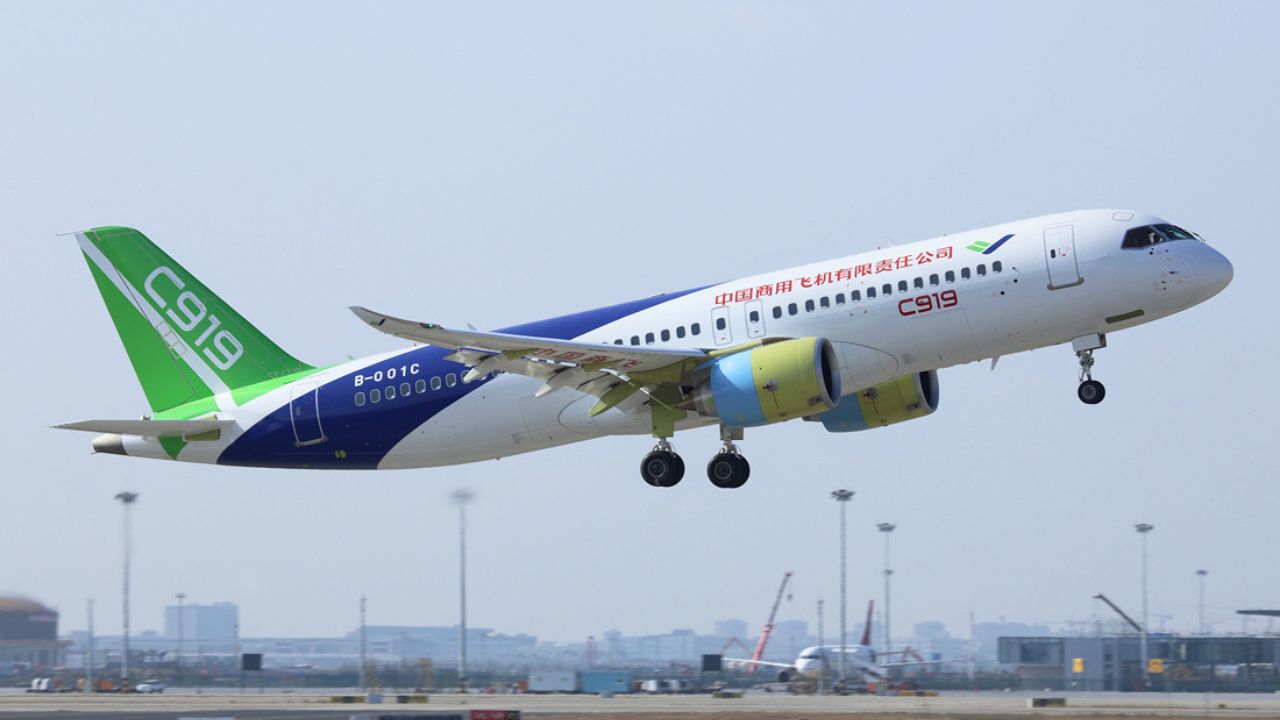
State documents show the aircraft has amassed more than 1,000 orders, mostly from China’s three largest carriers, including Air China, China Eastern Airlines and China Southern Airlines, with deliveries plans stretching into the early 2030s.
Official data indicates the C919 has carried more than 2.3 million passengers domestically in 2025 alone, an unmistakable sign of China’s confidence in the design.
Western manufacturers historically captured most of China’s orders, but recent trade tensions and tariff disputes have amplified China’s desire for self-reliance in high-tech manufacturing. In some cases, geopolitical friction has even led to bans on aircraft deliveries from foreign companies as trade retaliation.
Production Realities and International Hurdles
Despite its rapid progress, COMAC’s global challenge still faces real limits. The company’s 2025 delivery targets were scaled back significantly after supply chain bottlenecks slowed production.
COMAC originally aimed to deliver upwards of 75 C919 jets this year, but filings show only about 25 aircraft were actually expected to be delivered. The setback underlines the complexity of aircraft manufacturing.
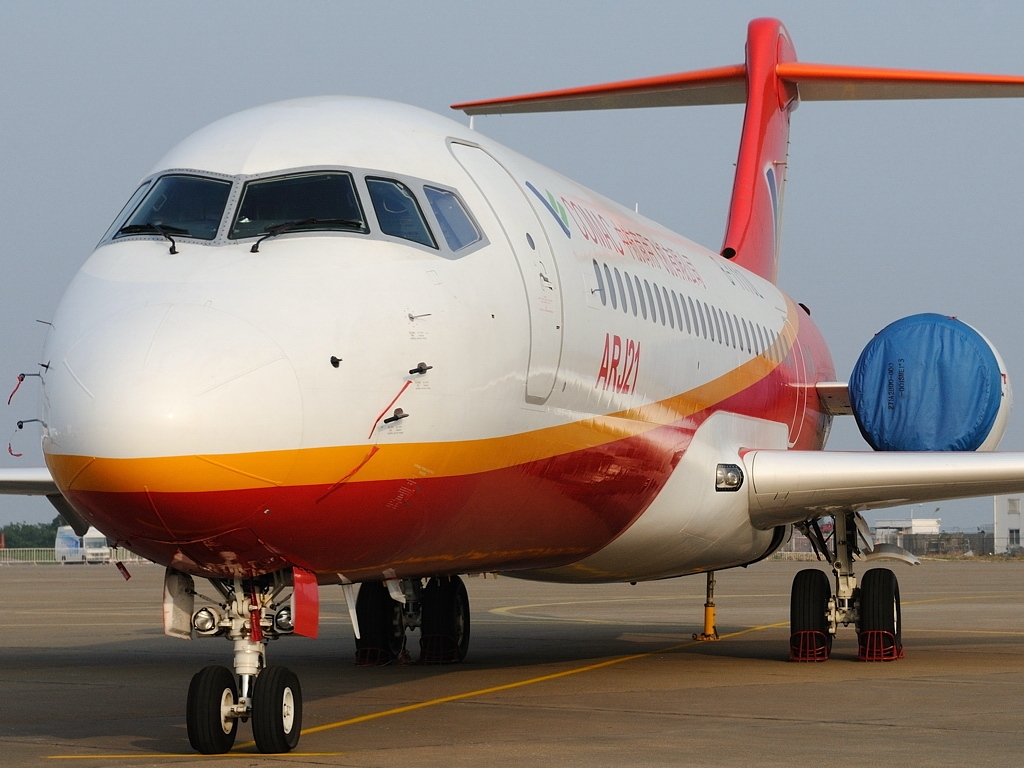
Part of this stems from COMAC’s ongoing reliance on Western-made engines and avionics, especially the CFM LEAP-1C engine produced through a joint venture between GE and Safran. Supply constraints on these engines have hampered output, even as China tries to develop a domestic alternative.
Another major barrier is regulatory acceptance. COMAC’s jets have earned certification and entry into service within China but have not yet cleared the European Union Aviation Safety Agency or the U.S. Federal Aviation Administration, a prerequisite for broad international sales.
Without this recognition, many global carriers will hesitate to add C919s to international fleets.
Ripples Through the Global Market
Nevertheless, China’s ambitions are causing ripple effects across the aviation ecosystem. Companies that once dominated with near-exclusive market share are now recalibrating strategy. Airbus is expanding production capacity and diversifying supply chains, partly in response to competition and partly in response to persistent bottlenecks.
Airlines around the world are watching closely. Orders for new aircraft are among the most capital-intensive decisions any airline makes, and having more credible options could shift negotiating leverage with existing manufacturers.
Industry figures such as IATA’s director general have remarked that COMAC’s emergence introduces a serious new dynamic into the long-established market.
China’s rise in aviation parallels its trajectory in other global industries, notably electric vehicles where Chinese brands now hold significant market share in many regions. If COMAC’s next decade follows that arc, the aerospace world might soon host more than just two dominant makers of the planes that ferry billions of passengers every year.
Sources: theaustralian.com.au, Reuters, Gulf News