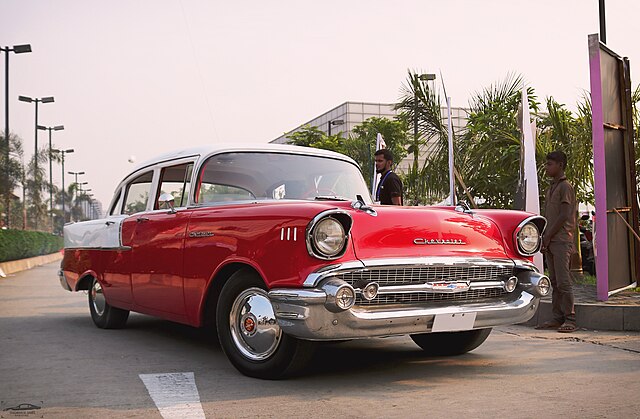
The 1950s were a golden era for American automotive design, with chrome-laden land yachts and sleek hardtops rolling off assembly lines in Detroit. While iconic models like the ’57 Chevy Bel Air convertible command hefty prices today, plenty of 1950s iron remains surprisingly affordable for enthusiasts on a budget.
These aren’t the basket cases or project cars that need everything — we’re talking about solid, drivable classics that regularly sell for $15,000 or less in good condition. Whether you’re looking for your first classic or want to add some midcentury style to your garage without emptying your retirement account, these twelve 1950s survivors prove you don’t need a fortune to own a piece of automotive history.
They may not have the glamour of their more expensive siblings, but they’ve got the chrome, the curves, and that unmistakable ’50s character that makes heads turn at car shows and cruise nights.
Plymouth Cranbrook (1951-1953)

The Plymouth Cranbrook was Mopar’s solid, dependable answer to Ford and Chevy’s mainstream offerings, and today it’s one of the best bargains in the 1950s market. With an average price around $13,000 to $15,000, these stately sedans and club coupes offer classic proportions with sweeping fenders and plenty of chrome without breaking the bank.
The Cranbrook came powered by Plymouth’s reliable 217-cubic-inch flathead six making a modest 97 horsepower, which won’t win any races but will get you down the road with that smooth, torquey inline-six character. The 1953 models are particularly interesting with their available Hy-Drive transmission, a clever hybrid manual-automatic setup that let you shift without using the clutch once you were moving.
These cars may not have the performance reputation of other 1950s classics, but they’re handsome, well-built, and perfect for cruising to the local diner without worrying about your investment every time you turn the key.
Ford Custom (1950-1951)

Before the Fairlane name gained prominence, Ford’s Custom line represented the company’s yop-level offering, and these early 1950s models have become project car favorites that keep values accessible. The Ford Custom frequently sells in the $10,000 to $14,000 range for decent examples, making it one of the most affordable ways into 1950s Ford ownership.
These cars came with Ford’s legendary flathead V8 in various displacements, giving them more character and performance potential than many six-cylinder competitors. The styling bridges the late 1940s and the modern 1950s with its upright stance and substantial chrome grille, and the simple mechanical design means parts are readily available and relatively easy to work on. Many Customs have been modified over the years, which actually helps keep prices reasonable since purists tend to chase more original examples.
If you’re looking for a classic Ford with hot rod potential or just want that unmistakable flathead V8 rumble without spending Shoebox money, the Custom delivers.
Chevrolet Styleline/Fleetline (1950-1952)

Before the Bel Air became its own series in 1953, Chevrolet’s Styleline and Fleetline models represented the company’s bread-and-butter offerings, and they remain accessible today. These pre-Tri-Five Chevys typically trade in the $8,000 to $14,000 range depending on condition and body style, with sedans being the most affordable entry point.
The fastback Fleetline models have a particularly distinctive silhouette that’s become popular with custom builders, while the Styleline notchbacks offer more conventional styling. Power came from Chevrolet’s tried-and-true 235-cubic-inch inline-six or the optional 216 six, neither of which set any performance records but both known for smooth, reliable operation. These early ’50s Chevys don’t have the flash of their more famous mid-decade siblings, but they’ve got honest, straightforward charm and represent the last of the truly postwar designs before Detroit went wild with fins and chrome.
The mechanical simplicity and massive aftermarket support make them great candidates for both preservation and customization.
Studebaker Champion (1950-1952)

Studebaker’s Champion was the independent automaker’s volume seller, and its distinctive styling makes these cars stand out from the Big Three crowd. With average prices around $12,000 to $15,000, Champions offer something genuinely different without requiring you to mortgage your house.
The bullet-nose front end on the early models is wonderfully quirky, while the 1952 revamp brought sleeker lines that influenced Studebaker’s gorgeous 1953 Starliner. Champions came with Studebaker’s economical inline-six engines that prioritized fuel economy over raw power, which made them popular with budget-conscious buyers when new. The coupe models are particularly attractive with their low, sleek profiles that look more expensive than they were.
Yes, parts can be trickier to source than for a Ford or Chevy, but the Studebaker community is strong and helpful, and these cars’ unique styling ensures you won’t see three more at every car show you attend.
Nash Rambler (1950-1955)

The Nash Rambler was America’s original compact car success story, and its quirky charm and historical significance make it a fascinating choice under $15,000. These small, efficient cars with their convertible tops and distinctive styling typically sell in the $8,000 to $13,000 range, making them genuinely affordable pieces of automotive innovation.
The Rambler pioneered the compact car segment that would eventually dominate American roads, and it did so with clever packaging, unibody construction, and available features like the convertible landau roof that offered open-air motoring without a full convertible. Power came from Nash’s inline-six engines that prioritized economy over speed, which was the whole point. The early models have that wonderfully odd inverted-bathtub Nash styling with covered front wheels that you either love or find amusingly eccentric. Later models adopted more conventional proportions but kept the practical, efficient character.
These aren’t muscle cars or boulevard cruisers: they’re conversation starters with genuine historical importance and surprising versatility.
Hudson Wasp (1952-1954)

The Hudson Wasp was essentially a detuned version of the legendary Hornet, offering the same stylish step-down design and excellent handling at a more accessible price point, both when new and today. Good Wasps can be found in the $12,000 to $15,000 range, especially four-door sedans which are less sought-after than the sleek club coupes.
These cars rode on Hudson’s innovative step-down platform with the floor dropping between the frame rails for a lower center of gravity and better handling than most 1950s sedans. The Wasp used Hudson’s 232-cubic-inch inline-six rather than the Hornet’s more powerful engine, but it still provided smooth, torquey performance. The styling was distinctively Hudson with its wide stance, integrated fenders, and substantial presence that made these cars look like they were hugging the road. While they’re not as famous or valuable as Hornets, Wasps offer the same fundamental goodness and stand-out design.
Parts can be challenging compared to the Big Three, but the Hudson-Essex-Terraplane club provides excellent support.
Packard Clipper (1953-1954)

Once upon a time, Packard represented American luxury rivaling Cadillac, and the Clipper line brought that prestige within reach of middle-class buyers. Today, with average prices around $15,000 to $18,000, early-to-mid-fifties Clippers offer genuine luxury car features and elegant styling for prices that sometimes dip below our threshold, particularly for sedans.
These were beautifully built cars with Packard’s reputation for quality and smooth inline-eight engines that delivered refined, effortless power. The 1953-54 models had conservative but dignified styling with fine detailing and high-quality materials throughout. Yes, you’re buying into an orphan brand without the parts availability of GM or Ford products, but you’re also getting a car that was genuinely premium when new. The Packard clubs are dedicated and knowledgeable, and these cars have enough presence to hold their own at any classic car gathering.
Just budget for maintenance and accept that some parts may require patience to source.
DeSoto Custom (1950-1952)

DeSoto’s Custom line represented Chrysler Corporation’s mid-priced entry, and these substantial sedans and coupes offer Mopar quality and style for remarkably accessible money. Prices typically range from $8,000 to $14,000 depending on body style and condition, with sedans being particularly affordable.
These were large, comfortable family cars powered by DeSoto’s smooth flathead six-cylinder engines that emphasized reliability over excitement. The styling evolved from the late-1940s rounded forms to more modern proportions, with generous chrome and the distinctive DeSoto grille making them easily identifiable. Build quality was typically excellent, as DeSoto benefited from Chrysler’s engineering prowess and manufacturing capabilities. The Custom offered features like Fluid Drive semi-automatic transmission, which provided easier operation than full manual transmissions.
These aren’t the most exciting 1950s classics, but they’re honest, well-built cars that represent middle-class prosperity and post-war optimism, and they can be enjoyed without constant worry about their value.
Mercury Monterey (1952-1954)

Mercury’s Monterey represented Ford’s premium mid-size offering, slotting between Ford and Lincoln with more style and power than the former and more accessibility than the latter. Early-to-mid-fifties Montereys, particularly sedans, regularly appear in the $10,000 to $15,000 range at auctions and sales.
These cars came with Ford’s flathead V8 or, starting in 1954, the new overhead-valve Y-block V8 that brought modern performance to the lineup. The styling was distinctively Mercury with more elaborate trim and detailing than Fords, making these cars feel more upscale without the maintenance complexity of higher-end luxury makes. The hardtop coupes command premium prices, but four-door sedans offer the same fundamental character and mechanical durability for much less money. Parts availability benefits from Ford’s massive production volumes and the enthusiast community’s dedication to flathead and early OHV Ford engines.
These are comfortable cruisers with enough power to keep up with modern traffic and enough style to look good doing it.
Oldsmobile 88 (1950-1952)

The Oldsmobile 88 might be legendary as the car that launched the muscle car movement, but early examples of this influential nameplate remain surprisingly attainable. Sedans from the early 1950s can be found in the $10,000 to $14,000 range, offering a piece of performance history without stratospheric pricing.
The 88’s significance stems from pairing Oldsmobile’s powerful Rocket V8 engine with the lighter 76/88 body, creating a formidable performer that dominated early NASCAR racing. These cars delivered genuine performance and handling that set new standards for postwar American automobiles. The styling successfully balanced traditional proportions with modern touches, and the build quality reflected Oldsmobile’s premium positioning within the GM hierarchy. While the most desirable club coupes and convertibles have climbed beyond our budget, four-door sedans offer the same Rocket V8 experience and historical significance.
The mechanical design is straightforward, parts are reasonably available, and you’ll own a legitimate piece of automotive performance history.
Chevrolet 150/210 (1953-1954)

When Chevrolet reorganized its lineup for 1953, the 150 and 210 became the lower-trim alternatives to the glamorous Bel Air, and today they offer the same fundamental goodness for less money. These models typically sell in the $10,000 to $15,000 range, providing excellent value for enthusiasts who want that classic early-fifties Chevy style without paying Bel Air premiums.
The 1953-54 redesign brought modern proportions, better visibility from the one-piece windshield, and updated mechanicals including improved suspension. Power came from Chevrolet’s reliable inline-six or the optional “Blue Flame” six paired with Powerglide automatic in sportier applications. The 150 and 210 had simpler trim than the Bel Air but shared the same solid construction and mechanical components. These are particularly smart buys for anyone planning modifications since you’re not starting with the most valuable trim level.
Parts availability is excellent thanks to massive production numbers and the Tri-Five Chevy aftermarket, making these cars practical to own and maintain.
Kaiser Henry J (1951-1954)

The Henry J was industrialist Henry J. Kaiser’s attempt at creating an affordable compact car for post-war America, and while it struggled commercially, today it represents one of the quirkiest entry points into 1950s motoring. These small, simple cars typically trade for $8,000 to $13,000, making them genuinely budget-friendly classics with distinctive styling.
The Henry J featured unitized construction for strength and efficiency, with simple but modern lines that emphasized practicality over flash. Power came from either Willys’ small inline-four or inline-six engines that provided adequate rather than exciting performance. The spartan interiors and basic equipment reflected the car’s economy mission, though that simplicity means less to go wrong today. Kaiser’s financial difficulties meant relatively low production numbers, so these cars are uncommon enough to be interesting without being impossibly rare. The Henry J has developed a cult following among enthusiasts who appreciate its underdog story and honest, no-frills character.
Parts sourcing requires more effort than Big Three products, but the community is passionate and helpful.
Conclusion

The affordable 1950s car market offers far more variety and opportunity than many enthusiasts realize, with solid examples of genuine classics available for reasonable money. These twelve models prove you don’t need deep pockets to own a piece of the tailfin era — just realistic expectations and an appreciation for the less-hyped alternatives to the usual suspects.
Whether you’re drawn to Mopar’s solid engineering, Ford’s flathead V8 character, GM’s smooth inline-sixes, or the quirky independence of smaller manufacturers, there’s a 1950s classic that fits your budget and style. Yes, you’ll probably be driving a sedan rather than a convertible, and you might be explaining what a Hudson Wasp is rather than basking in Bel Air admiration, but that’s part of the charm. These cars represent authentic pieces of automotive history that can be enjoyed, driven, and appreciated without constant worry about devaluation or repair costs.
The 1950s dream is more accessible than you think — you just need to look beyond the usual chrome-laden suspects and embrace the wonderful variety of what Detroit and the independents offered during America’s automotive golden age!