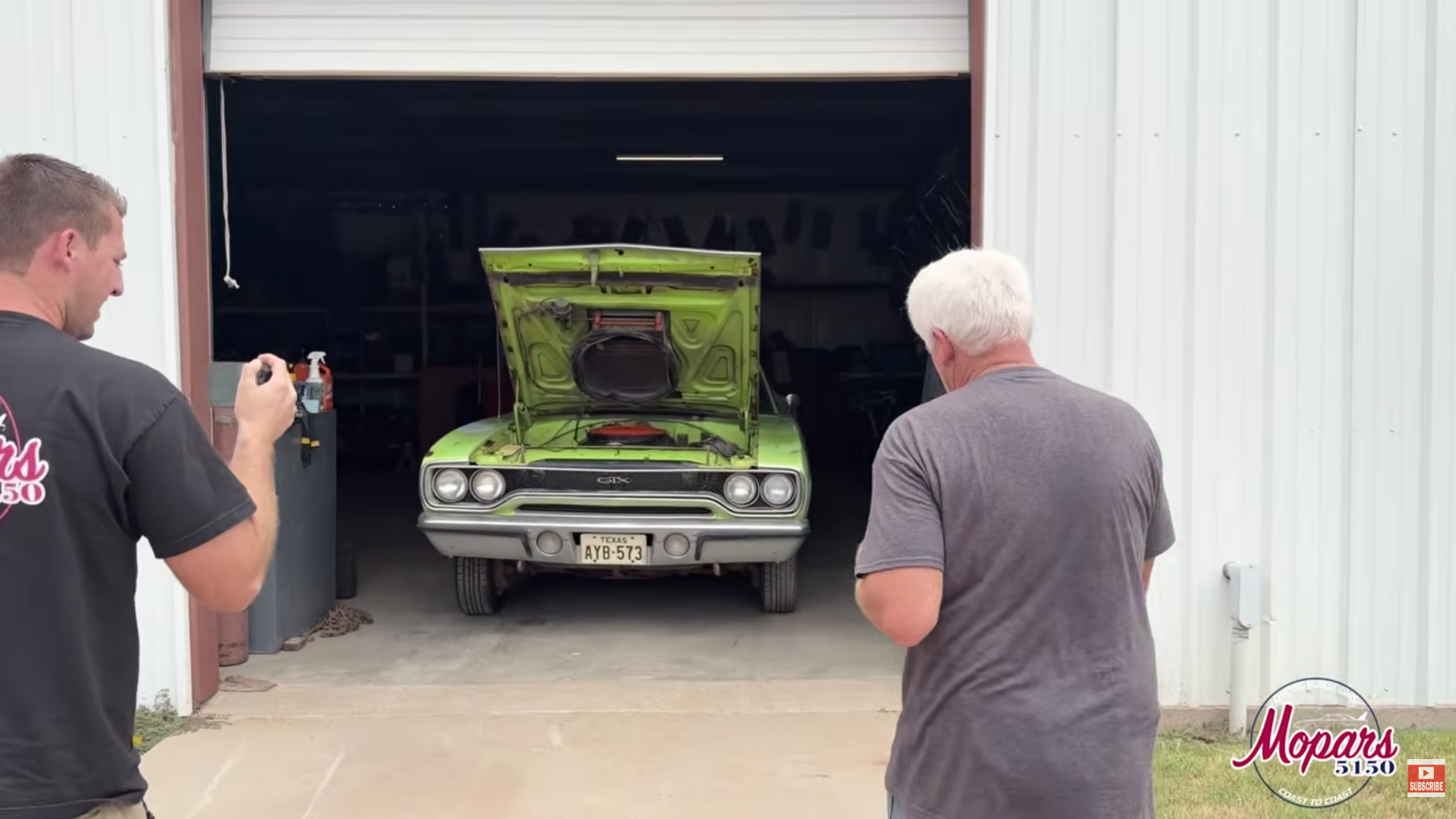
A Limelight Green 1970 Plymouth GTX had been sitting in West Texas for roughly 45 years when a new group of caretakers finally came calling. Despite the decades of storage, the old Mopar still had much of the equipment that made it special when it left the factory.
This isn’t an ordinary 440-powered GTX either. Its fender tag identifies it as a genuine V-Code Six Barrel car with a four-speed manual, Dana rear axle, Air Grabber equipment, and an especially striking combination of green paint, black trim, and white reflective stripes.
The discovery was documented by the guys running the Mopars5150 YouTube channel, who traveled to Midland, Texas, after spending several months working toward a deal for the car. What initially looked like a solid restoration candidate became considerably more interesting as they inspected the drivetrain and started digging through the paperwork that had survived with it.
The GTX has clearly lived a life since 1970, including evidence suggesting it may have spent time at the drag strip. Its original engine is no longer present, yet several other important pieces remain, and one hidden document helped confirm exactly how this car was ordered.
The Fender Tag Reveals A Serious Specification
Decoding the GTX’s fender tag quickly established why the team was so interested. It confirms the V-Code 440 Six Barrel engine, four-speed transmission, Limelight Green paint, black bucket-seat interior, center console, and a Dana rear axle with 3.54 gearing.
The car also came with an Air Grabber setup, black hood treatment, and a white reflective side stripe. That combination gives the GTX an unusual appearance even before considering the drivetrain underneath it.
Much of the car also appears remarkably untouched after so many years. The original radio is still in the dash, the floors were described as solid, and numerous pieces of factory trim and equipment are still present rather than having disappeared during decades of storage.
Its Original 440 Is Gone
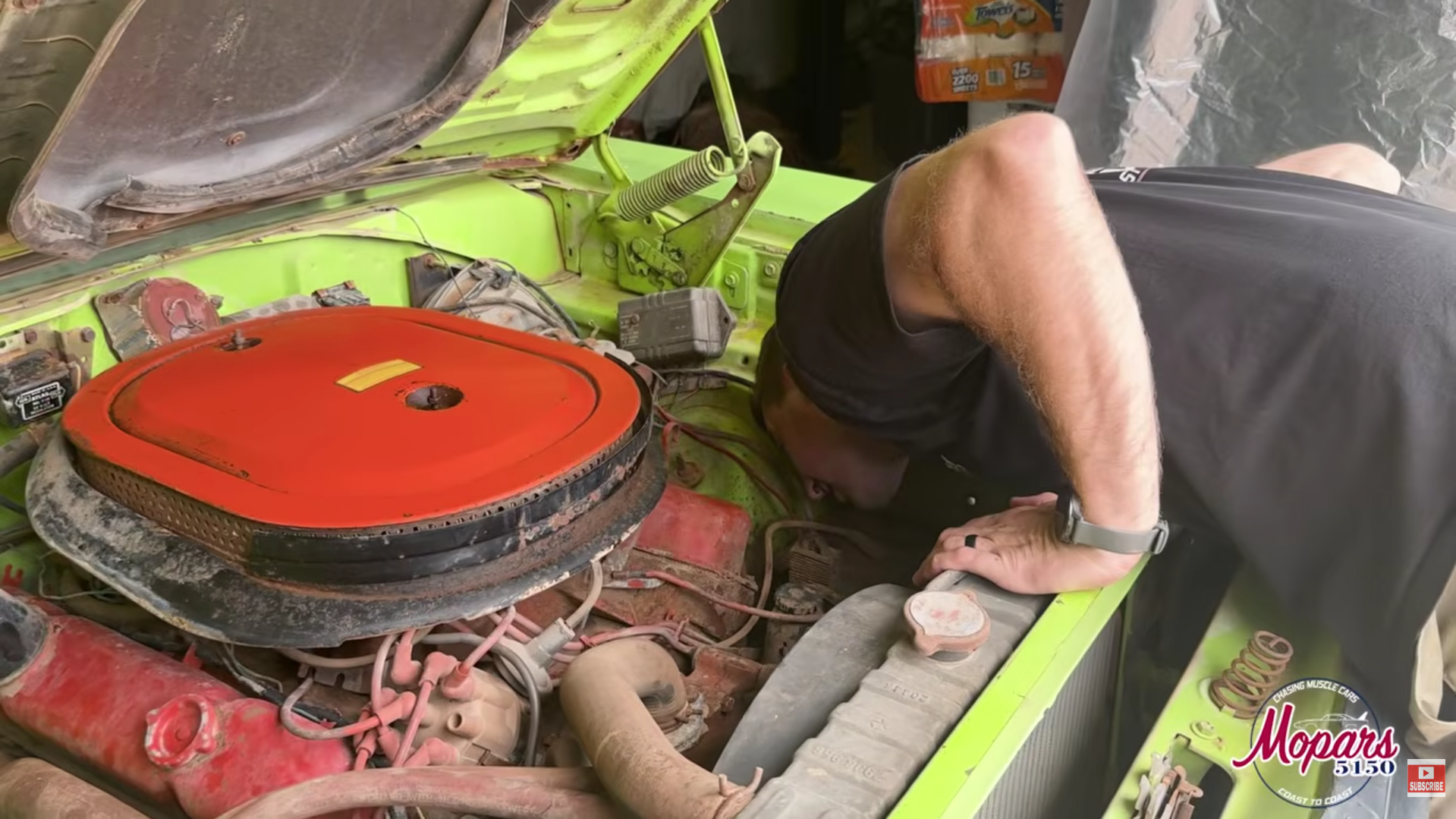
One important piece is missing from the otherwise appealing package: the numbers-matching engine. The block currently in the car carries no VIN stamping, leading the Mopars5150 team to suspect it could be an early warranty-replacement engine.
That possibility hasn’t been conclusively established, although the rest of the drivetrain offered encouraging signs. The team said the four-speed transmission appeared to retain the correct identifying numbers, while the Dana rear axle was also still with the car.
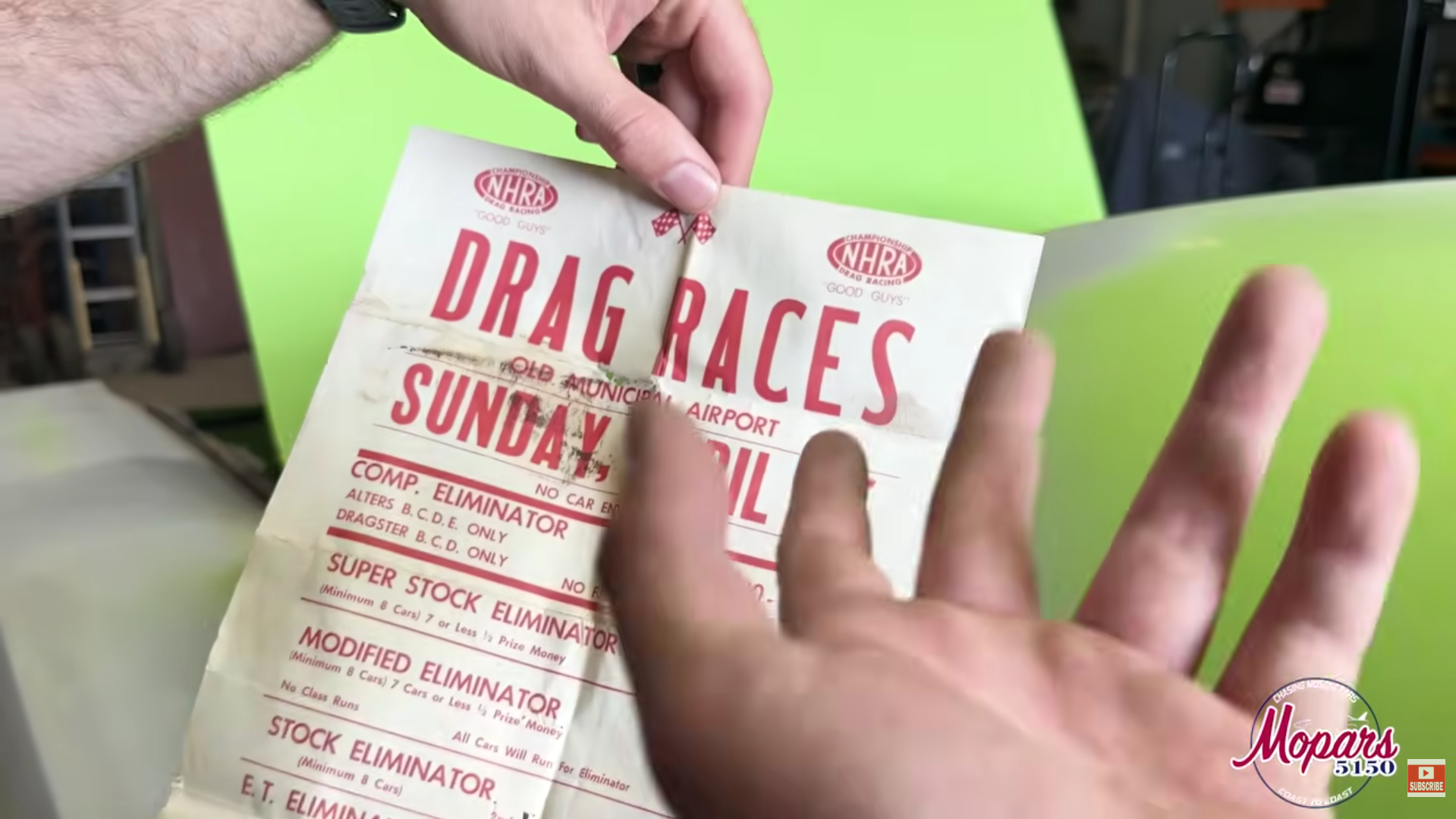
A small piece of the GTX’s past may offer another clue about why the original engine disappeared. Among the items found with the car was an old drag-racing document connected to Roswell’s former municipal airport, dated to the early 1970s and carrying the original owner’s name.
It Had Been Sitting For Around 45 Years
The story provided with the car suggests its original owner intended to have it restored. The shop owner who was supposed to perform the work passed away, and the GTX’s owner also died soon after, leaving the project stalled for years.
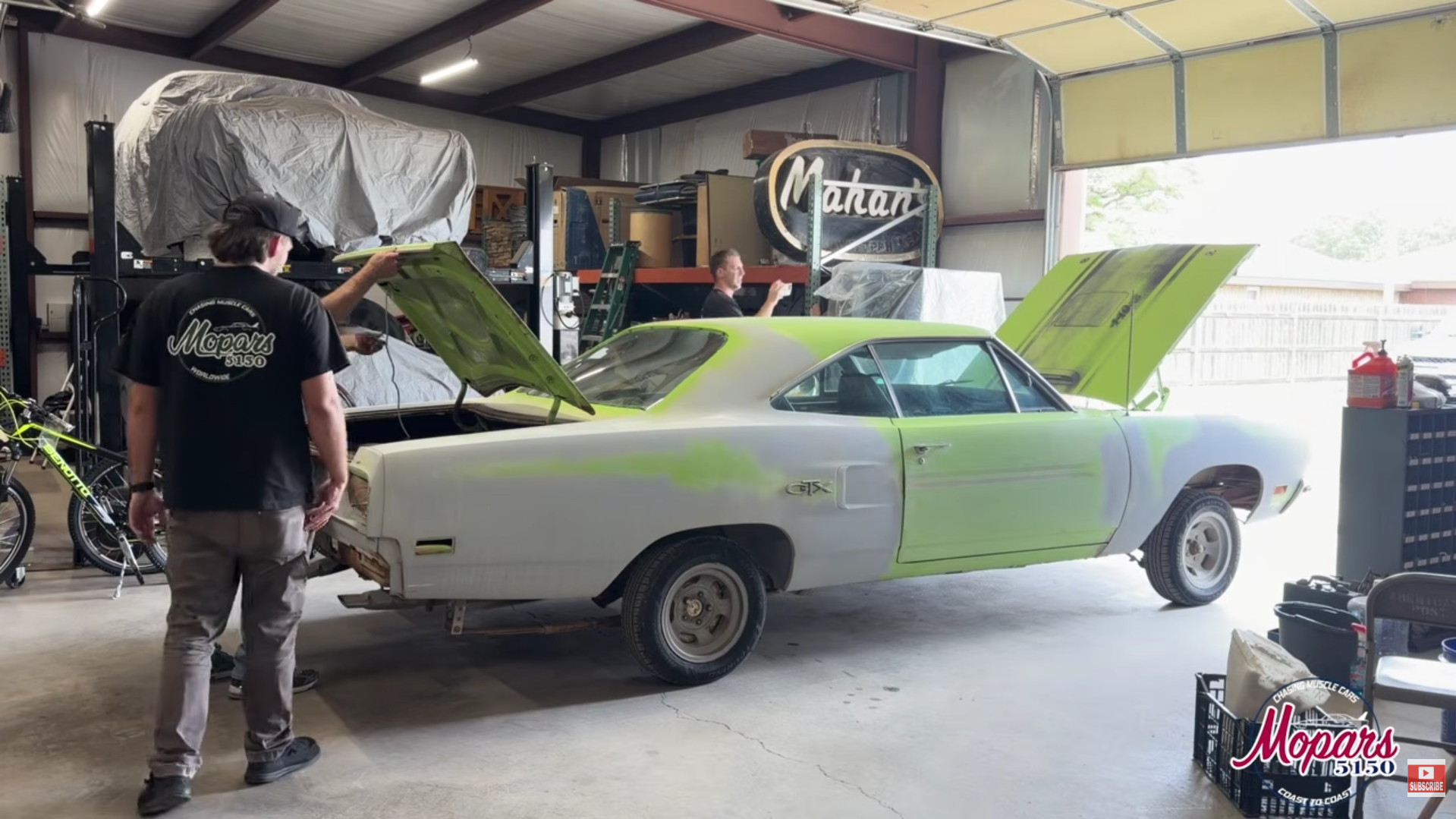
Fortunately, the Plymouth spent much of that time under a carport in West Texas. There is surface corrosion and primer covering portions of the body, but the people inspecting it found the structure surprisingly solid for a vehicle that had effectively been parked for decades.
The Limelight paint is still visible beneath the primer in several areas, and those involved believe much of it may be original. Whether any of that old finish can eventually be preserved will depend on how aggressively the car was previously sanded and how much deterioration is hiding underneath.
A Hidden Build Sheet Changed Everything
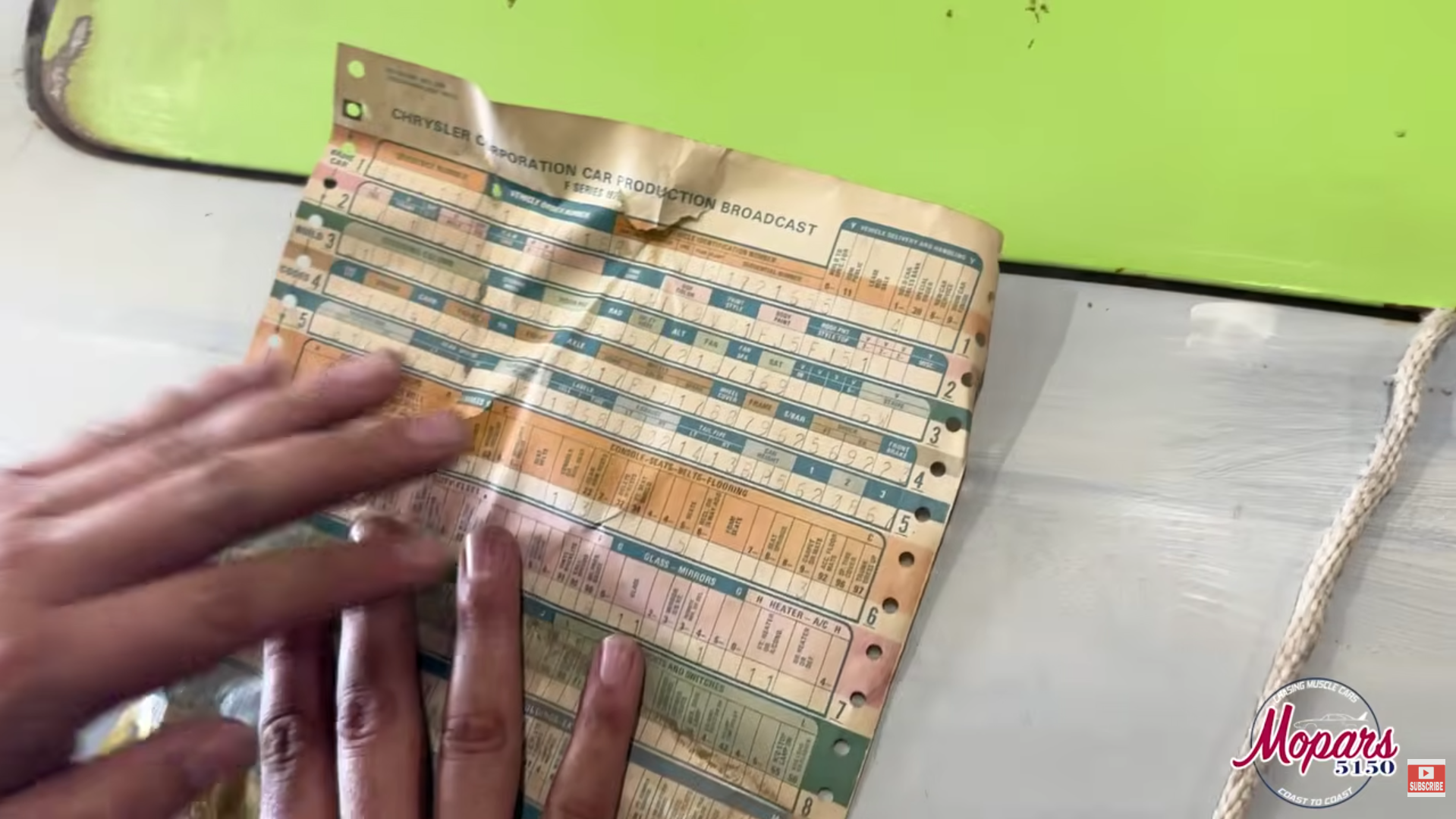
Initially, the group couldn’t find a broadcast sheet despite searching beneath the carpeting and around the seats. Previous inspections had apparently come up empty as well, making it seem possible that the car’s factory build sheet was simply gone.
One final look behind the rear seat changed that. A surviving sheet was discovered there, confirming key details, including the green exterior, white stripe, black interior, Six-Barrel engine, and four-speed transmission.
The group also found original paperwork showing where the GTX had been purchased, adding another layer of provenance to a car that already retained an unusually strong collection of period material. For a project this incomplete, having factory documentation survive alongside it can make a major difference when restoration begins.
The Rare GTX Has A New Home
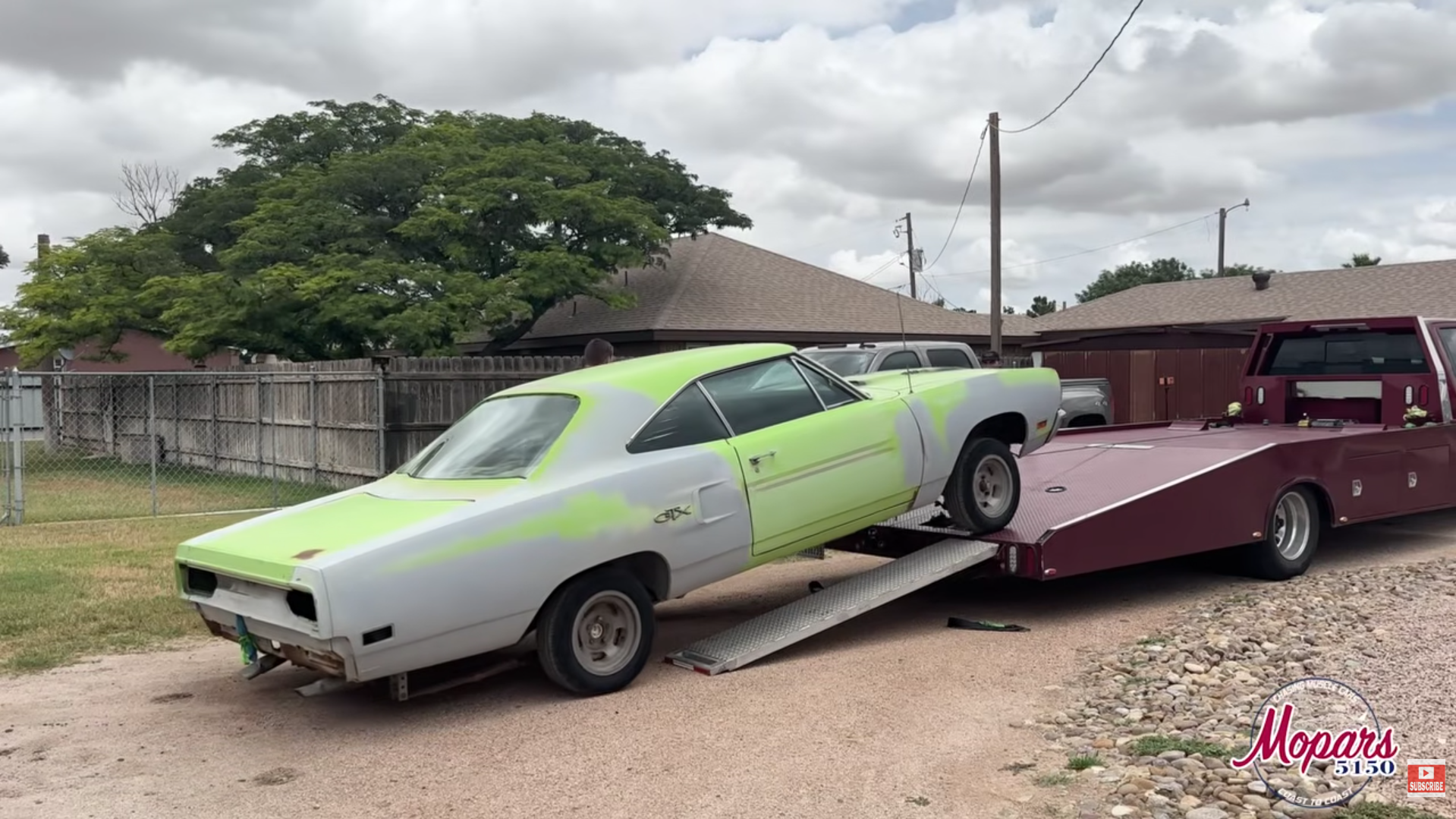
Mopars5150 ultimately struck a deal and purchased the Plymouth, bringing its decades-long period of inactivity to an end. The team didn’t promise an immediate restoration, although they made clear that the car was too interesting to ignore.
Its replacement engine prevents it from being a perfectly preserved numbers-matching survivor, yet that hardly makes the GTX ordinary. A genuine V-Code Six Barrel, four-speed car with a Dana rear, unusual colors, surviving documentation, and hints of period drag-racing history still has plenty going for it.
After roughly 45 years of sitting, this Limelight GTX finally has another chance to return to the road. The next question is whether its new owners preserve the scars of its long sleep or give one of Plymouth’s most desirable muscle cars the complete restoration it was supposed to receive decades ago.