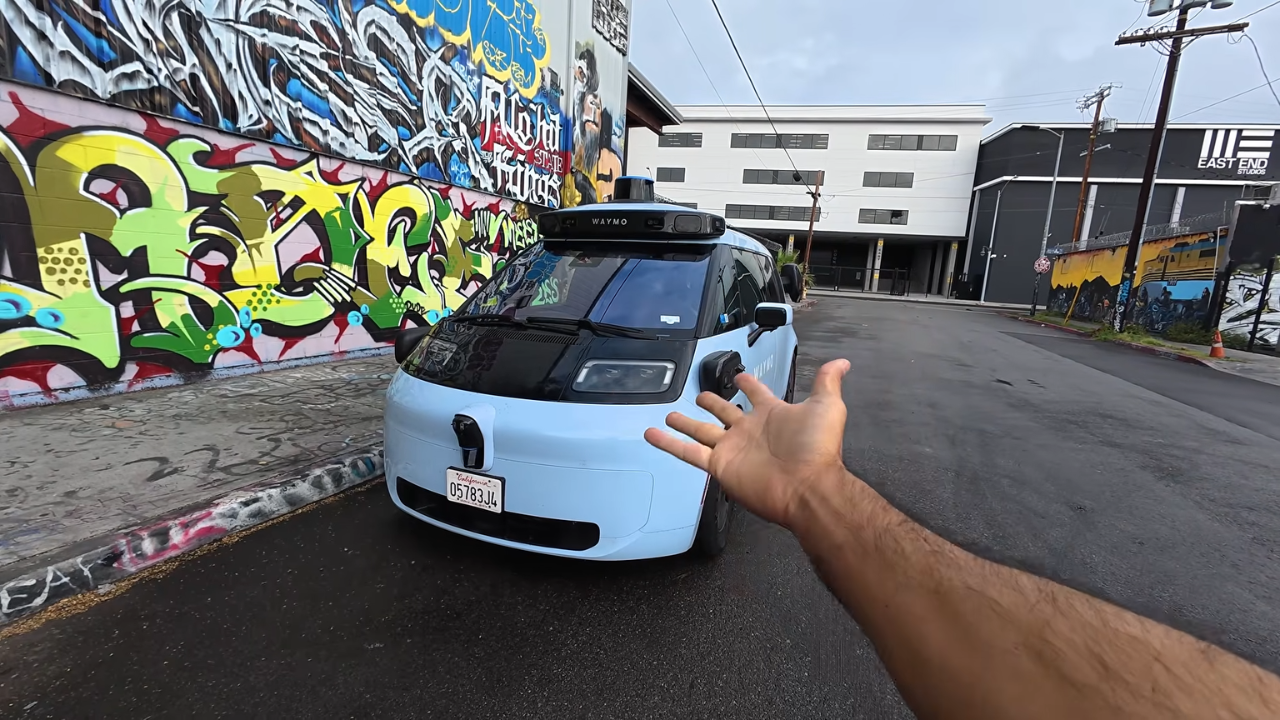
A driverless taxi can still take somebody’s parking spot. Near Bell Gardens High School in California, repeated Waymo sightings have residents asking why the cars are spending so much time on their streets.
Filmmaker Erick Ramirez examines the sightings in the southeast Los Angeles community. His documentary, published October 18, follows the parking complaints into questions about the cameras mounted on the cars.
People he interviewed described seeing Waymos around the neighborhood for roughly two weeks. One person said a sister had noticed a car sitting near the high school, while another recalled a separate vehicle near home for about a week.
For Ramirez, the practical complaint starts with space. He describes struggling to find parking himself and questions why a commercial fleet should occupy residential spots where people are already squeezing in their own cars.
Room at the Curb
Embedded media follows; please allow a moment for it to load.
During one check near the school, Ramirez says he filmed a Waymo around 10 a.m. and found it around 3 p.m. in the same position as parents waited for dismissal. His two observations put the car in that spot hours apart, though they do not establish that it stayed there continuously.
Getting a ride presented another problem. Ramirez says he tried to compare Waymo’s prices with Uber and Lyft, but the app would not let him book a trip in Bell Gardens at the time. The closest service he could find was near the Sixth Street Bridge.
He also includes a phone exchange with Waymo support about recording and data use. When he presses for information beyond the website, a support representative responds, “If it’s not on the website, it means that it’s not open for public knowledge.” The exchange supplies no explanation for the vehicle’s particular parking location.
A Closer Look
Waymo’s documentation offers some answers to residents’ questions about the sensors. The company says exterior cameras help its vehicles interpret their surroundings, while exterior microphones detect emergency sirens. It describes safeguards designed to limit collection of human voices and says it does not use facial recognition to identify individuals.
On access to recordings, Waymo says it may share certain data with law enforcement to meet legal requirements, enforce agreements, or protect safety. Agencies seeking information are directed to follow valid legal processes. That policy does not establish that the car near the school was conducting surveillance for any agency.
Ramirez also raises questions about human assistance for the vehicles. In its explanation of remote assistance, Waymo says those workers respond to requests from the driving system with advice it can accept or reject. They do not continuously monitor the cars, and the service does not rely on remote drivers, according to the company.
His proposed parking alternative is straightforward: rent space in private lots. Later, encountering a Waymo among industrial buildings in neighboring Commerce, Ramirez gives that location his approval: “Like, this is fine. No problem.”