
A Ukrainian bomber drone on a routine strike mission returned to base not with battle damage to its wings or fuselage but with something far stranger and far more telling about the evolving nature of modern warfare.
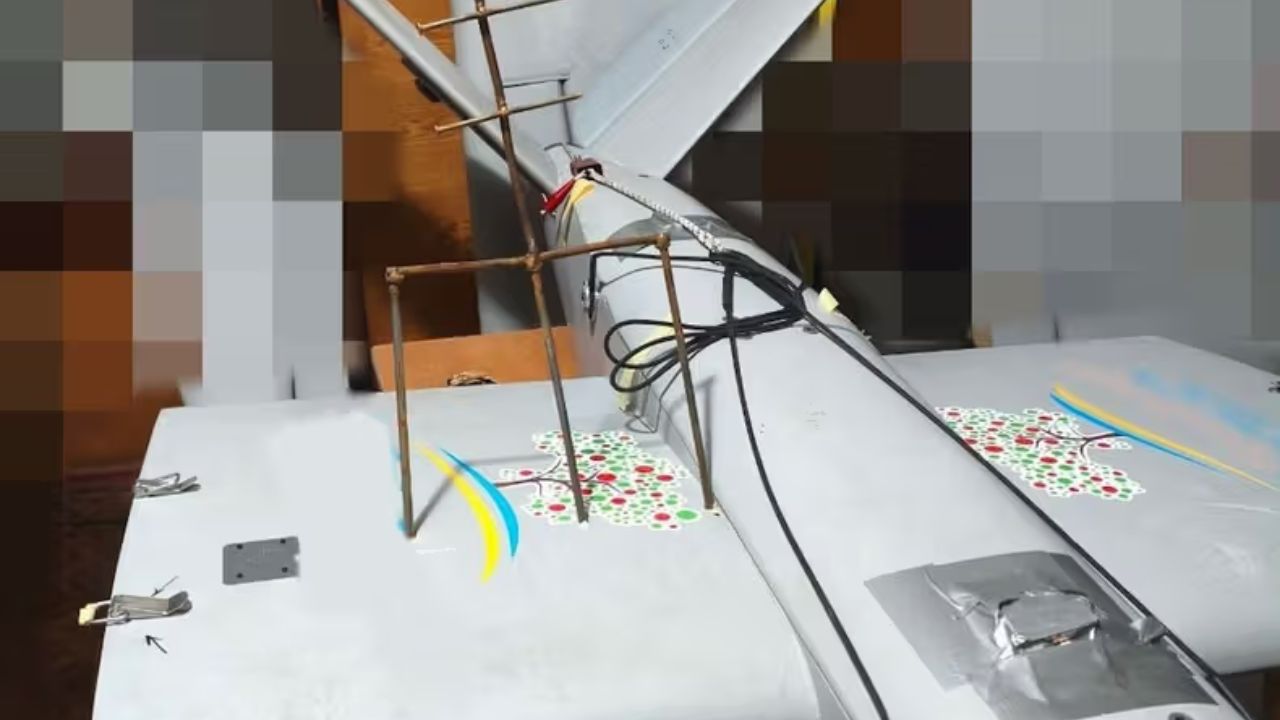
When soldiers pulled the heavy unmanned aircraft from the sky in Ukraine’s northeastern Kharkiv region, they found it pierced by a crude trident-like weapon, roughly two feet long and made of nails and steel rods.
The object was lodged deep and upright through the drone’s body in a stark image that tells a story of ingenuity, desperation, and the brutal creativity fueling the drone war over Eastern Europe.
What Happened Over Kharkiv
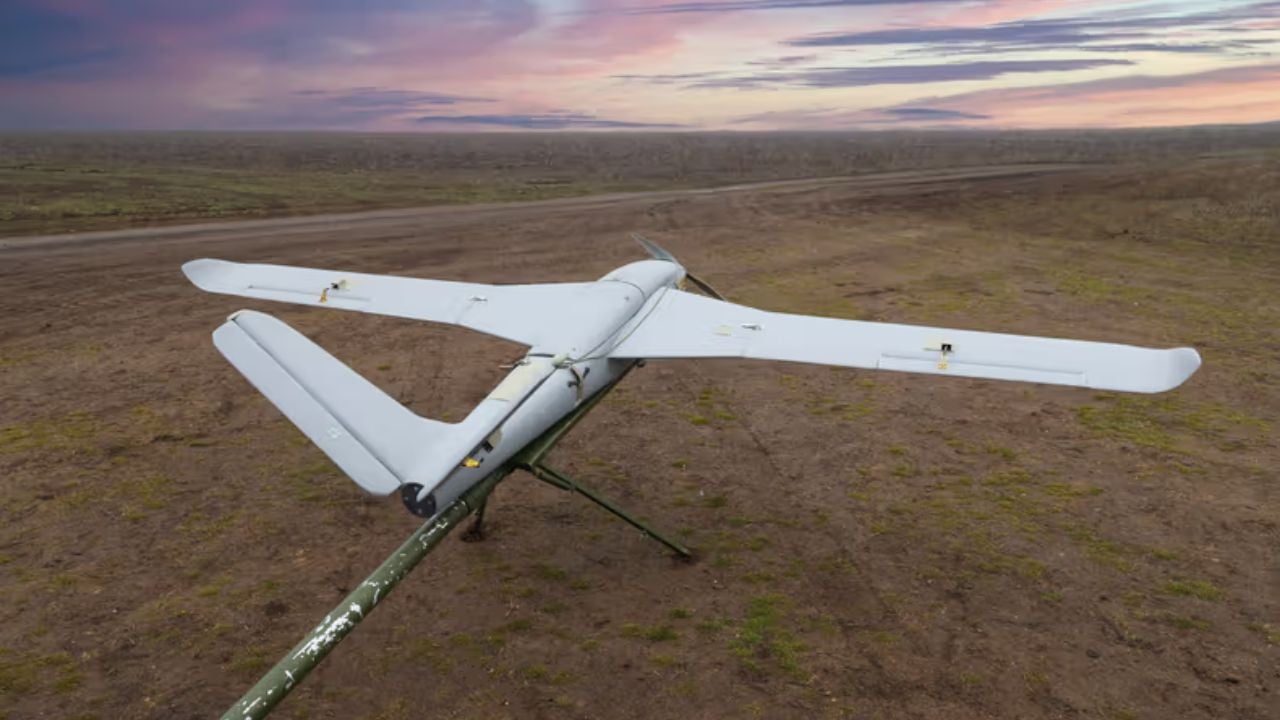
The drone in question was a Ukrainian Backfire bomber, a fixed-wing unmanned aircraft that had taken off to strike Russian targets late last month.
Instead of coming back with holes or shrapnel wounds typical of anti-aircraft fire or surface-to-air missiles, it returned with something that looked like it had come straight from the Monmouth Rebellion or an improvised weapons shop in a garage.
At first glance Ukraine forces thought the protrusion was just part of an antenna. Only on closer inspection did they realize the strange spike was not a manufacturing defect but the result of enemy action.
The unit commander, Alex Eine, told Business Insider that there is no question the trident was launched from another drone and not from ground-based artillery or infantry fire.
The Ukrainian bird was cruising around 800 meters altitude when the impact occurred in a sector without camera coverage. Telemetry tracks show a blip that could mark the moment of strike, but gusting winds make it difficult to conclusively tie the event to that moment in flight.
Friendly fire was ruled out thanks to careful coordination and real-time flight logs.
A Medieval Weapon in a High-Tech War
What makes this incident unusual is not just the odd weapon, but what it suggests about how both sides are adapting in a conflict now dominated by unmanned aircraft.

This is the first known instance of a trident-style projectile being used in aerial interception. Instead of relying on guided missiles or radar-directed rounds, someone built a primitive spike, mounted it under a drone and sent it upward into the flight path of an enemy aircraft.
There are no reports of the attacker achieving a perfect shot. The Ukrainian craft did not crash. It staggered home, scratched around the impact point but otherwise structurally intact. Operators credit the Backfire’s robust airframe for surviving an impact that might have shredded a lighter quad-copter type.
This blunt instrument, made of nails welded onto steel rods, might sound like something from a medieval battlefield. Yet it highlights a stark reality on today’s front lines.
In a war where drone traffic is constant and threats are everywhere, fighters on both sides are experimenting, innovating, or improvising with whatever materials they have.
Ukraine itself has poured resources into low-cost interceptor drones designed to hunt and strike enemy UAVs directly. Local manufacturers are churning out as many as 1,000 units a day as Kyiv tries to stay ahead of evolving Russian tactics.
Drone Warfare’s New Frontier
Russia has also experimented with equipping some of its own drones with air-to-air missiles, although those are typically reserved for higher-value manned targets such as aircraft and helicopters.
The trident episode shows that when sophisticated weaponry is scarce or too expensive, soldiers and engineers will turn to simple, low-technology solutions that might still disrupt or degrade an opponent’s capabilities.
The incident underlines just how central drones have become in the Ukraine war. They are no longer just eyes in the sky or cheap attack platforms. They are frontline fighters, scouts, and now even makeshift air defense nodes.
Modern battlefields are crisscrossed by swarms of uncrewed platforms, from tiny quadcopters to larger fixed-wing bombers flying deep into contested territory.
Photos shared with Business Insider capture the stark image of the Backfire with its metal spike. That image has rippled through military circles around the world as defense analysts and drone developers study the incident.
At a time when drone technology is pushing boundaries on autonomy, tasking and lethality, it is striking to see how old-school improvisation still finds a place.
The Ukrainian crew watching their bomber lumber back over the horizon must have felt like a scene from science fiction. To everyone else watching this long and grinding conflict from a distance, a trident-pierced drone is simply another chapter in the grueling story of how two nations are adapting warfare to the age of the drone.
Sources: Business Insider