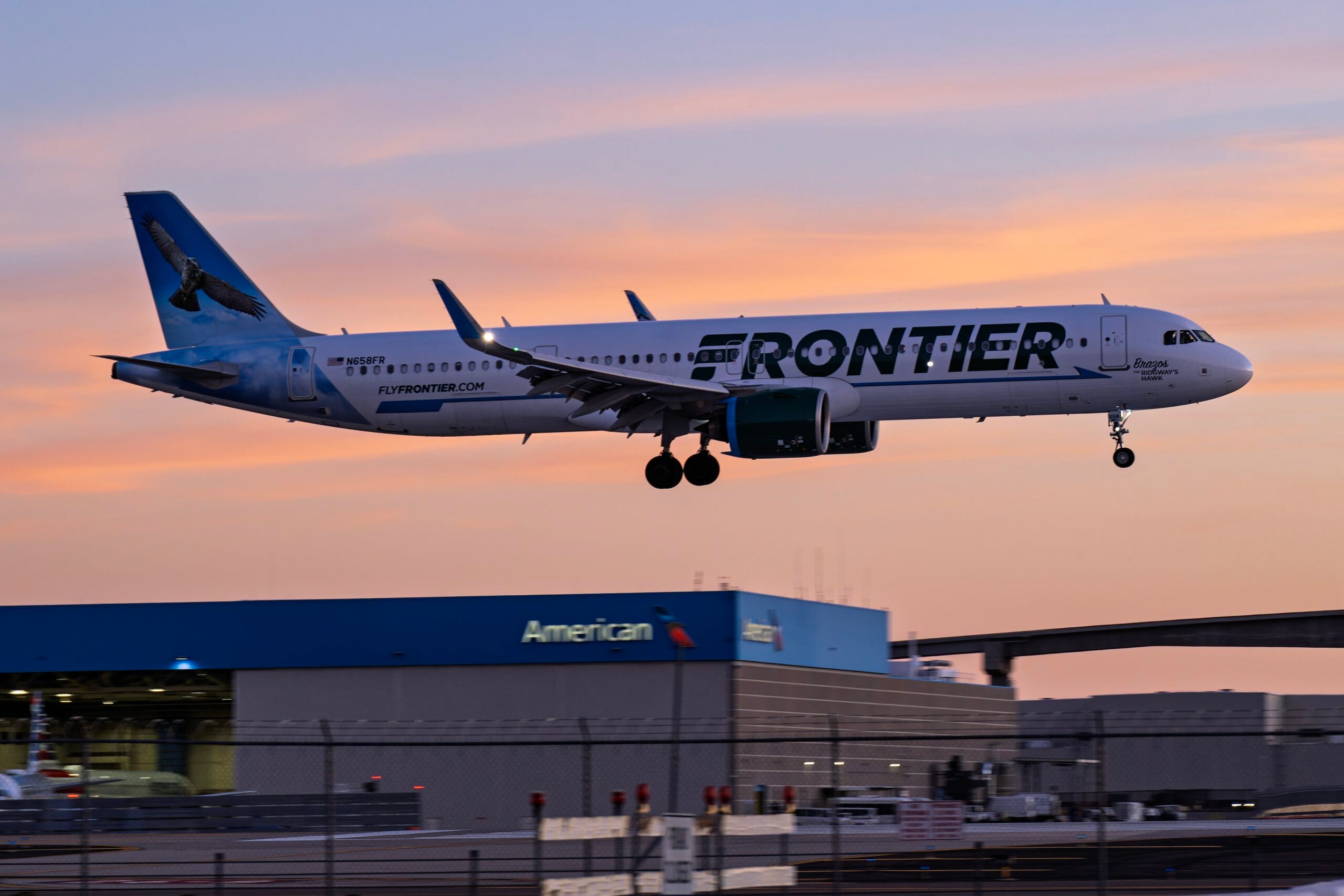
Late Friday night, what should have been a routine red-eye from Denver to Los Angeles turned into something out of a disaster film. At approximately 11:20 p.m., Frontier Airlines Flight 4345 was accelerating down Runway 17L at Denver International Airport when it struck a pedestrian who had crossed onto the active runway. The impact was catastrophic for the individual on the ground and deeply traumatic for everyone on board.
The flight was carrying 231 people total, including 224 passengers and seven crew members, all aboard an Airbus A321neo. The collision caused at least one engine to catch fire, sending a wave of smoke through the aircraft cabin and triggering an emergency evacuation. Within minutes, passengers were sliding down emergency chutes onto the dark tarmac, unsure of what had just happened.
Twelve people reported minor injuries in the chaos that followed, and five were transported to area hospitals. Remarkably, given the severity of the incident, no passengers lost their lives. The same cannot be said for the person on the runway.
Airport officials confirmed that the pedestrian had jumped the perimeter fence at Denver International and was struck just two minutes after breaching it. The individual has not been publicly identified and is not believed to have been an airport employee. According to an official who spoke with ABC News, the person was at least partially pulled into one of the engines, which then ignited briefly before firefighters extinguished the blaze.
What Passengers Experienced Inside the Cabin
Emergency crews responded to the scene and bussed passengers to the terminal. 231 souls were on board. Emergency response and investigation are ongoing. The NTSB has been notified. Runway 17L will remain closed while the investigation is conducted. 2/2
— Denver Int’l Airport (@DENAirport) May 9, 2026
For the people seated on that plane, the sequence of events was terrifying and disorienting. Passenger Victoria Lohman described a massive bang as the jet was rolling down the runway, followed by instant fear throughout the cabin. Fellow traveler Levi Lynn recalled watching flames out the window for roughly ten to fifteen seconds before smoke overtook the interior of the aircraft.
The smoke was not just thick but chemically sharp, burning passengers’ eyes and triggering panic. Mohamed Hassan said that even hours after the evacuation, the whole experience still felt surreal, like something he expected to wake up from. Jacob Athens posted video to social media showing the emergency slide evacuation in progress and what appeared to be a visibly damaged engine.
Passengers waited on the cold runway for over an hour before transportation arrived, a delay that frustrated many who were already rattled. Most were eventually bused to the terminal and rebooked on a separate Frontier flight to complete their trip to Los Angeles.
How the Pilot and Air Traffic Control Responded
The cockpit crew acted quickly and professionally under extreme pressure. The pilot immediately halted the takeoff after the collision and got on the radio with air traffic control to report the situation. In the recorded exchange obtained by Denver7, the pilot calmly relayed that the plane had struck a person on the runway, reported an engine fire, and confirmed 231 souls on board before announcing the decision to evacuate on the runway.
Air traffic control responded by rolling emergency vehicles and directing them toward the aircraft. The coordination between the flight deck and ground operations helped ensure the evacuation unfolded without further casualties. Runway 17L was closed for the rest of the night and did not reopen until around 11:30 the following morning.
The National Transportation Safety Board was notified and will lead the federal investigation into the incident. The Denver Police Department is also conducting its own separate inquiry.
What This Incident Reveals About Airport Security and Runway Safety
One of the most pressing questions in the aftermath is how a person managed to jump a perimeter fence at one of the busiest airports in the United States and reach an active runway in just two minutes without being detected or intercepted. Airport officials stated that the fenceline itself was found to be intact, meaning no structural failure allowed the breach. The individual apparently scaled the fence intentionally.
This raises serious questions about perimeter monitoring, response times, and whether additional detection technology is needed at major airports. Two minutes is an extraordinarily short window between a fence breach and a runway crossing. If surveillance systems flagged the intrusion, the response was not fast enough to prevent the tragedy. If it was not flagged at all, that is a significant gap in safety infrastructure.
For passengers like Hassan, that question loomed just as large as the accident itself. Airport perimeter security has long been a concern in aviation safety circles, and this incident is likely to reignite conversations at the federal level about detection systems, fencing standards, and real-time monitoring protocols at commercial airports across the country.