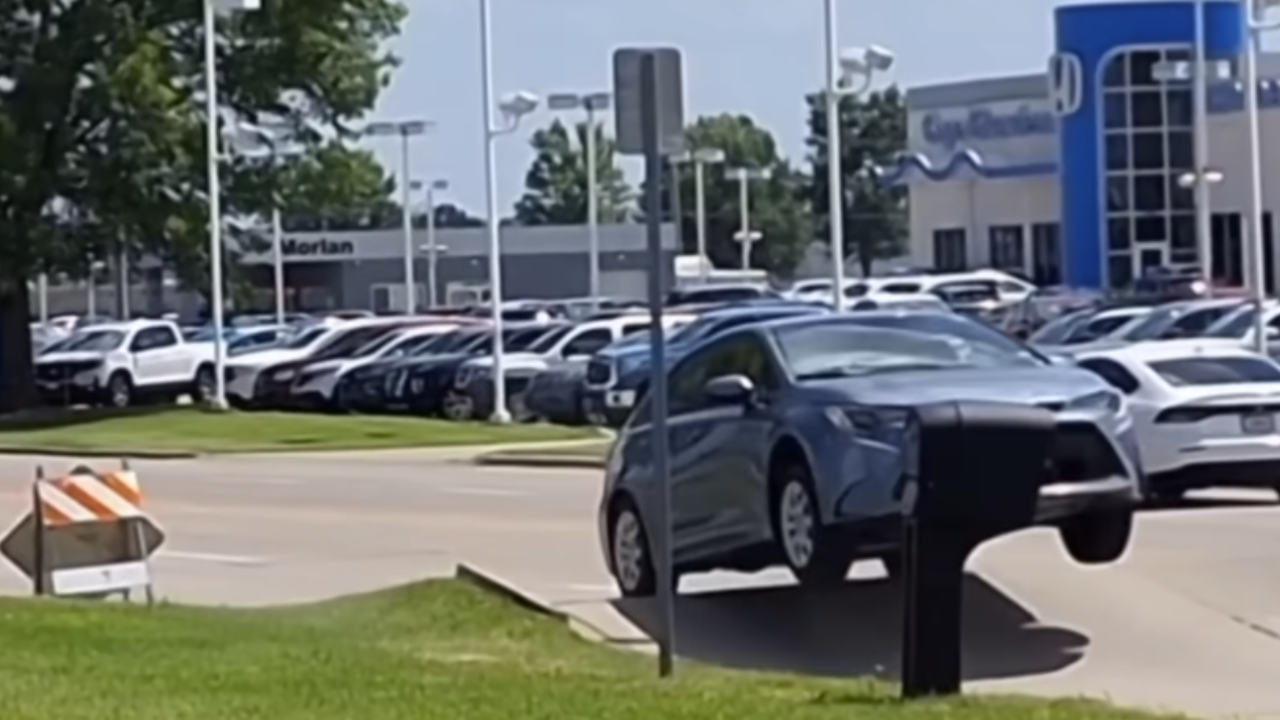
If you have scrolled through social media this week and seen a car go airborne off a chunk of pavement that looks like it grew a speed bump overnight, you are not losing your mind and you are not looking at old footage from a disaster movie. That clip is real, it is from Missouri, and it is making the rounds again because half the country is currently baking under another brutal heat wave. Funny how a year-old video finds new life every time the thermometer decides to be dramatic.
The footage in question shows a section of Siemers Drive in Cape Girardeau buckling right in front of a bystander’s camera, sending a car bouncing over a ridge that popped up out of nowhere. A separate clip from the same stretch of weather shows I-44 near Doolittle developing its own unscheduled speed hump in the fast lane. Neither is staged, neither is CGI, and both happened because asphalt and concrete have limits, just like the rest of us on a 100 degree day.
For car folks, this is one of those stories that hits differently than it would for the average commuter. We spend our time thinking about tire pressure, alignment, and suspension geometry, and then the road itself decides to misbehave. It is a good reminder that no matter how well you have your car dialed in, the pavement underneath you is a variable you cannot control.
What Actually Causes a Road to Buckle
Concrete and asphalt expand when they heat up, same as most materials. Under normal conditions there is enough room built into the road design to handle that expansion. Problems start when a wet spring soaks the ground underneath, then a heat wave hits right after. The pavement swells, has nowhere to release that pressure sideways, and pops upward instead.
Missouri Department of Transportation engineers pointed to that exact combination as the likely trigger for the Cape Girardeau incident, calling it a mix of heat, moisture, and gaps in the concrete design working against each other at once.
Not a New Problem, Just a Louder One This Time
Public works officials in Cape Girardeau said buckling happens most summers, usually in small, manageable sections that get patched before anyone notices. This one just happened to be bigger, faster, and caught on camera at the exact right second.
Crews had the Siemers Drive section patched with fresh asphalt within a day, and drivers were back to normal by Monday. The Doolittle stretch on I-44 got similar attention from state crews soon after.
What Drivers Should Actually Watch For
Sudden ridges or bulges in the road surface are the big tell, especially on hot afternoons after a rainy stretch. Slow down if you see uneven pavement ahead, give yourself extra following distance, and report anything that looks like a bulge to local authorities before it turns into a launch ramp. It costs you nothing and might save the next driver a very bad afternoon.
With more heat in the forecast across a good chunk of the country, do not be surprised if this old video keeps resurfacing. The pavement, unfortunately, does not care what year it is.