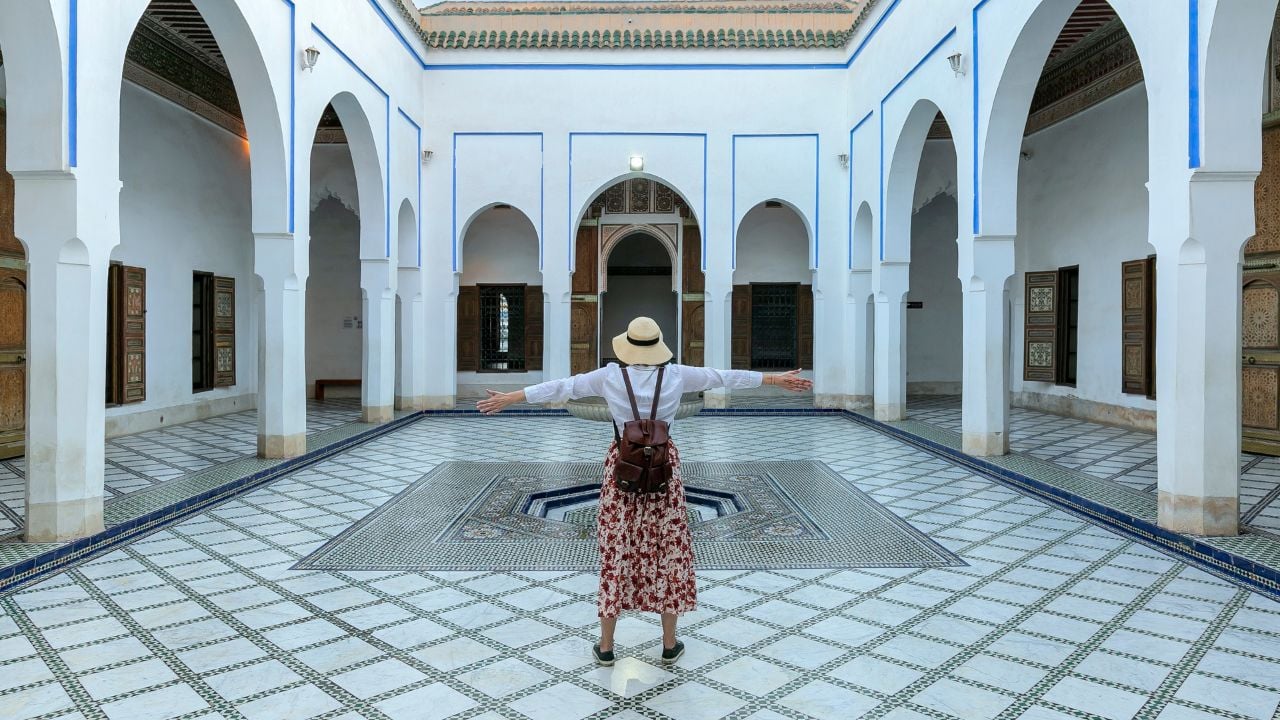
Morocco can feel rich before the trip becomes complicated. Warm color on old walls, courtyard shade, mint tea poured high into a glass, ocean wind in Essaouira, and late-afternoon light over Agafay can make five or seven days feel full without turning the journey into a race.
The smoothest first route keeps the shape simple. Marrakech brings the medina, riads, palaces, gardens, souks, rooftop dinners, and the shock of arriving somewhere completely alive. Essaouira cools the trip down with Atlantic air, blue boats, ramparts, seafood, whitewashed walls, and a medina that feels easier to breathe in. Agafay adds open sky and desert-colored silence without demanding the long road to the Sahara.
Five days can work if the pace stays tight: two nights in Marrakech, two in Essaouira, and one final night or long afternoon near Agafay. Seven days feel better, especially if Marrakech gets a softer arrival day and Essaouira gets time for a slow harbor morning.
Merzouga and the great dunes are unforgettable, but they are a different kind of trip from Marrakech. For a first Morocco route built around comfort, color, food, and breathing room, staying closer is not a compromise. It is the smarter luxury.
1. Begin in Marrakech, but Give the First Day a Soft Landing
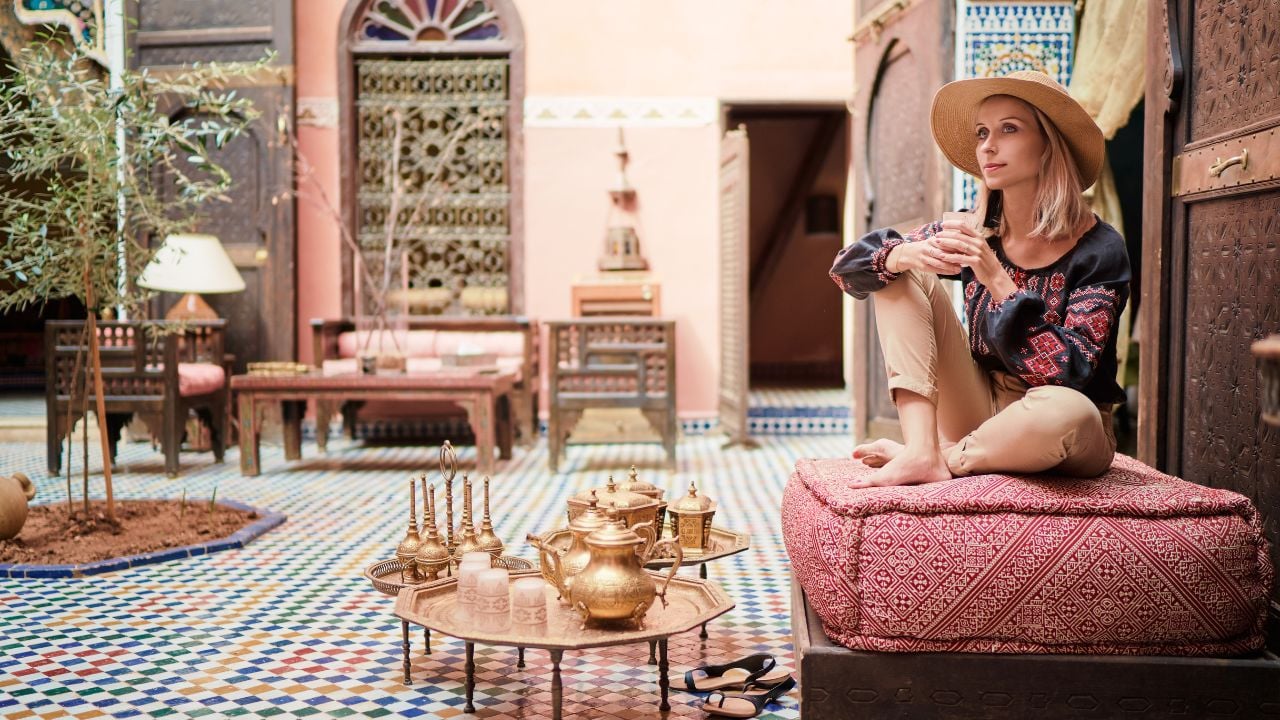
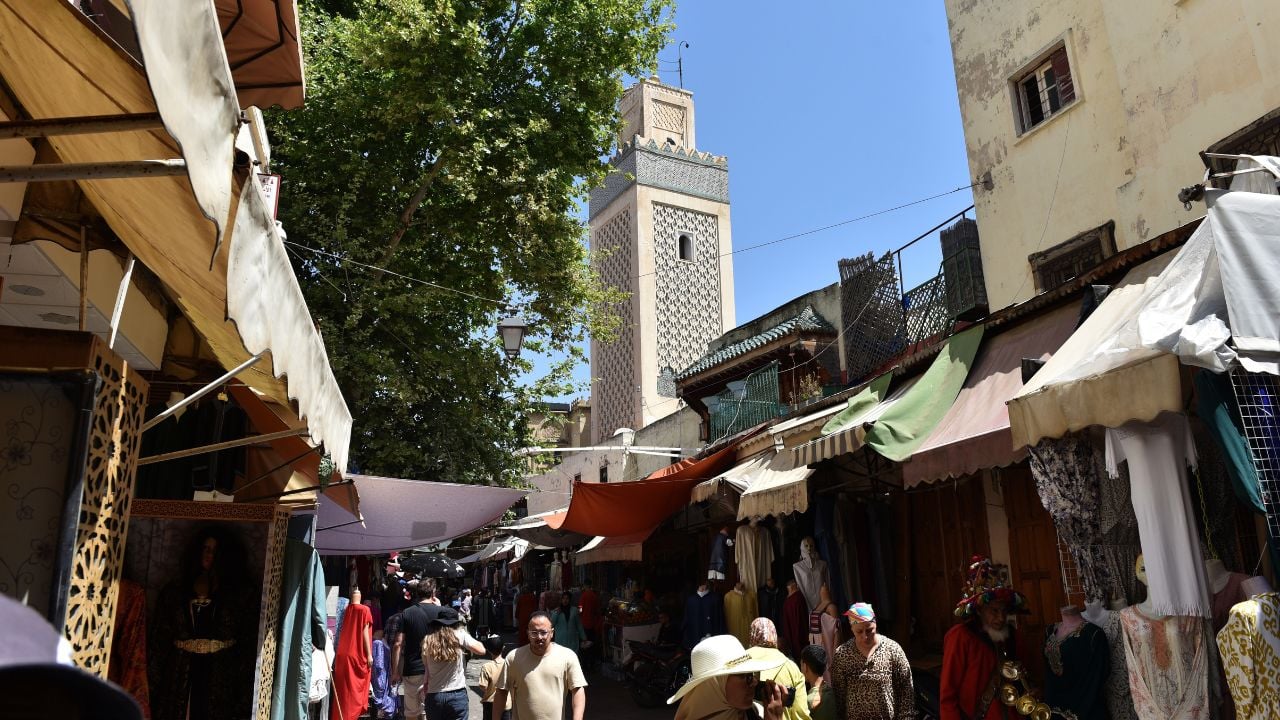
Marrakech is not shy. The city meets first-timers with motorbikes in narrow lanes, spice colors, brass lamps, patterned doors, courtyard fountains, rooftop terraces, and the constant feeling that the next turn might open into something louder, quieter, or more beautiful than expected.
The Medina of Marrakesh has deep historical weight. UNESCO notes that Marrakesh was founded in 1070-72 by the Almoravids and remained a political, economic, and cultural center for a long period. That history is part of the force of the old city, but arrival day is not the moment to wrestle with all of it.
Check into a riad, listen to the courtyard quiet, drink mint tea if it is offered, and take one short walk before dinner. Keep the first evening close to the room or restaurant you already chose. Marrakech is much easier to love when the first night does not begin with getting lost, hungry, and tired in the souks.
The next morning can carry the bigger introduction. Visit Morocco highlights Jamaa El-Fna, the medina, historic palaces, Majorelle Garden, Koutoubia Mosque, and the Menara basin among the city’s major draws. Choose two or three, not six. A palace, a garden, and one careful medina walk already make a full Marrakech day.
2. Use Marrakech for Courtyards, Gardens, and One Good Souk Wander
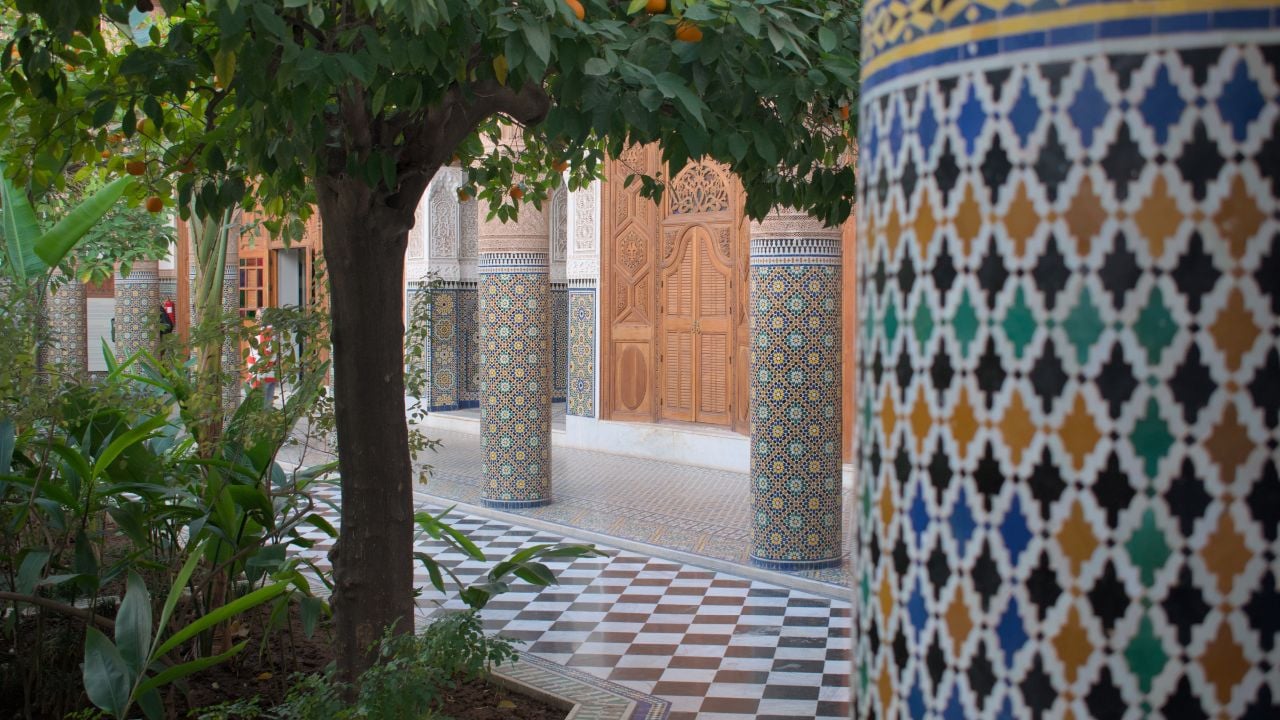
Marrakech works best when the day alternates between intensity and shade. A morning in the medina can be thrilling for an hour and exhausting by the third. Courtyards, gardens, tiled rooms, and rooftop cafés are not extras here; they are how the city becomes enjoyable rather than overwhelming.
Bahia Palace is one of the best places to feel that balance. Visit Morocco describes it as a masterpiece of Moroccan Islamic architecture, combining bright colors, zellige, marble, lush gardens, and historic stories. On the ground, that means painted ceilings, carved wood, cool courtyards, patterned tile, and a slower kind of beauty after the noise outside.
Pair the palace with one calmer stop such as Majorelle Garden, Le Jardin Secret, or a museum, then leave the souks for later in the day when there is no pressure to be efficient. Getting turned around is part of the experience, but it feels better when the schedule has space for it.
A guide can help on the first souk walk, especially for travelers who want context, less stress around bargaining, and a clearer path through the lanes. Without one, keep the goal modest: spices, lamps, textiles, leather, a tea break, and the decision to leave before the medina stops being fun.
3. Go to Essaouira for Sea Air, Blue Boats, and a Calmer Medina
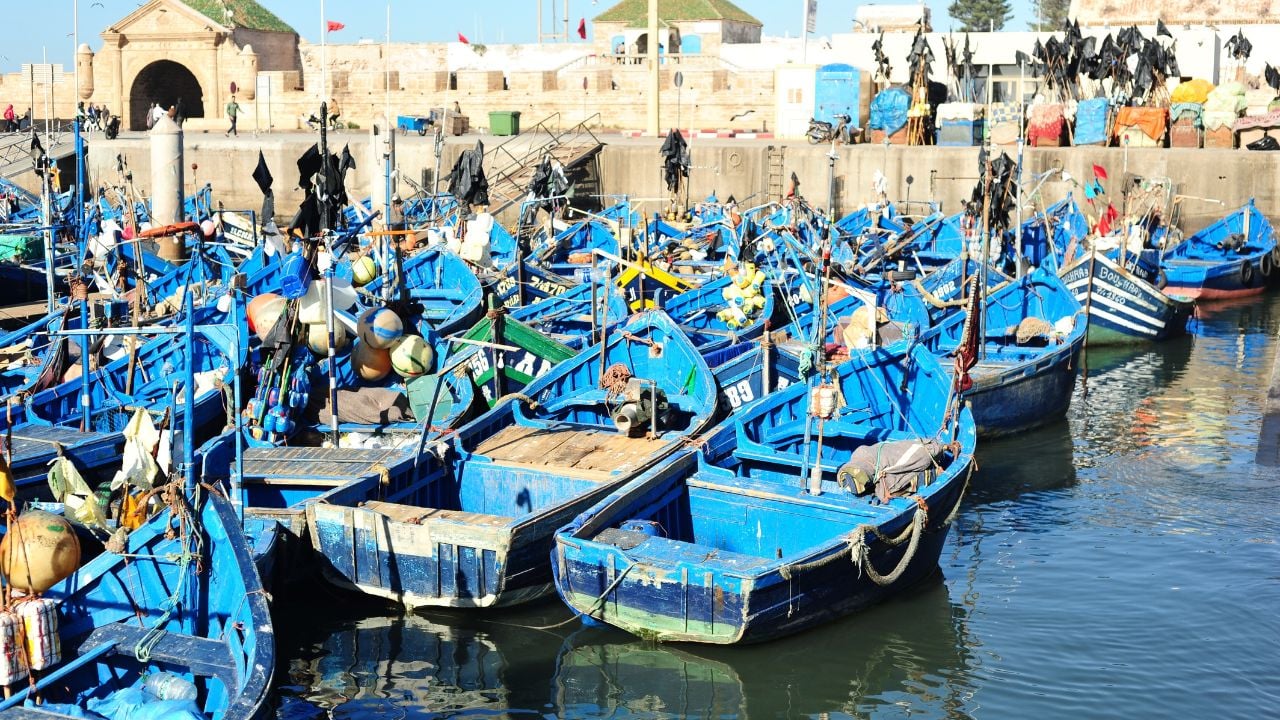
Essaouira is the right counterweight after Marrakech. The change is physical: wind off the Atlantic, gulls over the port, white walls, blue shutters, fishing nets, ramparts, and a medina that feels easier to navigate after the pressure of Marrakech.
UNESCO describes the Medina of Essaouira, formerly Mogador, as an exceptional example of a late-18th-century fortified town built according to contemporary European military architecture principles in a North African context. That history gives the old city depth, but the sea keeps the mood lighter.
Spend the first hours by the port. Blue boats crowd the water, fish is unloaded nearby, and the ramparts frame the old town behind the harbor. Visit Morocco points travelers toward Essaouira’s fishing port, fish market, winding medina alleys, and summer Gnaoua music culture, which is exactly the mix that makes the town feel both relaxed and alive.
Two nights are much better than a rushed day trip. Walk the walls, browse slowly, eat seafood, sit out of the wind when it gets too strong, and let the second evening arrive without a drive back to Marrakech waiting at the end of it.
4. Add Agafay for Desert Light Without the Long Sahara Drive
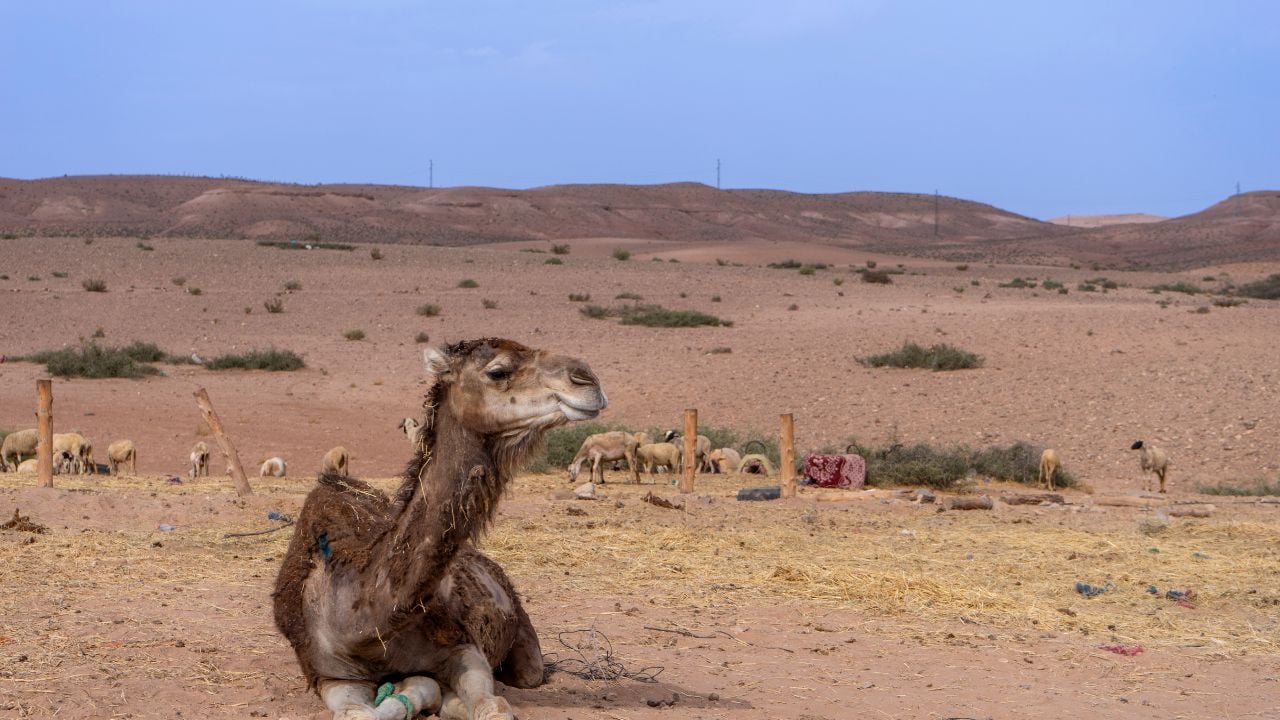
Agafay is not the Sahara, and the trip should never pretend otherwise. Its beauty is different: rocky pale hills, open sky, low light, dry ridges, and Atlas views when the weather is clear. It gives a desert-like pause close to Marrakech instead of the multi-day overland push required for the great dunes.
Visit Morocco’s official beach and desert brochure describes the Agafay Desert as having rocky dunes and breathtaking views of the Atlas Mountains. That is the appeal to focus on, not a false promise of endless sand seas.
Arrive in the afternoon if possible. The land looks better as the sun lowers, the colors soften, and the horizon becomes the main attraction. A short walk, a camel ride, a quad excursion, or simply sitting with tea can be enough before dinner.
One night works for most first-timers. Choose a camp or lodge for comfort, let dinner and the sky take over, then return toward Marrakech for departure. Agafay is strongest as a gentle finale, not as an adventure checklist.
5. Keep the Route Simple So Morocco Has Room to Breathe
The cleanest order is Marrakech, Essaouira, then Agafay before returning to Marrakech for departure. That keeps the movement logical: city heat and courtyards first, Atlantic wind in the middle, open desert-colored light at the end.
Private transfers, buses, or hired drivers can all work depending on budget and comfort level, but changing bases every night will make the trip feel smaller, not bigger. Morocco rewards time inside places: a second breakfast in the same riad courtyard, a return to one Marrakech rooftop, a slow Essaouira harbor walk, or an extra hour watching Agafay turn gold.
Leave one flexible half-day in the plan if possible. Market wandering, long meals, road timing, heat, wind, or a sudden desire to sit longer over tea can easily change the day. That should not feel like failure. It is often the point.
This route keeps the first Morocco trip generous without stretching it thin. Marrakech brings color and energy, Essaouira brings salt air and calm, and Agafay sends the journey home with wide-open light instead of one more crowded medina turn.