When firefighters rush out the door to answer a call, they expect the road to be the path to the emergency, not the emergency itself. But in Ferguson, Missouri, that expectation has been shattered in a costly way, and the department is now sounding the alarm about a problem that may be far more widespread than most people realize.
A fire truck is wrecked, a fire station has been hit before, and officials say drivers are creating dangerous situations for emergency crews.
Ferguson’s fire department has been dealing with a string of vehicle-related incidents that have left equipment damaged, budgets stretched, and crews rattled. These are not freak accidents happening once in a blue moon. They are recurring, they are costly, and according to department leadership, they are becoming almost routine. That is a sentence that should bother every person who has ever called 911.
What makes this situation even more striking is that Missouri actually has a law on the books designed to prevent exactly this kind of thing. The Move Over Law requires drivers to move to the right and stop when emergency vehicles are approaching with lights and sirens. And yet, according to Ferguson’s Assistant Chief Aaron Bockhorst, crews see that law ignored every single day.
A Fire Truck Was Hit Just Two Minutes After Leaving the Station
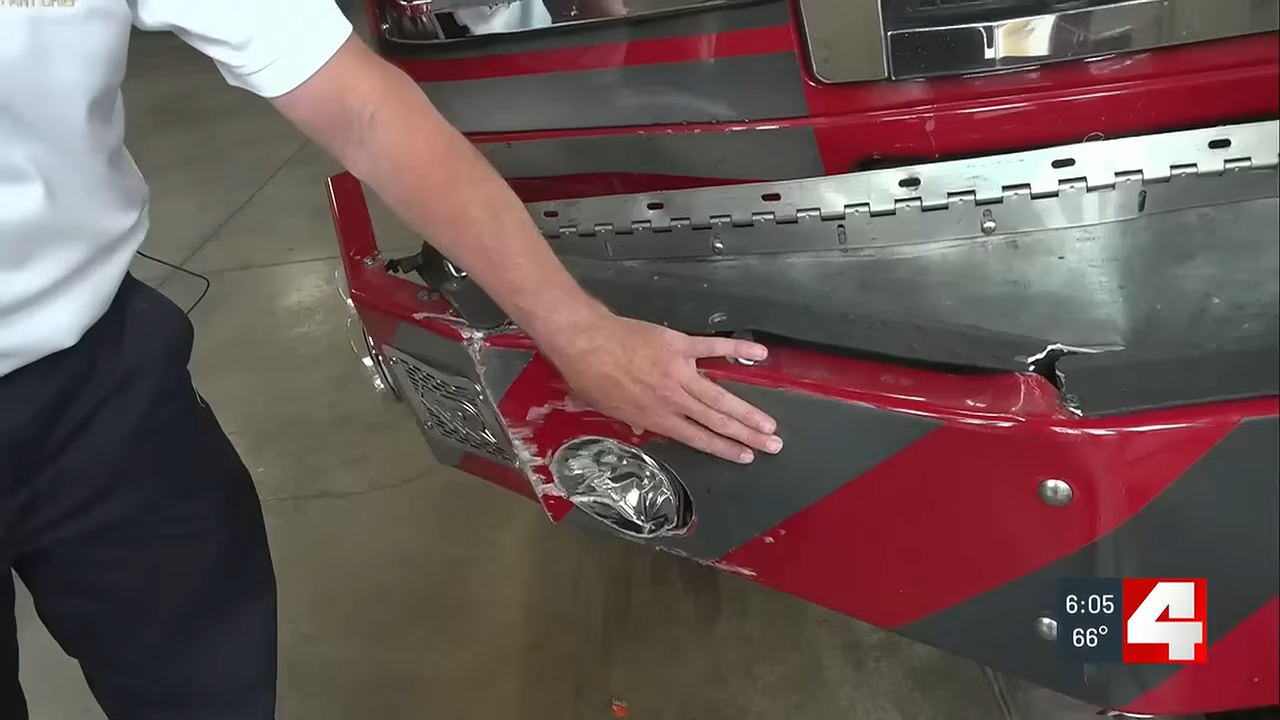
On a Thursday morning around 8:30, Ferguson fire crews were heading out to assist Florissant with a fire call when a driver turned directly into their fire truck while crews were attempting to pass on the left. The collision was not minor. The impact hit the driver’s door of the van involved, spun the vehicle around, pushed the bumper in, bent parts of the truck’s step, damaged a door, and damaged the outrigger. One key hose compartment, the one that holds the first attack line pulled at a fire scene, was knocked out of service entirely.
Repair estimates for that truck came in at a minimum of $100,000. The truck itself is still considered safe to operate, but with that hose compartment out of commission, the crew’s ability to respond to certain emergencies is compromised. Two minutes. The crew had been out of the station for just two minutes before the crash happened.
Ferguson Station Two Has Been Hit Before, and It Did Not Come Cheap
If you think this is a one-time incident, think again. Back in September, surveillance video captured a car driving off the road on West Florissant and slamming directly into Fire Station Two. The impact did not just damage the building. It also sent bricks flying into a fire truck parked inside. The bill for repairing the building came to approximately $55,000. Fixing the fire truck that got hit by flying debris cost the department around $65,000. That is more than $120,000 from a single incident involving one distracted or out-of-control driver.
Ferguson is now actively planning to relocate Fire Station Two within the next few years. Part of that decision is driven by the repeated vehicle incidents at that location. The station also needs more space for modern equipment, but the safety factor for personnel at that site is clearly a motivator. When a fire station becomes a target simply by virtue of sitting near a road, something has gone seriously wrong.
What Drivers Can Actually Learn From This Situation
Missouri’s Move Over Law is not a suggestion, and it is not optional. When you see a fire truck, ambulance, or police vehicle with lights and sirens running, you are legally required to move right and stop. That is not just courtesy, it is state law, and in real terms, it can be the difference between a crew making it to a fire and a crew ending up as the ones who need rescuing.
Assistant Chief Bockhorst put it simply: firefighter drivers have to anticipate everything that could go wrong. They are navigating massive vehicles through traffic, in a hurry, with lives potentially on the line at the scene ahead. They cannot also be responsible for correcting the mistakes of every driver who does not bother to get out of the way. The burden of awareness has to be shared. Emergency vehicles take much longer to stop than a passenger car. When a driver cuts across their path or fails to yield, the consequences can be severe.
A Department Stretched Thin by Preventable Incidents
Perhaps the most quietly alarming detail to come out of all of this is what Assistant Chief Bockhorst said about budgeting. Fire departments plan yearly for a certain number of accidents and unexpected expenses. But Ferguson has blown well past what could reasonably be anticipated. Every dollar spent repairing a truck that was hit by an inattentive driver is a dollar not going toward new equipment, new hires, or improvements to infrastructure.
A department that is constantly repairing vehicles is a department that is constantly playing catch-up. And when that catch-up costs hundreds of thousands of dollars across just a handful of incidents in a single year, the ripple effects reach far beyond the damaged metal and broken bricks. They reach into response times, equipment availability, and the safety of every person that department serves.
The next time you see emergency lights in your mirror, move over. It is the law. It might also save a life, possibly your own.
A lot went wrong here. Plenty of blame to go around.