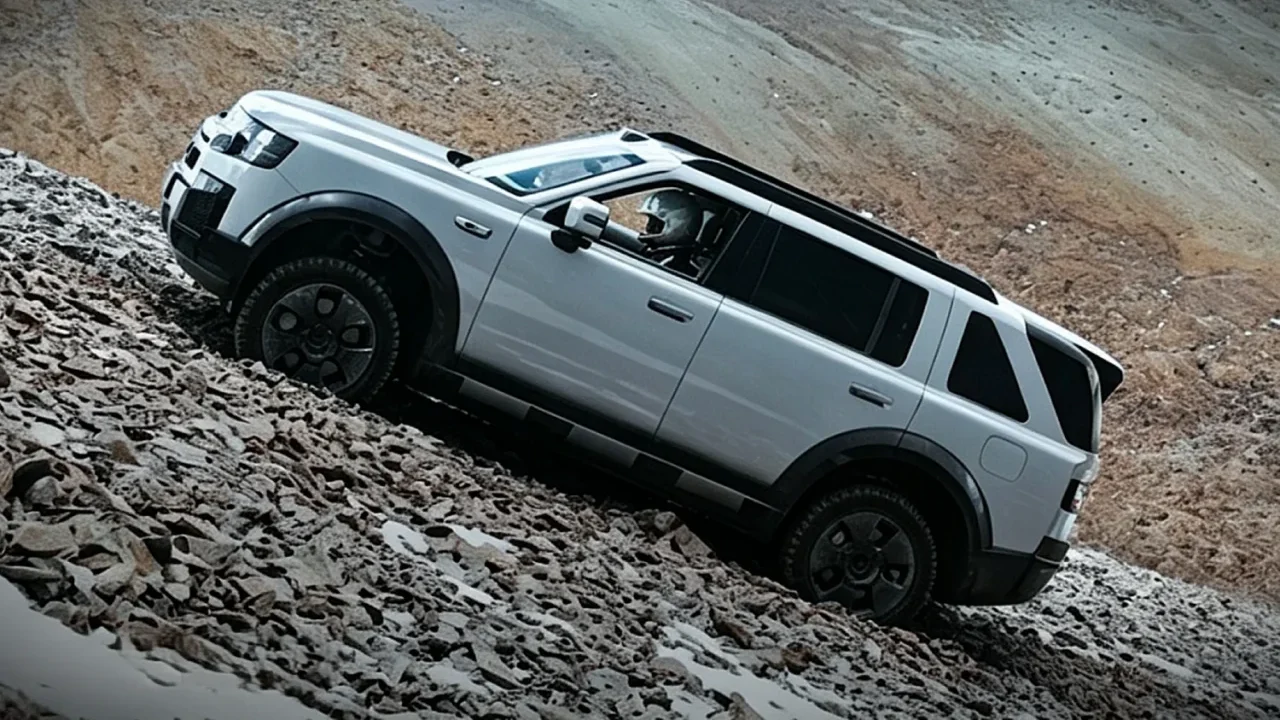
Reviving the Freelander name as an electrified SUV built through JLR’s partnership with Chery was always going to invite questions about whether it could live up to its Land Rover roots. The companies have now found a rather extreme way to demonstrate that the new model isn’t afraid of rough terrain.
The Freelander 8 only officially launched in China on September 3, yet it arrived with an unusual achievement already attached to its name. Before customers could buy one, the SUV had been sent high into the mountains of Tibet for a Guinness World Records attempt.
CarNewsChina reports that the record run actually took place on August 22. The challenge involved loose rock, shale, steep gradients, and an altitude high enough to seriously affect the performance of combustion engines.
The Freelander 8 ultimately reached 6,002.33 meters, or roughly 19,693 feet, above sea level. That was enough to earn it the Guinness World Record for the highest altitude achieved by a hybrid vehicle.
It Beat The Previous Record By Just 22 Meters
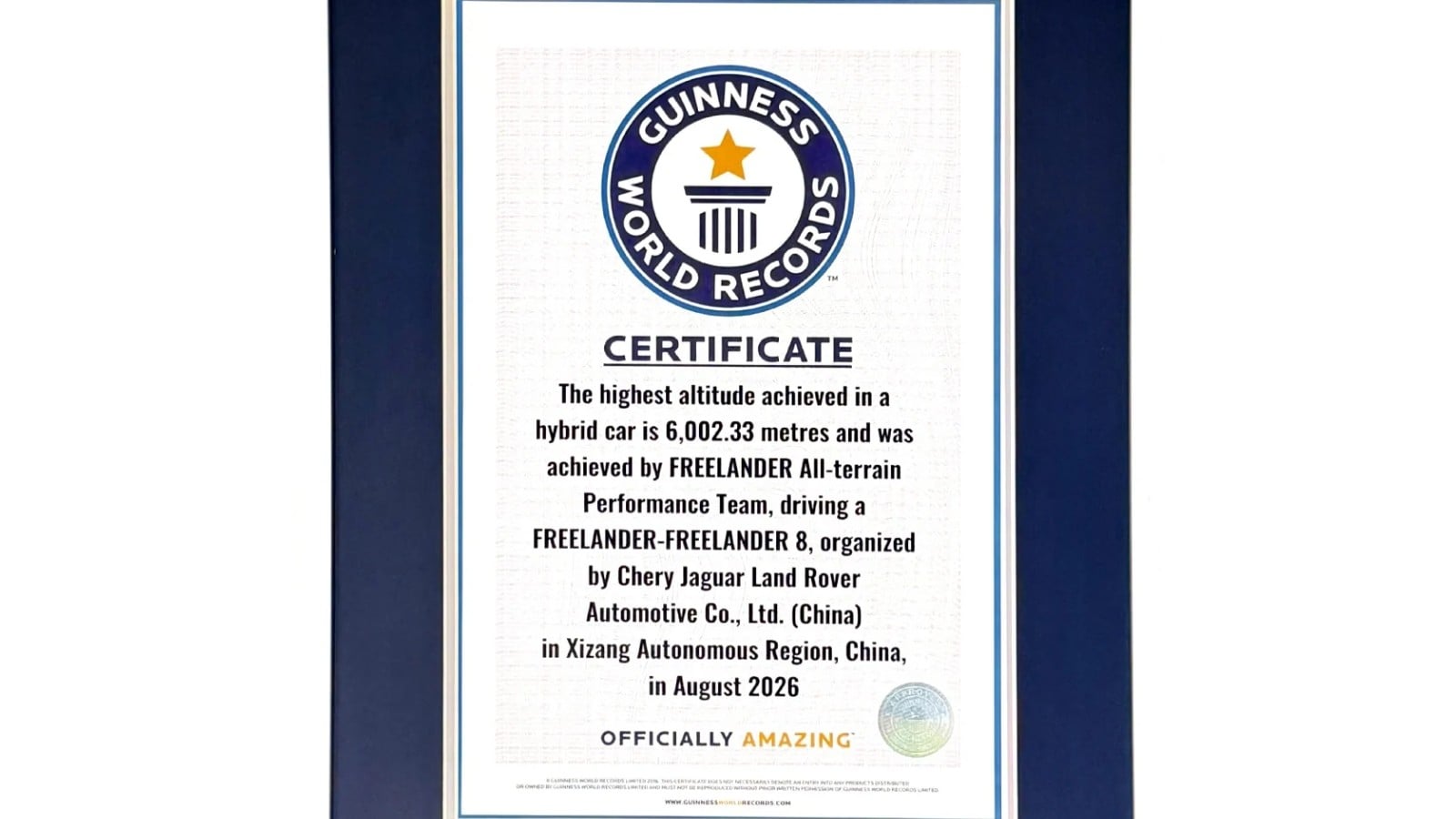
The Freelander didn’t exactly smash the previous benchmark. BYD’s Fang Cheng Bao Bao 5 had reached 5,980.05 meters in July 2024, meaning the new record is higher by just 22.28 meters.
Getting there was still a serious challenge, as the Freelander covered approximately 1,480 meters of off-road trail with around 200 meters of vertical ascent, traversing loose scree and unpaved shale along the way.
Conditions become particularly difficult for machinery at 6,000 meters because atmospheric pressure and available oxygen are dramatically lower than at sea level. Chery-JLR says the Freelander’s turbocharged 1.5-liter four-cylinder range extender still maintained 80% of its rated generating capacity during the climb.
Turbocharging helps compensate for the thinner air by forcing more oxygen into the engine. That’s important in an EREV like the Freelander because the combustion engine needs to continue generating electricity while the electric motors handle propulsion.
The Freelander 8 Has 818 HP
Those electric motors aren’t lacking in muscle. The dual-motor all-wheel-drive system produces a combined 610 kW, equivalent to approximately 818 hp, with a 483-hp motor at the front and a 335-hp unit at the rear.
The rear drive unit also incorporates a two-speed reduction gearbox. Selecting first gear provides a 1.5:1 torque multiplication ratio, allowing the system to generate up to an equivalent 8,000 Nm, or roughly 5,900 lb-ft, of wheel-end torque.
It effectively gives the electric drivetrain something resembling a traditional off-roader’s low-range gearing. That also reduces the amount of motor torque and electrical current required for a given amount of wheel torque, potentially helping control heat during sustained low-speed climbing.
It Did All This With A Unibody Chassis
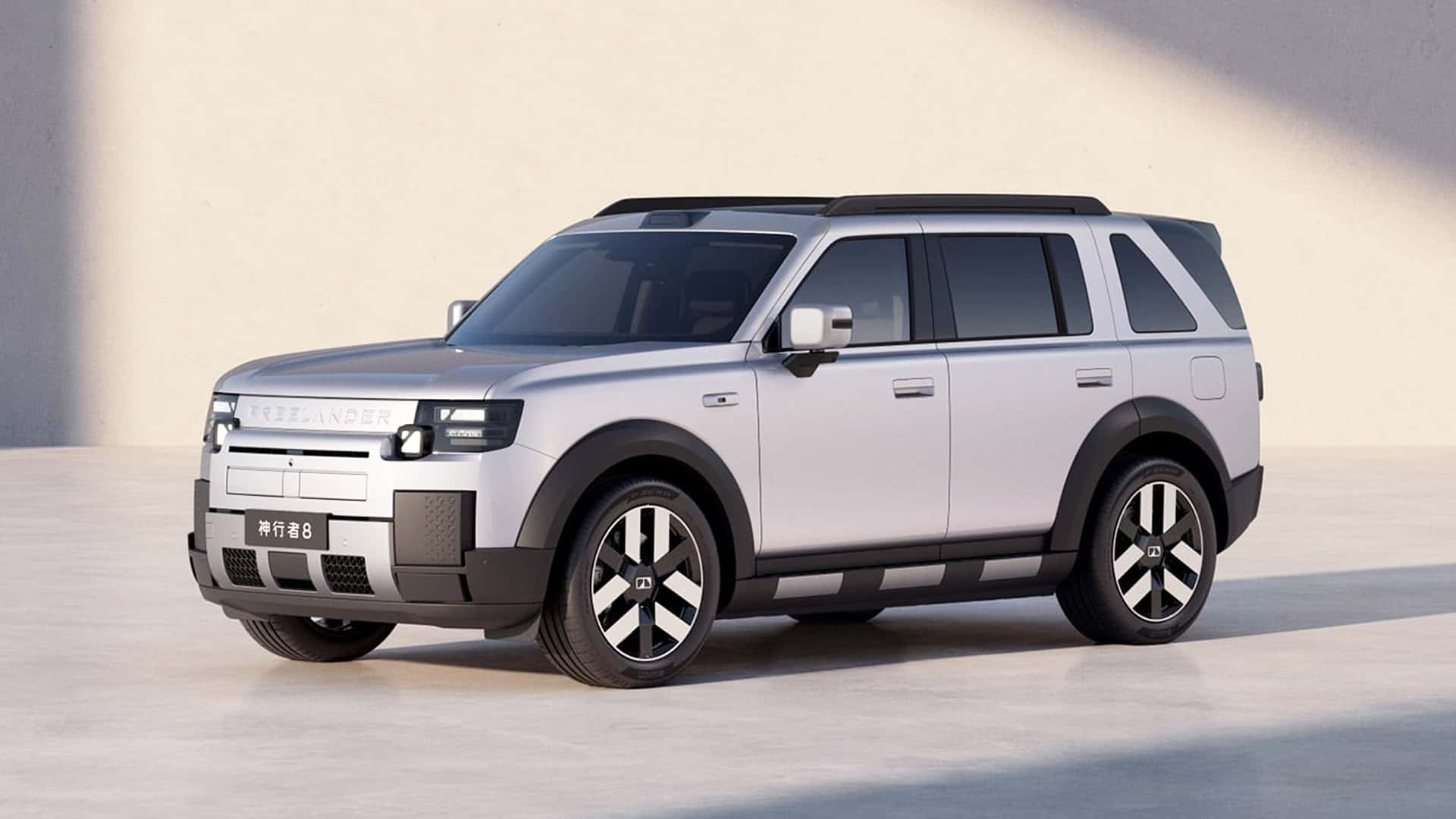
Unlike the body-on-frame Fang Cheng Bao Bao 5 that previously held the record, the Freelander 8 uses unibody construction. Chery-JLR says the chassis completed the climb without structural damage, although it hasn’t released detailed post-run inspection results or specified which tires were fitted.
The SUV is a substantial machine, measuring 5,118 mm long with a 3,040-mm wheelbase and weighing approximately 2.98 tonnes. Air suspension with continuously variable damping is also part of the package.
Its drivetrain draws energy from a large 60.33-kWh CATL battery using an 800-volt electrical architecture. Chinese pricing currently ranges from 289,900 to 379,900 yuan, or roughly $41,000 to $54,000.
A Guinness record doesn’t tell us how the Freelander 8 will perform after years of everyday abuse. Reaching 19,693 feet on a loose Tibetan mountainside, however, is one memorable way to reintroduce the Freelander name.