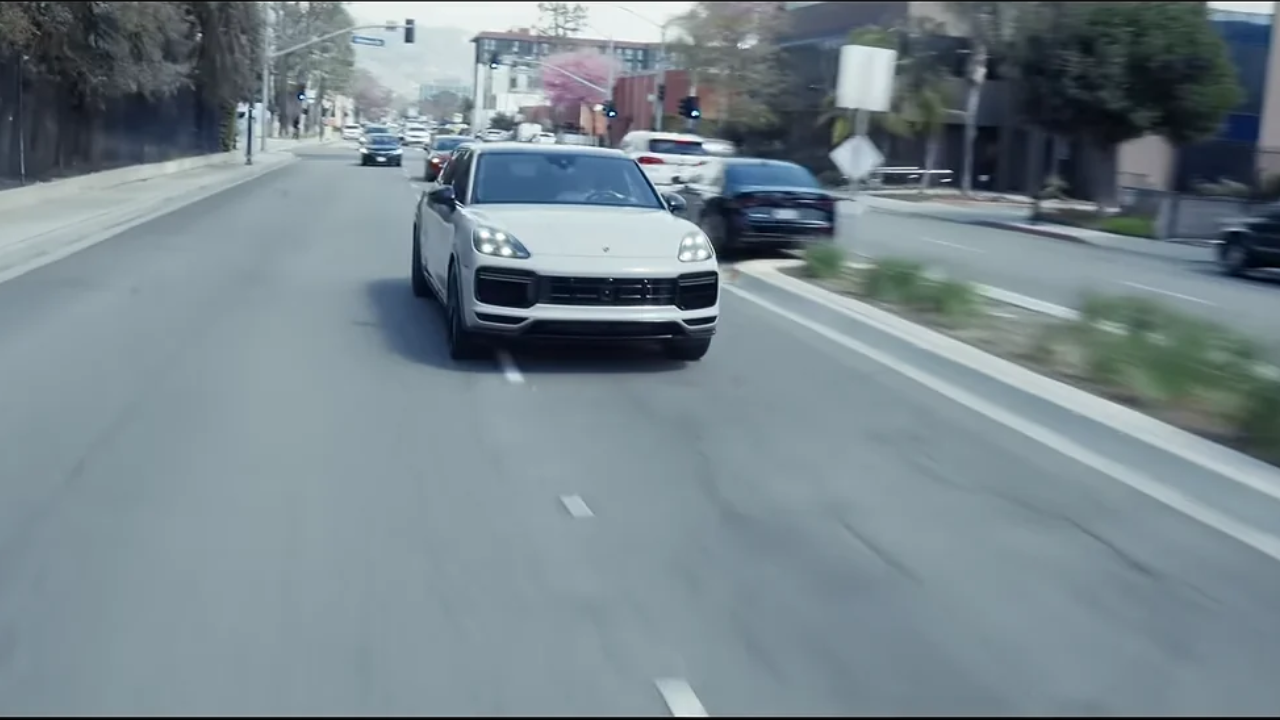
West Coast Customs has released a new video showing how Mark Zuckerberg’s unusual Porsche minivan was built. The car first made headlines in October 2024, but the shop’s November 14, 2026, footage gives viewers a much closer look at the work behind it.
Zuckerberg wanted something special for his wife, Priscilla Chan, who was looking for a minivan. Rather than buy a typical family hauler, he asked the California custom shop to create one from a Porsche Cayenne Turbo GT.
The finished vehicle had already drawn plenty of attention for its stretched body and sliding doors. What wasn’t clear from the original photos was just how much of the Porsche had to be changed.
Now, the crew is showing the work that went into the conversion, including a major change to the SUV’s frame and a set of doors that became the hardest part of the job.
Making Room
Embedded media follows; please allow a moment to load.
The project began with a 2023 Cayenne Turbo GT, a high-performance SUV that was never designed to carry three rows of passengers. Before making any cuts, West Coast Customs brought in Bluepoint Scan to create detailed scans of the vehicle’s interior and exterior.
Those measurements helped the team plan where to add new body panels, supports, and door parts. Once the Porsche was stripped down, fabricator Rick Bentley took on the job of extending it.
His team cut the vehicle in half and added roughly 30 inches to its length. That gave the shop enough room to create a larger passenger area while keeping the familiar Cayenne shape.
The added space also called for changes to the roof and cabin. A separate team made new carbon-fiber parts, while the interior crew worked on adding another row of seats. Ryan Friedlinghaus wanted the finished cabin to feel like something Porsche might have built itself.
Those Sliding Doors
Getting passengers into the longer Porsche meant replacing its conventional rear doors with powered sliding ones. Making that work proved far more difficult than stretching the body.
The crew had to build new doors, fit rollers, and design tracks that would guide them along the sides of the vehicle. They also developed a motor-driven belt system to move each door when someone pressed a button.
Even the windows required custom work. The team used the original rear glass as a guide while building new frames and preparing glass for the sliding doors.
During the final reveal, Friedlinghaus told Zuckerberg that the doors had been the hardest part of the conversion. He also wanted to avoid making the stretched Cayenne look like a limousine.
With the fabrication complete, the Porsche went through bodywork and paint. Workers then finished the upholstery, installed the electronics, and applied paint protection film before handing it over.
A Different Kind Of Reveal
Although Zuckerberg had helped plan the build, Chan had not seen the finished vehicle. She and her husband arrived together for the reveal, where she got her first look at the custom Porsche.
“It’s beautiful,” Chan said as she examined the vehicle. She was especially impressed that the longer body still looked like a Porsche rather than a heavily altered SUV.
Friedlinghaus explained that making the conversion look factory-built had been a major goal from the beginning. Zuckerberg agreed, saying he wanted people to wonder why Porsche didn’t make something like it.
Chan also admitted she hadn’t been sure the project would happen. With Zuckerberg often working on different ideas, she hadn’t known which ones would become real.
“I don’t know what I was expecting, but it wasn’t this,” she said.
Zuckerberg had first shared the completed Porsche in October 2024, along with a matching 911 GT3 Touring with a manual transmission. The newly released footage shows how West Coast Customs turned his original idea into the family vehicle he presented to Chan.