A Toyota Tundra owner says a collision repair turned into a $9,000 engine problem after a dealership allegedly told him to keep driving despite noticing misfires. Months later, he opened the engine himself and found damaged components, raising even more questions about what happened.
The owner described the situation in an October 2026 Reddit post, explaining that his 2016 Toyota Tundra 5.7-liter had been involved in a crash earlier in the year. He requested an engine inspection before collecting the repaired truck because he reported unusual noises around the time of the collision.
According to the owner, his insurance company initially declined to authorize an engine inspection because the vehicle would not start and there was no visible evidence of engine damage. When the dealership eventually started the truck, technicians reportedly detected misfires, cleared the diagnostic codes, and said the engine ran normally afterward.
The trouble apparently wasn’t over. About a month later, the driver experienced a serious mechanical failure while towing a two-ton trailer on the highway. The subsequent diagnosis, repair estimate, and insurance denial left him searching online for answers.
Warning Signs
Need advice for this situation I’m in
by
u/Guilty-Resort-4665 in
MechanicAdvice
In the r/MechanicAdvice post, the owner explained that a tow truck driver had noticed an unusual noise when collecting the vehicle after the accident. The truck had also reportedly made a loud knocking sound during the collision.
When the driver picked up the Tundra after repairs, the engine was still misfiring. He said dealership staff recommended driving approximately five miles and filling the tank with gasoline, suggesting the problem would correct itself.
The owner followed those instructions and continued using the truck.
About a month later, while towing a two-ton trailer, he heard a loud crash and suddenly lost power and what he described as braking. He said the highway was empty at the time.
$9,000 Repair
After the breakdown, the owner had the Tundra transported to another Toyota dealership for inspection.
According to his account, technicians identified a burned intake valve in cylinder two, which was no longer holding compression. They also reported that cylinder one had compression near the lower end of the acceptable range.
The dealership estimated repairs at approximately $9,000.
The owner tried to get insurance to cover the damage, but the company rejected the claim as ordinary wear and tear from Arizona’s summer heat.
Rather than authorize the expensive repair, he decided to handle the engine work himself. He left the truck parked in his driveway for several months before beginning the job.
Unexpected Discovery
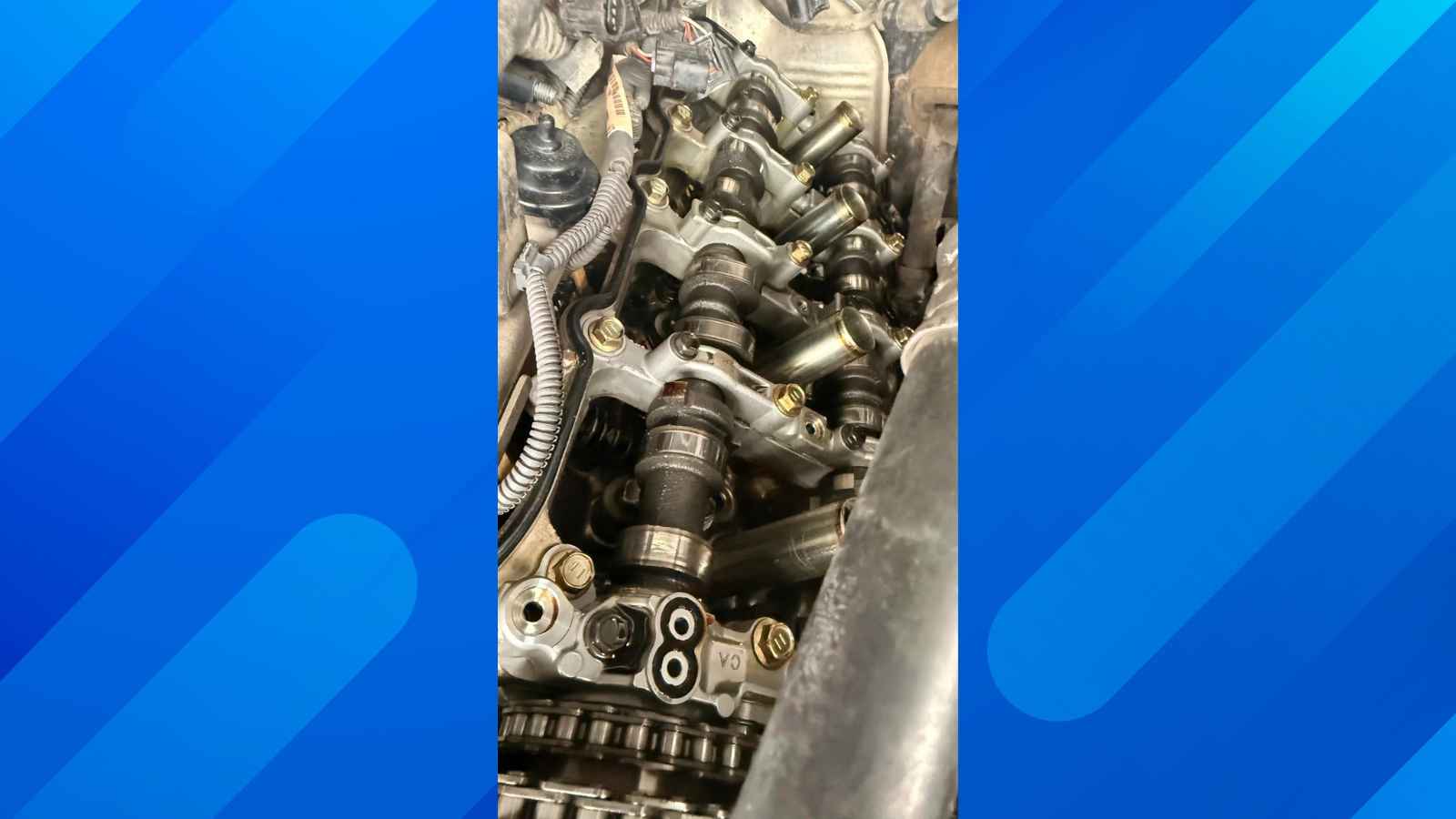
When he finally removed the valve cover, the owner reported finding that the intake valve spring assembly for cylinder one had come apart, leaving components scattered around the cylinder head. The discovery prompted him to stop working and contact both his Toyota service advisor and insurance company.
The photographs accompanying his Reddit post show the engine components he was concerned about, but the images alone don’t establish what caused the failure or when the damage occurred.
Other Reddit users questioned whether the engine problems could be connected to the original collision. One commenter who identified himself as a master technician with 36 years of experience argued that a collision would be unlikely to cause this type of valve failure unless the engine sustained substantial direct damage. Another commenter suggested replacing the engine with a lower-mileage used unit rather than pursuing the existing repair.
The discussion also raised concerns about the time between the accident, the engine failure, and the owner’s inspection. Establishing a direct mechanical connection between the collision and the later breakdown could be difficult.
In a reply, the owner confirmed the Tundra suffered front-end damage in the original crash. However, no independently verified diagnosis links that damage to the engine failure.