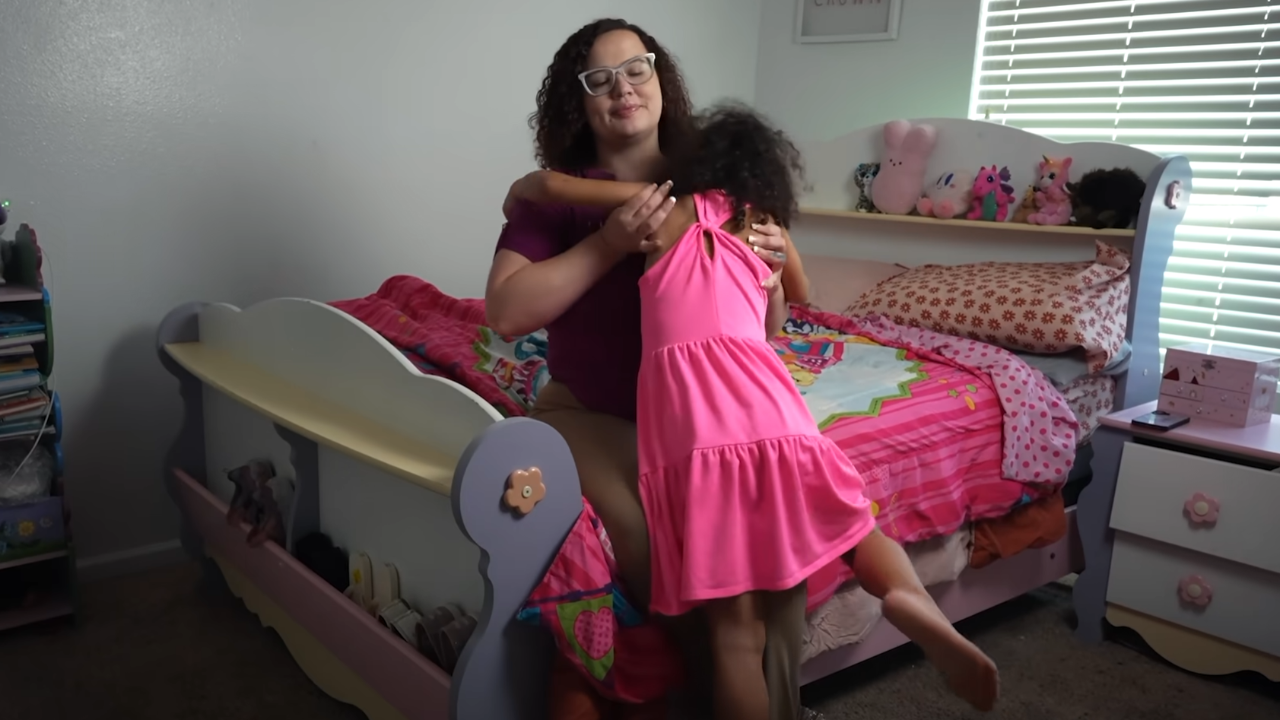
A private paternity test excluded the man Nadia Sutton identified as her daughter’s father. She continued looking for a connection to his family.
In a newly published Dallas Morning News video, Sutton recounts a dispute that began years earlier. She met Gary Alton Matthews Jr. in New Orleans in the spring of 2020, when she was 22, and eventually arranged to meet him at his home.
Sutton said Matthews convinced her he could not use a condom during sex. She took Plan B afterward, then learned she was pregnant.
She chose to have her daughter and described the pregnancy as “a means for a total transformation.” After the birth, she pursued financial support through the state.
A Family Search
Embedded media follows; please allow a moment for it to load.
After the negative result, Sutton described receiving harassing messages on Instagram from Matthews. What caught her attention was his emphasis: rather than simply saying he was not the father, she recalled him saying “a test will never say it.”
She turned to Ancestry. The first match, she said, was Matthews’s younger sister. Sutton sent the results to the state as she continued challenging the exclusion.
Ancestry explains that its matching service compares a customer’s DNA with other members’ DNA, identifies shared segments, and uses the amount of shared DNA to estimate how closely people are related. That can identify a family connection through someone other than the person whose paternity is in dispute.
The Next Round
The newspaper reported that Matthews had provided a private sample while claiming he was working abroad. The following year, the state required him to provide DNA in open court. That test returned a probability of more than 99.99% that he was the father.
AABB, which accredits relationship-testing facilities, says accredited facilities follow validated procedures to maintain a chain of custody and traceability from the start of a case through the reporting of results. Those procedures track the sample used to produce a result.
Sutton is among at least five women with child-support cases involving Matthews. Caitlyn Morris, another mother living in Baton Rouge, described her experience in the video: “I wasn’t believed for so long.”
The report put Matthews’s unpaid child support at more than $200,000 owed to the mothers of three of his children at the time of its reporting. Through his attorney, Matthews declined to comment to the newspaper.