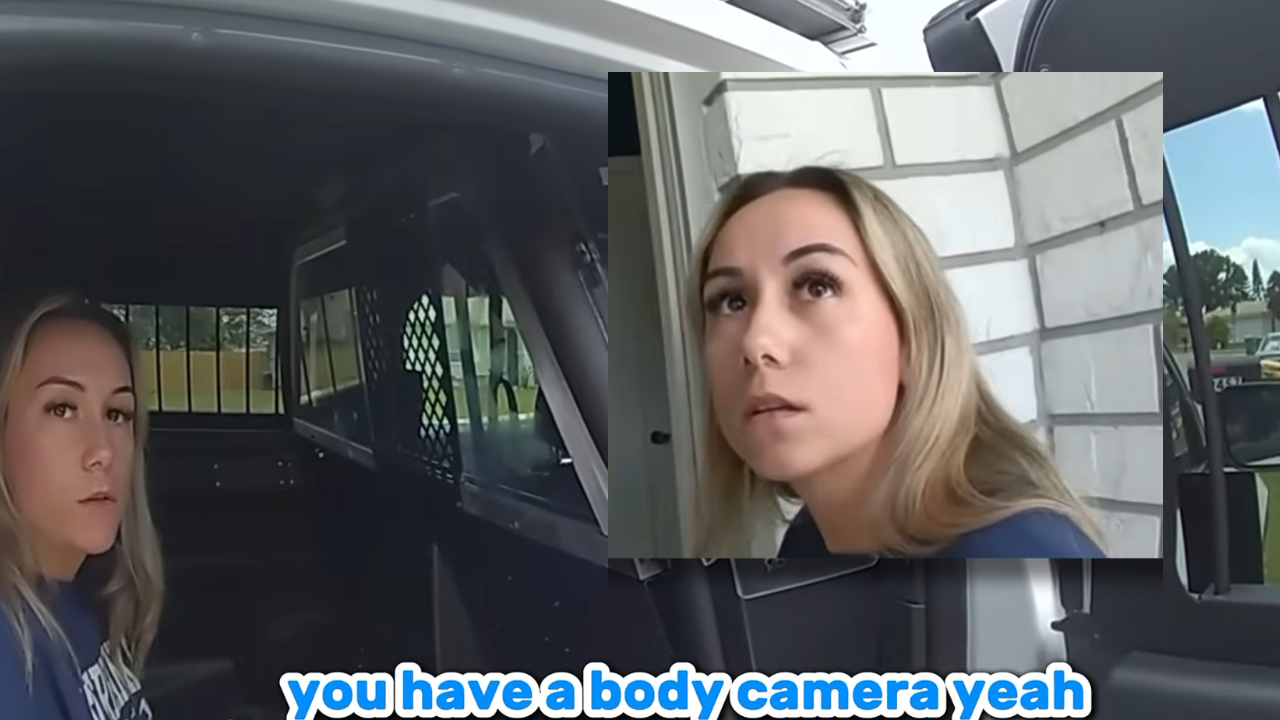
An April 2024 Florida arrest is drawing fresh attention after newly circulated bodycam footage captured a woman repeatedly asking why she was being taken into custody, just one day after she had bonded out of jail.
The footage, published by the YouTube channel Police Encounters TV on October 8, 2026, shows a Charlotte County Sheriff’s Office detective arriving at a home to arrest Ana Barbara Adams Pedrosa in connection with a retail-theft investigation.
Punta Gorda police had arrested her the previous day on related allegations. But the sheriff’s detective explained that additional cases had developed outside the city’s jurisdiction, meaning she would face another arrest.
What began as a relatively calm encounter became more complicated when Adams Pedrosa requested an attorney, and the detective presented her with a choice between going to the sheriff’s office for questioning or heading directly to jail.
Another Arrest
Embedded media follows; please allow a moment to load.
On April 25, 2024, Detective Savage arrived at the residence, introduced himself, and asked Adams Pedrosa to step outside.
She initially appeared cooperative, although she seemed confused when he informed her that she was being arrested again.
Adams Pedrosa asked several times what she was being arrested for. Savage described the new allegations as similar to the previous day’s charges and explained that Charlotte County had separate cases.
The detective placed her in handcuffs while another deputy helped retrieve her shoes and cellphone. She continued asking questions about where she would be taken and whether she could post bond again.
She also told Savage that she had already spoken with an attorney.
A historical booking listing identifies Adams Pedrosa, then 27, as arrested on April 24 on three counts of first-degree petit theft and one count of participating in a scheme to defraud involving property valued at less than $20,000.
Those entries concern the earlier arrest. The exact charges filed in connection with the following day’s encounter have not been independently verified in the official arrest paperwork.
A Choice Presented
The conversation shifted when Adams Pedrosa told the detective she did not want to speak to anyone without an attorney.
Savage began reading her Miranda rights, explaining that she could remain silent, consult an attorney, and stop answering questions.
But Adams Pedrosa remained focused on where she was going. She wanted to know whether she would be taken to a police facility or back to jail, where she had spent the previous night.
The detective explained that her destination would depend on whether she agreed to speak with him.
“If you wanna talk with me, we’ll go to the office. If you don’t wanna talk with me, you’ll just go straight down to the jail,” Savage told her.
She then asked whether an attorney would be available at the office.
Savage responded that if she wanted to speak with her attorney, she would go directly to jail and he would not ask her further questions.
After confirming that choice, Adams Pedrosa agreed to go to the office.
The exchange is the central issue raised in the resurfaced footage. Although she had previously expressed a desire for an attorney, she subsequently agreed to speak with the detective after learning that doing so would change where she was taken.
What The Law Says
The U.S. Supreme Court’s ruling in Edwards v. Arizona established protections against police-initiated custodial interrogation after a suspect invokes the right to counsel.
Under that decision, officers generally cannot resume questioning about a criminal case without counsel present unless the suspect initiates further communication and validly waives the right.
Police Encounters TV’s commentary questions whether the detective’s response to Adams Pedrosa’s request for an attorney was consistent with those protections.
The distinction matters because the video shows Adams Pedrosa asking about the circumstances of her detention rather than making an incriminating statement about the suspected thefts.
Determining whether a constitutional violation occurred would require examining the full circumstances, including whether any subsequent questioning took place and whether she knowingly and voluntarily waived her rights.
The available footage does not establish that a court found the detective’s conduct unlawful.
Inside The Home
After the arrest, Savage spoke with Adams Pedrosa’s relatives about the suspected retail-theft activity.
Her uncle told the detective that she had been staying with the family and that he had noticed merchandise appearing at the residence, including clothing and toys.
He acknowledged that he did not know where all the items came from or whether they had been stolen.
During the conversation, Savage indicated that the case involved multiple incidents. At one point, he explained that a single store had identified approximately 65 transactions or occurrences under examination.
The detective did not establish on camera that all 65 incidents had resulted in criminal charges or that Adams Pedrosa was responsible for every one.
Her relatives discussed concerns about her shopping habits, but their observations did not independently establish the alleged thefts.
An unusual family connection also emerged. Her uncle explained that a relative working as a corrections officer had participated in her booking the night before.
Savage continued collecting information while other family members arrived at the residence and learned that she had been arrested a second time.
The Court Record
Adams Pedrosa’s case had progressed beyond the initial arrests by the summer of 2024.
A Charlotte County court schedule dated July 31, 2024, lists her for a case-management conference in felony case 24-631F.
That listing establishes that the matter had reached the court’s calendar, but it does not identify a conviction, dismissal, plea agreement, or sentencing decision.
A final disposition has not been independently verified. The arrests and charges themselves are not findings of guilt, and no court ruling concerning the detective’s handling of her request for an attorney has been established from the records reviewed.