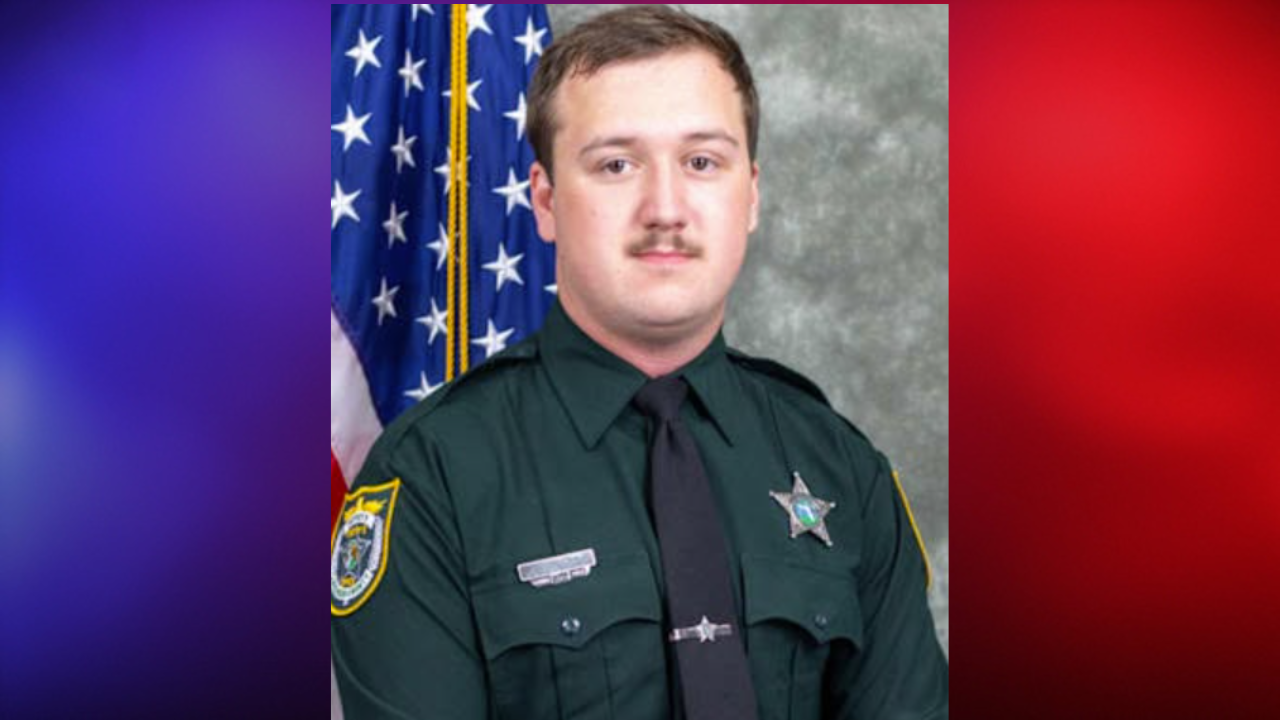
A Florida Highway Patrol trooper clocked an off-duty sheriff’s deputy riding a motorcycle at 111 mph, declared to himself that the rider was “going to jail,” and pulled him over.
Then he recognized him.
“Dude! Bro! I didn’t recognize you!” Trooper Joshua Provencher said after learning the motorcyclist was Brevard County Sheriff’s Deputy Michael Fultz, according to video obtained by News 6. What followed was a phone call to a supervisor, an acknowledgement that Fultz had been traveling 111 mph in traffic, and a decision not to arrest him.
Instead, Fultz received a civil citation saying he had been driving 74 mph in a 65 mph zone. The same ticket reportedly noted in its narrative that his motorcycle had actually been clocked at 111 mph.
The Trooper Initially Had a Different Plan
The February 9 traffic stop happened on U.S. 192 near Melbourne, Florida. Provencher was reportedly running radar when a motorcycle passed in the opposite direction at a high rate of speed.
“He’s going to jail,” Provencher can be heard saying before making a U-turn, according to News 6.
After catching up and stopping the motorcycle, the trooper approached Fultz without initially recognizing him.
“What on earth!” Provencher said. “111. And you were increasing. Tell me why I shouldn’t take you to jail?”
Fultz apologized and indicated that he had a driver’s license. Then Provencher asked whether he knew him.
“Yeah. Fultz. Sheriff’s Office,” Fultz replied.
That changed the tone of the encounter.
“Dude! Bro! I didn’t recognize you!” Provencher responded. “C’mon!”
The trooper went back to his patrol vehicle and called a Florida Highway Patrol sergeant.
“I know this guy. He is a deputy,” Provencher said. “Just clocked him at 111 out here on 192. Any advice?”
The supervisor’s side of that conversation was not captured on the recording.
Provencher described the conditions to the sergeant, saying Fultz had been passing two other motorcycles that were also traveling more than 80 mph. He said there was “a fairly decent amount of traffic,” although Fultz was traveling in a straight line and was not weaving.
Then came one of the clearest statements on the recording.
“If I can avoid the 10-15, I don’t want to ruin his job,” Provencher said.
“10-15” is police radio terminology referring to a prisoner in custody.
Florida’s New Speeding Law Was Already in Effect
Florida’s Dangerous Excessive Speeding law had taken effect on July 1, 2025, roughly seven months before Fultz was stopped.
The law creates a criminal offense in two circumstances: driving at least 50 mph above the speed limit, or driving at least 100 mph “in a manner that threatens the safety of other persons or property or interferes with the operation of any vehicle.”
The second part matters here.
Fultz was reportedly clocked at 111 mph in a 65 mph zone, which works out to 46 mph over the limit. That means his speed alone did not meet the law’s separate 50-mph-over threshold.
For the 100-mph provision to apply, the surrounding circumstances also had to make the driving a threat to people or property or interfere with another vehicle.
According to News 6, Brevard County Sheriff’s Office investigators later concluded that happened.
Trooper Provencher was aware that Deputy Fultz’s speed, along with the traffic conditions which made his speed a danger to other drivers, met the statutory criminal requirements for the new ‘super speeder law.'”
Investigators also wrote that Fultz admitted his speed violated the law.
A first conviction for dangerous excessive speeding can bring up to 30 days in jail, a $500 fine, or both.
There is some discretion here that is worth spelling out. The statute establishes the criminal offense and penalties, while Florida’s arrest law says an officer may make a warrantless arrest for a misdemeanor committed in the officer’s presence. The Dangerous Excessive Speeding law does not say every qualifying driver must automatically be taken to jail.
That makes Provencher’s own explanation for exercising that discretion especially relevant.
A 111 MPH Stop Became a 74 MPH Ticket
After speaking with his supervisor, Provencher returned to Fultz.
“Man, you know you’re making my hands tied,” the trooper said. “I’m trying to figure out what to do because, you know, 111, it’s a horrible speed.”
He ultimately told Fultz he would not arrest him.
“I already spoke to my sergeant, and he’s giving me full leeway on it,” Provencher said. “He’s like, ‘It’s up to you.'”
Records obtained by News 6 show the citation Provencher issued listed Fultz as traveling 74 mph in a 65 mph zone, just 9 mph over the limit.
The narrative portion of the citation reportedly still stated that the vehicle “was clocked at 111.”
“If you weren’t doing 111 miles an hour, I wouldn’t write the damn ticket,” Provencher told him.
The difference had another practical consequence.
Under Florida law, motorists cited for driving at least 30 mph over the speed limit must appear at a mandatory hearing. A citation for 74 in a 65 falls nowhere near that threshold.
“I’m not going to make you go to court,” Provencher told Fultz.
Fultz later paid $155 in fines and late fees, according to court records cited by News 6.
There Was Another Issue With the Motorcycle
Records reviewed by News 6 also indicate Fultz did not have the motorcycle endorsement required on his driver’s license.
Florida law states that a person may not operate a motorcycle without a license authorizing motorcycle operation.
Provencher did not cite Fultz for the missing endorsement, according to the report, and there is no indication the motorcycle was impounded.
Near the end of the encounter, the trooper offered a warning.
“Slow it down,” Provencher said. “I don’t feel good about it.”
The Stop Surfaced During a Different Investigation
The Brevard County Sheriff’s Office did not learn the full circumstances of the stop through a routine FHP referral. The incident surfaced while the sheriff’s office was conducting a broader administrative investigation of Fultz, according to records obtained by News 6.
Investigators found Fultz had been stopped by other law enforcement agencies at least four times during a two-month period while riding his motorcycle off duty and failed to report the stops as required by agency policy.
Fultz initially said he had informed his supervisor about the February stop, according to the report, but later clarified that a sergeant had approached him after word of it got out.
There is no indication in the administrative report that any action was taken over the February 9 stop before Fultz was recognized as Brevard County’s 2025 Deputy of the Year in March.
The timing is particularly awkward because Fultz acknowledged that the Brevard County Sheriff’s Office and FHP were then participating in a campaign targeting dangerous speeding.
In January, Sheriff Wayne Ivey had appeared with deputies and troopers to warn motorists about exactly that behavior.
“Slow down. Drive responsibly. And if you can’t, these gentlemen behind me are going to help you learn to drive responsibly.”
Fultz resigned from the sheriff’s office in May as Ivey was preparing to fire him following an administrative investigation into several separate allegations of misconduct.
Fultz later apologized in a statement to News 6 for the embarrassment caused by his actions, while saying he disagreed with some allegations and conclusions in the investigation.
The Public Had One Question About the Law
Reaction to the story quickly focused on whether Fultz received treatment that another motorcyclist would have gotten.
“Whatever happened to ‘nobody is above the law’?” one person commented on Facebook.
Another commenter raised a more technical point: “I believe the law says they can arrest, not that it’s a mandatory arrest.”
That commenter has the statutory wording right. Florida law gave Provencher the authority to make an arrest but did not command him to do so.
The unanswered question is why he exercised that discretion as he did.
On the recording, Provencher himself said Fultz’s 111 mph speed was “horrible,” described a “fairly decent amount of traffic,” and initially reacted by saying the rider was going to jail. After discovering Fultz was a deputy he knew professionally, Provencher told his supervisor, “If I can avoid the 10-15, I don’t want to ruin his job.”
He then wrote the deputy a ticket for 9 mph over the speed limit.
News 6 said Florida Highway Patrol did not respond to its questions about whether the agency reviewed the stop internally or how it would address concerns that Fultz received special treatment.