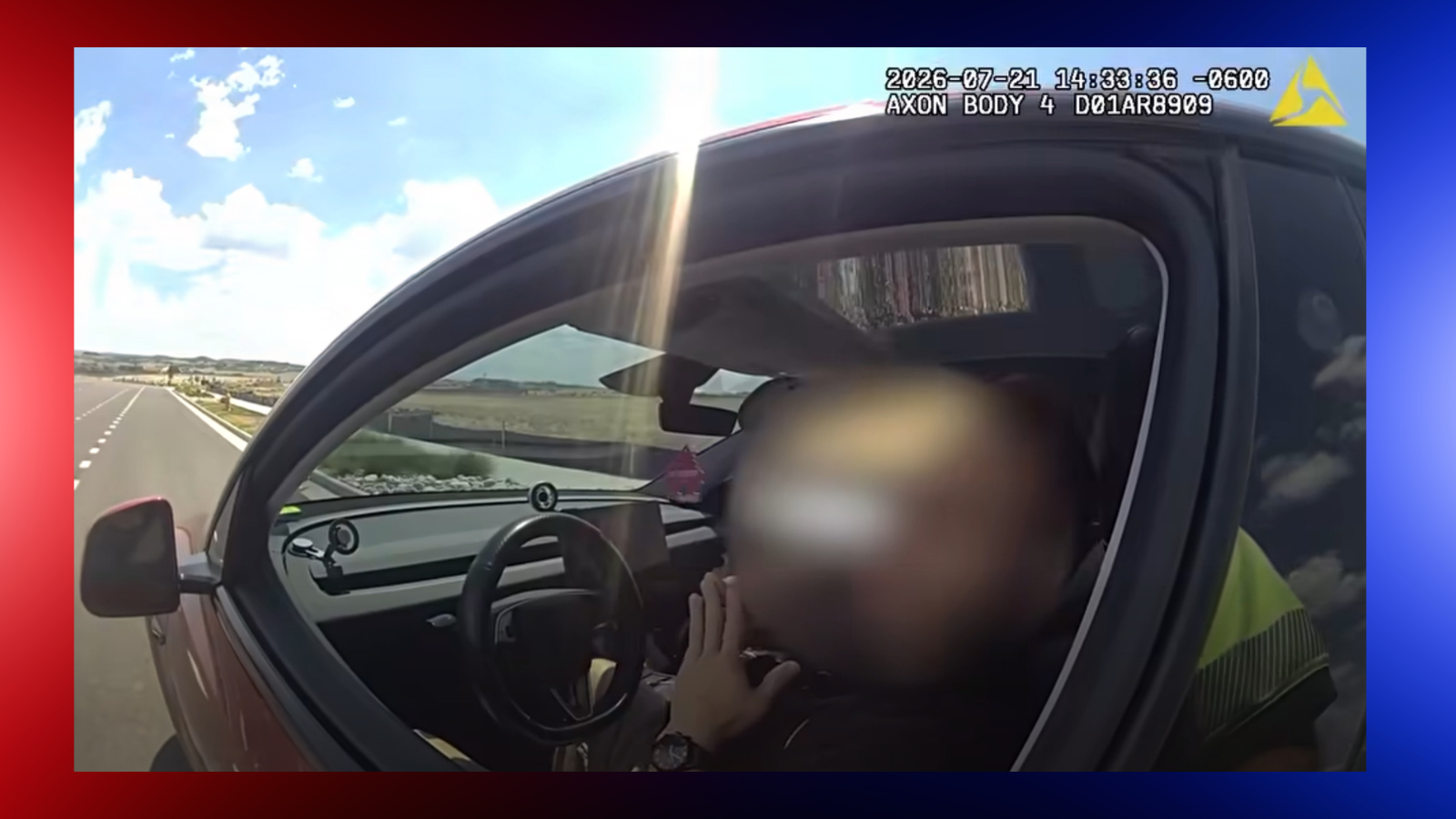
A Colorado driver’s attempt to blame their vehicle’s driver-assistance system for a speeding violation is getting plenty of attention after police shared body camera footage of the traffic stop.
According to the Parker Police Department, one of its officers recently stopped a driver traveling 64 mph in a 45 mph zone. Rather than disputing the speed itself, the driver insisted they were not responsible because the vehicle’s driver-assistance features were engaged.
The encounter quickly turned into an unusual roadside debate after the driver argued that the vehicle’s technology, rather than the person behind the wheel, should be held responsible for the speeding violation. The driver also demanded to speak with a supervisor after the officer issued the citation.
Police later shared the video as a reminder that advanced driver-assistance technology may help operate a vehicle, but it does not replace the driver or remove the driver’s responsibility to follow traffic laws.
“I Wasn’t Driving”
Please allow a moment for the embed to load.
The driver was “adamant” that they were not responsible for the speeding violation because the vehicle’s driver-assistance technology was active at the time of the stop.
Body camera footage shared by the department shows the driver repeatedly telling the officer that the vehicle was driving itself and that he should not be held responsible for its speed.
The officer disagreed, explaining that the person sitting behind the wheel remains responsible for operating the vehicle regardless of whether driver-assistance features are engaged.
At one point during the exchange, the driver demanded to speak with a supervisor. The officer explained that a complaint number was listed on the citation and said the driver could also address the ticket in court.
Police Say Drivers Remain Responsible
In the post accompanying the video, Parker Police emphasized that modern driver-assistance systems are designed to assist drivers, not replace them.
“Driver assistance technology does not replace the driver,” the department wrote.
Police noted that features such as adaptive cruise control, lane-centering systems and full self-driving technology do not relieve motorists of their legal responsibility to operate a vehicle safely. Drivers remain responsible for obeying speed limits, paying attention to the road and maintaining control of the vehicle.
“No matter what technology your vehicle has, the person behind the wheel is accountable for the vehicle’s actions,” the department added. “These systems are designed to assist you, not drive for you.”
The department concluded its message by encouraging motorists to slow down, remain engaged and help keep Parker’s roads safe.
Readers Had Plenty To Say
The video generated hundreds of comments, with many viewers focusing on the driver’s argument that the vehicle should be blamed for the speeding violation.
“The car doesn’t have a driver’s license!” one commenter wrote. Another added, “You literally set the speed of the autopilot.”
Several Tesla owners also weighed in, noting that driver-assistance systems still require human supervision and that the driver remains responsible for monitoring the vehicle and adjusting its settings when necessary.
Others praised the officer’s patience throughout the lengthy exchange, with one commenter writing, “Well handled, officer. ‘I wasn’t driving!’ Unbelievable.”
Another viewer offered a straightforward summary of how traffic disputes should generally be handled: “Don’t hold court on the side of the road. Tell it to the judge.”
A Traffic Stop Is Not a Courtroom
The video also offers a broader lesson in traffic-stop etiquette. The side of the road is generally not the place to argue a legal case, demand that an officer reverse a decision, or attempt to litigate whether a citation is justified.
A driver is unlikely to talk an officer out of doing their job, and becoming combative or repeatedly arguing is even less likely to improve the situation. Even when a motorist believes an officer is mistaken, the safer approach is usually to remain calm, comply with lawful instructions and document the encounter.
Someone who believes they were treated improperly can record relevant details, preserve any available video and raise the issue through the department’s complaint process, a supervisor, legal counsel or the court system. In other words, even when an officer may be wrong, it is usually better to let the dispute be resolved through the proper process rather than escalating the confrontation on the roadside.
While viewers had different opinions about the technology itself, most agreed with the department’s central message: regardless of how advanced a vehicle’s driver-assistance features may be, responsibility for what happens on the road still belongs to the person behind the wheel.