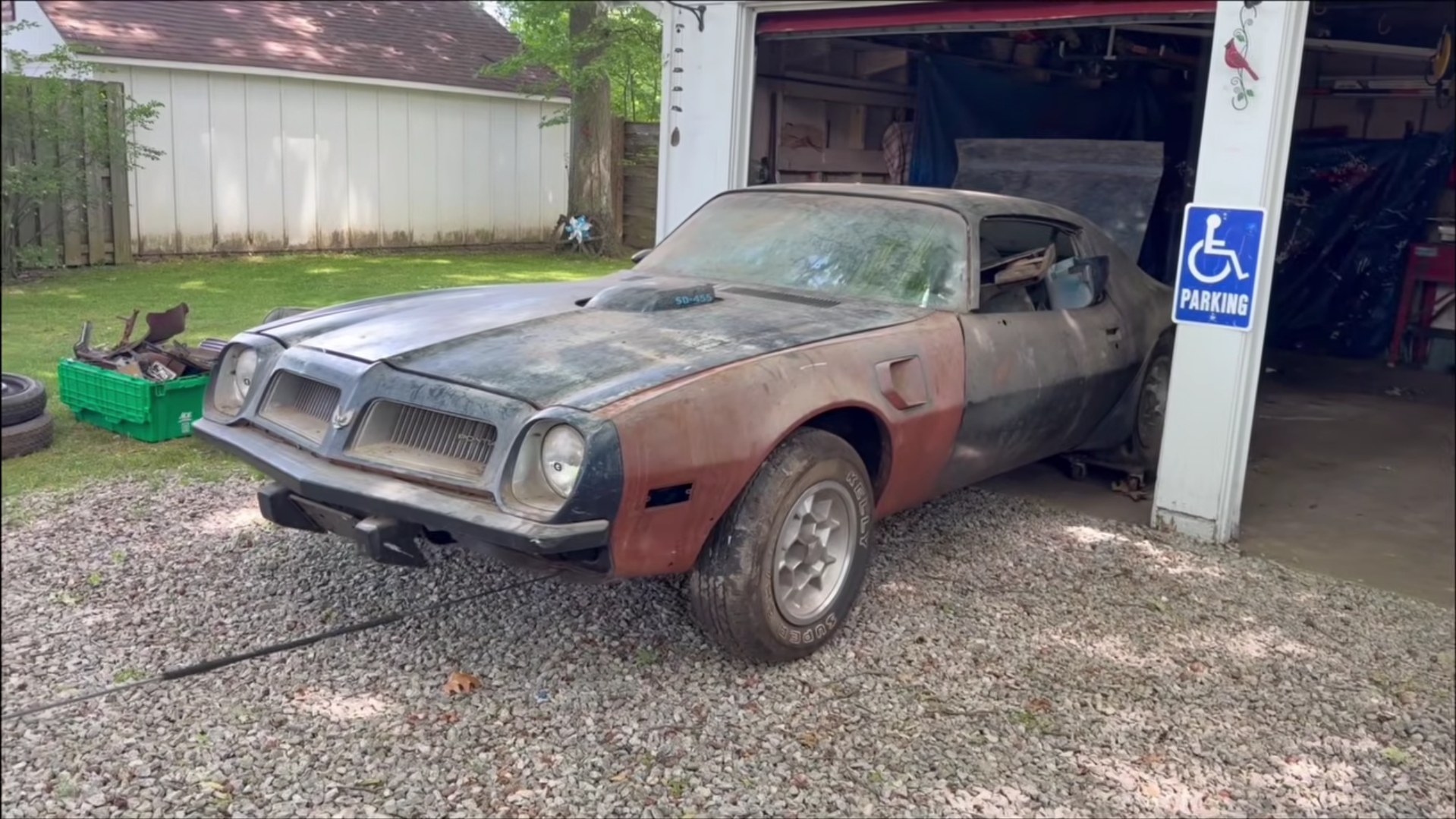
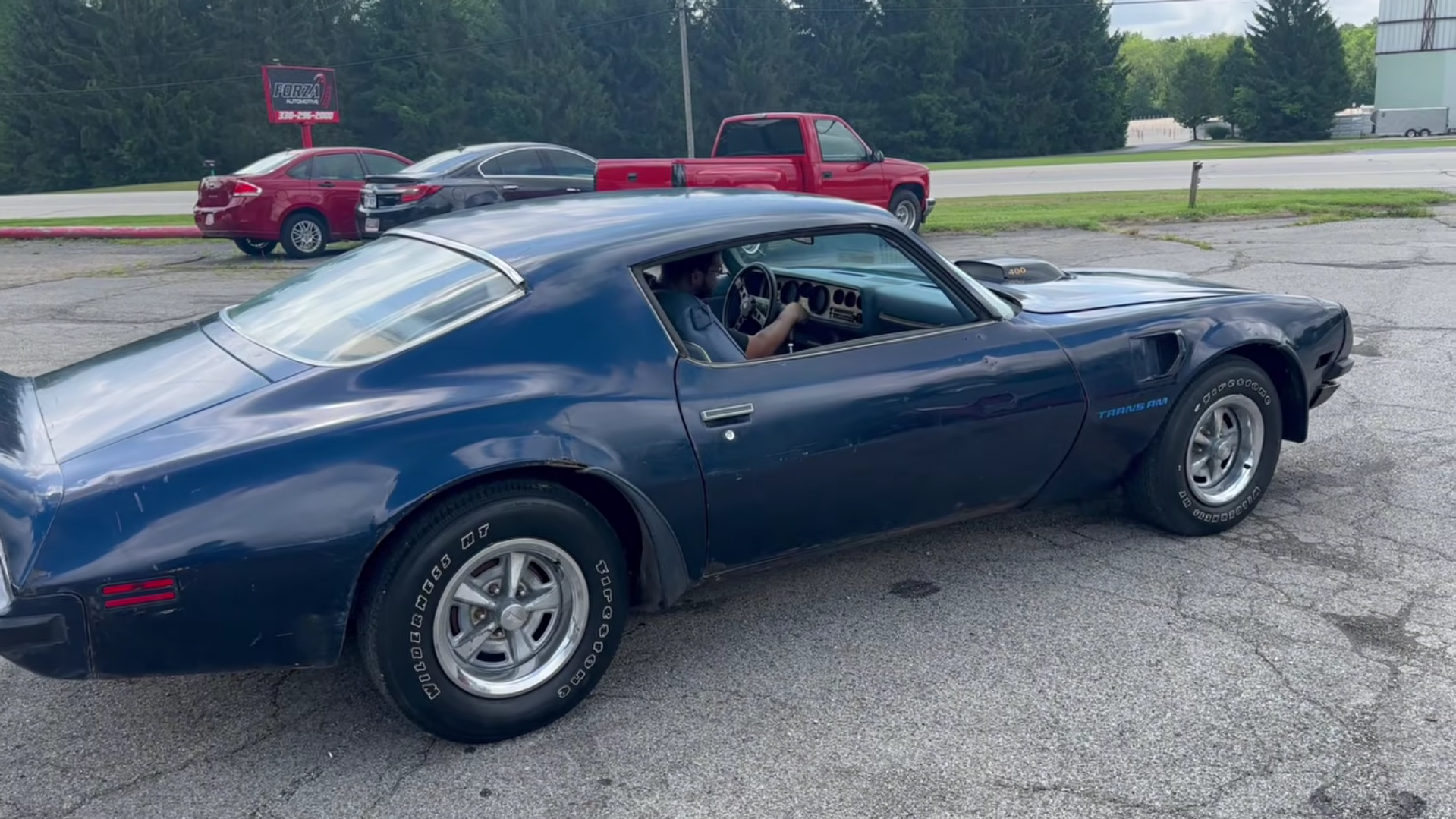
A neglected 1974 Pontiac Trans Am pulled from a garage after roughly 30 years appeared to offer the kind of bargain muscle-car hunters dream about. Forza Automotive paid a little over $3,000 for the blue project, partly because several clues suggested it might be equipped with Pontiac’s highly desirable Super Duty 455 engine.
The car had belonged to a man who dismantled it with plans to complete a restoration. After he became ill and died, the Trans Am remained parked indoors with body panels, seats, trim, and other parts stacked around it.
A Super Duty decal on the valve cover and matching lettering on the shaker scoop made the discovery especially intriguing. If those markings reflected the car’s original specification, the rough Pontiac could have been considerably more valuable than its purchase price suggested.
Once the car reached the shop, however, the team began decoding its identity and found a very different story. The Trans Am was not a genuine Super Duty model, although it still turned out to be a running, matching-numbers 1974 car with a solid foundation.
The Super Duty Clues Looked Convincing
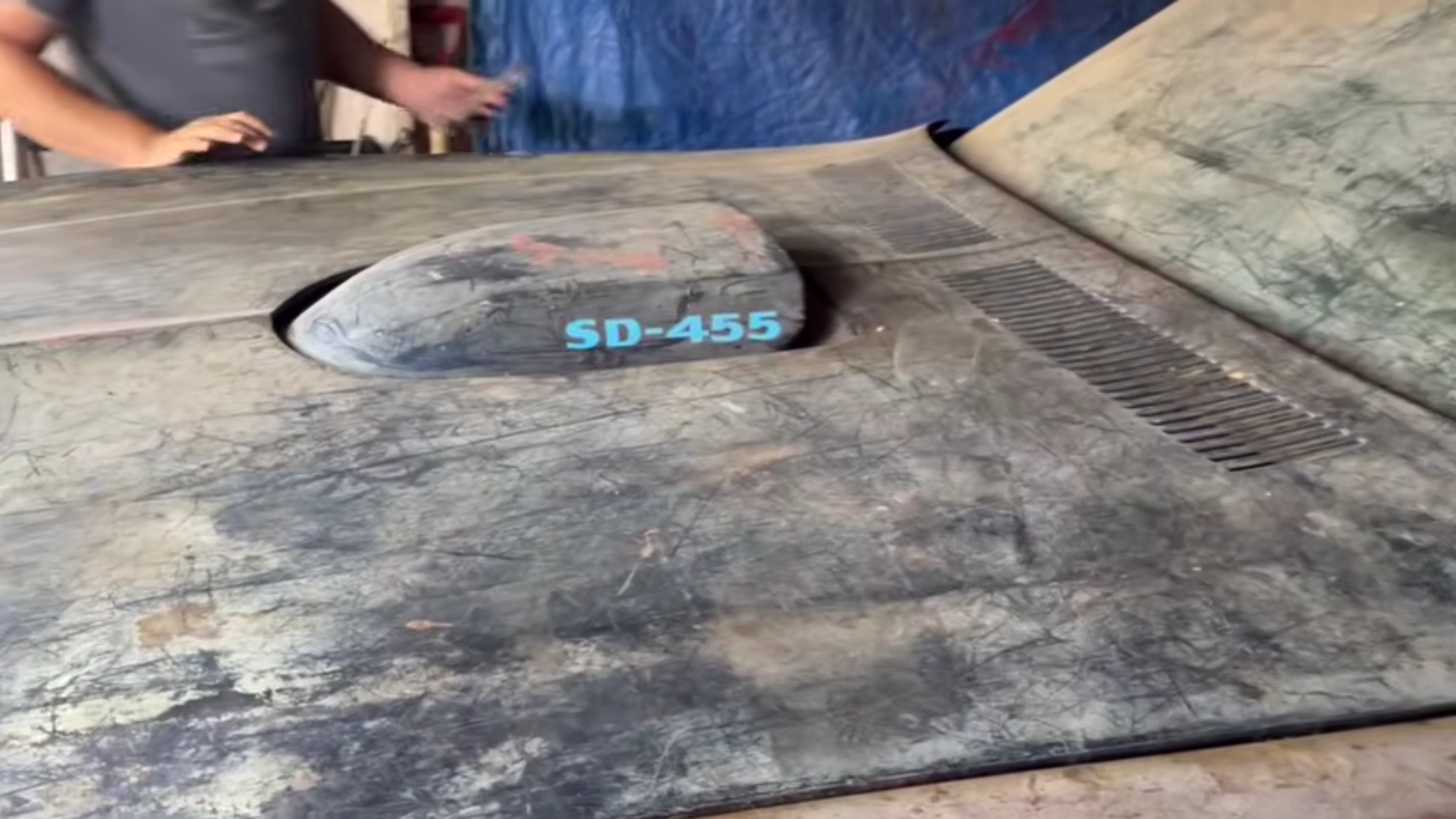
The first inspection revealed several details that encouraged the team to take a gamble. In addition to the Super Duty graphics, the engine bay contained a dual-snorkel air cleaner and other period components that looked promising from a distance.
Those items were not proof of authenticity, since decals and bolt-on parts can be added easily. Access to the engine code was limited when the car was first viewed, and the seller reportedly wanted an immediate decision because other buyers were interested.
Forza Automotive agreed to purchase the Trans Am and returned later with tools to remove it from the garage. Stuck brakes, flat tires, and decades of storage made extraction difficult, but the car finally saw daylight for the first time in approximately three decades.
Engine Codes Revealed The Truth
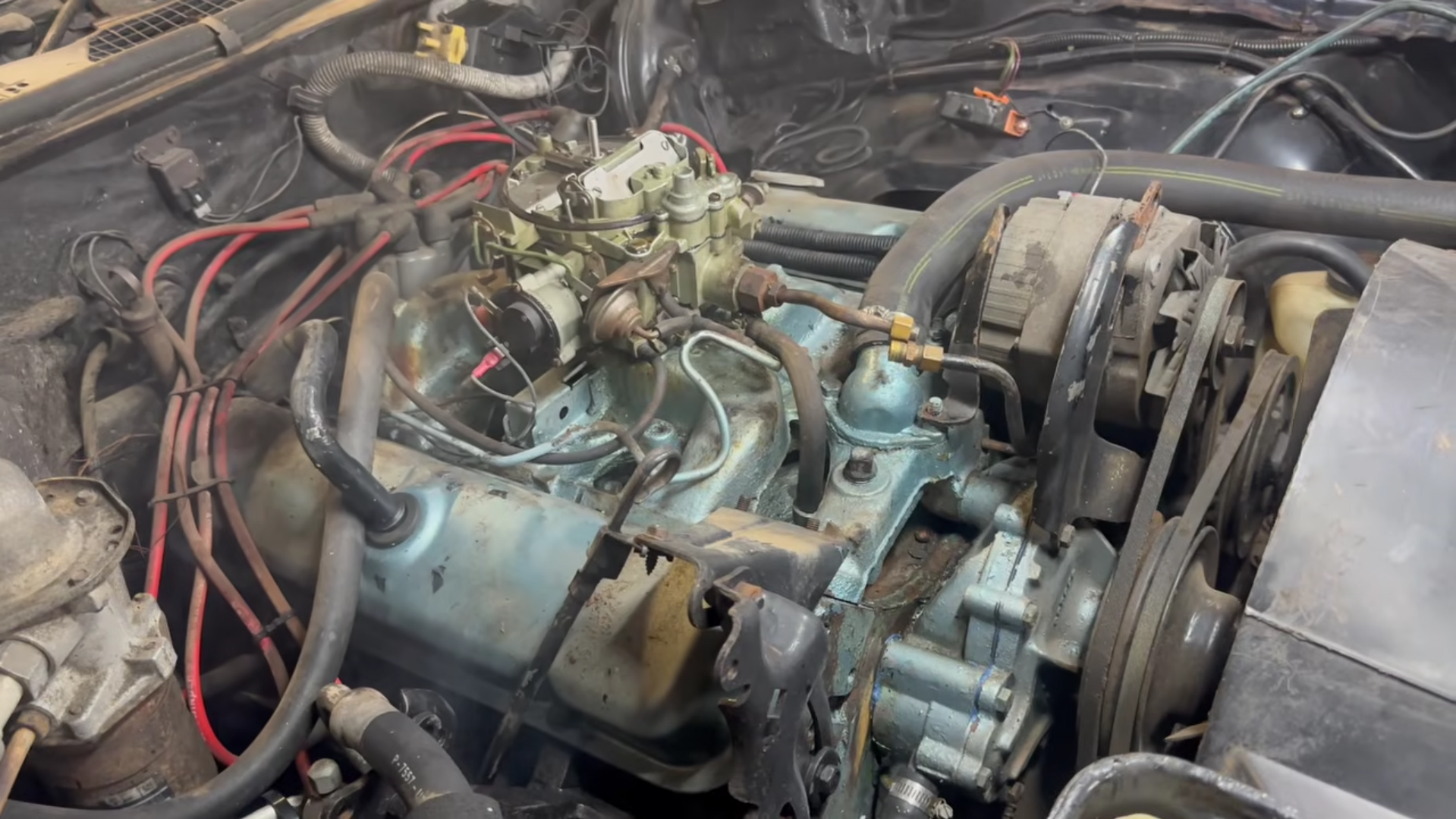
Back at the shop, the team cleaned the engine block area and located a YM code. That designation identified the engine as a 1974 Pontiac 400 rather than the 455-cubic-inch Super Duty unit they had hoped to find.
The vehicle identification number also confirmed that the Trans Am was originally built as a 400 car. Someone had apparently added the Super Duty decals and other parts at some point in its life, leading the previous owner to believe it was something rarer.
Although disappointing, the discovery did not make the Pontiac a bad purchase. A largely complete 1974 Trans Am with a correct-era engine, usable interior, and relatively solid structure still represented a strong project at just over $3,000.
The Original Pontiac 400 Still Ran
After checking the oil and connecting a battery, the crew found that the engine would turn over. A small amount of fresh fuel poured into the carburetor was enough to make the dormant V8 fire almost immediately.
The fuel system was not yet drawing gasoline from the tank, which appeared to be empty. Once fresh fuel was added and the system was primed, the engine ran well enough for the team to continue evaluating the transmission, brakes, and underbody.
Further inspection produced an important piece of good news. The partial VIN stamped on the Pontiac 400 matched the car, confirming that it retained its original engine.
The car also carried a Turbo 400 automatic transmission, while the rear frame rails and much of the underside remained reasonably solid. Rust was present in the front floor areas, lower doors, rockers, and quarter panels, but the structure was better than expected for a long-stored project.
Years Of Storage Damaged The Brakes
The Trans Am’s brake pedal was initially nearly immovable because the master cylinder had seized. Replacing it with a new aluminum unit restored movement, although the hydraulic system still required further attention.
A clogged bleeder screw and a deteriorated flexible brake hose prevented fluid from reaching one front caliper. The crew cleaned the blockage, replaced the failed hose with a usable spare, and bled the system until the front brakes began operating.
They also reinstalled the correct power-window door, replacing a manual-window door that had been fitted previously. The front clip had to be removed to improve access to the hinges and brake components before everything could be aligned and reassembled.
Still A Strong Project Without The SD Badge
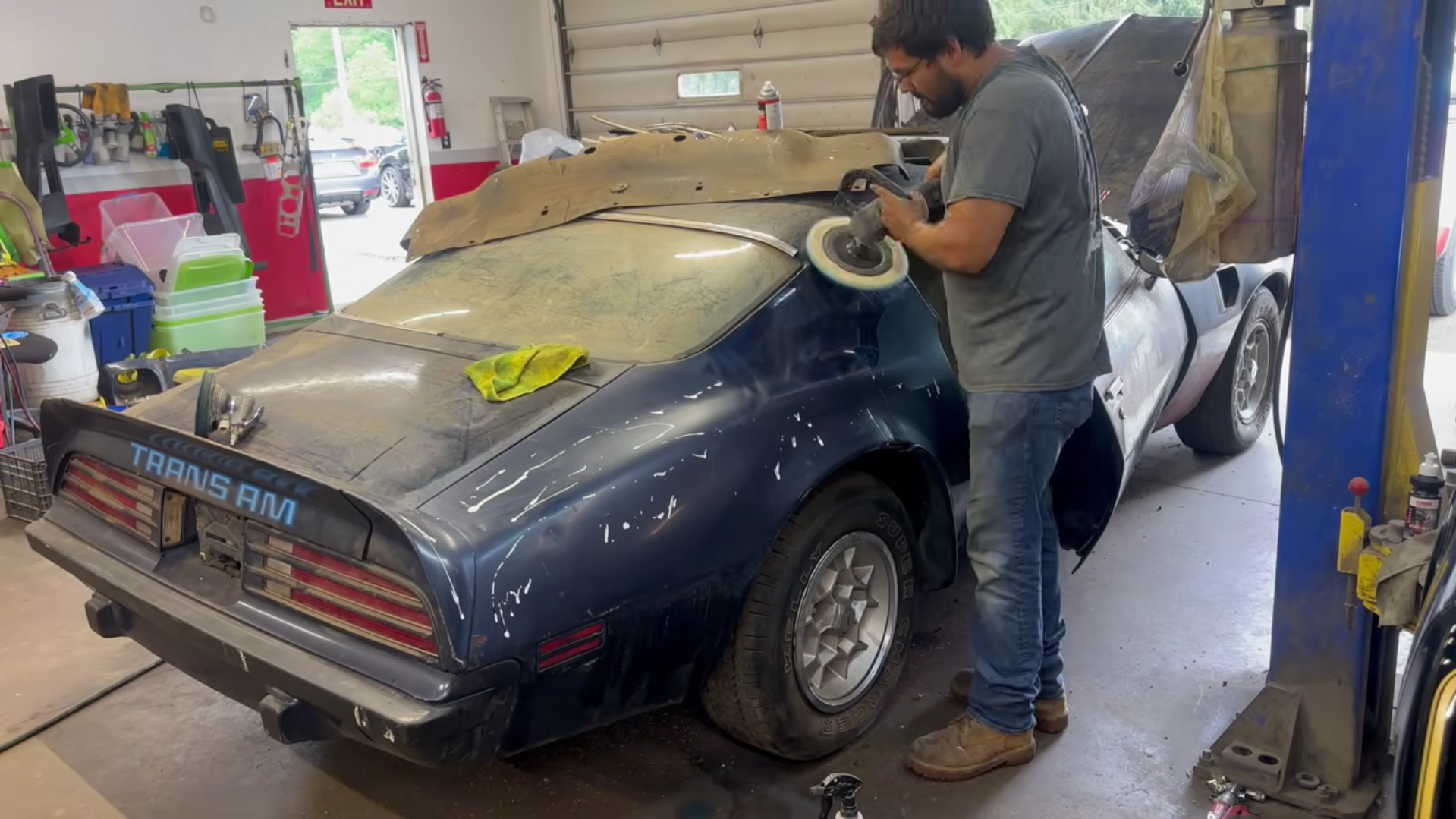
Wet sanding and polishing brought back some of the original dark blue finish, although deep scratches and previously sanded panels prevented a complete cosmetic recovery. The crack-free dashboard, original radio opening, 8,000-rpm tachometer, and 160-mph speedometer helped preserve much of the car’s period character.
The finished Trans Am could run, shift, stop, and drive around the property, though the team did not consider it fully roadworthy without additional repairs. Its matching-numbers Pontiac 400 and uncommon Admiralty Blue color still made it an appealing restoration candidate.
Forza Automotive ultimately listed the car for $11,500 after completing the mechanical revival and documenting its condition. The $3,000 gamble did not uncover a genuine Super Duty, yet it did rescue a largely complete 1974 Trans Am with its original engine and a far better future than another 30 years in storage.