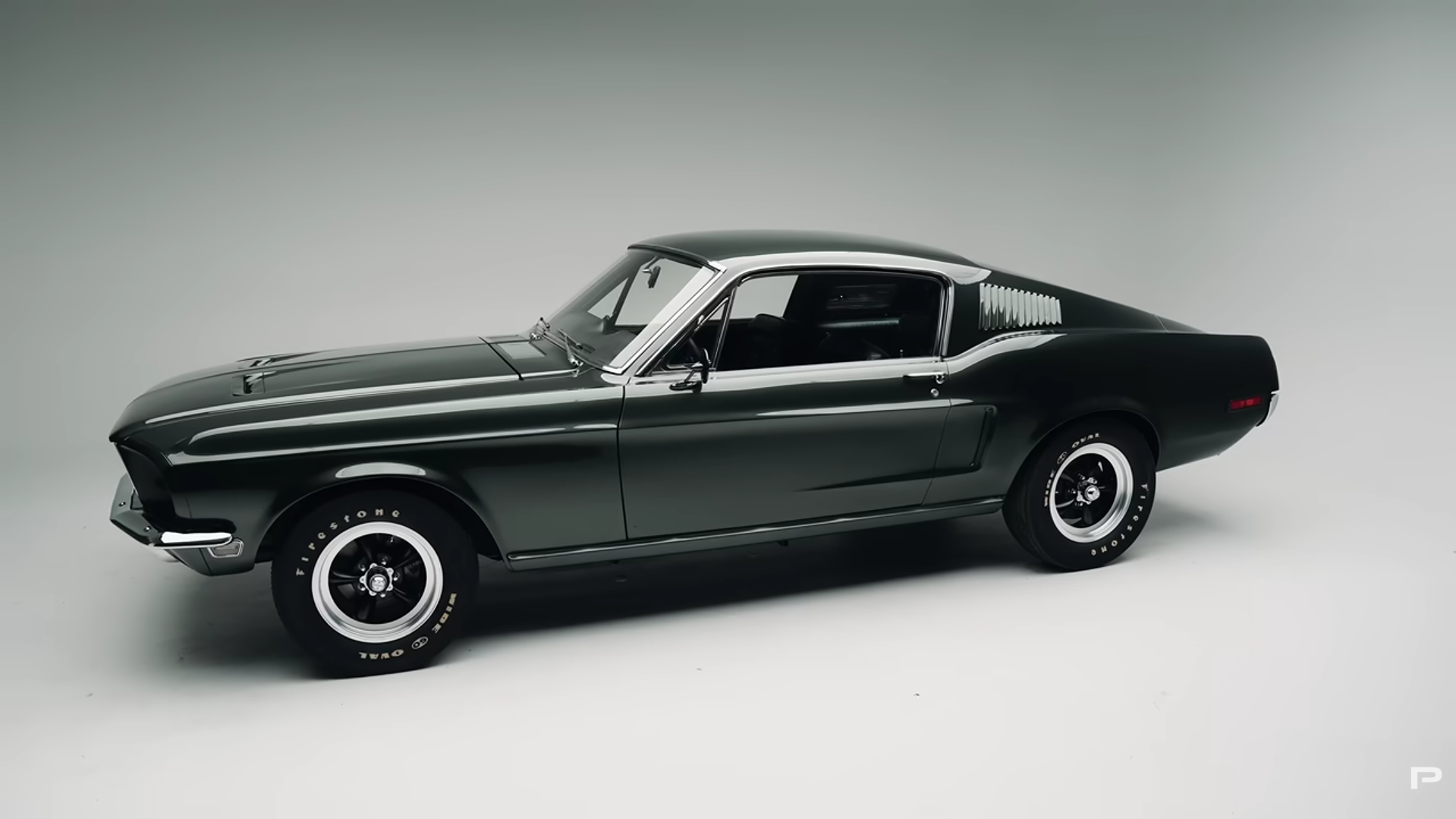
Few movie cars have influenced automotive culture as deeply as the Highland Green 1968 Ford Mustang GT from Bullitt. The stunt car used in the film’s legendary San Francisco chase is now on display at the Petersen Automotive Museum, giving visitors a rare chance to see one of cinema’s most important surviving vehicles.
This particular Mustang was one of two cars prepared for the 1968 film starring Steve McQueen. Unlike the cleaner “hero” car used for close-ups and promotional shots, this example was built to absorb the jumps, hard landings, slides, and punishment required during filming.
For decades, the stunt Mustang was believed to have been destroyed after production. Its rediscovery in Mexico in 2016 began a lengthy authentication and restoration process that ultimately confirmed it as the car seen charging over San Francisco’s steep streets.
The Petersen recently featured the Mustang in a detailed video with Associate Curator Jonee Eissen and owner-restorer Ralph Garcia. Their discussion explored how the car was identified, what survived from filming, and why Bullitt permanently changed the way Hollywood approached automotive action.
The Chase That Changed Movie History
The nearly 10-minute pursuit between McQueen’s Mustang and a black Dodge Charger remains one of the most celebrated car chases ever filmed (click the link, it’s worth it!). Rather than relying heavily on rear projection, studio sets, or artificial effects, director Peter Yates and his crew filmed much of the action on real public streets.
Compact cameras were mounted low on the vehicles, near the wheels, on bumpers, and behind the driver. Those perspectives allowed viewers to feel the suspension working, the tires sliding, and the cars landing violently after launching over San Francisco’s hills.
The scene also used no dialogue or musical score during the main chase. Engine noise, tire squeal, gear changes, and impacts carried the sequence, creating an unusually raw sense of speed and danger for the period.
Rediscovered Before Becoming An Eleanor Replica
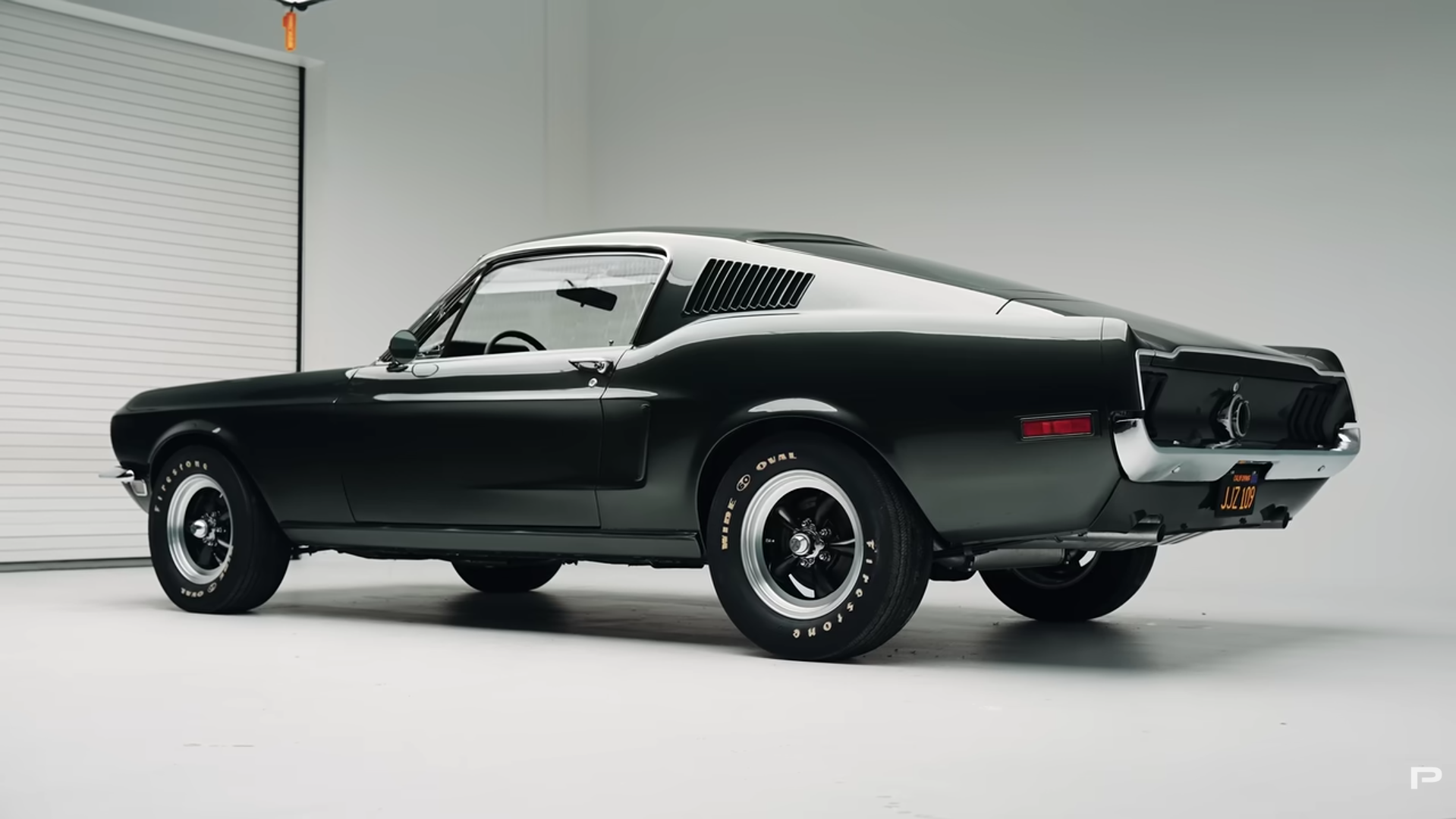
The stunt car’s survival was almost accidental. A man named Hugo Sanchez discovered the badly deteriorated Mustang in Mexico and brought it to Ralph Garcia’s shop with plans to transform it into an Eleanor-style replica inspired by Gone in 60 Seconds.
Parts for that conversion had reportedly already been ordered when questions about the car’s identity began to emerge. Unusual holes, extra hoses near the fuel tank, and other modifications suggested it may have lived a very different life from an ordinary 1968 Mustang.
A check of the vehicle identification number linked it to one of the two Bullitt Mustangs, specifically the stunt car commonly identified by the ending digits 558. Mustang historian Kevin Marti later examined the records and helped authenticate its connection to the production.
Restored Without Erasing Its Film History
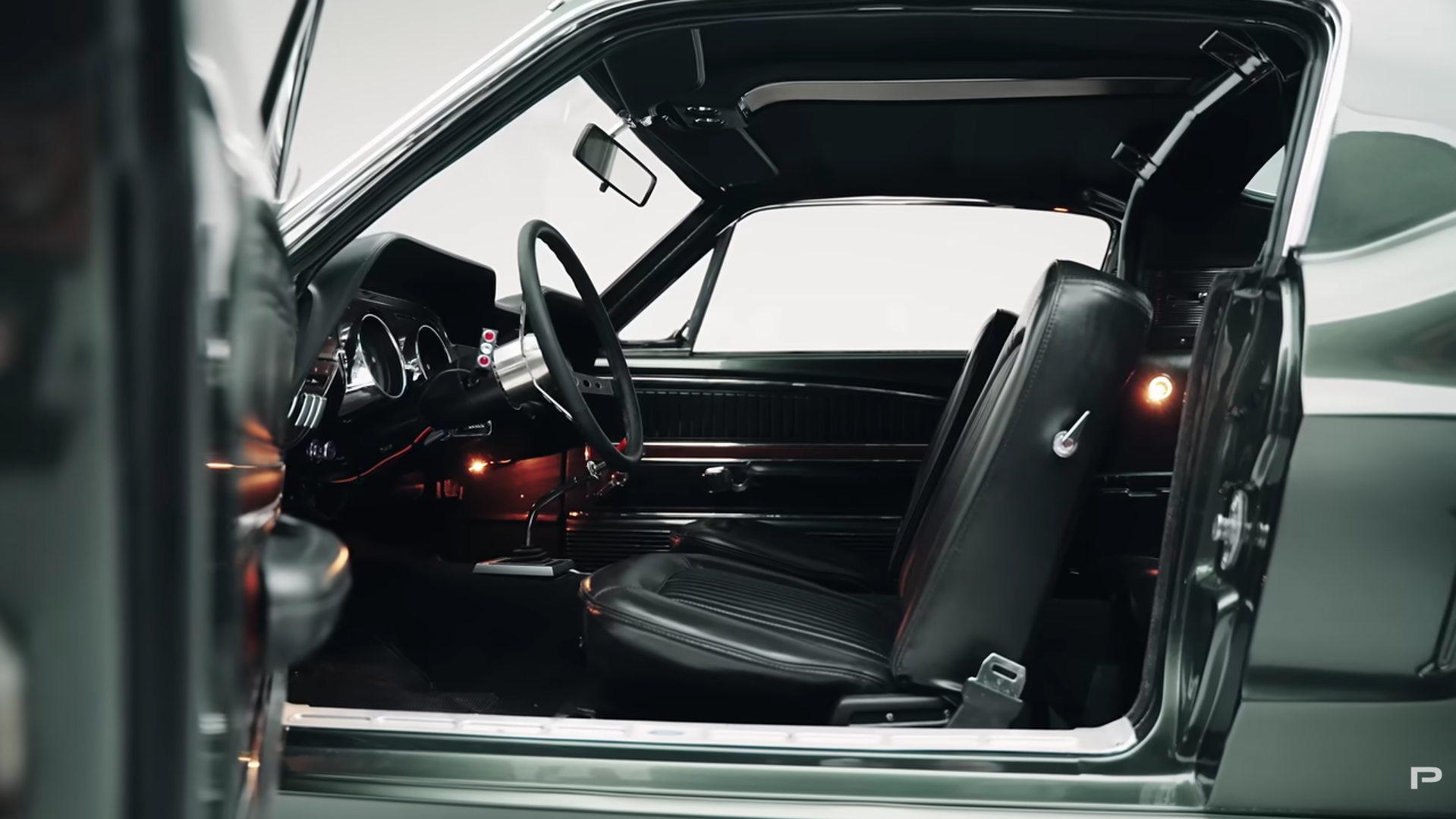
The Mustang was in extremely poor condition when it was found, leaving restoration as the only practical path forward. Garcia says the work has relied heavily on original and new-old-stock components, with the project now approximately 95 percent complete.
The restoration team deliberately preserved several details connected to the movie. Dents underneath the car from the jumps remain visible, along with a hole in the rear wheel well and plumbing believed to have supported camera equipment, lighting, a generator, or a smoke system.
Other film-specific details were recreated or retained, including a Shelby-style steering wheel, a distinctive driver-side mirror, an unusual wooden shift knob, and modified turn-signal hardware. The exterior also remains free of Ford and Mustang badges, matching the car’s appearance on screen.
Built To Survive San Francisco’s Hills
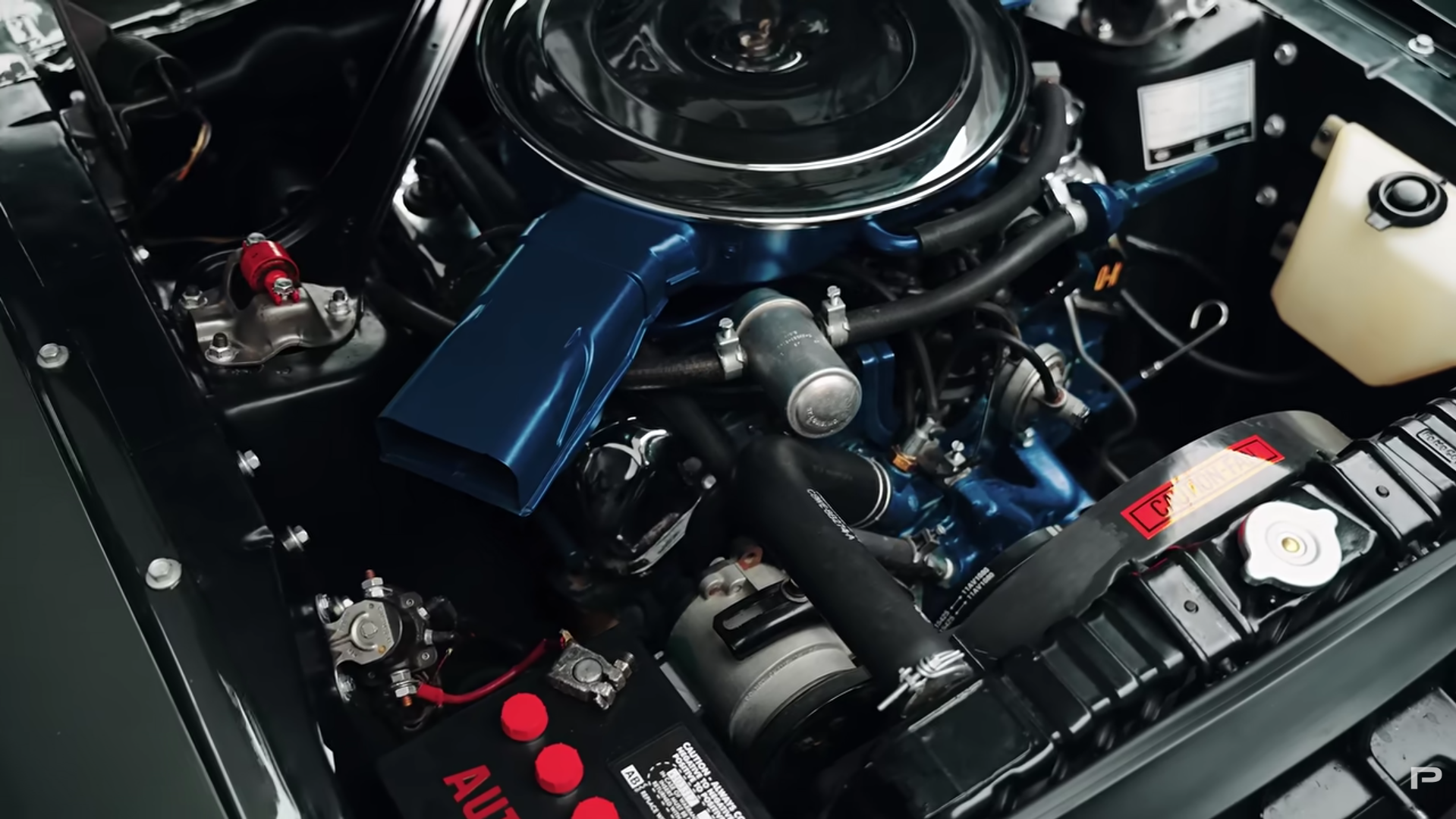
The stunt Mustang required significant preparation before filming. Race-car builder Max Balchowsky and others strengthened the car for repeated jumps, reinforced the shock towers, and fitted upgraded suspension components capable of handling the punishment.
Garcia says some of the original rear suspension modifications were no longer present when the car was recovered. The restoration therefore used stock-style replacement hardware in certain areas while preserving documented movie modifications where possible.
The Mustang’s battered history is what separates it from a replica or a carefully preserved road car. Every reinforced section, odd bracket, and surviving dent contributes to the authenticity of the vehicle audiences watched being driven at the limit.
A Rare Opportunity To See A Movie Icon
The Petersen Automotive Museum plans to display the Mustang first in its lobby and later in its Hollywood gallery through the end of 2026. For movie and Mustang enthusiasts, the exhibition offers an uncommon chance to inspect details that are difficult to appreciate from film footage alone.
The car’s importance extends far beyond its connection to Steve McQueen. It represents a turning point when filmmakers proved that authentic driving, practical stunts, and carefully placed cameras could create tension that studio tricks struggled to match.
Decades after it was nearly lost, the real Bullitt stunt Mustang has returned to public view as a carefully restored piece of film and automotive history. Its scars, modifications, and unlikely survival make it one of the most compelling Mustangs ever built.