Here’s a scenario that should make every driver’s stomach turn a little. You’re heading to work, minding your own business, and suddenly there’s a police chase unfolding right in front of you on the interstate. You do the smart thing. You don’t swerve into oncoming traffic, you don’t slam your brakes and risk a pileup, and you definitely don’t try to dodge around a police cruiser. Instead, you drive straight over the spike strip because it’s the safest option available. Sounds like the responsible choice, right?
That’s exactly what happened to Patricia Lyons in Kenosha, Wisconsin, and now she’s out roughly $3,000 for making the call that probably saved everyone involved from a much worse outcome.
The chase itself started when police went after Martin Hernandez, who authorities say was driving a stolen white van on January 22. Multiple departments got involved, and troopers deployed spike strips on Interstate 94 to try to end the pursuit. The chase eventually stopped when Hernandez crashed into a wall, shutting down three lanes of traffic. Somewhere in the middle of all that chaos, Lyons found herself boxed in with a spike strip laid out in front of her and nowhere safe to go except straight over it.
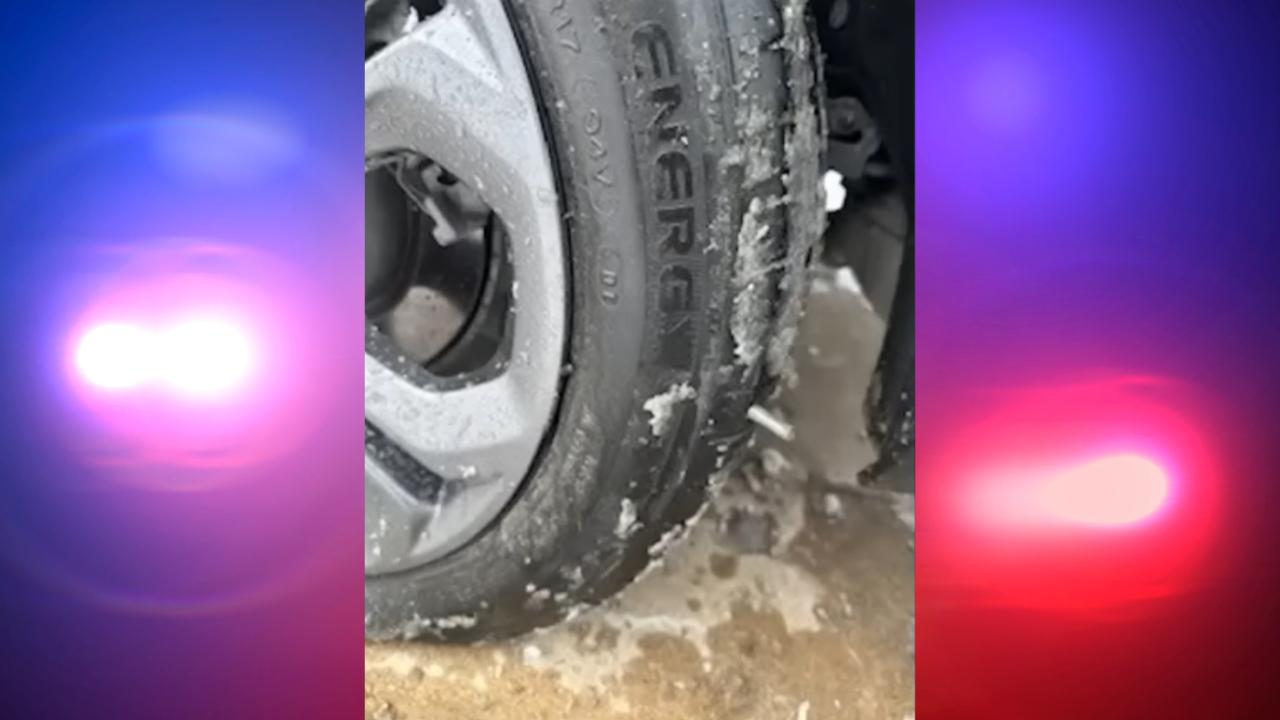
Anyone who has ever run over so much as a nail knows how much of a headache a flat tire can be. Now imagine three tires taking direct hits from a strip specifically engineered to shred rubber. That’s the situation Lyons was dealing with when she had her car towed straight to the dealership instead of the office that day.
What the Damage Actually Cost
Lyons ended up needing four new tires, which came out to $797.41. On top of that, she needed two new alloy wheel assemblies at $1,664.06, plus labor and an alignment.
All told, her bill landed north of $3,000, and she paid every cent of it herself while she waited to see if the state would step up.
The State’s Response Left a Lot to Be Desired
The Wisconsin Department of Transportation told Lyons the trooper was simply doing the job and wasn’t negligent, which may well be true. But they also said they had no obligation to cover the full repair cost. Instead, they offered $551.08, based on what they say was the prorated value of her worn tires.
As for the wheels and other damage, DOT maintains spike strips aren’t designed to cause that kind of harm in the first place, so they’re not footing that bill either.
Where Things Stand Now
Lyons filed a claim with the Wisconsin Claims Board, a process that can drag on for months before any resolution shows up.
In the meantime, she’s left covering a bill for doing precisely what officers likely would have wanted any driver to do in that moment: stay calm, avoid a collision, and let the strip do its job.