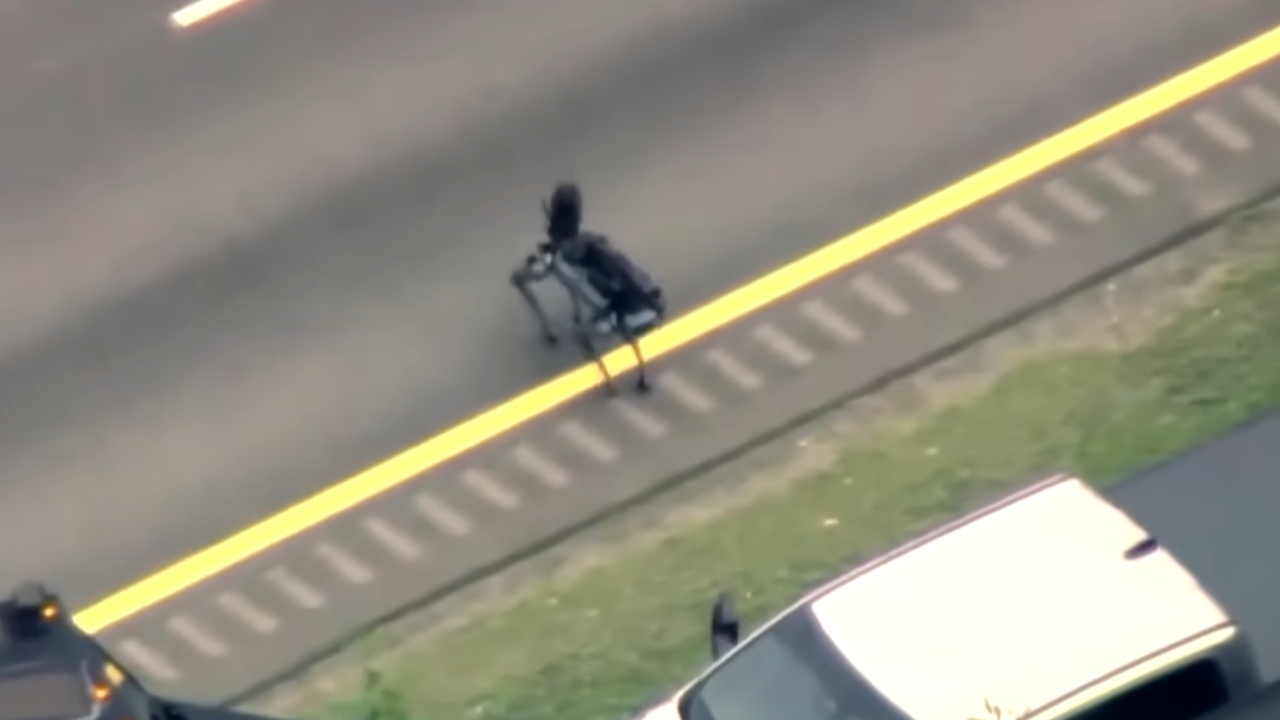
If you’ve ever wondered what the future of law enforcement looks like, a recent incident near Boston gave us a pretty clear preview. Picture a silver pickup truck surrounded by armored police vehicles on a Massachusetts highway, and instead of officers approaching on foot, a robotic dog trots up to do the dangerous work instead. It sounds like something pulled straight from a science fiction film, but this was very real, and it’s becoming more common across the country.
The standoff involved a suspect wanted in connection with a homicide who had barricaded himself inside the truck. Rather than putting officers in the line of fire, police sent in a robot dog to try to break the truck’s rear window. The window tint proved tougher than expected, so officers had to finish the job with non-lethal rounds. From there, a drone flew through the shattered glass to survey the inside of the cab, which is how authorities were able to confirm the suspect had died from a self-inflicted gunshot wound before any officers had to physically approach the vehicle.
It’s a heavy story, and our thoughts go out to everyone affected by it. But it also highlights something worth talking about if you follow vehicles, tech, or just how law enforcement operates these days. This wasn’t an isolated stunt. It’s part of a broader shift in how police departments across the country are handling high-risk calls, and there’s a similar example out of California that shows just how creative this technology is getting.
For anyone who appreciates engineering, whether it’s under the hood of a classic muscle car or inside a piece of tactical robotics, these tools are a fascinating glimpse at where things are headed.
A Drone With a Magnet Did What?
Earlier this month, the Sacramento Sheriff’s Office used a drone equipped with a powerful magnet to disarm a suspect who was hiding in a garage with a knife in hand. Instead of sending deputies into a tight, enclosed space with an armed individual, the drone hovered in, latched its magnet onto the blade, and lifted it clean away. The sheriff’s department noted that this approach let deputies resolve a potentially deadly encounter without anyone rushing in.
Honestly, it’s the kind of gadget that makes you wonder what garage tinkerer came up with the idea first. Somewhere out there, someone tried this on a fridge magnet before it ever became department policy, and we appreciate that kind of ingenuity.
Why Departments Are Leaning Into Robotics
The appeal here is pretty straightforward. Standoffs and barricade situations are some of the most unpredictable calls officers respond to. Sending a machine in first, whether it’s a four-legged robot or a magnet-equipped drone, means fewer humans in immediate danger.
Departments say the goal is simple: resolve dangerous situations safely, for both the public and the officers involved.
The Debate Over How Far Is Too Far
Not everyone is on board without reservations, and that’s a fair conversation to have. Critics have raised concerns about police surveillance and where the line should be drawn as this technology becomes more capable and more common. Supporters counter that keeping officers and bystanders out of the line of fire is worth the tradeoff.
As robotics and drones keep advancing, expect this debate to keep pace right alongside them.
Lessons Learned
Technology in law enforcement isn’t just about flashy gadgets. It’s about giving officers options that didn’t exist a decade ago, ones that can de-escalate situations without anyone getting hurt.
Whether it’s a robot dog on a highway or a magnetic drone in a garage, these tools are reshaping how dangerous calls get handled, and that’s a trend worth keeping an eye on.