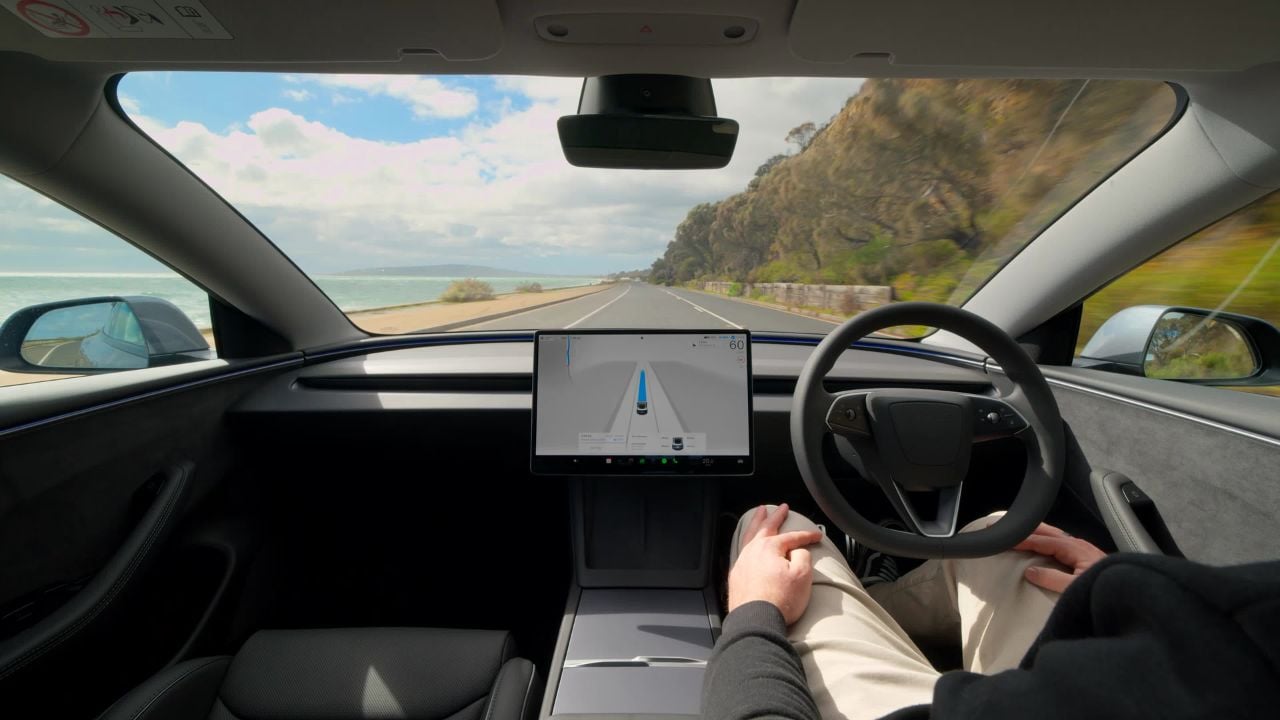
Tesla’s driver monitoring system is designed to ensure motorists remain attentive when using Autopilot and Full Self-Driving (Supervised). Yet some owners have reportedly found an unusual way to bypass those safeguards: plastic doll heads mounted near the rearview mirror.
The trend appears to have emerged in China, where online marketplaces are selling miniature figurines specifically positioned to face Tesla’s cabin camera. The accessories are often marketed as decorative dashboard items or travel companions, but many buyers appear to have a different purpose in mind.
Reports suggest the fake heads can obscure the camera’s view of the actual driver while presenting what appears to be a forward-facing face. In some cases, drivers have allegedly managed to operate their vehicles for extended periods without receiving attention warnings from the system.
The development highlights an ongoing challenge facing automakers as driver-assistance technology becomes more advanced. While systems continue to improve, some users remain determined to find ways around safety measures designed to keep them engaged behind the wheel.
A Surprisingly Simple Workaround
Wow China is coming up with so many techniques to beat the FSD driver monitoring system. This one is new pic.twitter.com/bPW8QOso7f
— John Ee (@heyJohnEe) June 5, 2026
The gadgets themselves are remarkably simple. Many consist of small plastic figurine heads resembling celebrities or fictional characters that can be mounted near the rearview mirror.
Tesla’s in-cabin camera monitors head position and eye movement to determine whether a driver is paying attention while driver-assistance features are active. By positioning a doll head directly within the camera’s field of view, some owners claim the system interprets the object as an attentive driver.
According to reports circulating online, the figurines typically cost between $10 and $50 depending on quality and design. Videos shared on social media have helped fuel interest in the products, turning what began as a niche workaround into a growing online trend.
One reported demonstration involved a Tesla owner using a figurine resembling the wrestler/actor Dwayne Johnson while allegedly driving for an extended period without triggering driver-monitoring warnings.
Drivers Are Trying More Than Doll Heads
A tiny plastic doll head may have just exposed a major weakness in Tesla’s self driving safety system.
Drivers in China are reportedly using them to trick the car into thinking they’re watching the road. pic.twitter.com/BPYAClt270
— D Composites (@CompositesD) June 17, 2026
The figurines are only one example of the efforts to bypass camera-based monitoring systems. Some Tesla owners have experimented with photographs positioned in front of the camera, while others have used lenticular images that appear to blink from different viewing angles. More sophisticated setups reportedly involve small display screens that play looping videos of a person’s face moving and blinking naturally.
These methods became increasingly popular after Tesla introduced stricter distracted-driver monitoring software updates in China last year. As enforcement increased, some owners began searching for new ways to defeat the safeguards.
The result has become an ongoing cat-and-mouse game between vehicle software and drivers attempting to circumvent it.
Why Driver Monitoring Is Important
Tesla’s driver-monitoring system exists for a reason. Despite increasingly capable driver-assistance technology, Autopilot and Full Self-Driving (Supervised) still require active human supervision at all times.
The system is designed to detect when drivers become distracted or stop watching the road. If the vehicle determines attention has drifted for too long, it issues warnings and can eventually restrict access to driver-assistance functions.
Safety experts have repeatedly warned that bypassing those protections increases the risk of crashes. Driver-assistance systems can handle many tasks, but they are not fully autonomous and may still require immediate human intervention.
Removing the monitoring element creates a scenario where a driver may not be prepared to react when the vehicle encounters a situation it cannot handle on its own.
Can Tesla Stop It?
Tesla has not publicly commented on the reported use of doll heads, photographs, or video displays to fool its monitoring systems.
Whether future over-the-air software updates can reliably identify these tricks remains unclear. Improving camera-based driver monitoring often requires balancing accuracy with privacy concerns and avoiding false alerts for legitimate drivers.
The situation demonstrates a broader challenge for the automotive industry. Even sophisticated AI-powered safety systems can sometimes be defeated by surprisingly low-tech solutions when determined users actively try to bypass them.
For now, the trend serves as another reminder that driver-assistance technology is only as effective as the people using it. No matter how advanced the software becomes, it cannot fully protect drivers who intentionally disable the safeguards designed to keep them attentive.