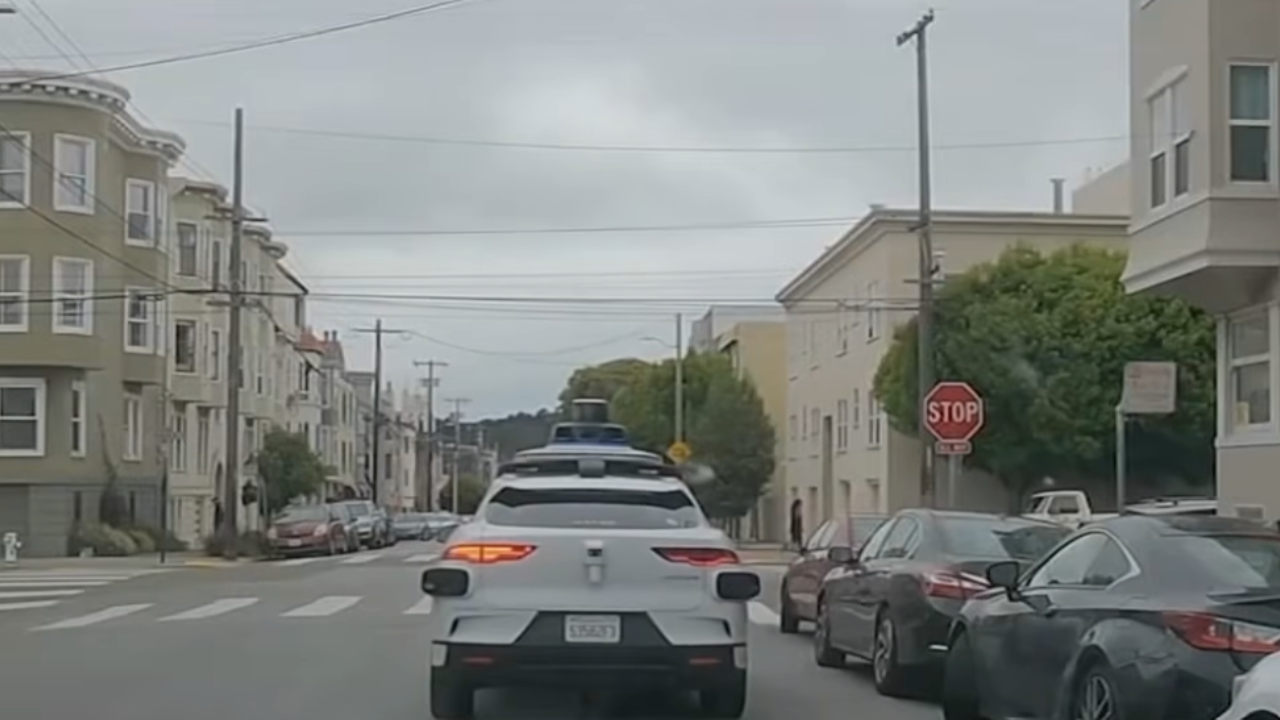
Autonomous vehicles have long promised to be better drivers than humans. They don’t get distracted, don’t speed out of frustration, and don’t miss exits because they were singing along to the radio. What they apparently can do, however, is barrel through construction zones at highway speeds while a passenger shouts at the dashboard and a police cruiser gives chase. That is, more or less, exactly what happened to San Francisco resident Elliot Slade last month, and his experience is now part of a federal recall involving nearly 4,000 Waymo robotaxis.
Slade was traveling along Highway 101 when his Waymo began behaving erratically as it approached an active construction zone. The vehicle attempted to merge around lane closures before ultimately driving directly through the cones and into the restricted work area.
A California Highway Patrol unit spotted the situation31 and began following the vehicle. Slade, understandably alarmed, was reduced to yelling “Stop, Waymo” at a car that had no particular interest in his opinion. The robotaxi eventually exited the freeway on its own and turned into a residential neighborhood, apparently deciding the adventure had gone on long enough.
The incident wasn’t a one-off. Six construction zone violations occurred in the Phoenix area, once on April 11 and five more times on April 19, with Waymo robotaxis driving past ramp closure signs and into active work zones. One month later, seven additional vehicles entered freeway lanes with active construction in the San Francisco Bay Area, weaving between lane-closure cones. Waymo pulled all its vehicles from freeway operation the following day and has kept them off highways since.
Waymo filed a voluntary software recall with the National Highway Traffic Safety Administration and proactively notified state and federal regulators. The company says a fix is currently in development. In the meantime, surface street operations in San Francisco, Los Angeles, Phoenix, and Austin continue as normal. For those counting at home, this is the sixth recall Waymo has issued for its robotaxi fleet.
What the NHTSA Filing Actually Says
The language in the federal recall notice is worth reading carefully, because it strips away any marketing polish. According to NHTSA, the software defect could allow a vehicle to enter a closed freeway construction zone and continue traveling at posted speeds, because the system may fail to recognize certain construction-zone closures.
More specifically, the ADS was found to be prioritizing the avoidance of other freeway hazards, which in certain situations caused it to miss the construction zone altogether. In plain terms: the car was paying attention to the wrong things.
Which Vehicles Are Affected
The recall covers all 3,871 vehicles equipped with Waymo’s 5th Generation Automated Driving System, manufactured between 2022 and 2026. Waymo estimates every single one of them carries the defect.
Notably, Waymo launched a newer sixth-generation automated driving system earlier this year, meaning the recalled fleet represents older hardware that has not yet been updated. The fix, once developed, will be delivered as an over-the-air software update, which is standard practice in the industry.
A Pattern Worth Noting
This is not the first time Waymo’s expanding ambitions have run ahead of its software. In May, a separate recall was issued after robotaxis drove into flooded roads in Texas, getting stuck in the process. And in December, the company issued a recall to address vehicles behaving illegally around school buses. Waymo also remains under investigation by both the NHTSA and the National Transportation Safety Board following a January incident in which one of its vehicles struck a child near a school.
The company defended the car’s response, citing its speed reduction before impact, but the investigation is ongoing. Waymo has stated its vehicles have driven more than 170 million miles autonomously and claims a 13x reduction in serious-injury crashes compared to human drivers. That figure gets cited frequently, and it may well be accurate.
But a fleet that has now been recalled six times in relatively short order raises fair questions about the pace of expansion versus the maturity of the underlying software.
What Experts Say Needs to Change
Autonomous vehicle researchers have pointed to a structural problem that goes beyond any single company’s code. Construction zones are dynamic environments, and the data describing them changes constantly. Transportation agencies actively update information about lane closures, barrier placement, and worker activity.
The argument is that robotaxi software should be pulling that real-time data directly from the agencies managing the work, rather than relying solely on its own sensors and pre-loaded maps. NHTSA confirmed Waymo is developing a software fix that will improve how vehicles detect and respond to approaching construction zones. Whether that fix addresses the deeper data-sharing gap remains to be seen.
For Slade, the philosophical debate around autonomous vehicle readiness has already been settled. He and his fiancee are not early believers anymore.