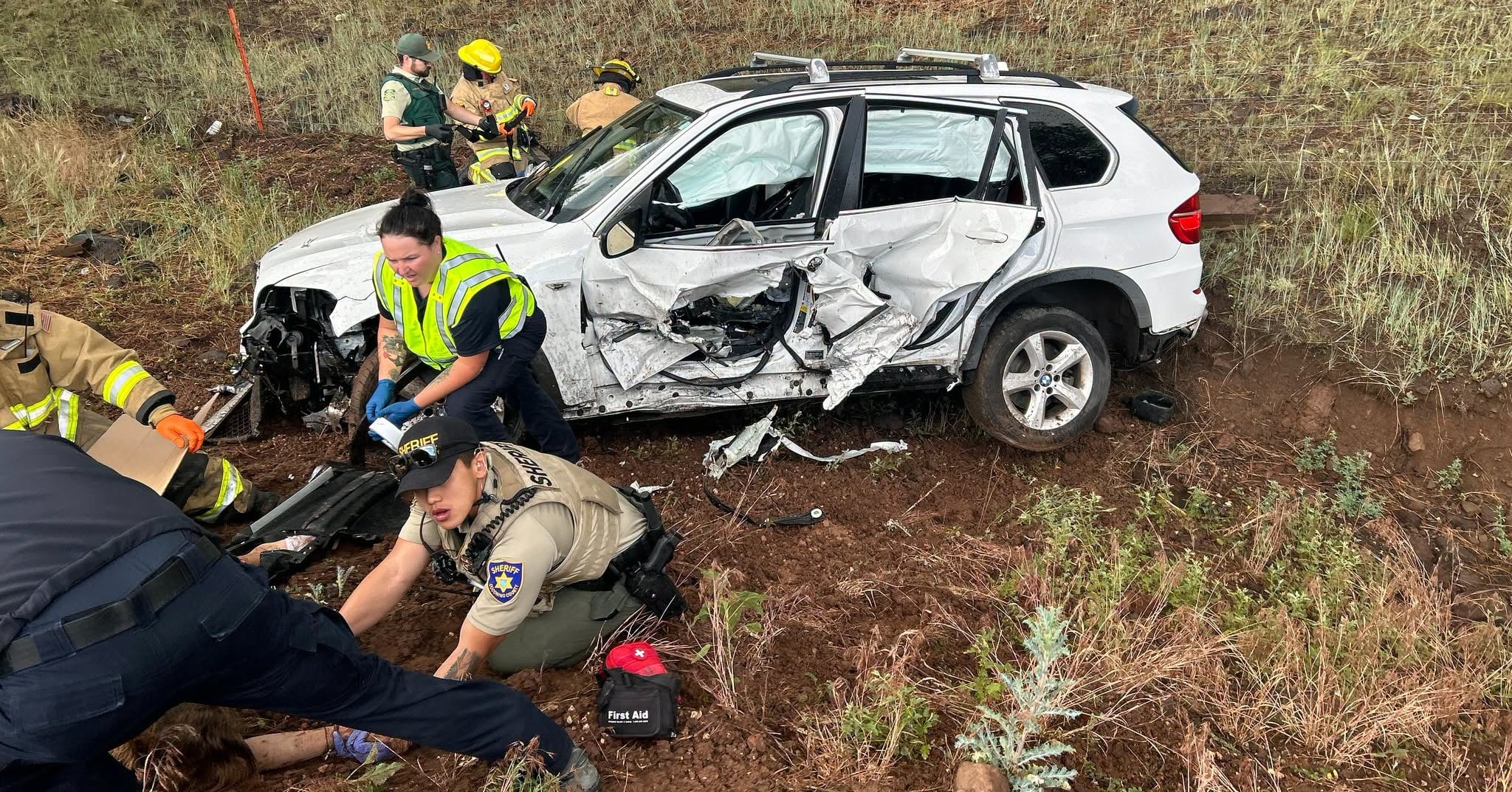
A Sunday road trip through northern Arizona turned into a major rescue operation when a vehicle carrying two out-of-state tourists left the highway and plunged down an embankment on Interstate 40 in Coconino County. The crash, which occurred on June 14, 2026, required the coordinated response of more than a half-dozen agencies before it was over.
According to the Arizona Department of Public Safety Highway Patrol, witnesses reported the vehicle began swerving before the driver made a hard right and punched through a guardrail, sending the car tumbling down a steep embankment. Both occupants were trapped and required extraction. The driver sustained major injuries to her left leg, including a partial severing and compound fracture. Her passenger suffered broken ribs. Both were last reported in stable condition.
AZDPS confirmed the two were tourists traveling too fast for the wet, low-visibility conditions on the roadway at the time. Neither was identified by name. The crash is classified as a single-vehicle major injury collision.
The incident also underscores a reality that veteran drivers know well: wet pavement on an unfamiliar road is one of the more unforgiving combinations in driving, and the consequences don’t scale with your confidence level.
A Rescue Operation That Required Half the County
What made this crash notable beyond the injuries was the sheer volume of resources it consumed. Williams Police Department, the Coconino County Sheriff’s Office, ADOT, Ash Fork Fire, Williams Fire, Lifeline Ambulance, Copperstate Ambulance, and Classic Air Ambulance all responded, along with two tow trucks. That’s a significant mobilization for a two-occupant vehicle.
When a crash requires air ambulance transport and multiple ground units working in tandem, it speaks to how remote and technically challenging these embankment recovery operations can be. I-40 through this stretch of Arizona is not a forgiving environment for off-road excursions.
I-40 Through Northern Arizona Is Not a Casual Drive
Interstate 40 through Coconino County passes through some genuinely demanding terrain. The area around Williams sits at roughly 6,700 feet in elevation, where summer weather patterns can shift quickly. Rain here isn’t a rare inconvenience, it can arrive fast and hard, reducing visibility and turning road surfaces slick before most drivers have time to adjust.
Arizona’s monsoon season officially begins June 15 and runs through September 30, bringing thunderstorms, heavy rain, lightning, and damaging winds during the hottest parts of the day. This crash happened one day before the official start. In the days surrounding the incident, multiple areas from Flagstaff to Tucson experienced thundershowers, with localized heavy rain and flash flooding observed in the region. Wet roads on I-40 in mid-June are not the anomaly they might seem.
Speed and Wet Roads: A Combination That Never Goes Well
There’s no mystery to what happened here. AZDPS stated plainly that the tourists were driving too fast for the conditions. Wet pavement dramatically reduces the stopping distance and lateral grip available to any vehicle, and high-speed swerving on a wet interstate is rarely survivable without serious consequences. The fact that both occupants made it out alive, given the compound fracture and partial limb severing involved, is fortunate.
For drivers unfamiliar with a particular stretch of road, the hazard is compounded. You don’t know where the curves tighten, where the drainage is poor, or where the shoulder drops away. I-40 in this corridor has seen serious crashes before, and the guardrail the tourists punched through existed precisely because this kind of loss-of-control event has happened before.
What This Means for Anyone Driving Through Arizona This Summer
Arizona’s 2026 monsoon season is forecast to be wetter than normal, according to NOAA’s Climate Prediction Center, which means conditions like those on June 14 are likely to repeat across the state’s highway system throughout the summer. Anyone traveling I-40, US-89, or similar routes through northern Arizona should expect that a sunny morning can give way to reduced visibility and wet roads by afternoon without much warning.
Slowing down in those conditions is not a nicety. It’s the margin between an inconvenient delay and the kind of response that ties up eight agencies and two tow trucks.