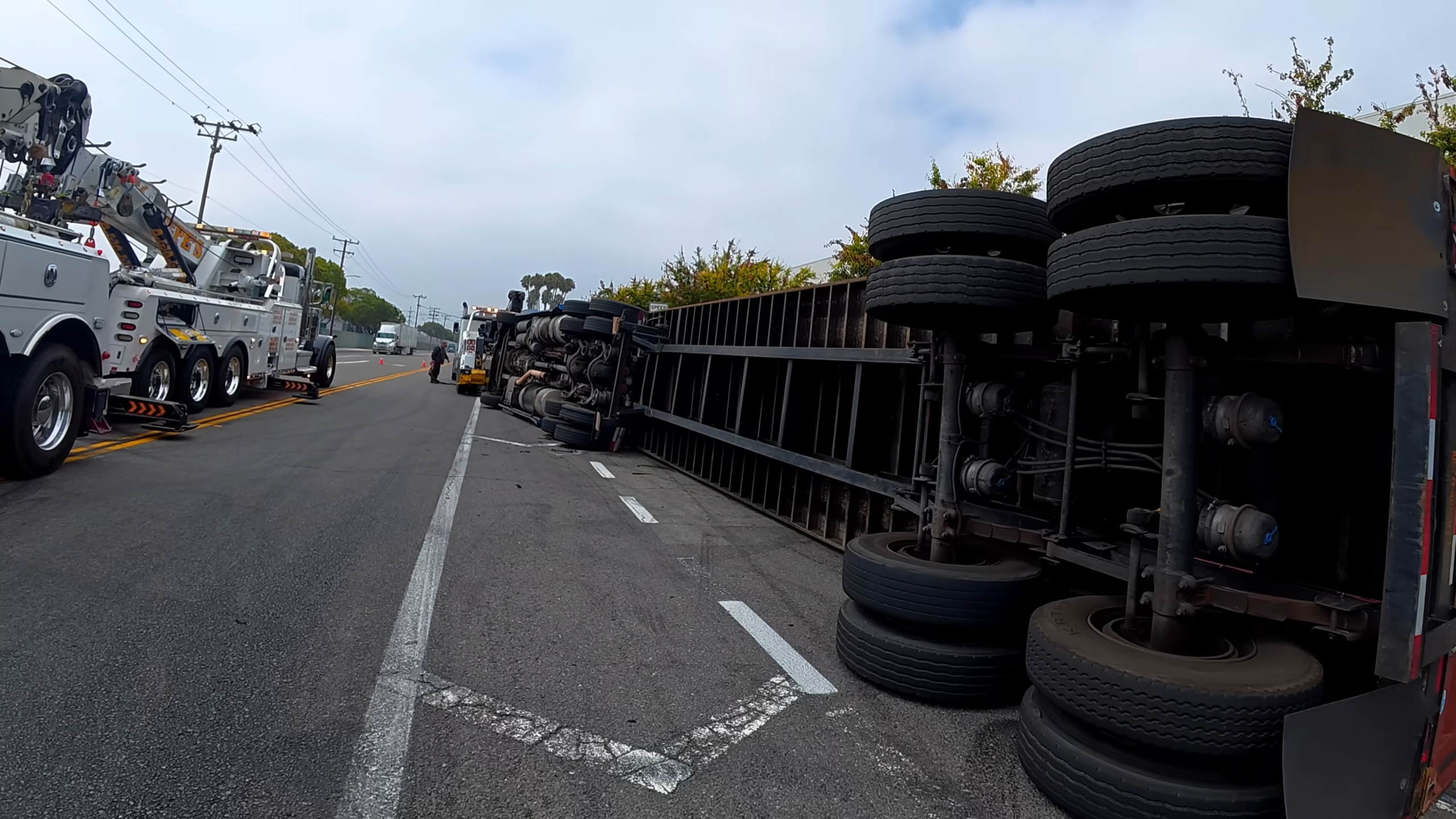
A routine freight run turned into a heavy-lift operation when a tractor-trailer loaded with solar panels tipped over in Compton, California, sending a recovery crew through a nearly 30-minute operation to get the rig back on its wheels and off the road. The footage, captured on video by the recovery team, shows exactly what goes into righting a commercial truck when the cargo is both fragile and extremely heavy. It is not quick, and it is not simple.
The trailer was carrying solar panels, and once the crew tracked down the paperwork, the gross weight came in at 27,000 kilograms, just under 60,000 pounds. The lead operator noted with some dry humor that the number “seemed like a lie,” but the weight was real and the job was going to reflect it. Solar panels are dense, glass-faced, and do not take kindly to being on their side.
Adding some friction to the situation, the driver was not carrying his required documentation, did not know the load weight off the top of his head, and faced a communication barrier with the crew due to a language difference. By the time the job was wrapped, the truck was also being flagged for impound over non-payment issues. So all told, not a great day for that particular operation.
The recovery team, working out of the Compton area and covering routes around the 710 freeway corridor, handled it with the kind of methodical focus that keeps these jobs from becoming worse incidents. A rotator crane handled the heavy lifting, with rigging that included a container link and a platinum sling setup, while the crew worked through air system issues caused by a crushed crossmember valve before the trailer could be safely moved.
Why Solar Panel Loads Are a Legitimate Hazard on California Roads
Solar panels are increasingly common cargo on California highways, given the state’s aggressive renewable energy build-out. That means heavier loads, denser freight, and more pressure on drivers and carriers to move product quickly.
Weight management and proper load securing are not optional on runs like this one.
What the Recovery Actually Involved
The rotator crane, also called a “rotator” in tow industry shorthand, is one of the more specialized pieces of equipment in commercial recovery. It allows operators to rotate the boom 360 degrees, giving them rigging options that a conventional wrecker simply cannot match.
On a 50,000-plus-pound load with no clean attachment points, that flexibility matters.
When the Paperwork Is as Big a Problem as the Wreck
The driver’s missing documentation was a theme throughout the job. No weight records, no commercial driver documentation on hand, and eventual impound status made what was already a complicated recovery into a paperwork situation on top of a mechanical one.
Carriers are required to have load documentation accessible to emergency and recovery personnel.
The Tow Industry’s Social Media Moment
One bright spot in the footage: a fan of the recovery crew showed up on scene to pay his respects, calling the lead operator one of the most skilled rotator operators around and mentioning he watches their work daily.
The operator mentioned his personal goal of owning a rotator and offering free recovery assistance across the country, coast to coast. It is the kind of thing that does not make the news but says something about a trade that rarely gets recognized until something goes sideways on the freeway.