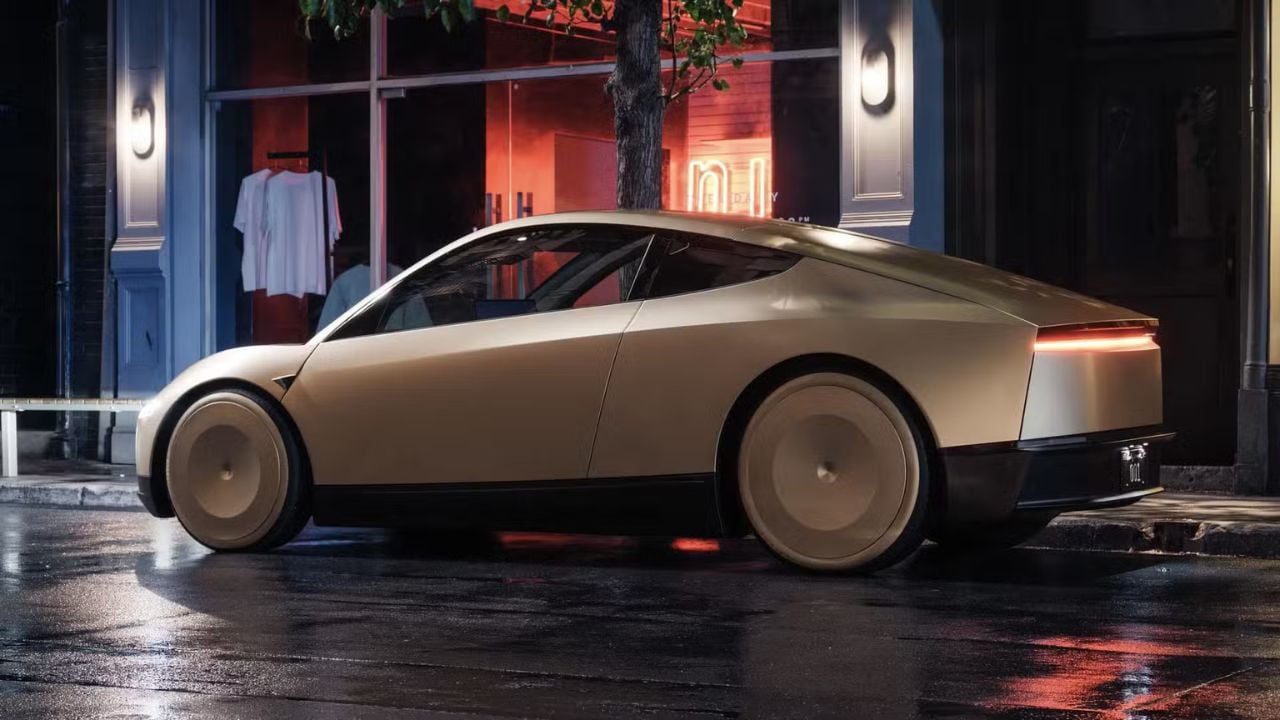
Tesla’s long-promised Cybercab is finally becoming a little less mysterious. Newly uncovered EPA certification documents have revealed the robotaxi’s key technical specifications, offering the clearest look yet at the engineering behind Tesla’s purpose-built autonomous vehicle.
The filings confirm several details Tesla had previously hinted at, including a relatively small battery pack and exceptional efficiency figures. At the same time, the documents also reveal a few surprises, particularly regarding the Cybercab’s weight and overall packaging.
According to the EPA certification paperwork, the two-seat Cybercab weighs 3,113 pounds, uses a single 219-horsepower electric motor, and carries a battery pack with roughly 48 kWh of usable capacity. Tesla also appears to have officially completed the vehicle’s emissions and efficiency certification process in the United States.
The Cybercab remains one of Tesla’s most ambitious projects. Designed specifically for autonomous ride-hailing, the vehicle is expected to operate without a steering wheel or pedals, though the company still faces major regulatory and technological hurdles before fully unsupervised operation becomes legal on public roads.
Smaller Battery, Huge Efficiency

One of the most impressive figures revealed in the filing is the Cybercab’s energy efficiency. EPA test data indicates the vehicle achieved an unadjusted combined driving range of roughly 418 miles during testing.
After applying the EPA’s standard real-world correction factors, that would translate to an estimated driving range just under 300 miles. That closely matches Tesla’s earlier claims that the Cybercab would deliver “close to 300 miles” of range.
The vehicle reportedly consumes approximately 165 Wh per mile, an exceptionally low figure by modern EV standards. For comparison, most current electric vehicles consume substantially more energy, especially larger crossovers and trucks.
The relatively modest 48-kWh lithium-ion battery pack plays a major role in that efficiency strategy. By keeping the pack smaller and lighter than typical EV batteries, Tesla appears focused on maximizing operating efficiency rather than brute-force range numbers.
The filings also suggest Tesla expects wireless inductive charging to serve as the Cybercab’s primary charging method, though traditional charging support is still expected.
The Weight Is Surprisingly High
Despite the Cybercab’s small footprint and minimalist design, the vehicle weighs more than many expected. At 3,113 pounds, it remains lighter than a standard Tesla Model 3, though not by as large a margin as some observers anticipated.
That figure becomes more interesting when considering the Cybercab is a compact two-seat vehicle without a steering wheel, pedals, or many traditional driver-control components.
For perspective, lightweight two-seat sports cars such as the Mazda MX-5 Miata weigh significantly less despite offering full passenger-car functionality. Even some larger compact sedans come surprisingly close to the Cybercab’s curb weight.
Part of the explanation obviously comes from the battery pack itself, which weighs hundreds of pounds. Tesla’s autonomous-driving hardware, computing systems, cameras, crash structures, and redundant electronics also add complexity and mass that traditional vehicles do not require.
The EPA paperwork lists a gross vehicle weight rating of 3,730 pounds, giving the Cybercab a payload capacity of approximately 617 pounds for passengers and cargo.
Front-Wheel Drive Is An Unexpected Choice
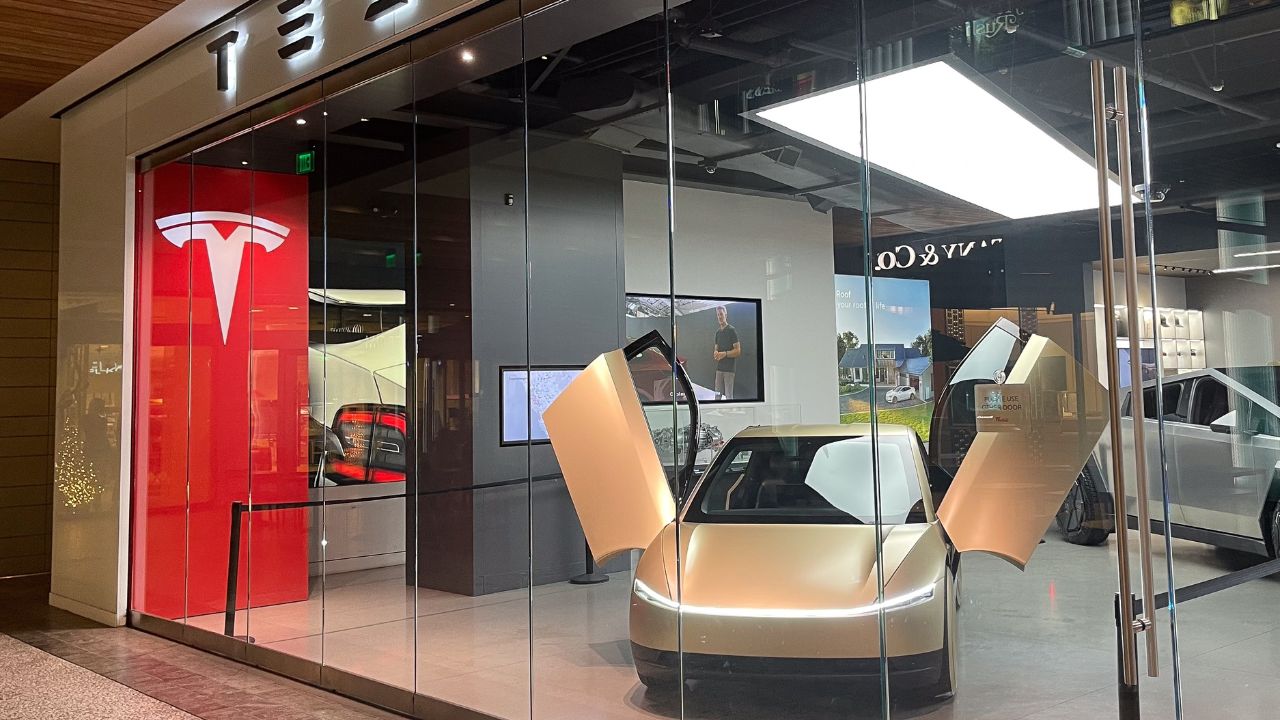
The filings also confirm the Cybercab uses a single front-mounted permanent-magnet electric motor producing 163 kW, or roughly 219 horsepower.
That makes the Cybercab front-wheel drive, an unusual choice for Tesla. Most of the company’s modern vehicles use rear-wheel-drive or dual-motor all-wheel-drive layouts.
The decision likely comes down to efficiency, cost reduction, and packaging simplicity. A front-drive configuration eliminates the need for a rear drive unit while simplifying the overall architecture of a vehicle designed primarily for urban ride-hailing rather than enthusiast driving dynamics.
Tesla also appears to have intentionally avoided overloading the Cybercab with excessive power. While 219 horsepower may sound modest by Tesla standards, it should be more than enough for a lightweight urban-focused EV.
The smaller motor likely operates in a more efficient range during normal city driving, helping contribute to the vehicle’s unusually low energy consumption figures.
The Real Challenge Still Has Nothing To Do With Hardware
The EPA certification documents confirm that Tesla has technically completed one major hurdle: the Cybercab is now certified for U.S. roads from an emissions and efficiency standpoint.
The paperwork even lists an “introduction into commerce” date of May 29, 2026, suggesting Tesla has already begun formally integrating the vehicle into its production and regulatory pipeline.
Still, the most important question surrounding the Cybercab remains unanswered. Tesla has yet to secure broad approval for fully unsupervised autonomous operation, the very capability the entire project depends on.
Without legal and technological approval for true driverless functionality, the Cybercab risks becoming an extremely efficient electric vehicle without a fully defined role.
The specifications now reveal that Tesla has engineered a remarkably optimized EV platform. Whether the company can successfully deliver the autonomous future the Cybercab was designed for remains the much larger challenge.