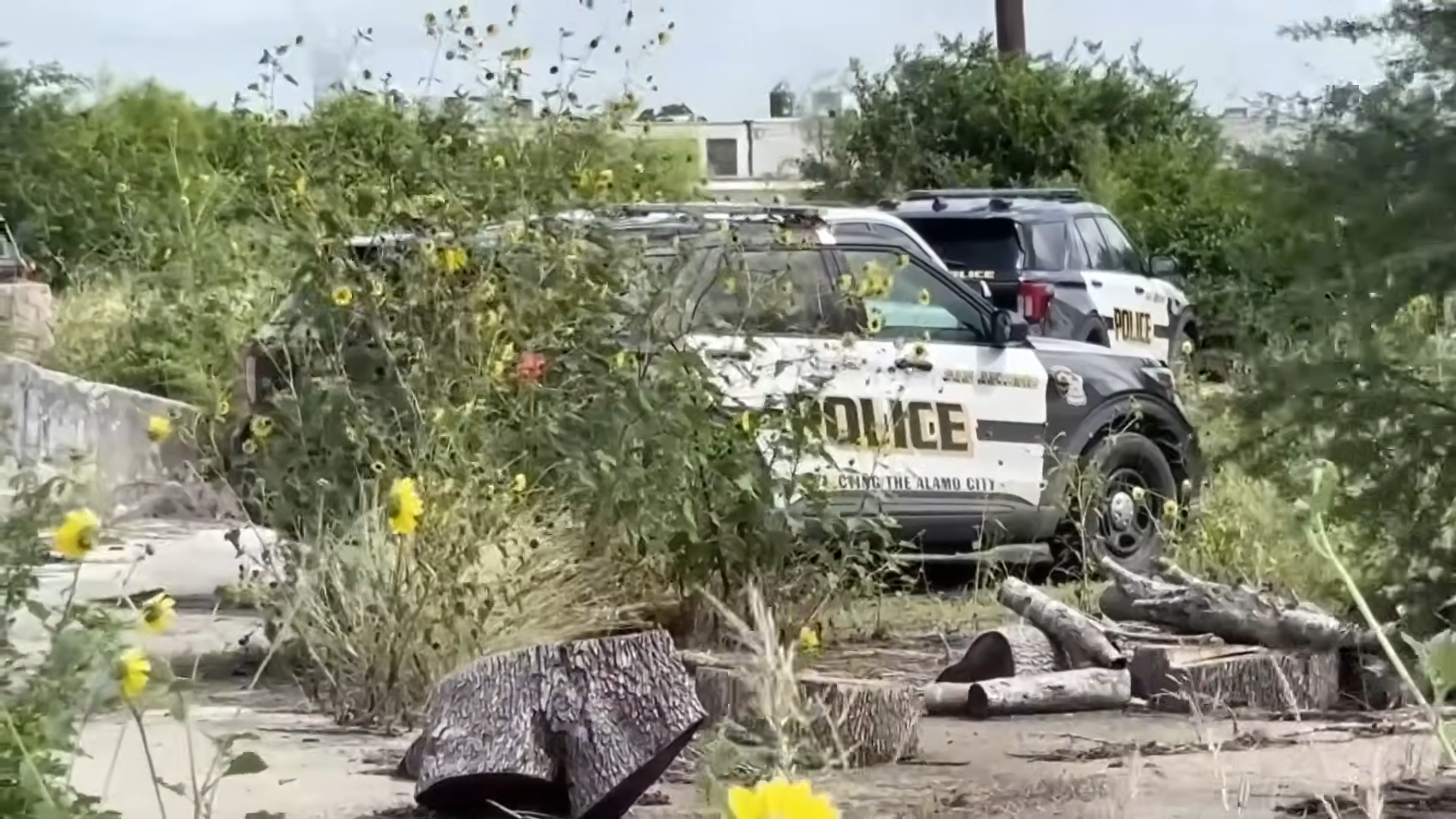
What started as a call about a suspicious vehicle on San Antonio’s west side turned into something considerably more interesting by mid-morning. Officers responding to a business complaint near Merida and South Navidad found themselves chasing teenagers across railroad tracks instead of writing a report. That’s never a great sign for the teens involved, but for investigators, it turned out to be a productive Tuesday.
When the dust settled and the K9 units had done their sweep, police had located a vacant lot concealed behind dense brush that was quietly housing three stolen vehicles: two Kias and a Hyundai. The property had apparently been functioning as an informal stash site, the kind of setup that tends to indicate someone has been doing this more than once. One of the car owners made the discovery personal by showing up at the scene herself, having reported her vehicle stolen from just a few miles away less than an hour earlier.
One suspect was taken into custody. Two others made it across the tracks and disappeared, which means detectives are now working with fingerprints, physical evidence, and whatever else the scene gave them to figure out who else was involved. More pressingly, they’re trying to determine whether this was a one-off or part of a broader theft operation with more participants and more vehicles to account for.
The choice of vehicles involved is no accident, and it’s a story that anyone who follows automotive crime news has seen play out in city after city. Kia and Hyundai models continue to be the preferred targets for teen theft rings across the country, and San Antonio has had a front-row seat to that trend for years.
The Kia Boys Problem Hasn’t Gone Away
The “Kia Boys” phenomenon, which began gaining national attention around 2021 after viral TikTok videos demonstrated how to steal certain models using nothing more than a USB cable and a screwdriver, turned models built without engine immobilizers into routine theft targets, with thieves able to tear apart the steering column and start the vehicle without a key.
San Antonio, like most major cities, got hit hard. The trend had already driven up juvenile vehicle theft rates significantly in Bexar County, with SAPD leadership acknowledging the department’s vehicle theft unit was badly understaffed for the volume of cases it was managing.
The problem isn’t exclusive to Texas, but cities like San Antonio have served as reliable case studies in how quickly this can spiral when you combine an easily exploitable design flaw with teenagers who have social media accounts and a lot of free time.
A Settlement That Should Help, Eventually
The automakers have not exactly covered themselves in glory on this front. In 2015, only 26 percent of Kia and Hyundai vehicles sold in the United States included engine immobilizers, compared to 96 percent of vehicles sold by other manufacturers. That gap is what created the opening.
Late last year, some movement finally happened on the legal side. Hyundai and Kia reached an agreement with 35 state attorneys general to retrofit approximately 7 million U.S. vehicles with free zinc-reinforced ignition cylinder protectors, with the companies also committing to equip all future U.S. models with engine immobilizer technology. Eligible owners began receiving notices in early 2026 and will have until March 2027 to complete the retrofit at authorized dealerships. The fix reinforces the ignition cylinder so that it can’t be removed using the crude methods the social media tutorials made famous.
It’s a meaningful step, but it’s worth noting that in 2025, four of the ten most stolen vehicles in the United States were Hyundai or Kia models. The fix is arriving years after the problem went national.
Stash Sites and the Bigger Picture
The vacant lot on San Antonio’s west side is worth dwelling on for a moment. Three vehicles tucked behind heavy brush, near railroad tracks that gave fleeing suspects a ready-made escape route, at a location a nearby business apparently noticed but couldn’t fully identify as a problem. Stash sites like this one are a marker of organized activity rather than impulsive joyriding. Someone had to know that lot was there, know that it was unmonitored, and decide it was a reliable place to leave vehicles while figuring out the next step.
Whether this particular operation connects to something larger is what investigators are now working to establish. Two suspects still outstanding and three vehicles recovered means there are more threads to pull. San Antonio has seen these situations escalate into wider rings before, and the evidence-gathering process underway at that lot is the kind of methodical work that sometimes pays off weeks after the initial scene clears.
What Owners of Affected Vehicles Should Do Right Now
If you own a Kia or Hyundai built between 2011 and 2022 and you haven’t already taken steps to protect it, the settlement retrofit is the most substantive option available. Eligible consumers are encouraged to schedule installation of the zinc-reinforced ignition cylinder protector as soon as they receive their notice, with authorized dealerships handling the installations. The software update that was offered in 2023 reduced risk but didn’t eliminate it entirely, which is part of why the hardware fix was pursued.
In the meantime, a steering wheel club, a visible GPS tracker, or simply parking in well-lit areas with cameras are the kinds of low-tech deterrents that genuinely affect whether a car gets targeted. Opportunistic theft depends on opportunity. The San Antonio victim who drove to the scene to identify her own car had learned that the hard way, less than ten minutes from home.