
For decades, many of America’s biggest trucks operated outside the same safety standards applied to regular passenger vehicles. Heavy-duty pickups, cargo vans, and commercial work vehicles often escaped stricter federal oversight despite their massive size and growing presence on public roads.
That is finally beginning to change. The Insurance Institute for Highway Safety has officially launched its first-ever safety evaluations for commercial vehicles, marking a significant expansion of the organization’s testing programs beyond traditional passenger cars and SUVs.
The initial round of testing focuses on heavy-duty pickup trucks and cargo vans, specifically examining basic driver-protection features such as airbags, seat belt technology, and seat belt reminder systems. While those features may sound routine in modern passenger vehicles, many are not actually required by federal regulations on commercial-grade trucks.
The move could have major implications for the industry. Commercial vehicles are involved in thousands of fatal crashes every year, and safety advocates have long argued that larger work-focused vehicles should no longer receive regulatory exemptions simply because they fall outside traditional passenger-car classifications.
Why Heavy-Duty Trucks Avoided Stricter Rules

Vehicles such as the Ford Super Duty, Chevrolet Silverado HD, and Ram Heavy Duty occupy a regulatory gray area. Unlike half-ton pickups such as the F-150 or Ram 1500, many heavier-duty trucks are classified differently under federal rules because of their higher gross vehicle weight ratings.
That distinction means many commercial vehicles are exempt from some crash-safety requirements, fuel-economy regulations, and advanced driver-assistance mandates that apply to standard passenger vehicles.
As a result, features many drivers now take for granted, including advanced airbags, force-limiting seat belts, or effective seat belt reminders, are not universally required on larger commercial trucks and vans.
The IIHS says that gap has become increasingly difficult to justify. In 2023 alone, more than 6,500 people were killed in crashes involving medium- and heavy-duty trucks or light commercial vans, accounting for roughly 16 percent of all roadway fatalities in the United States.
What The IIHS Tested First
Rather than immediately conducting full crash tests, the IIHS began by evaluating basic occupant-protection systems on nine commercial vehicles. The first group included three Class 3 heavy-duty pickups and six cargo vans.
Among the pickups tested were the Chevrolet Silverado 3500HD, Ford F-350 SuperCrew, and Ram 3500. Cargo vans included the Ford Transit T250, Mercedes-Benz Sprinter 2500, Chevrolet Express 2500, Ram ProMaster 2500, Rivian Delivery 500, and Chevrolet BrightDrop 400.
The evaluations focused on several core safety technologies: front and side airbags, seat belt pretensioners, force limiters, and the effectiveness of seat belt reminder systems.
IIHS researchers note that these systems can significantly reduce injuries and fatalities during crashes. Front airbags alone are estimated to reduce driver deaths in frontal impacts by nearly 30 percent, while side airbags can dramatically lower fatality risks in side collisions.
Some Trucks Passed, Others Fell Short
The early results were somewhat encouraging, though several vehicles still failed to meet IIHS expectations.
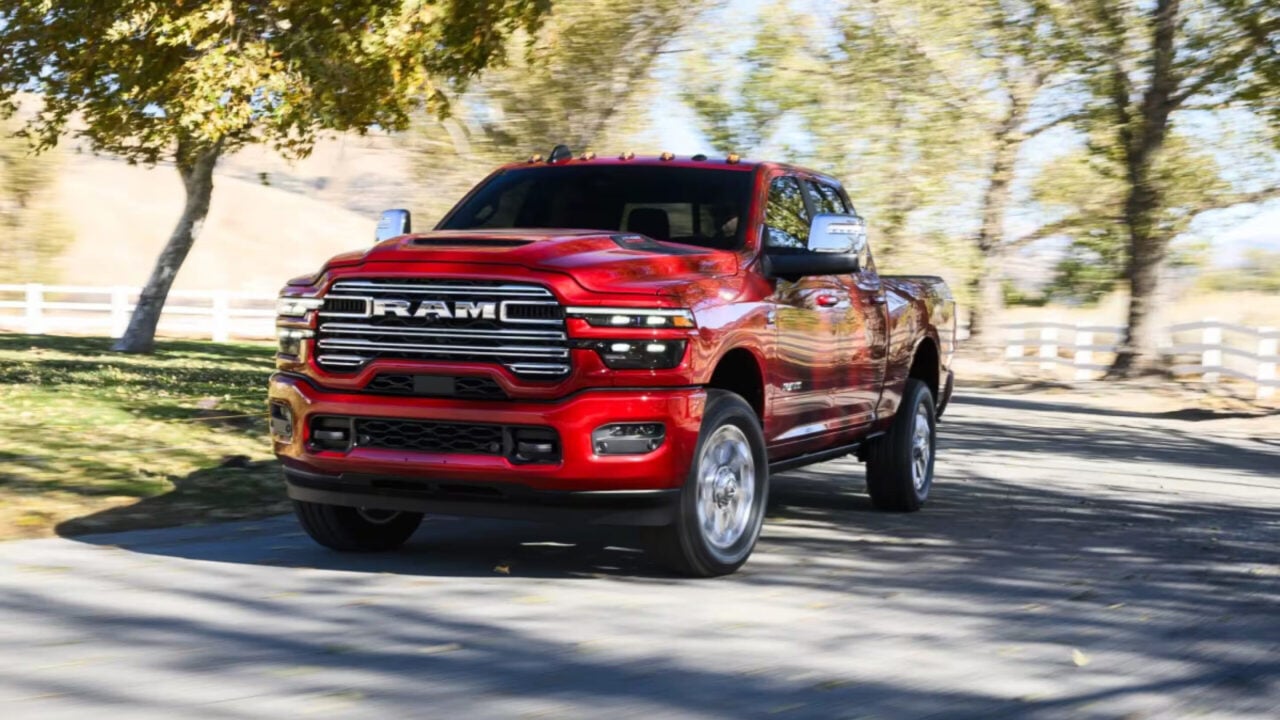
Both the Chevrolet Silverado 3500HD and Ford F-350 SuperCrew received positive marks by including all of the evaluated safety features, such as effective seat belt reminders. The Ram 3500 included the necessary airbags and belt technologies but failed the seat belt reminder evaluation.
Among cargo vans, the Chevrolet BrightDrop 400 and Ram ProMaster 2500 checked all the required boxes. Other vans struggled primarily because of inadequate seat belt reminder systems.
The Ford Transit, Mercedes-Benz Sprinter, Rivian Delivery 500, and Chevrolet Express all failed the reminder-system portion of the testing. The aging Chevrolet Express also lacked effective seat belt force limiters.
The IIHS places particular emphasis on seat belt reminders because delivery and commercial drivers frequently make repeated stops throughout the day and may neglect to buckle up consistently. The organization says previous studies found persistent reminder systems increased seat belt usage by roughly 30 percent.
More Advanced Testing Is Coming
This first phase is only the beginning of the IIHS commercial vehicle initiative. The organization plans to expand future evaluations to include headlights, automatic emergency braking systems, and eventually larger Class 4 through Class 6 trucks.
Those future tests could become increasingly important as commercial vehicles grow larger, heavier, and more technologically complex. Advanced driver-assistance systems are especially critical on large trucks because their weight and stopping distances can make collisions far more severe for other road users.
For fleet operators and businesses, the new evaluations may also influence purchasing decisions in much the same way IIHS ratings shape the passenger-car market today.
Ultimately, the goal is to bring commercial vehicle safety closer to the standards expected from modern passenger vehicles. Considering the number of heavy-duty trucks and vans sharing public roads every day, many safety experts argue the change is long overdue.