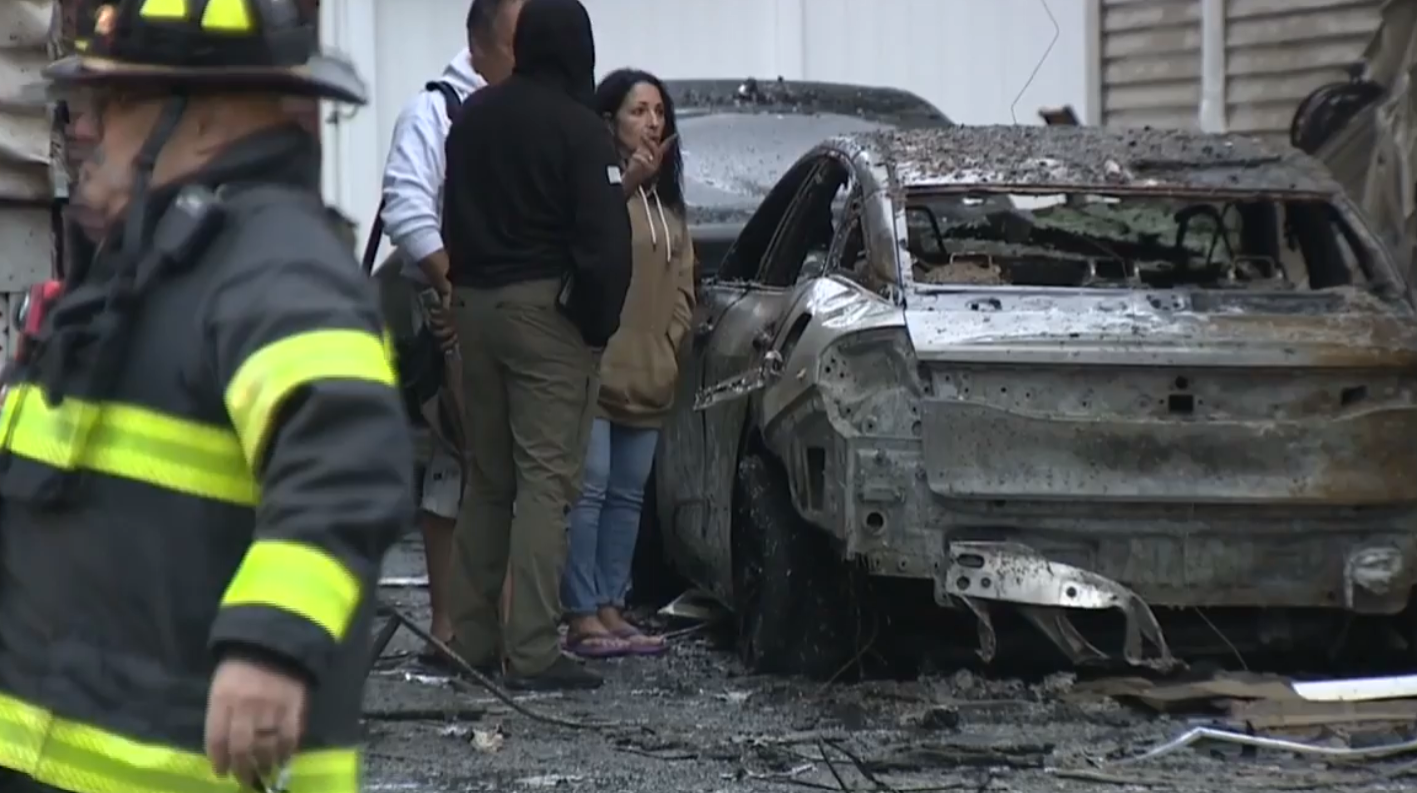
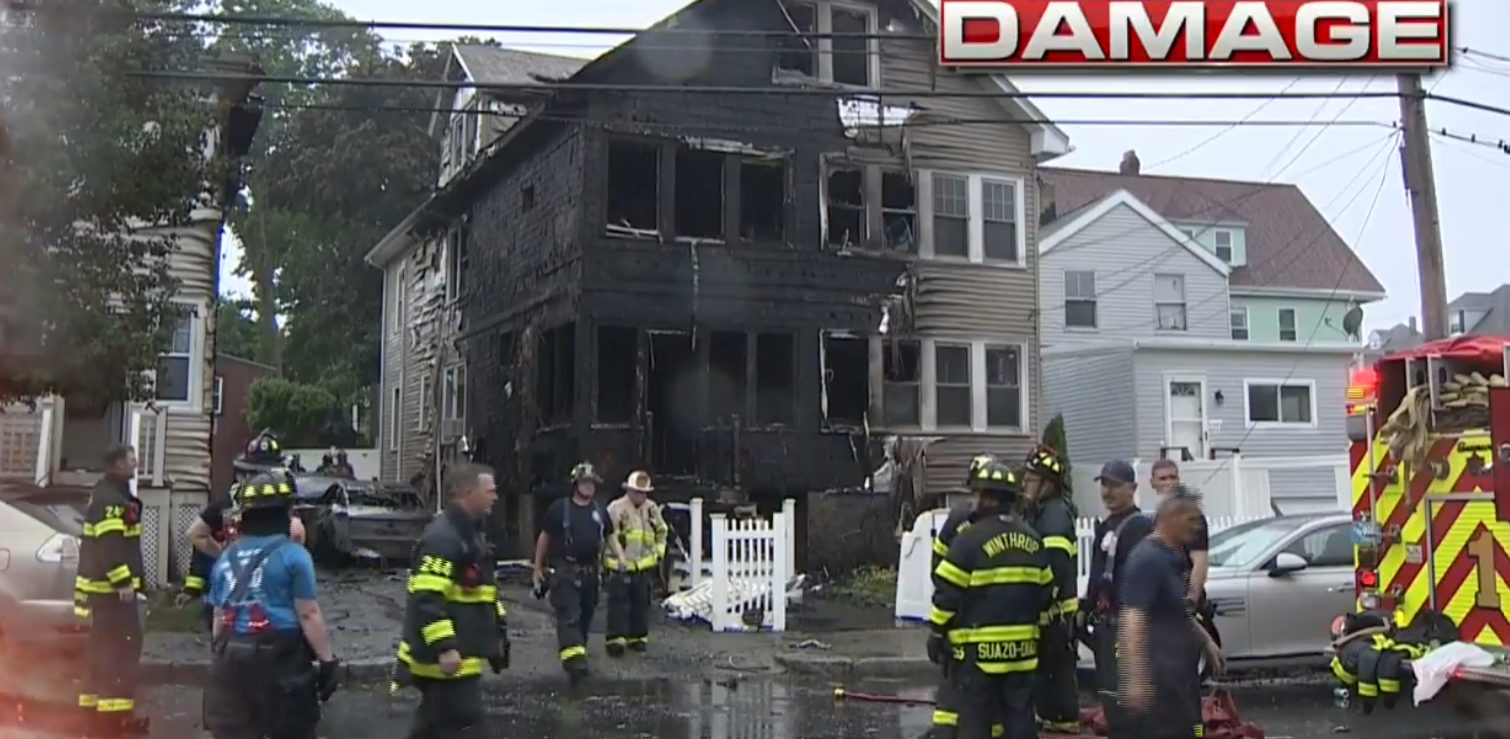
A parked electric vehicle turned a quiet Sunday morning in a Boston-area neighborhood into a scene of devastation, raising fresh questions about what happens when EV battery fires break out in residential settings. The June 8 fire in Winthrop, Massachusetts left two homes on River Road completely destroyed and sent two people to the hospital, including a pregnant woman who was experiencing contractions at the time of the blaze.
Both were expected to recover, but the story behind the fire is one that the automotive and fire safety communities will be watching closely.
Winthrop fire officials received calls around 4:30 a.m. reporting the fire. What makes this incident particularly notable is the speed and intensity with which it spread. The electric vehicle was positioned between the two structures, and according to fire officials, it ignited both buildings simultaneously.
That kind of simultaneous involvement of multiple structures is not typical of a conventional gasoline-fueled vehicle fire, and it underscores a challenge that fire departments across the country are actively working to address.
The fire was serious enough that multiple surrounding towns had to send mutual aid to assist Winthrop firefighters in battling the battery-involved blaze. A number of off-duty Winthrop firefighters also stepped in voluntarily to help. By the time the fire was extinguished, investigators determined both homes were complete total losses. Four families were displaced, left without a place to return to.
Among those displaced was Maurizio Marcoccio, who lived on the second floor of one of the affected buildings. His daughter and son-in-law occupied the first floor. His daughter was in early labor during the fire and was transported to the hospital.
The family is now left without a home to bring their newborn back to, which puts a deeply human face on an incident that also carries significant implications for how communities think about EV parking and emergency preparedness.
Why EV Battery Fires Are Especially Difficult to Fight
Lithium-ion battery fires, the kind that power virtually every electric vehicle on the road today, behave very differently from traditional structure or vehicle fires. They are prone to a phenomenon called thermal runaway, where heat builds within the battery cells and causes a chain reaction that is extraordinarily difficult to stop.
Firefighters often have to apply massive amounts of water over extended periods, sometimes for hours, just to cool the battery pack enough to prevent reignition. Some fire departments have begun using specialized containment systems or fire blankets designed for EVs, but equipment and training vary widely between municipalities.
Multiple Towns Required to Contain the Blaze
The fact that Winthrop required assistance from neighboring communities to manage this fire is telling. Smaller towns and departments often lack the resources and specialized training to handle EV battery fires independently.
This is becoming an increasingly common situation as electric vehicles make up a larger share of the vehicles on American roads. The National Fire Protection Association and other bodies have been working to develop updated protocols, but the gap between the pace of EV adoption and fire department readiness remains a legitimate concern.
The Human Cost Behind the Headlines
It would be easy to reduce this story to a statistic, but the Marcoccio family’s situation is a reminder that these incidents carry real consequences. Losing a home under any circumstances is devastating. Losing one the morning a new family member is about to arrive is something else entirely.
The family has no immediate plan for where they will bring the baby home, and they are among four families now navigating that uncertainty. Displacement assistance, insurance timelines, and temporary housing logistics are difficult under the best circumstances.
What This Means for EV Parking and Residential Safety
This fire will likely add momentum to an ongoing conversation about where electric vehicles should be stored, particularly in densely populated areas with attached or closely spaced housing. Some European countries and certain U.S. jurisdictions have already begun revisiting building codes and parking regulations as they relate to EVs, including requirements around fire suppression systems in parking garages and setback distances.
For older neighborhoods with homes built close together, like many in the Boston metro area, the proximity question is especially relevant. As EV ownership continues to grow, local governments and fire marshals will face increasing pressure to get ahead of the risk rather than respond to it.