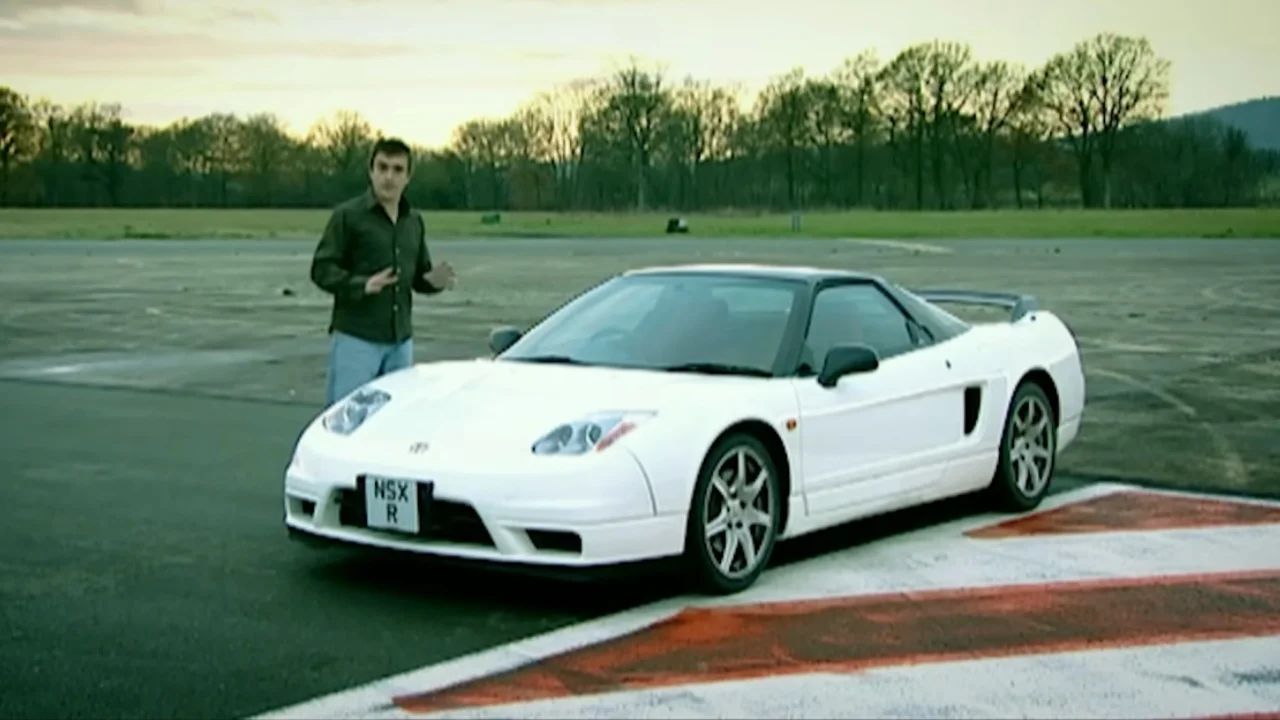
Richard Hammond made a name for himself on the BBC’s Top Gear, alongside Jeremy Clarkson and James May. The trio presented the show together from 2003 to 2015, before moving over to Amazon and fronting The Grand Tour. Many of us got into cars thanks to these three, and the show still holds fond memories for a lot of automotive enthusiasts.
The Top Gear Classic YouTube channel posts the best clips from the best years of the show, right back to the very start. It gives us a retro look into the show, and a clip recently uploaded features Hammond getting to grips with the Honda NSX-R.
The NSX-R was effectively a Type R version of the Honda NSX supercar, and was a more track-focused version of the NSX. Think of it as Japan’s answer to the Porsche 911 GT3 RS, and it’s widely lauded as one of the best supercars of all time.
In this clip, the mighty supercar is thrown around the iconic Top Gear test track, with Hammond describing it as a ‘hardcore’ version of the user-friendly NSX. It is a fascinating look back into the past, and the video lets us hear what Hammond thought of the car while it was still brand new.
This Is How Hammond Described the Legendary HondaNSX-R
Hammond said the NSX is the “reclusive uncle” of the Honda Civic Type R, a hot hatchback that in 2003 was one of the best on the market. This NSX-R, however, was very different from the original NSX, with Hammond calling it “totally hardcore,” before promptly spinning it in the video.
The Top Gear presenter detailed some of the changes Honda made to the supercar. Weight shedding was the name of the game, with the hood, trunk, and rear spoiler all made out of carbon fiber. Also at the back, the glass rear window was made out of thinner, lighter glass. Honda even used carbon fiber to create lighter seats inside the NSX.
Perhaps the most extreme weight-saving measure, however, came from the gated shifter. The base was usually made of leather, but Honda changed that to replace it with a fine mesh to save a minuscule amount of weight. “I could have done that wearing a thinner pair of socks,” remarked Hammond.
What Was the NSX-R Like To Drive?
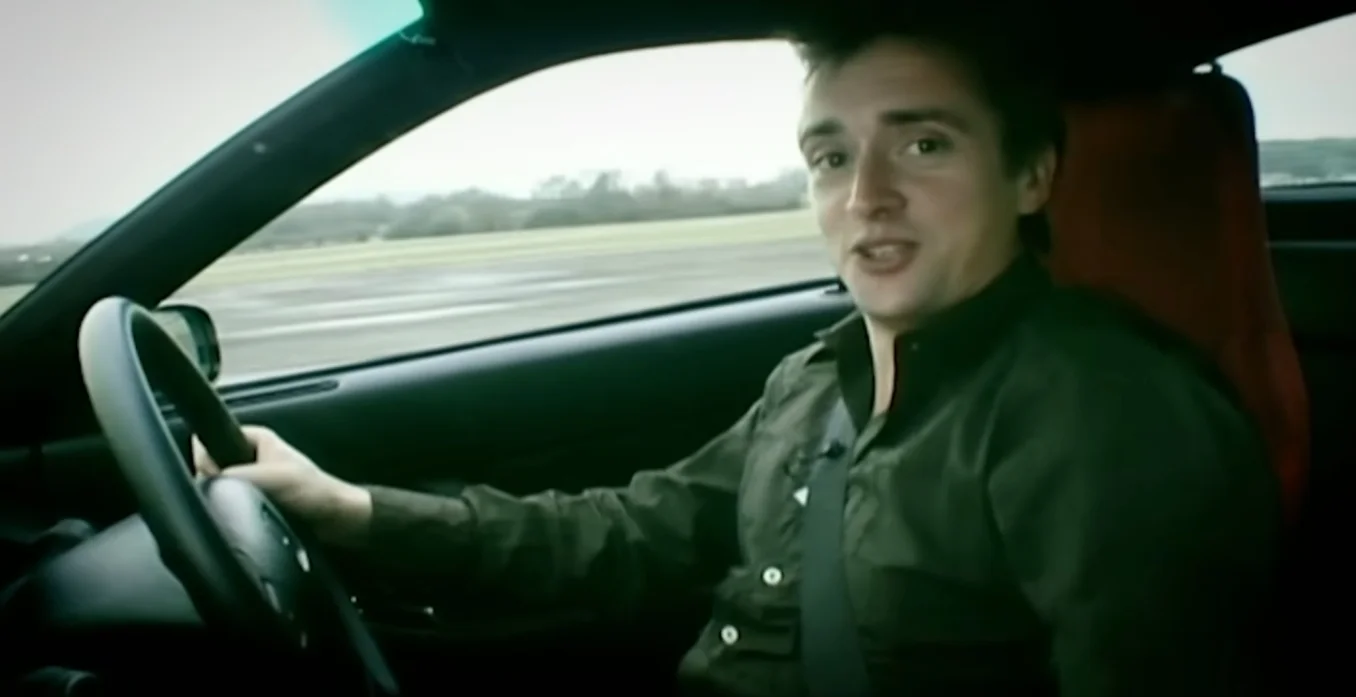
Hammond described how the car’s brakes were stronger and that the suspension had been made sharper. Under the hood, the 3.2-liter V6 engine was tuned to a quoted 276hp. In reality, it made closer to 300hp, allowing it to lap the Nürburgring in just 7:56.73. Even 24 years later, that is still an incredibly impressive lap time.
Honda also tweaked the car’s aerodynamics. They even allowed the radio aerial to lower halfway down when the radio was on, to improve the straight-line performance of the car. Hammond was full of praise for the results of all this. “It handles beautifully, and grips like nothing else,” he said. “But is it enough to make people sit up and take notice? Sadly, no,” he concluded.
Hammond explained that, at the time, nobody wanted to pay around $70,000 for a Honda. He also said the NSX-R had become an engineer’s plaything, and stopped simply being a supercar. He rounded off by saying Honda should just give up on the NSX and move on. Of course, they didn’t, and in 2026, views on the car have changed.
The Honda NSX-R Is Now Considered a Supercar Legend
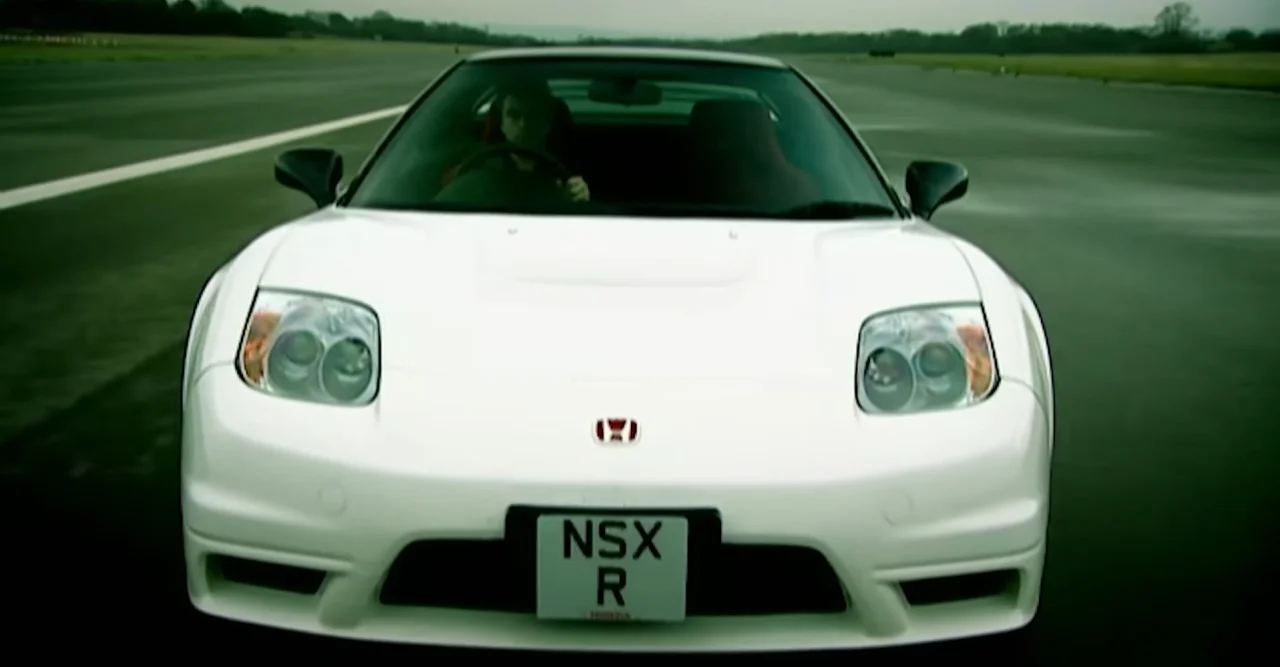
In 2026, the NSX-R is revered as one of the greatest supercars ever made. The first-generation NSX as a whole is highly coveted, and prices for it go up and up every year on the second-hand market. Classic.com lists the average price of an NSX-R at a mind-blowing $387,795. Considering how much they were when new, we think Hammond might have to revisit some of those comments he made about people not paying $70,000 for a Honda.