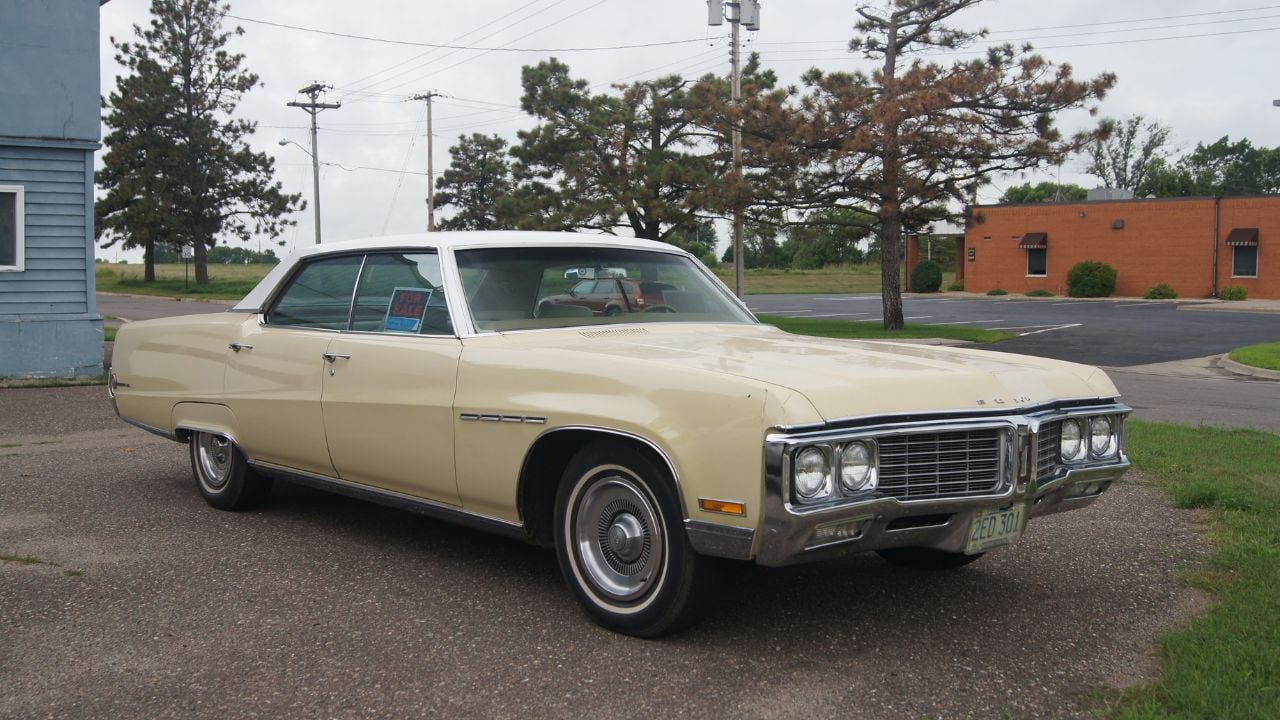
Full-size American luxury cars from the late 1960s through the mid-1970s were built for a very different kind of performance. They were not trying to feel light, sharp, or nervous. They were built to move six passengers, deep upholstery, long hoods, heavy chrome, air conditioning, and highway miles with very little effort.
That is where massive V8s became part of the land-yacht formula. These engines were not always installed for stoplight racing. In many luxury cruisers, they were used to make a huge car feel relaxed, quiet, and confident at speed.
The muscle cars usually get the attention, but many of the same displacement legends lived under longer, softer, far less obvious bodies. A 455, 429, 440, or 500 cubic inch V8 could sit beneath a vinyl roof and formal roofline, almost hidden by the car’s luxury image.
These five land yachts deserve another look. They are not small, cheap to fuel, or easy to park, but they give buyers a forgotten side of American big-displacement history: effortless torque, massive presence, and power delivered through silence rather than spectacle.
1970 Buick Electra 225
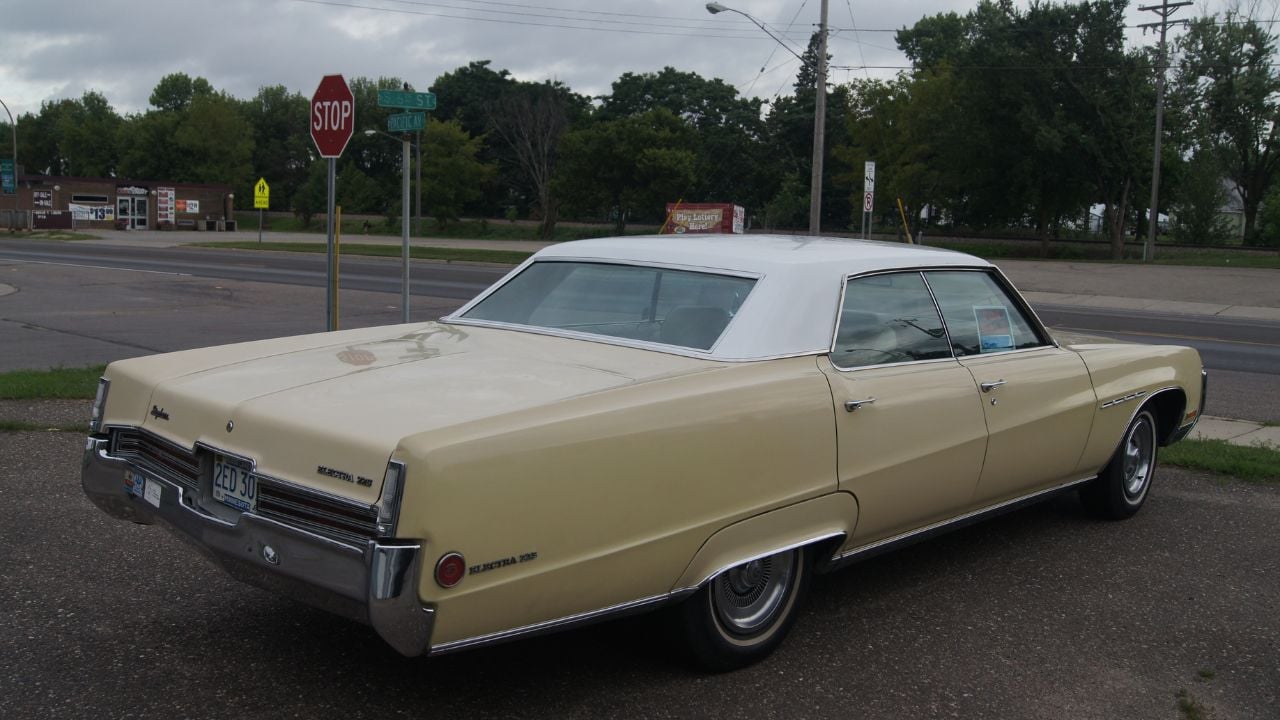
The 1970 Buick Electra 225 carried one of the great big-displacement engines of its era under a calm luxury body. Buick replaced the earlier 430 cubic inch V8 with a 455 cubic inch engine for 1970, and the Electra’s version was rated at 370 HP with 510 pound-feet of torque.
That torque figure is the key to the car’s personality. The Electra was not built to shout like a GS Stage 1 at a drag strip. It was built to move a long, heavy luxury Buick without strain, even with passengers, luggage, air conditioning, and a full tank of fuel on board.
The Electra 225 name also told buyers plenty about its scale. The car measured roughly 225 inches long, and the nickname “Deuce and a Quarter” still fits perfectly. Today, many shoppers look past these cars in favor of smaller muscle models, but a clean Electra delivers a different kind of satisfaction.
It has road presence, smooth V8 strength, a roomy cabin, and the relaxed confidence of a car built for long American highways. The 455 does not need to announce itself loudly. It simply makes the whole car feel lighter than it has any right to feel.
1970 Oldsmobile Ninety-Eight
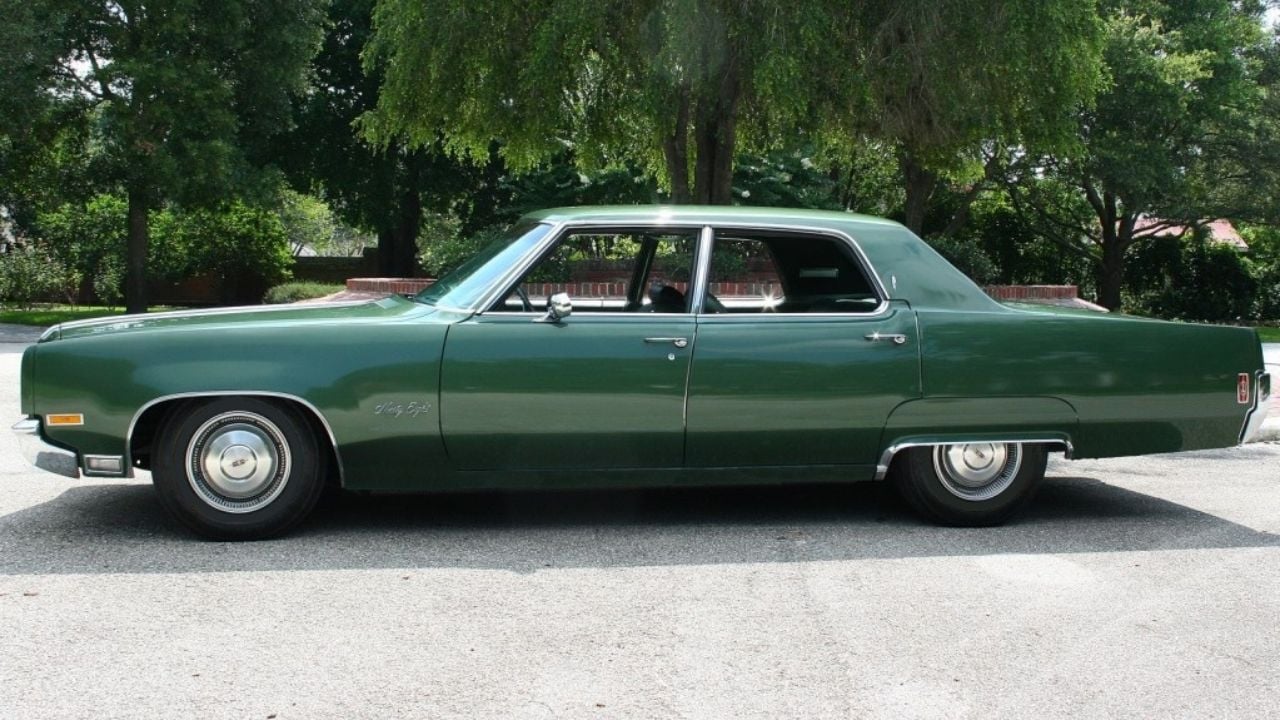
The 1970 Oldsmobile Ninety-Eight is easy to overlook next to the 442, yet it carried serious Rocket V8 power of its own. The Ninety-Eight used a 455 cubic inch V8 rated at 365 HP, paired with a Turbo Hydramatic automatic transmission.
Its size made the engine even more important. The 1970 Ninety-Eight rode on a 127 inch wheelbase and stretched about 225.2 inches long, placing it firmly in land-yacht territory. A smaller engine could move a car that large, but the 455 gave it the kind of low-speed authority expected from Oldsmobile’s flagship.
Oldsmobile gave this car a different mission from its muscle models. The Ninety-Eight was about quiet authority, deep seats, broad shoulders, and smooth highway travel. The 455 gave it the strength to feel dignified rather than burdened by its own size.
Collectors often chase the 442 first, but the Ninety-Eight offers a forgotten luxury side of the same engine family. A clean hardtop or convertible feels imposing, comfortable, and far stronger than its formal image suggests.
1969 Mercury Marquis
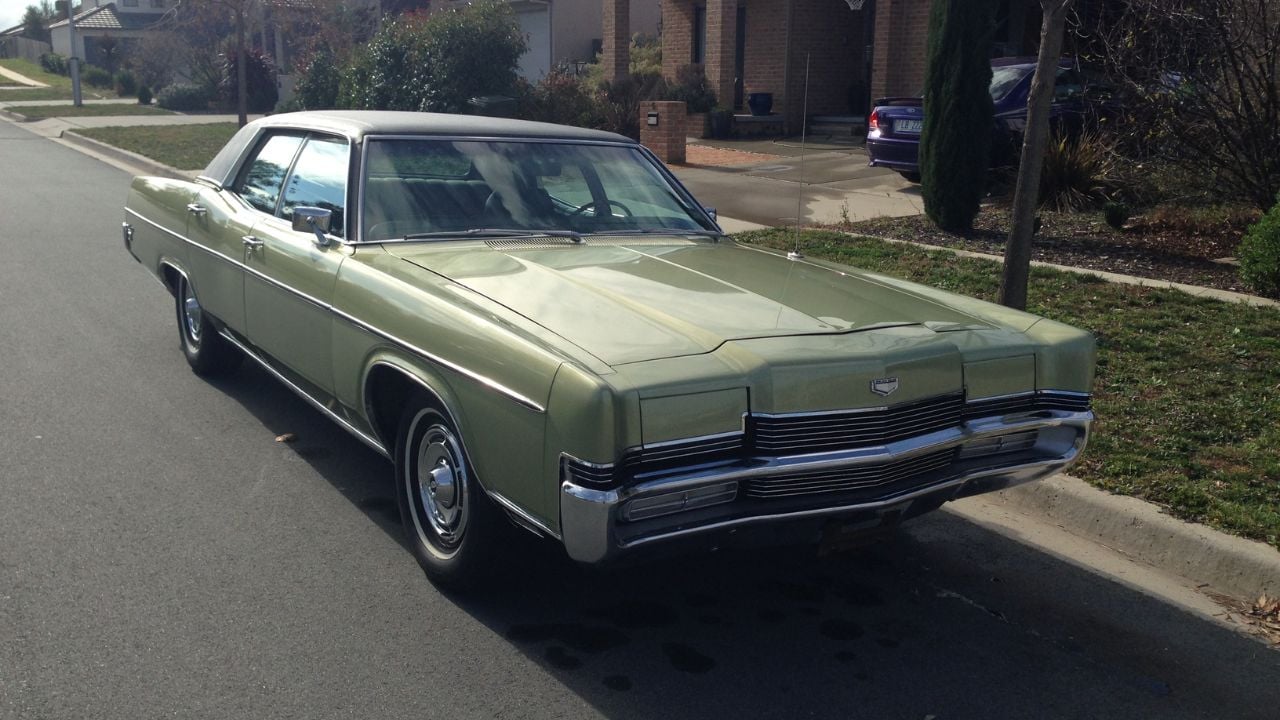
The 1969 Mercury Marquis looked like a mature full-size luxury car, but its engine choices gave it real big Ford V8 credibility. Mercury offered 429 cubic inch V8 power, including a 320 HP version and a stronger 360 HP four-barrel version, backed by a three-speed Ford C6 automatic.
The proportions matched the engine. The 1969 Marquis measured about 224.3 inches long on a 124 inch wheelbase, giving it the size and stance expected from a proper late-1960s American cruiser.
The Marquis rarely gets the same attention as a Mustang, Torino, or Cyclone from the same broad family tree. That lower profile now gives it a quieter collector appeal than Ford and Mercury performance models from the same era.
It hides its strength under formal lines, wide seats, long doors, and a calm Mercury personality. The 429 four-barrel version is the one that makes the strongest case, especially in a hardtop coupe or hardtop sedan. It gives buyers big Ford V8 character without the obvious muscle car script.
1973 Chrysler New Yorker Brougham
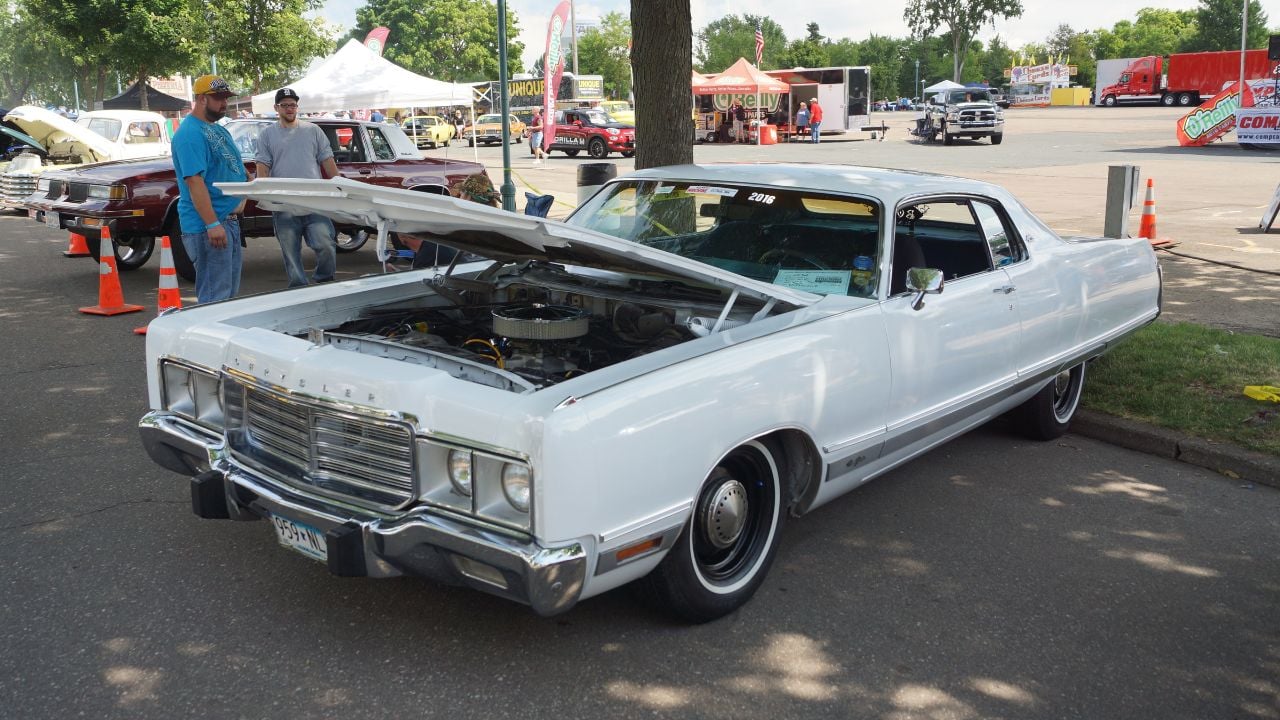
The 1973 Chrysler New Yorker Brougham came from the final stretch of Chrysler’s fuselage era, with huge proportions, clean body sides, and a cabin built around comfort. Under the hood sat Chrysler’s 440 cubic inch V8, one of the most respected big-block engines Detroit ever produced.
By 1973, emissions tuning and lower compression had reduced output, with the 440 listed at 215 net HP and 345 pound-feet of torque in the New Yorker Brougham. That lower net horsepower figure can mislead modern buyers.
This car was not chasing high-RPM drama. The 440’s job was to move a large luxury Chrysler through traffic and across open roads with a steady reserve of torque. It gave the car smoothness, confidence, and the feeling that the engine never had to work especially hard.
The New Yorker Brougham also has the visual character many later luxury cars lost: thin pillars, long overhangs, formal trim, and real presence. A well-kept example gives collectors a quiet Mopar big-block experience outside the usual Charger and Road Runner conversation.
1976 Cadillac Fleetwood Sixty Special Brougham
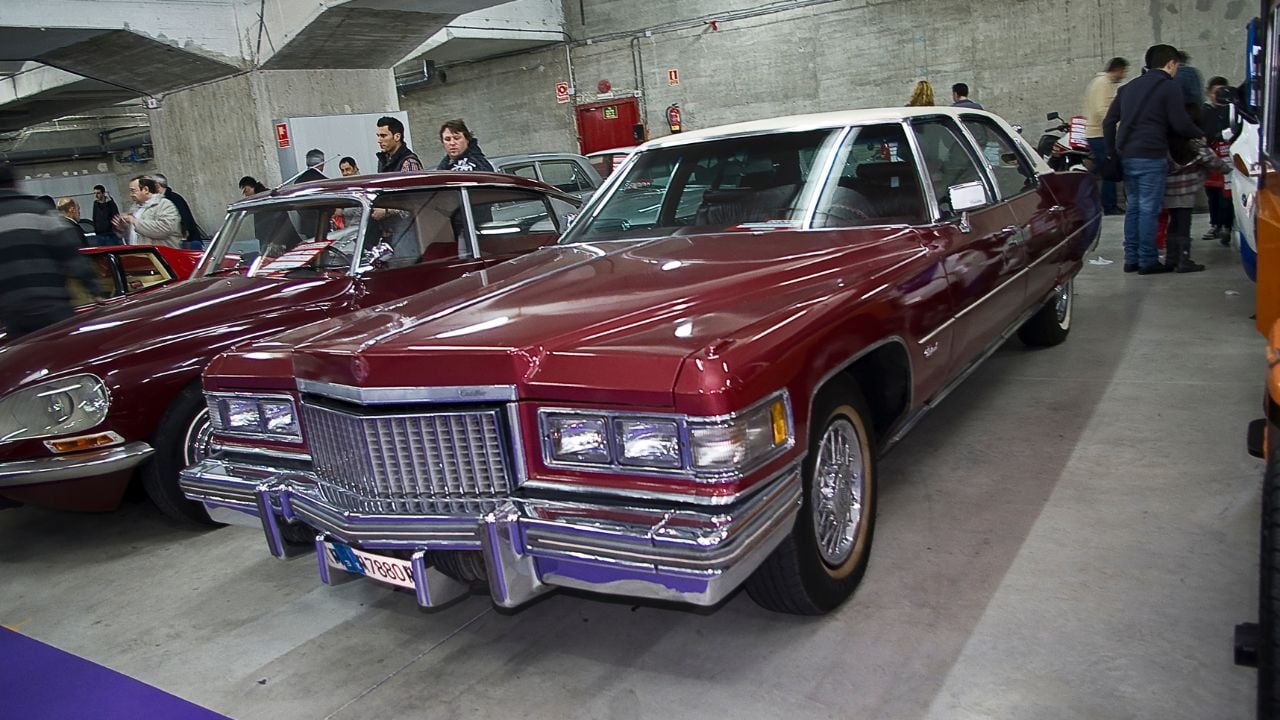
The 1976 Cadillac Fleetwood Sixty Special Brougham is one of the clearest examples of displacement hiding behind luxury manners. Cadillac fitted the 500 cubic inch V8 to its full-size lineup, and the Fleetwood Brougham’s version was rated at 190 HP and 360 pound-feet of torque with a four-barrel carburetor and TH400 automatic transmission.
The number that matters most is displacement: 500 cubic inches in a formal luxury sedan built for silence, space, and authority. On paper, the smog-era horsepower rating looks modest. In person, the car still feels enormous, smooth, and deeply American.
The Fleetwood Brougham was not built to win street races. It was built to glide, isolate, and carry its passengers with a kind of confidence modern cars rarely attempt. The 500 V8 gave the car a mechanical calm that suited Cadillac’s image perfectly.
Buyers often dismiss these mid-1970s Cadillacs as soft cruisers, but the 500 V8 gives the Fleetwood Brougham a story worth remembering. It was the end of an era when American luxury could still mean enormous cubic inches, deep silence, and a hood that seemed to stretch toward the horizon.
Big-Displacement Luxury Still Has Its Own Kind Of Power
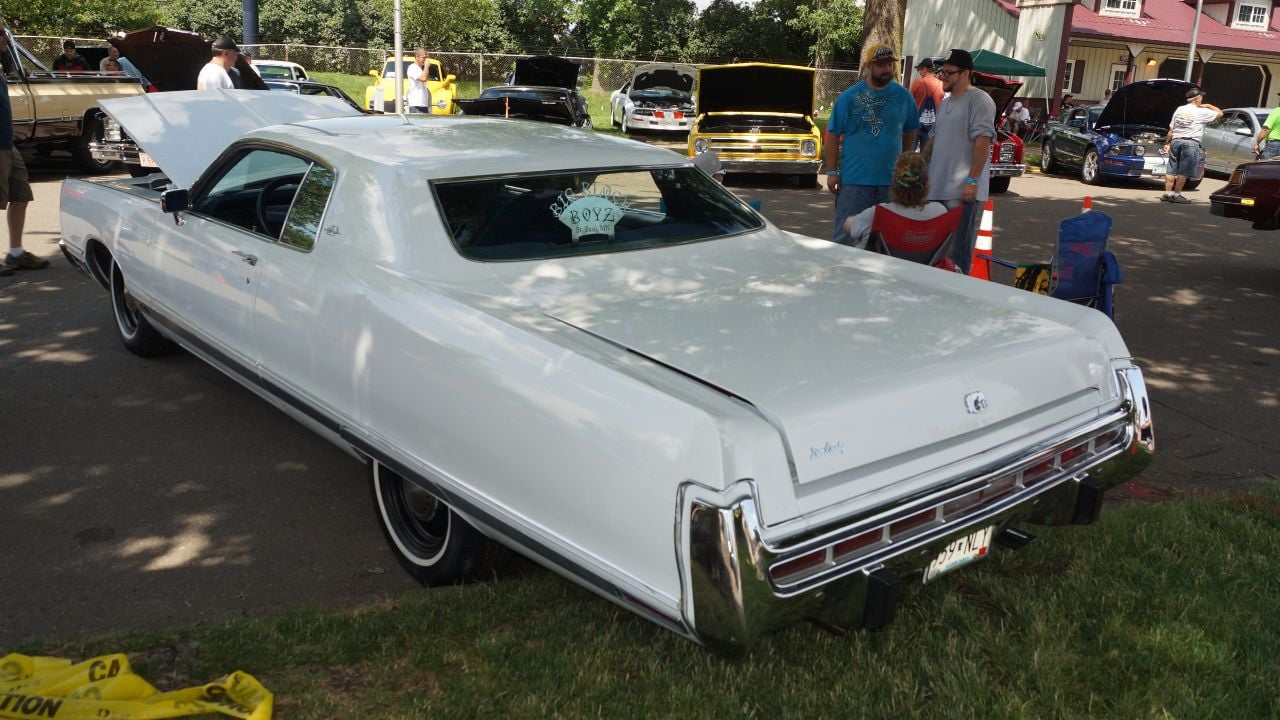
The easiest big V8 cars to remember are usually the loud ones. Chevelles, Road Runners, Torinos, 442s, and GS Buicks made their reputations through stripes, scoops, quarter-mile numbers, and muscle car mythology.
These land yachts tell another part of the same story. The Buick Electra 225, Oldsmobile Ninety-Eight, Mercury Marquis, Chrysler New Yorker Brougham, and Cadillac Fleetwood Sixty Special Brougham used big-displacement V8s to create effortlessness. Their engines turned weight, comfort equipment, and highway speed into something calm and controlled.
Condition matters heavily with cars this large. Rust, tired vinyl roofs, worn suspension, weak brakes, old cooling systems, cracked interior trim, and neglected carburetors can turn a cheap cruiser into an expensive project.
The right example offers a rare kind of old-car experience. It does not need to feel sharp to feel special. It only needs a long hood, a deep bench seat, a smooth automatic, and enough V8 torque to move away from a stop with almost no drama.
That was the real authority of these cars. They did not perform by shouting. They performed by making thousands of pounds of American luxury feel calm, silent, and completely unbothered.