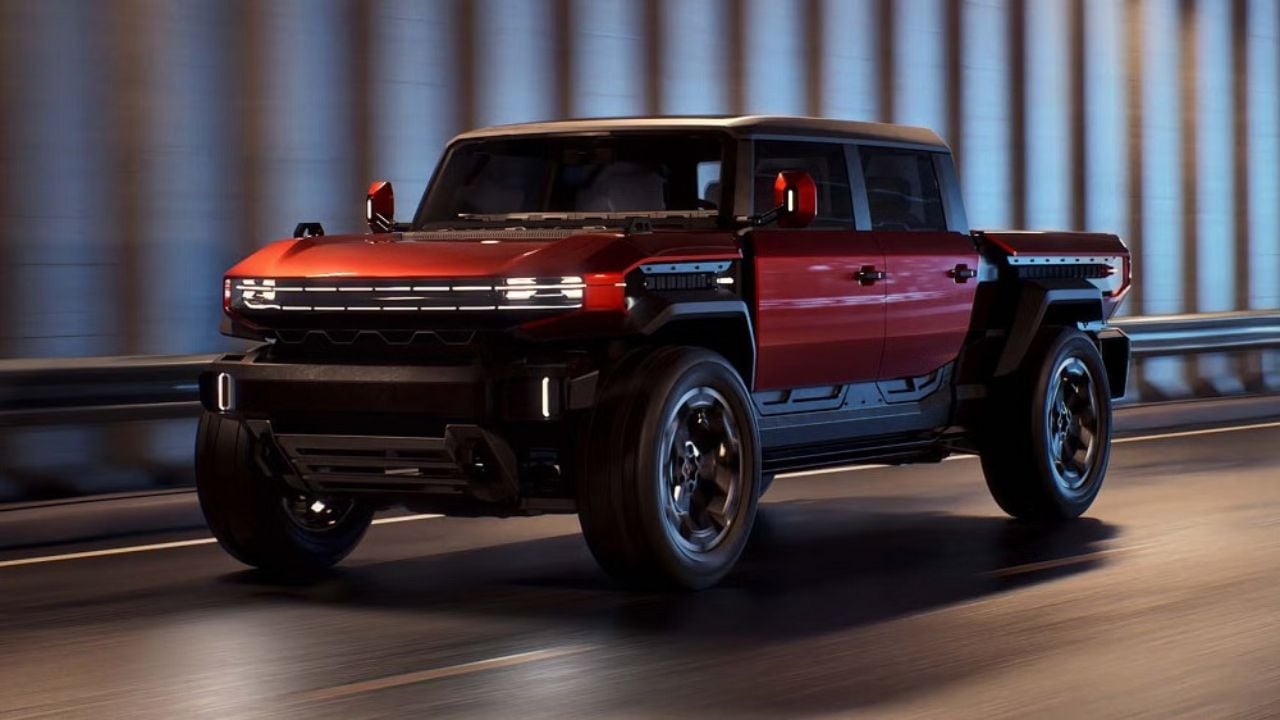
General Motors has revealed two new GMC HUMMER X concepts, and both point toward a very different future for the Hummer name.
At first glance, the pickup and SUV look like radical evolutions of today’s battery-electric GMC Hummer EV, which revived the legendary name as a model line rather than a separate brand.
Behind the aggressive design, however, this is more than a styling exercise.
With the HUMMER X project, GM is exploring how future electric off-road vehicles could look, function, connect with owners, and even be produced.
A Smaller And More Focused Hummer Idea
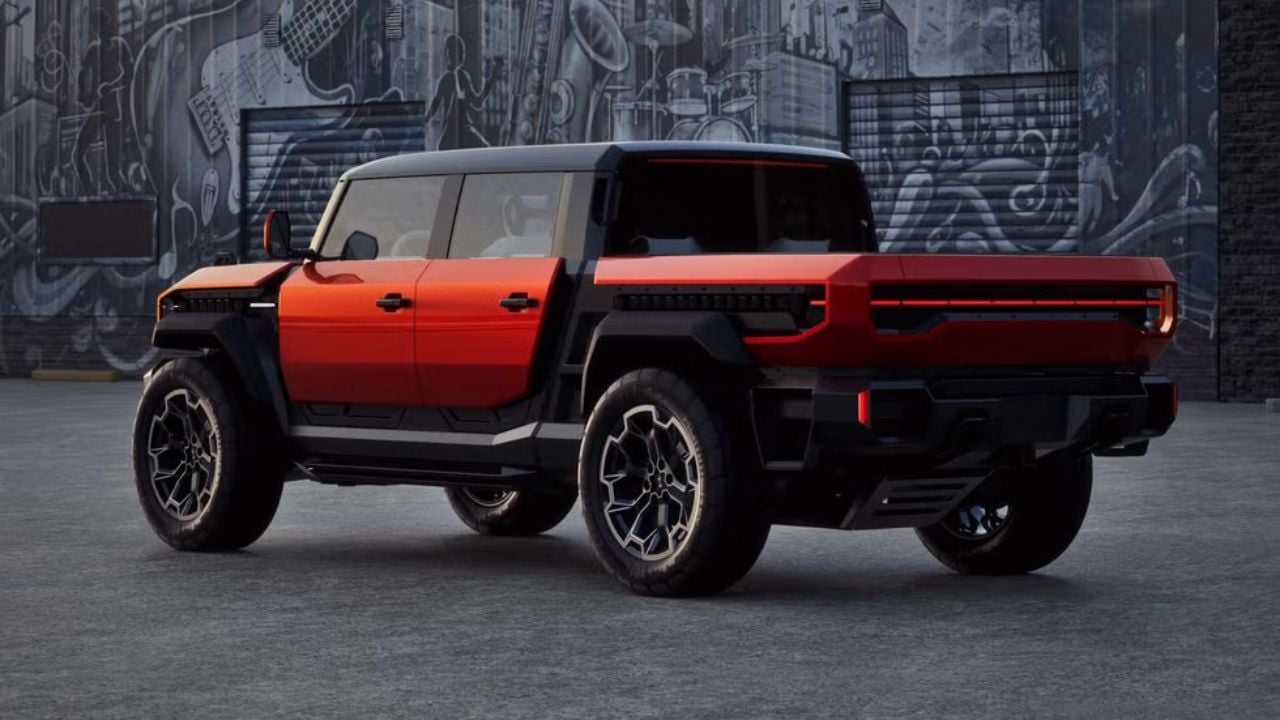
GMC says the HUMMER X is not intended for production, but the concept clearly has a deeper role than a normal show car.
It was developed to mark the opening of General Motors’ new design studio in Pasadena, California, a center focused on futuristic projects, mobility ideas, and technologies that could eventually influence production vehicles.
Unlike the current GMC Hummer EV, which is a massive truck-based electric vehicle, the HUMMER X moves down into the midsize segment.
That makes the idea more compact, more agile, and closer in spirit to traditional off-road vehicles, while still keeping the bold personality that made Hummer famous. It is still dramatic, but it feels less like an electric fortress and more like a focused adventure machine.
A New Look With Advanced Manufacturing
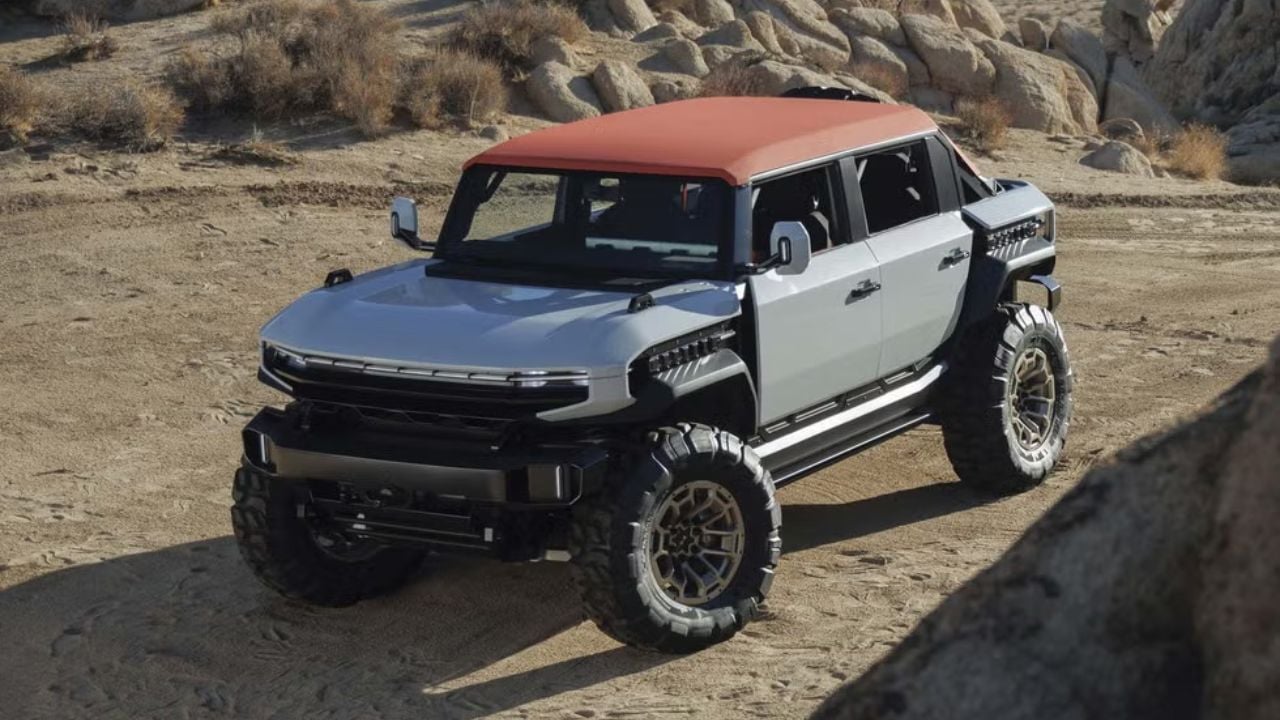
The design is a fresh interpretation of Hummer’s identity. The body uses flat surfaces, rounded edges, minimalist detailing, visible precision fasteners, and laser-welded joints.
The silhouette is cleaner and more sophisticated than today’s Hummer EV, but still aggressive enough to be recognized immediately. It keeps the squared-off stance and off-road confidence without simply copying the current production model.
The most important part of the project may be the production technology behind it. GM calls the process Flex Fab, a flexible manufacturing approach meant to support low-volume, specialized, and highly personalized vehicles without relying on expensive traditional stamping tools.
A related flex-fabrication approach has already appeared on Cadillac Celestiq production, and GM is now showing how the idea could support a more rugged electric off-roader.
The same system can produce different body elements from shared equipment, which could speed up development and make personalization much easier. GM says 57% of the HUMMER X structure was created using this process, showing how seriously the company is studying it for future vehicles.
Real Off-Road Hardware Still Matters
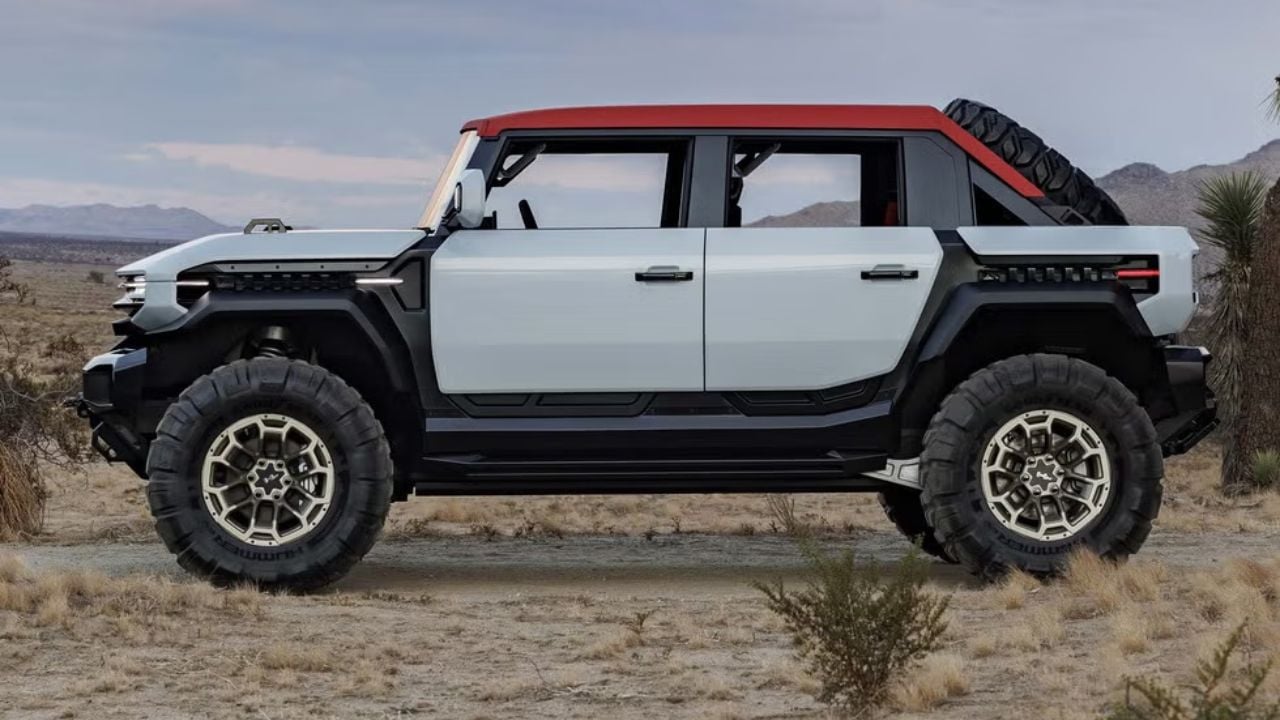
The SUV concept uses Goodyear tires sized 315/75 R18, with a 37-inch overall diameter. It also gets Multimatic dampers designed for serious off-road use.
The approach angle is 44 degrees, while the departure angle reaches 46 degrees. Ground clearance is 13.2 inches, giving the SUV version real trail credibility rather than only concept-car attitude.
The pickup is slightly longer and uses 35-inch tires sized 305/55 R22. Its wheelbase measures 130.7 inches, overall length is 207.3 inches, and ground clearance is 12.5 inches, with a 41.5-degree approach angle and a 29.7-degree departure angle.
GM has not released details about the electric motors or battery pack, but the company says the electric platform allows quick acceleration and a low center of gravity. That combination fits the Hummer idea well: instant electric torque, serious stance, and enough off-road hardware to make the design feel more than decorative.
A Cabin Built Around Trail Modes
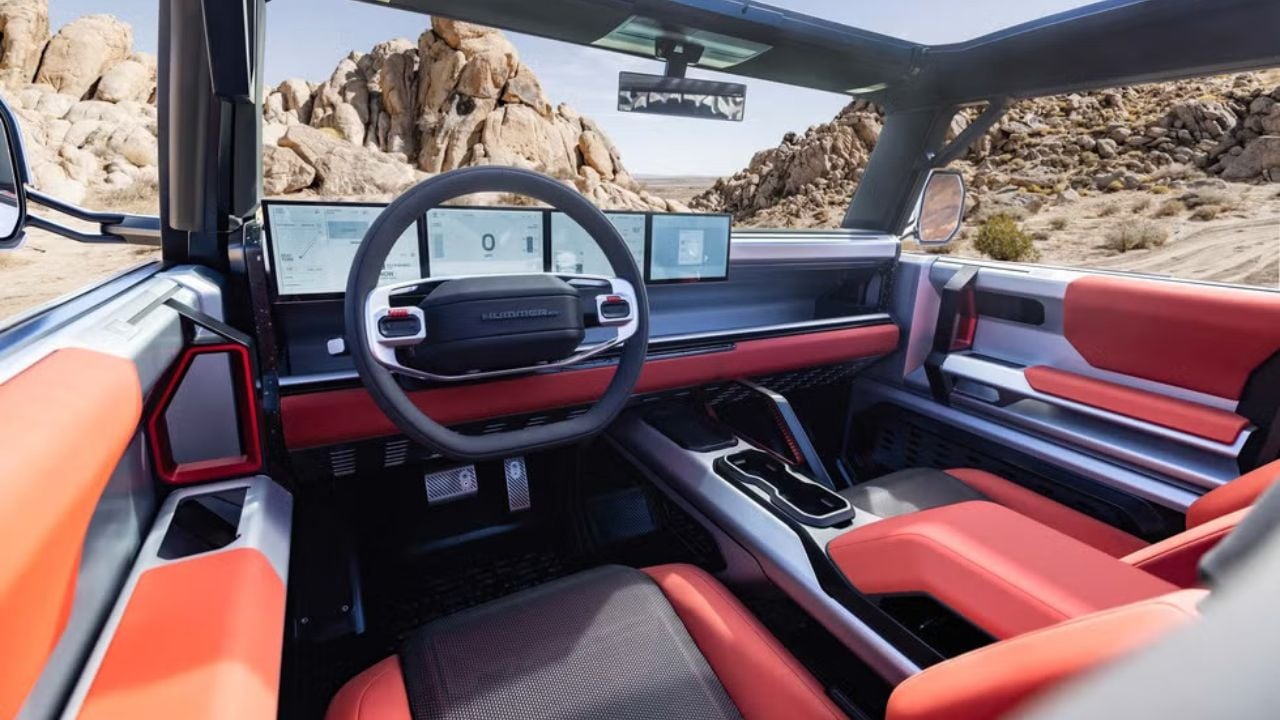
The interior feels more like a configurable command center than a normal dashboard.
The instruments and screens can change layout depending on the driving mode. The system can adapt for slow technical trail driving, fast desert running, or normal highway cruising.
That gives the driver a digital interface designed around the specific situation rather than a fixed dashboard layout. A rocky climb does not need the same information as a highway drive, and GM appears to be treating the screen layout as part of the off-road tool kit.
GM also paid close attention to sustainability. The concept explores materials that can be recycled or reused more easily, while several cabin pieces are made from recycled vehicle parts.
Instead of relying heavily on adhesives, the HUMMER X uses snap fits and mechanical fasteners that make disassembly, repair, and component reuse easier. That matters because future adventure vehicles may need to be more modular not only for personalization, but also for repairability and end-of-life recycling.
A Platform Built For Personalization
One of the most interesting ideas is the builder-maker philosophy. The HUMMER X is not imagined only as a vehicle, but as a platform for modifications, personalization, and community involvement.
That is why GM is developing HUMMER HUB, a group of connected apps designed to link drivers, vehicles, digital features, and future owner communities.
One of the most futuristic features is a scouting drone that can fly ahead of the vehicle, scan the trail in real time, and send terrain data directly back to the car.
When it is no longer needed, the drone returns automatically and charges in a special dock on the vehicle. That turns the drone from a gimmick into a potential trail tool, especially for drivers approaching unknown terrain, difficult obstacles, or remote routes.
The concept also hides several small details for brand fans. A team slogan is written in Morse code on the cabin floor, while the tire tread carries the message: “The courage to get lost leads to new discoveries.”
A Preview Of Future Electric Adventure Vehicles
GM says the HUMMER X will not directly enter production, but concepts like this often preview technologies and design ideas that later appear in real vehicles.
That matters as American automakers try to redefine electric off-roaders and lifestyle vehicles for a new generation of buyers.
The HUMMER X is still a non-production concept, but it feels more useful than a typical styling exercise. It points toward a future where electric off-road vehicles are not only powerful and luxurious, but also smaller, modular, digitally connected, easier to personalize, and easier to rebuild or recycle.
The current GMC Hummer EV proved that the name could survive in the electric era. HUMMER X asks a more interesting question: what happens if that same attitude becomes lighter, smarter, more adaptable, and more connected to the way owners actually use their vehicles?
This article was originally published by Autorepublika.com and is republished with permission. It has been reviewed and edited by Guessing Headlights.