
Some river cruises solve the hardest part of travel: the scenery changes while the suitcase stays put. Vineyard terraces, castle ruins, abbey towers, palm-lined banks, temple landings, and village roofs pass the windows while passengers sit on deck, eat lunch, or walk back to the same cabin at night.
The best routes are not just boat rides with nice views. They follow rivers where the banks are full of visible history and daily life: wine estates above the Douro, castles along the Rhine, stone villages in Austria’s Wachau, green fields and desert edges beside the Nile, and coconut palms along Kerala’s backwaters.
Some of these trips fit into a single day. Others need several nights because the river itself becomes the route between towns, temples, vineyards, and villages. Either way, the pace stays simple: wake up near the water, watch the banks change, step off when the stop is worth it, then return to the boat before the next stretch begins.
For travelers who want a slower trip without losing scenery, these five river cruises turn the journey into more than transportation.
1. Douro River, Portugal
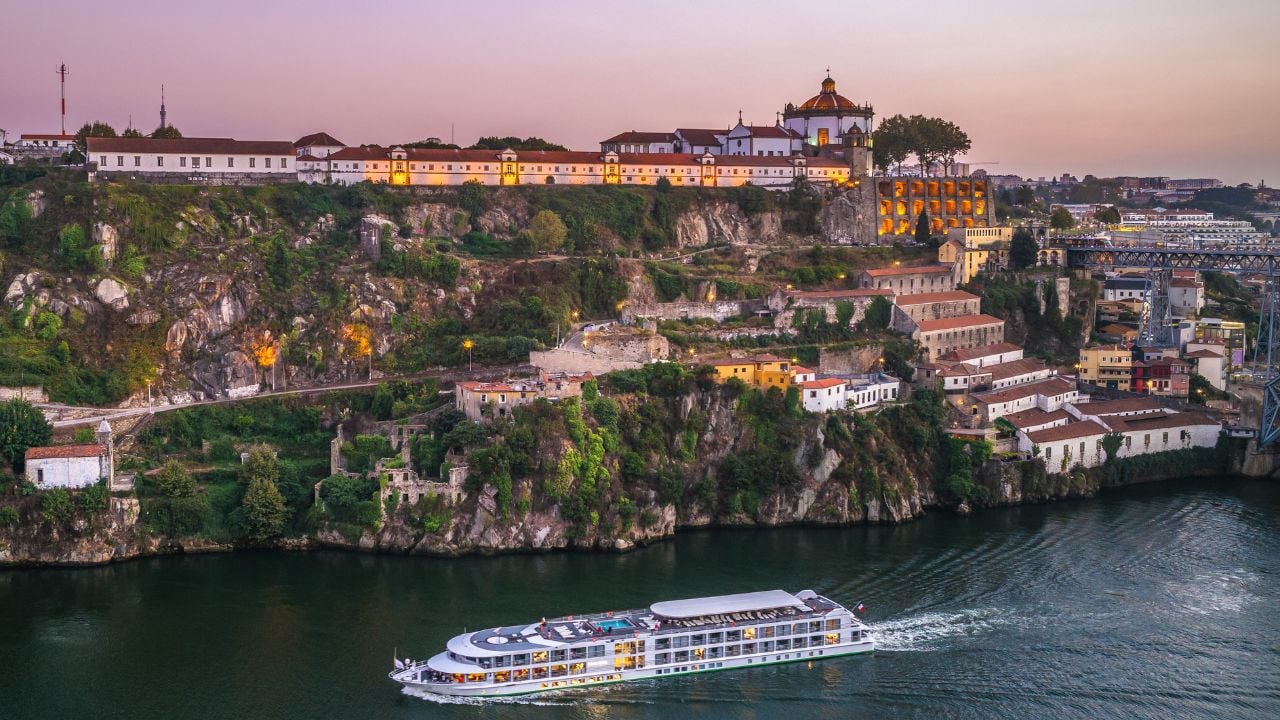
The Douro is built for slow looking. Terraced vineyards climb steep, dry slopes above the water, and whitewashed quintas sit among rows of vines that follow the curves of the hills. In bright sun, the river can look metallic between the brown-green slopes; near evening, the light turns warmer on the stone walls and vineyard terraces.
UNESCO says wine has been produced in the Alto Douro for about 2,000 years and describes the region’s long viticultural tradition as a cultural landscape of outstanding beauty. From the boat, that history is visible in the way the slopes have been cut, planted, and worked around the river instead of left wild.
A cruise here suits travelers who want wine country without changing hotels every night. Longer itineraries often begin or end around Porto, while shorter boat trips in the valley can still show the terraces, river bends, and estates that make the landscape so recognizable.
The best hours are often quiet ones on deck. Breakfast can come with vineyard rows sliding past the rail. Later, a tasting or shore stop breaks the day without turning it into a rush. By evening, the hills darken first, the river holds the light longer, and the boat feels like the easiest place to watch the valley settle.
2. Upper Middle Rhine Valley, Germany

The Upper Middle Rhine is the route for travelers who want castles without chasing them by car. Between Koblenz and Bingen, the river narrows into a dramatic valley where towers, ruins, vineyards, church spires, and old towns appear one after another above the banks.
UNESCO describes the Upper Middle Rhine Valley as a 65-kilometer stretch with castles, historic towns, vineyards, and a landscape shaped by long human involvement. The regional Rhine tourism site notes more than 40 castles, palaces, and fortresses between Deutsches Eck at Koblenz and the Mäuseturm near Bingen.
From the water, the valley keeps changing in short, satisfying scenes. A ruined tower appears above a vineyard slope. A church spire rises from a riverside town. A bend in the Rhine reveals another castle on the ridge. Barges and excursion boats pass below cliffs and old walls, so the view never feels like one static panorama.
This stretch is excellent as a day cruise from towns such as Rüdesheim, Bacharach, Boppard, or Koblenz. A seat outside with coffee, Riesling, or a simple lunch can cover more scenery than a busy sightseeing plan on land. The boat does the moving while passengers watch the castles, vines, and river towns arrive in sequence.
3. Wachau Valley on the Danube, Austria
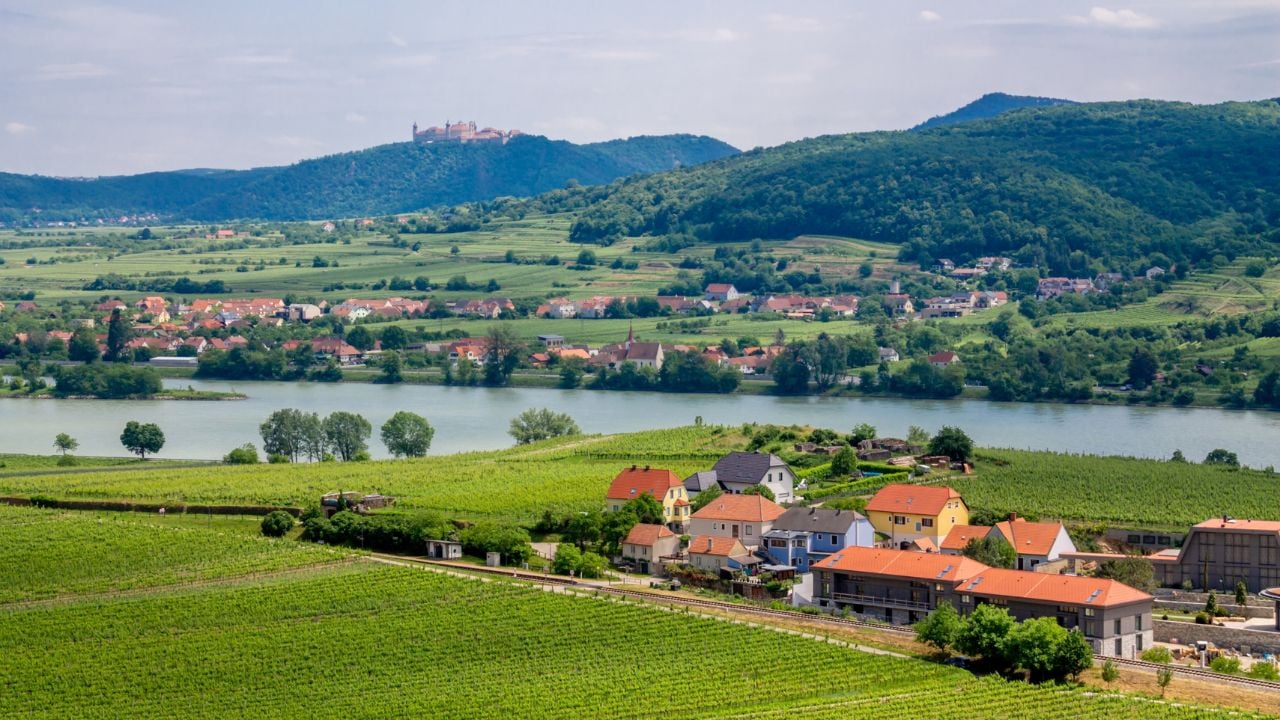
The Wachau keeps the Danube close to villages, vineyards, orchards, abbeys, and old stone walls. The scenery is not huge in the way a mountain route is huge. It is detailed: church towers above red roofs, vineyard terraces above the river, apricot country near the banks, and small towns that appear between bends.
Austria’s official tourism site says the Wachau became a UNESCO World Heritage Site in 2000 and describes the region through places such as Melk, Spitz, Dürnstein, Weißenkirchen, and Krems. Those names are not just map points from the boat. They bring abbey towers, wine villages, ruins, and narrow streets into the river view.
Melk Abbey is the grandest landmark, rising above the Danube with a scale that is hard to miss from the water or the approach to town. Dürnstein brings a different picture: stone streets, vineyards, the blue-and-white church tower, and ruined castle walls above the village.
DDSG Blue Danube operates sightseeing cruises through the Wachau UNESCO landscape on vessels including MS Wachau and MS Dürnstein. The route is especially good for travelers who want a river day rather than a long cruise commitment. Sail, walk in one town, eat near the river, and let the Danube carry the main view.
4. Nile River Between Luxor and Aswan, Egypt
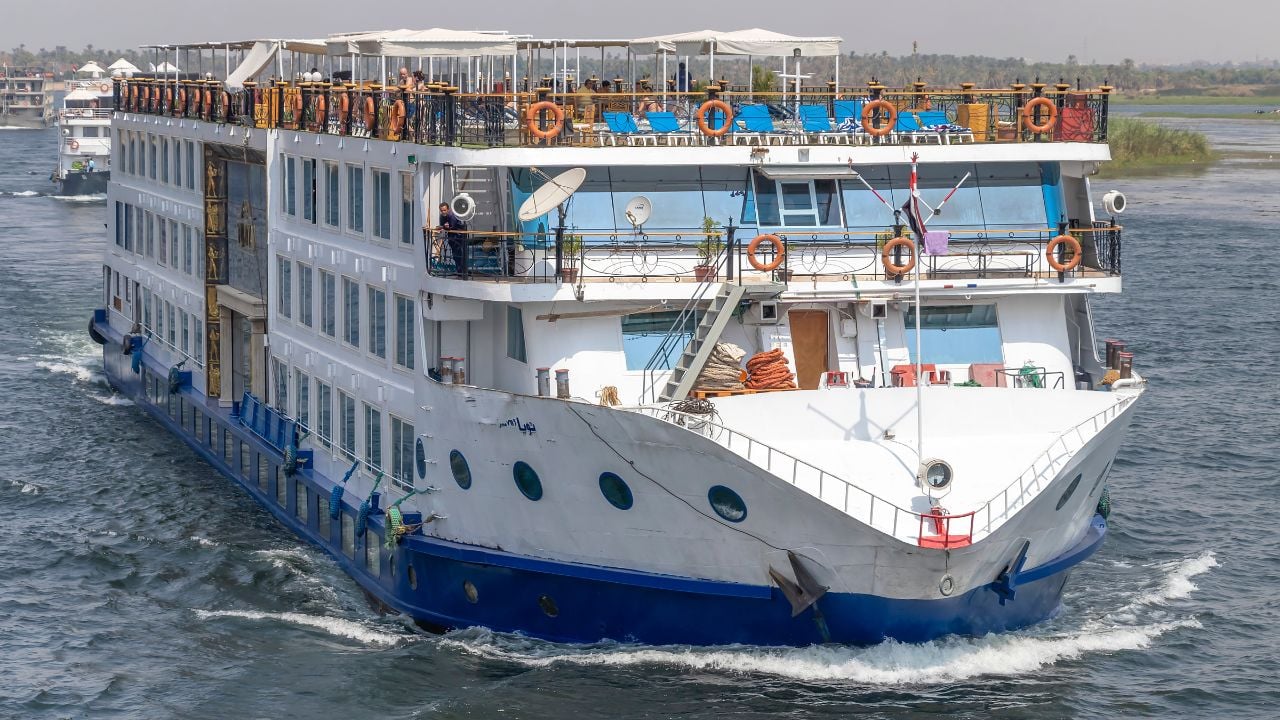
The Nile between Luxor and Aswan has a different kind of beauty from Europe’s wine valleys. From the deck, green fields, palms, mud-brick villages, small boats, and strips of cultivation run close to the water, while desert light waits just beyond the irrigated banks.
Egypt’s State Information Service page on Nile tourism notes that cruise ships may include onboard cultural shows such as Nubian folklore, dances, and songs. The route itself is also tied to some of Egypt’s most famous ancient sites, with Luxor and Aswan acting as the main anchors for many cruise itineraries.
The strongest moments are not only at temple stops. Between guided visits, the riverbanks move slowly past the boat: palms leaning toward the water, children near the edge, farmers’ fields close to the channel, and dry hills beyond the green strip. The contrast is immediate and constant, with river life and desert light sitting only a short distance apart.
This cruise suits travelers who want rest and ancient history in the same trip. A day may include early temple visits, heat, guides, and buses, but the return to the boat changes the pace. On deck, the view becomes quieter: water against the hull, low villages on the bank, and sunset turning the Nile darker while the desert edge fades behind it.
5. Kerala Backwaters, India
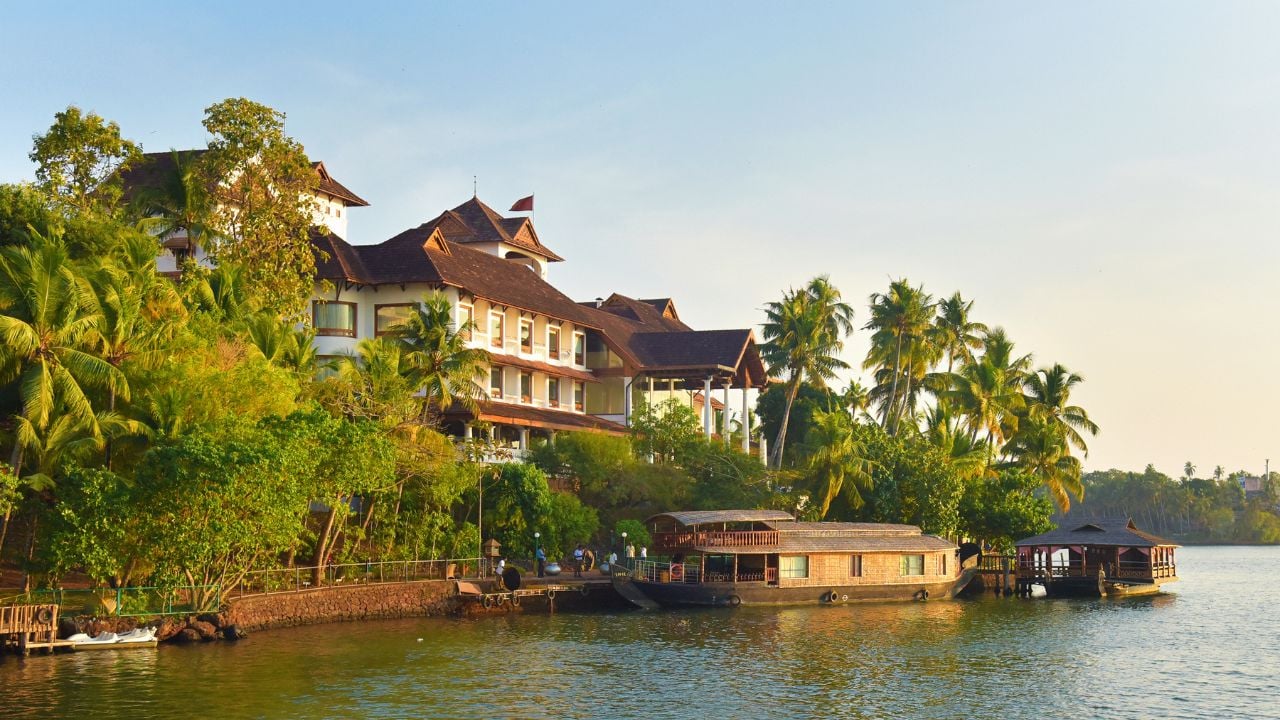
Kerala’s backwaters bring the cruise experience down to a closer, more tropical scale. Instead of castle ridges or temple landings, the boat moves through coconut palms, paddy fields, village homes, narrow channels, birds, fishing nets, and reflections that shift whenever the waterway turns.
Kerala Tourism explains that houseboats evolved from traditional kettuvallams and says Alappuzha is one of the best-known centers for backwater houseboat cruising. The boats are part of the scenery themselves, with covered roofs, open sitting areas, and slow movement through canals and lakes.
The view stays close to the boat. A house may sit just beyond a line of palms. A bird lifts from the edge of a paddy field. A small canoe passes near the bank. Lunch can happen while the boat idles near water plants, with the sound of the channel replacing the noise of a road.
The district tourism page for Alappuzha lists backwater boat cruises and houseboat packages, including routes on Vembanad Lake. Travelers should choose operators carefully, ask about licensing and waste handling, and avoid treating the backwaters as impact-free. Done well, the trip is simple without feeling empty: water, food, birds, palms, village edges, and long stretches where the boat moves slowly enough for every small detail to register.