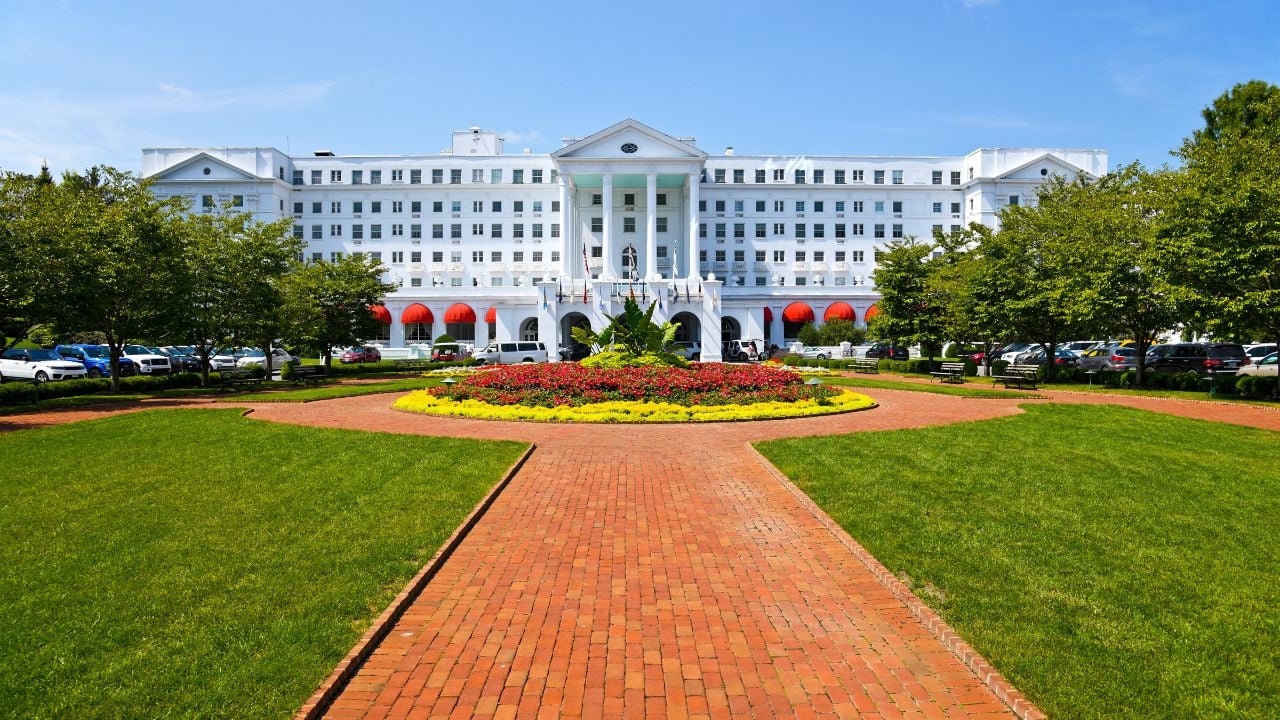
Some historic hotels are destinations before the first suitcase reaches the room. A ferry approaches a long white porch on Mackinac Island. Mineral water fills an old stone basin in Virginia. Live oaks shade a former Gilded Age club in coastal Georgia. Lake George sits outside a resort that has been part of Adirondack vacations since the 19th century.
These six U.S. hotels are not interchangeable places to sleep between sightseeing stops. Their buildings, grounds, arrival rituals, dining rooms, porches, bathhouses, staircases, and views carry enough history to shape the trip itself.
The strongest stays here are physical. Guests cross porch boards, hear carriage wheels or lobby noise, sit near fireplaces, walk under mossy trees, look across a lake, step into mineral water, or pass through bright public rooms that do not look like any modern chain hotel.
For travelers who want the lodging to matter as much as the destination, these properties offer something specific: old materials, visible traditions, and settings where checking in already feels like the first real activity of the trip.
1. Grand Hotel, Mackinac Island, Michigan
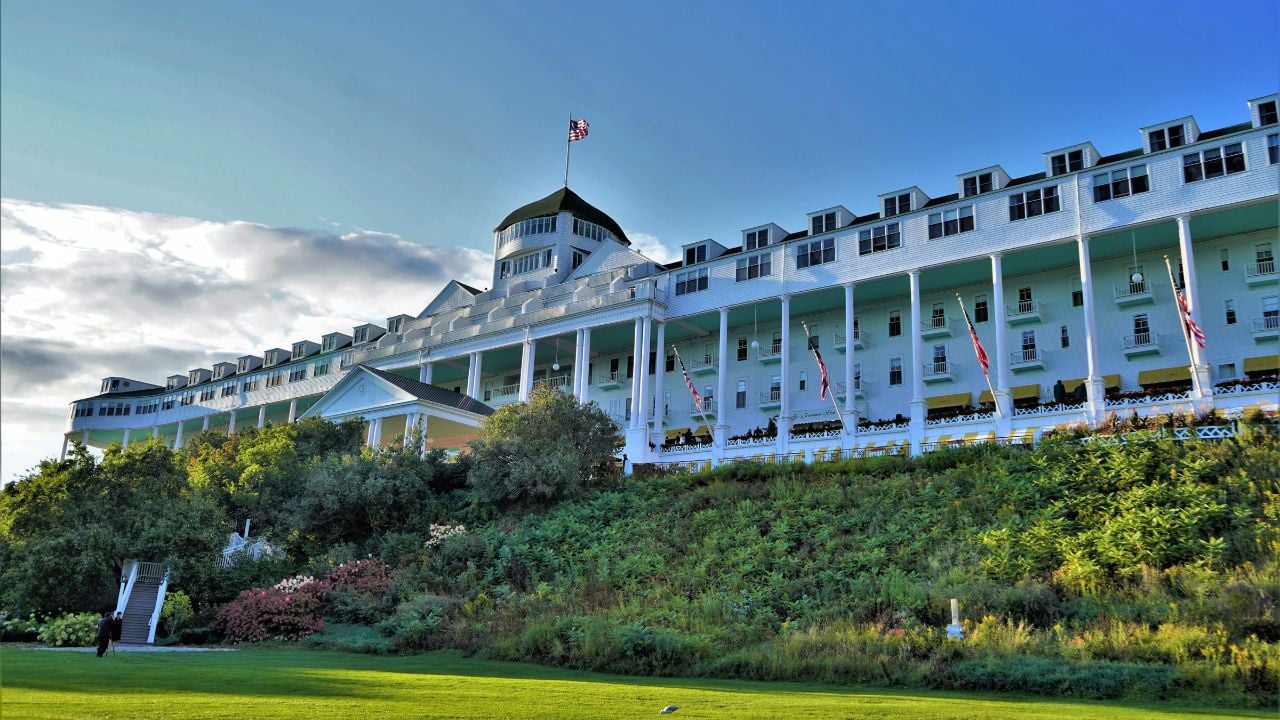
Grand Hotel begins with the approach from Lake Huron. The building sits high above the island, and the long white porch is visible before guests reach the entrance. On Mackinac Island, arrival already feels different because luggage, ferries, horse-drawn taxis, bicycles, and lake air replace the usual hotel driveway.
Grand Hotel says it opened on July 10, 1887, and lists its 660-foot Front Porch as the world’s largest. Mackinac Island Tourism says village leaders banned automobiles in 1898, which is why bikes, walking, and horse-drawn transportation still shape the island experience.
On the porch, the hotel becomes more than a view from outside. White rocking chairs line the boards, geraniums sit along the railings, and the lawn drops toward the lake. Guests sit facing the water instead of rushing through a lobby corridor, and the building’s length turns a simple walk from one end of the porch to the other into a slow look across the island and shoreline.
Evening changes the visible routine inside the hotel. Grand Hotel’s dress code requires elevated evening attire in the main areas after 6:30 p.m., with no denim or shorts permitted. Jackets, dresses, polished shoes, dining-room movement, and guests crossing the parlor-level spaces keep the property tied to an older resort ritual rather than a casual lakefront stay.
2. The Omni Homestead Resort & Spa, Hot Springs, Virginia
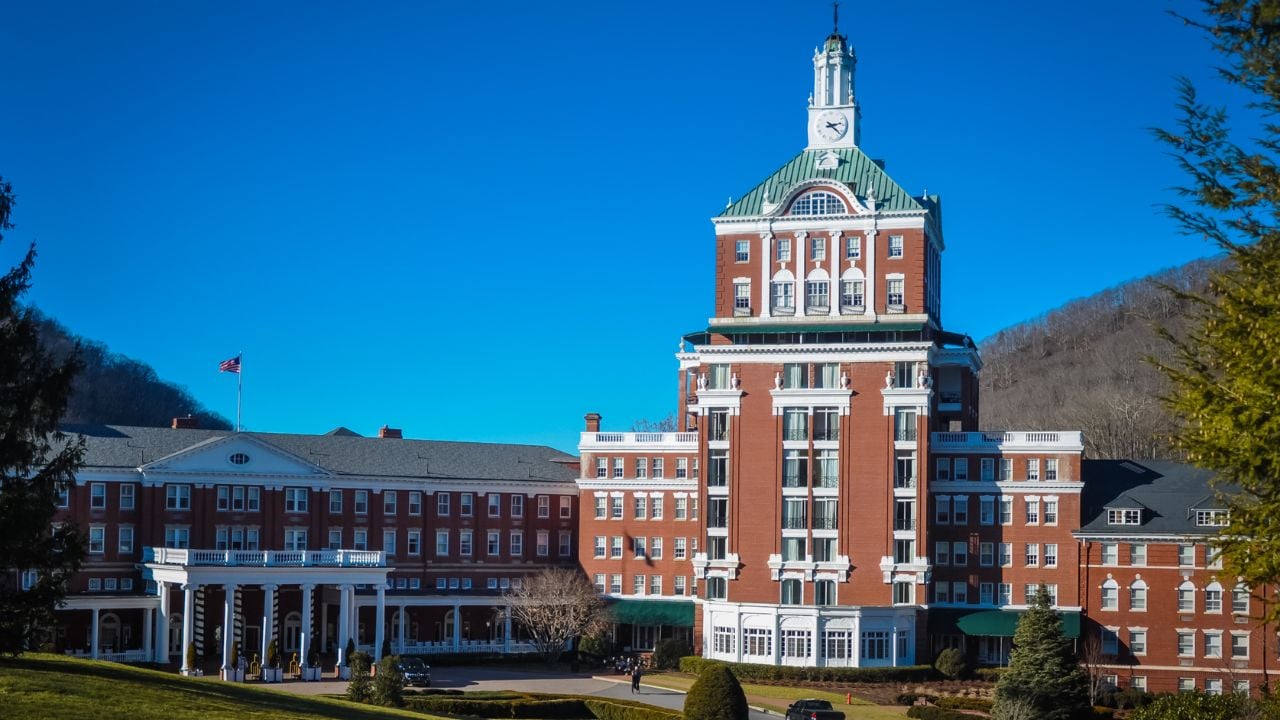
The Omni Homestead sits in Hot Springs, Virginia, with Allegheny Mountain ridges around the resort and roads that lead guests into a quieter, more enclosed valley setting. The main building, lawns, spa traditions, golf, and mountain air all point back to the same original draw: water.
Omni traces the resort through more than 250 years of hospitality. The historic core of the spa story sits nearby at the Warm Springs Pools, where Omni says the original octagonal stone basin was built in 1761 and established the first spa structure in America.
The Warm Springs Pools make the resort’s history tangible. Guests are not only reading about mineral springs on a plaque; they are entering bathhouse structures built around warm geothermal water. Stone, wood, old pool forms, and the steady temperature of the springs put the spa tradition in front of the body, not just the imagination.
Back at the resort, the day can move from mountain light outside to formal interiors, dining rooms, spa appointments, golf paths, and quiet public spaces. The Homestead’s history is strongest when the stay keeps returning to the reason people came to this part of Virginia in the first place: warm water rising from the ground and a resort that grew around it.
3. Jekyll Island Club Resort, Jekyll Island, Georgia
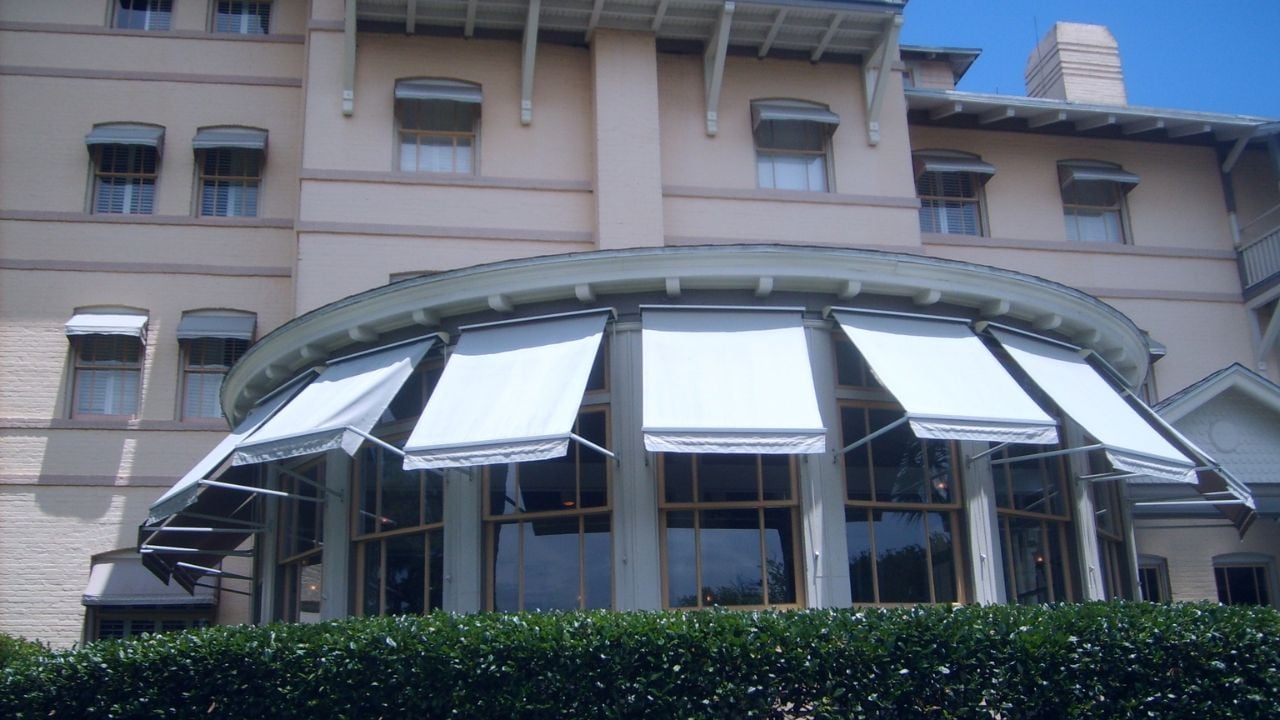
Jekyll Island Club Resort carries its history in the shape of the clubhouse and the land around it. Turrets rise above the old club buildings, lawns spread toward the historic district, and live oaks throw broken shade across paths where the air feels coastal and humid.
The resort’s history says the club officially opened in January 1888 and became a retreat for families representing one-sixth of the world’s wealth. The Jekyll Island district page ties the landmark district to the private winter retreat purchased in 1886 by some of America’s wealthiest families.
The property does not need marble-palace scale to show that past. The Clubhouse, cottages, porches, lawns, palms, and moss-hung trees create a quieter coastal version of old wealth. Paths connect the buildings instead of isolating them, so a guest can move from breakfast to a bike ride to a shaded walk through the historic district without leaving the setting that made the club famous.
Jekyll is best when the hotel and island stay connected. A morning ride under live oaks, a slow return across the lawn, a look at the old cottages, and an evening near the clubhouse keep the resort from becoming only a preserved Gilded Age object. The buildings still sit inside a working island landscape of bikes, trees, marsh air, and coastal light.
4. The Red Lion Inn, Stockbridge, Massachusetts
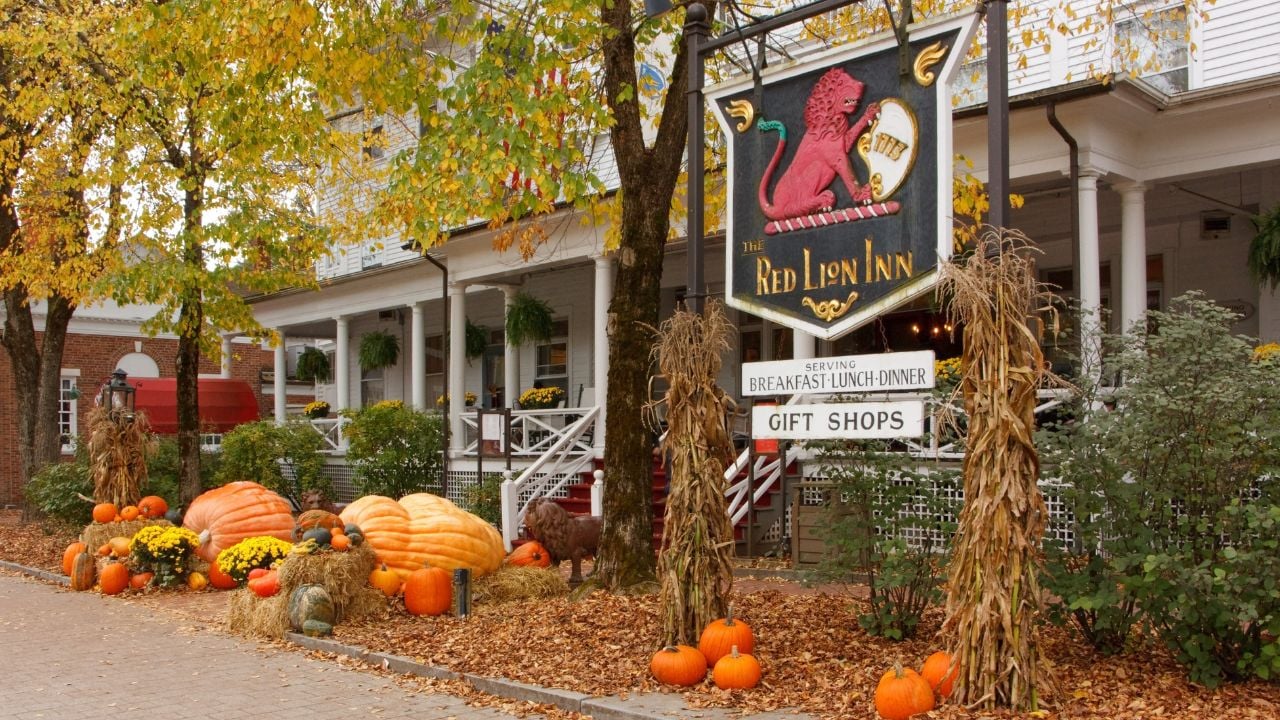
The Red Lion Inn does not rely on giant resort scale. Its character comes from the front porch, village street, fireplaces, antiques, old hallways, and the way the building sits directly inside Stockbridge rather than behind a long resort gate.
The inn’s history says tradition holds that Silas Pepoon established a small tavern on the site in 1773 under the sign of the Red Lion. It also describes the tavern as a welcome stop for stagecoaches traveling the road between Albany and Boston.
That stagecoach past still fits the building’s scale. Guests arrive to a Main Street inn, not a sprawling hotel campus. The porch faces the village, the interior leans into old furniture and patterned rooms, and the public spaces feel layered by use rather than designed all at once.
Stockbridge adds the rest of the frame. Step outside and the Berkshires appear through galleries, old homes, storefronts, trees, and seasonal weather. In fall, the sign, porch, and surrounding leaves can look almost staged, but the inn’s long tavern history keeps the scene grounded. This is the smallest-feeling property here, and that is exactly why it fits: the stay stays close to the street, the fireplace, and the village.
5. The Sagamore Resort, Bolton Landing, New York
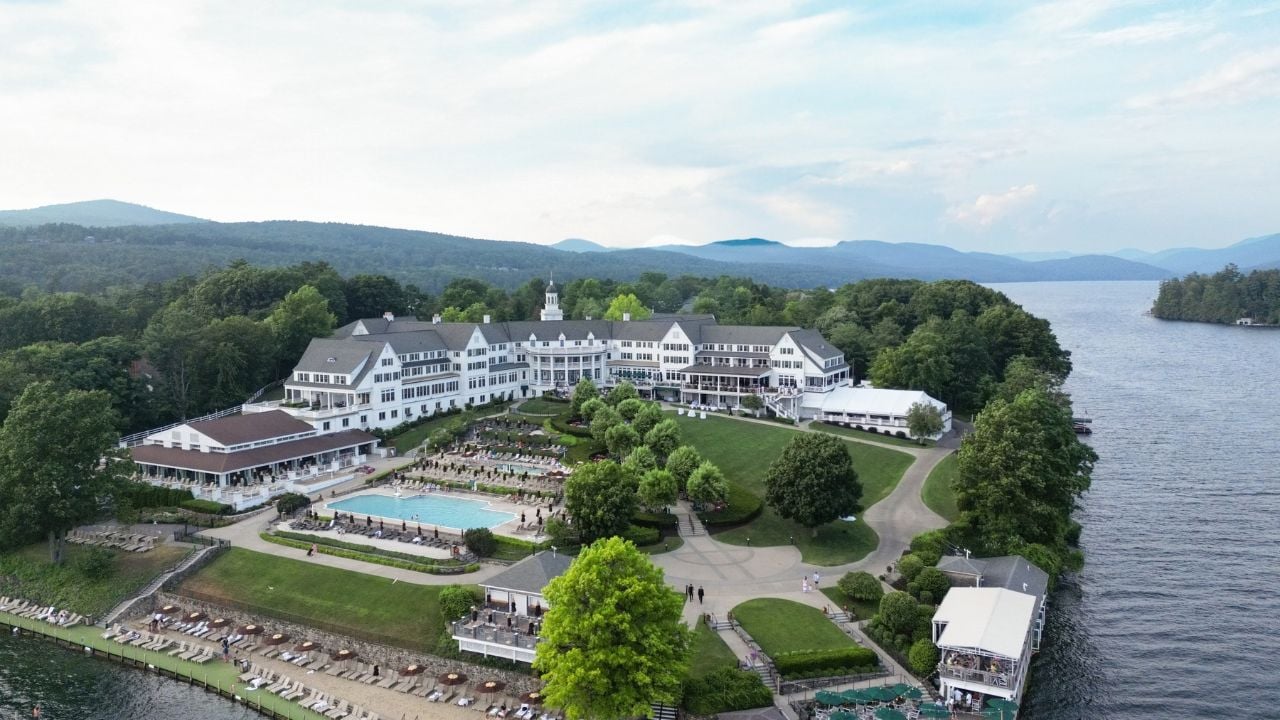
The Sagamore Resort faces Lake George with the Adirondacks beyond the water. The white resort buildings, lawns, docks, and shoreline make the lake part of the first impression, not a background feature glimpsed after check-in.
Historic Hotels of America says The Sagamore opened in 1883 in Bolton Landing on the shoreline of Lake George. The resort’s current setting keeps that old lake-vacation format visible: guests move between the hotel, the water, the lawns, boats, and mountain views across the lake.
The strongest hours here happen outside. Morning light comes across the water, docks shift slightly with boat movement, and the Adirondack ridges hold the far side of the view. By evening, the lake surface darkens before the sky does, and the resort lights begin to separate from the shoreline.
A stay can include meals, boat time, pool time, golf, or nearby village stops, but the property does not need a packed schedule to justify itself. The lake keeps pulling the day back toward the same simple scene: water in front, mountains beyond it, and a historic resort built to face both.
6. The Greenbrier, White Sulphur Springs, West Virginia
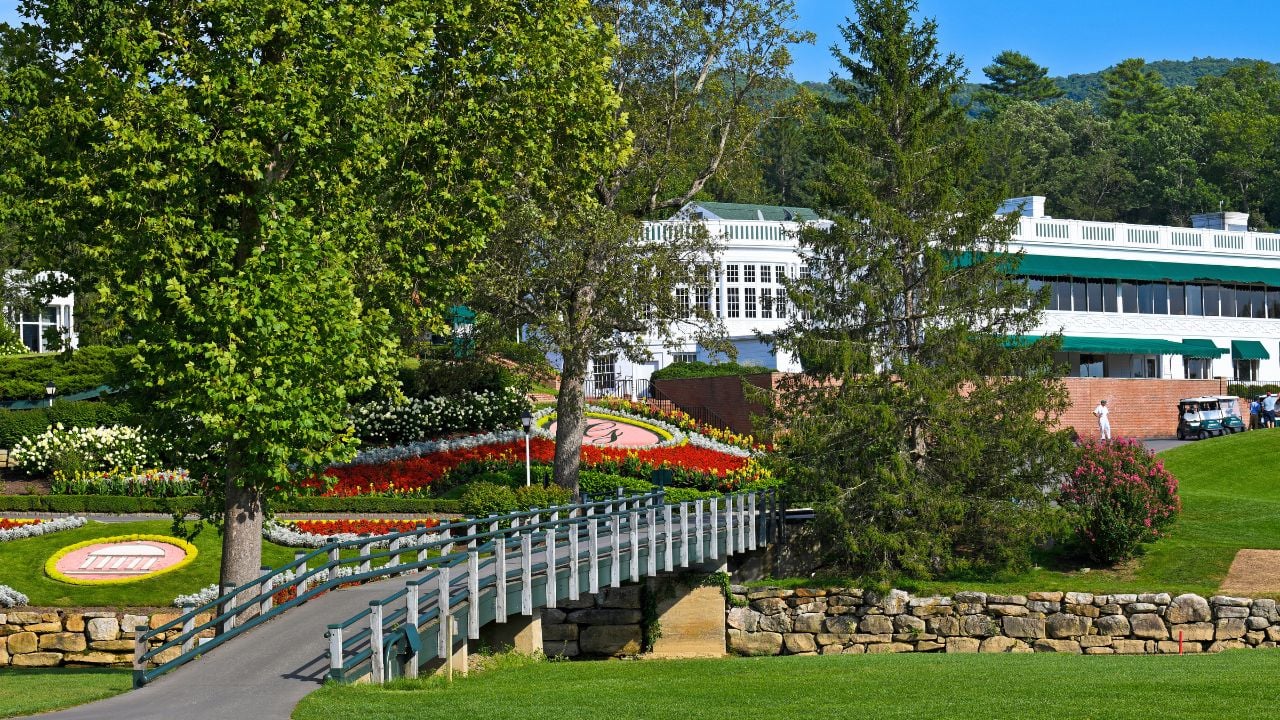
The Greenbrier is the loudest hotel on this list in the best literal sense: color, pattern, wide halls, polished public rooms, chandeliers, floral fabrics, and mountain-resort scale all arrive before the stay has settled into a routine.
The Greenbrier traces its roots to 1778, when visitors came to White Sulphur Springs for the mineral waters. Its modern visual identity is tied to Dorothy Draper. The resort’s Draper history credits her with its iconic aesthetic, including highly saturated hues, bold contrasts, and imaginative uses of pattern.
Those design choices are visible in the public spaces. This is not a beige retreat where the lobby disappears from memory. Stripes, floral prints, strong colors, bright rooms, and formal circulation spaces make the hotel feel deliberately staged. Guests pass through interiors that ask to be noticed.
The property also has a strange Cold War chapter under the surface. The official bunker tour page says the once-secret Greenbrier bunker is now a historical landmark open for guided tours. Mineral springs, bold interiors, mountain grounds, dining rooms, spa traditions, and the underground bunker make the resort less like one historic hotel story and more like several different eras stacked under one roof.