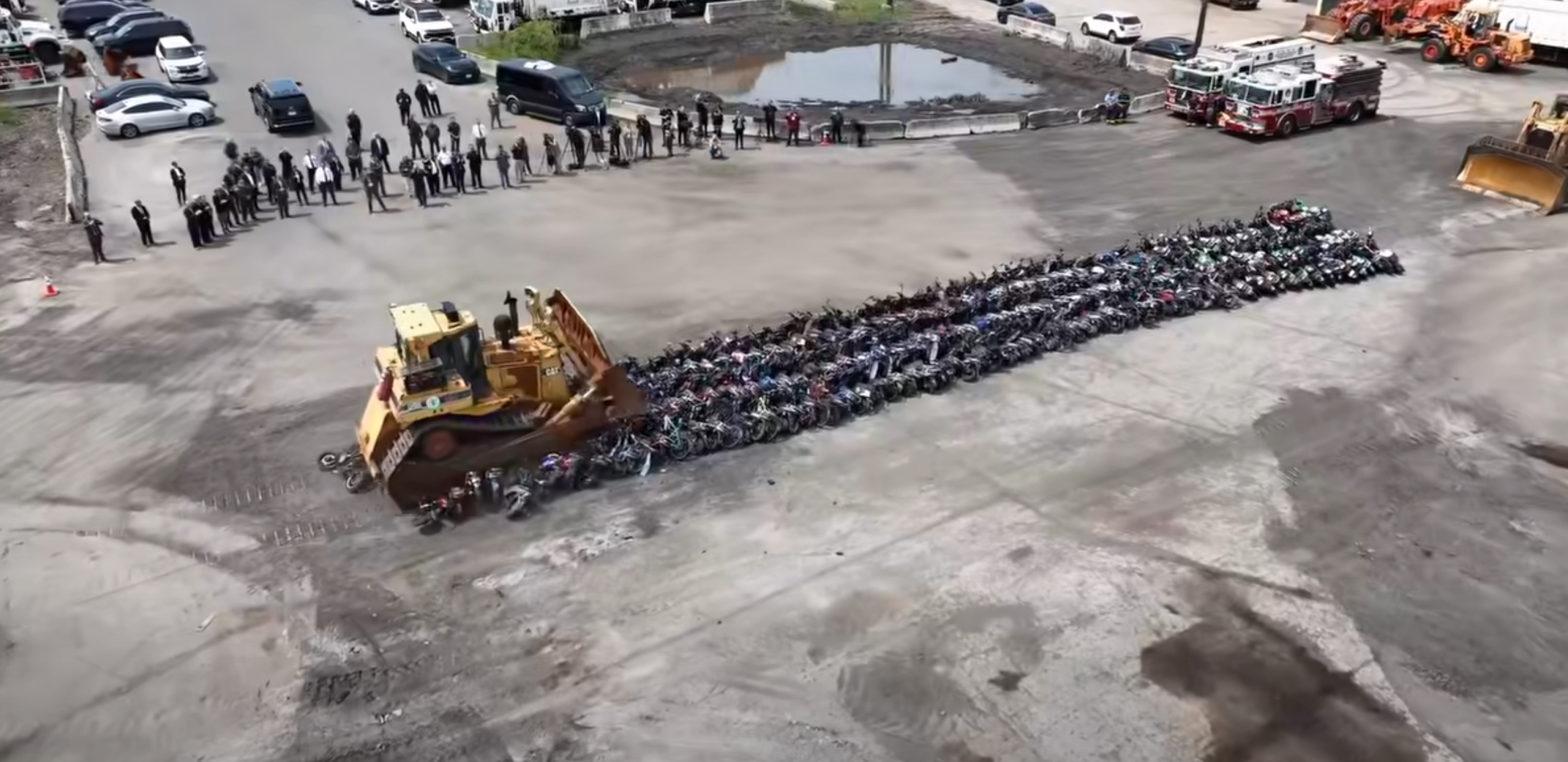
New York City has a message for anyone riding an illegal moped or scooter through its five boroughs: your ride might be next. On Wednesday morning, the NYPD and the city’s Sanitation Department turned 200 confiscated mopeds and scooters into scrap metal at the Sanitation Yard in Arden Heights, Staten Island. The vehicles were flattened, loaded up, and sent off to be recycled. It was not subtle, and it was very much the point.
The vehicles destroyed Wednesday represent just a small fraction of what the NYPD has already pulled off the streets this year. As of this week, officers have seized more than 5,700 illegal scooters and mopeds in 2026 alone, a figure that is nearly 10% higher than the same period last year. That is a significant jump, and it signals that this crackdown is not a one-time press event but an ongoing, accelerating effort citywide.
Police Commissioner Jessica Tisch made clear at the event that these are not just nuisance vehicles. According to Tisch, the seized scooters and mopeds were unregistered, uninsured, or equipped with fake or altered license plates, making them essentially invisible to law enforcement tracking systems. That combination of speed, maneuverability, and anonymity has made them a go-to tool for criminals looking to strike fast and vanish even faster.
The stakes here are very real. Last month, a 7-month-old girl was killed when gunfire erupted from suspects riding a moped. That tragedy added urgency to an already active enforcement push and put a human face on what can otherwise sound like a routine regulatory crackdown. When city officials talk about public safety and illegal vehicles, they are talking about moments like that one.
Why Illegal Mopeds and Scooters Have Become Such a Big Problem in NYC
The appeal of these vehicles to criminals is straightforward. A small, fast scooter can cut through traffic, disappear down alleyways, and carry two people without attracting much attention. Without registration or valid plates, there is almost no way to trace the vehicle back to an owner. Add in the sheer volume of two-wheeled traffic in a dense city like New York, and you have a near-perfect getaway machine.
The NYPD Aviation Unit has even had to get involved. In one documented case, the unit tracked two robbery suspects on a scooter as they moved through the Bronx, illustrating just how mobile and difficult to intercept these vehicles can be on the ground. When a helicopter is your best shot at keeping up with a scooter, it becomes clear that traditional patrol methods alone are not going to cut it.
What Local Officials Are Saying About the Crackdown
The Staten Island event drew strong statements from local leaders, and the tone was not exactly diplomatic. Staten Island Borough President Vito Fossella directed his remarks squarely at the people operating these vehicles illegally, warning that the NYPD knows who they are and that their vehicle could end up in the next crushing if they do not stop.
Staten Island District Attorney Michael McMahon added that arrests connected to these vehicles would be followed by prosecutions, offering a personal guarantee to Commissioner Tisch on the record. That kind of public commitment from a DA is notable and suggests that the legal follow-through is meant to match the enforcement energy on the street. This is not just about seizing bikes. It is about building cases.
What Cities Can Learn From New York’s Approach
There is a broader lesson here that extends beyond New York City. Urban areas across the country have struggled with the rise of unregistered electric mopeds and scooters, many of which operate in a gray area between bicycle and motorcycle regulations. New York’s approach treats the vehicle itself as the problem when it cannot be traced, which is a shift from focusing enforcement entirely on the rider.
Crushing the vehicles publicly and recycling the scrap also serves a practical purpose. It eliminates the possibility of the same bike returning to the street under different plates, which happens more often than most people realize. By turning seized vehicles into scrap, the city removes them permanently rather than storing them in impound lots where they may eventually be released or stolen again. It is a logistical solution that also doubles as a very clear visual statement.
What Comes Next in the NYPD’s Enforcement Push
Commissioner Tisch said the department will continue using every available tool to keep New Yorkers safe, which suggests Wednesday’s event was a milestone rather than a finish line. With seizure numbers already up nearly 10% compared to last year and pressure from local officials intensifying, it is reasonable to expect more crush events to follow.
The challenge going forward will be keeping pace with the supply. As long as unregistered mopeds and scooters remain easy to obtain and difficult to trace, the pipeline of illegal vehicles into city streets is unlikely to stop on its own. Enforcement can shrink it, but the city will likely need a mix of registration crackdowns at the point of sale, interagency coordination, and continued public pressure to make a lasting dent.
For now, though, 200 fewer illegal mopeds on New York City streets is not nothing. And the NYPD made sure everyone watching knew exactly where those bikes ended up.