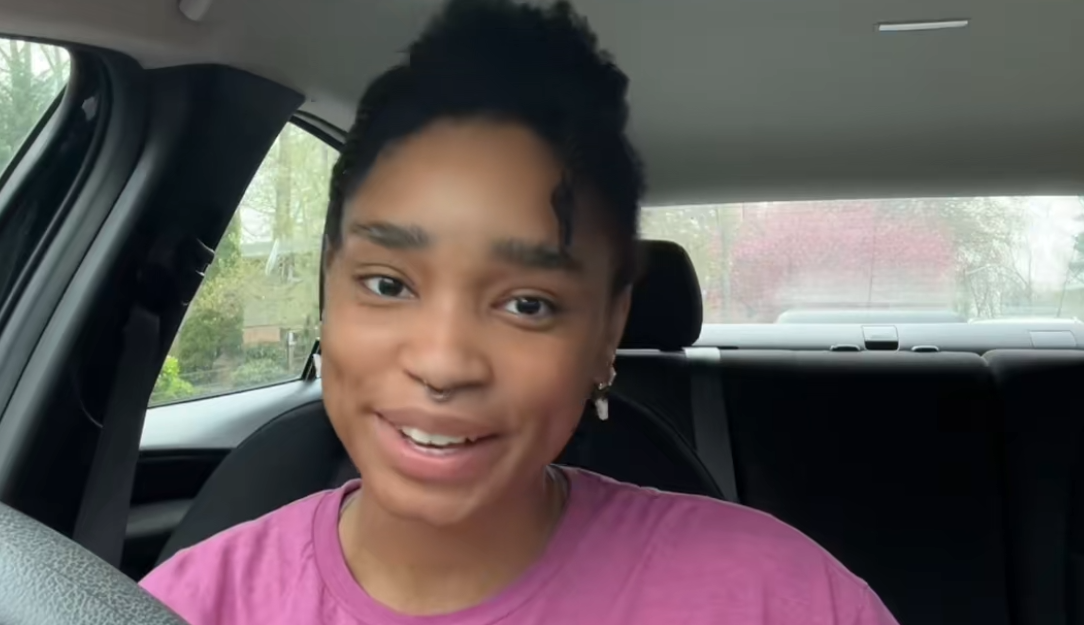
There are people who talk about getting their finances together, and then there is Aysia. The TikTok creator, known as @aysia.massie, did something that most car buyers would never even attempt: she paid off her entire vehicle loan before her first payment was ever due. No lottery winnings, no inheritance, no mystery side hustle windfall. Just discipline, a creative social media strategy, and 73 days of showing up every single day for her followers and, more importantly, for herself.
The journey kicked off on January 20, when Aysia posted the first video in what would become a wildly captivating series. She laid out her goal clearly: pay off her car loan totaling $12,500 before her first payment came due on April 10. She was starting with $3,000 already saved, which was a solid foundation, but still left a significant gap to close. Her plan was unconventional but oddly brilliant.
Rather than just grinding quietly and updating followers at the finish line, Aysia tied her daily savings contributions directly to the engagement her videos received. For every like, comment, share, save, and new follower she gained on each video in the series, she would contribute $0.03 from her own money toward the car payoff. It was not a crowdfunding campaign. It was a motivation system, a daily accountability check, and a content series all rolled into one.
The concept caught on fast. Viewers were not just watching passively but actively engaging because they knew their likes and comments were literally moving the needle on her financial goal. By the time she posted her final video on April 2, she had crossed the finish line a full week ahead of schedule, with $12,500 saved and a car that was completely paid off and fully hers.
How the TikTok Engagement System Actually Worked
@aysia.massie Day 73 | Last Day! Please go follow some others on a similar journey @Shadá | PaysItDown💳 @dabiggesstt🔋 @JMC | Devotion & Debt Free @B. Nicole and tags others or yourself in the comments !! #debtfreejourney #carloan #financialfreedom ♬ original sound – Aysia
It is easy to hear “she used TikTok to pay off her car” and assume she was raking in creator program money or running some kind of crowdfunding operation. Aysia addressed this directly and repeatedly throughout the series because people kept misunderstanding the mechanics.
The engagement she tracked each day, including likes, comments, shares, saves, and new followers, determined how much of her own money she would put toward the car that day. So if a video received 100,000 total engagements, she would contribute $3,000 from her personal funds. The TikTok platform itself barely factored in. By the end of the 73 days, the TikTok creator rewards program had contributed a grand total of $41 out of the $12,500. Forty-one dollars. She made that point crystal clear: this money came from her savings and her jobs.
Her second-to-last video happened to blow up in a major way, pulling in 1 million views, 279,000 likes, 23,000 comments, 15,000 shares, 17,000 saves, and over 14,000 new followers. That one day alone generated 348,533 engagements, which at $0.03 per engagement came out to just over $10,455. Combined with donations she received through CashApp and Venmo that same day, her final day contribution topped $10,951. That one viral day essentially carried the finish line across.
The Role of Donations, and Why They Were a Surprise
Aysia did not set out to collect donations. There was no tip jar prominently promoted in her videos, no GoFundMe link in the bio. But viewers, moved by her consistency and transparency, started sending money anyway. By the end of the 73 days, she had received $1,817.41 in total donations from strangers on the internet. She described seeing that number as “insane.”
In total, accounting for her own contributions over the full 73 days, she averaged $145.78 per day directly out of her own pocket. When donations are factored in, the overall daily average across all sources came out to $171.23. Those are not small numbers, and they reflect real financial effort, not a viral trick.
There was also a small technical hiccup at the finish line. Because she was using an external bank account to pay the loan, the lender capped her single-transaction payment at $10,000. She had to split the payoff into two transactions, the second being $2,656.05. A minor inconvenience, but not one that took any shine off the achievement.
What We Can Learn From Aysia’s Approach to Debt Payoff
The personal finance lesson here goes well beyond “go viral and pay off your car.” Most people watching will never have a video hit a million views, and that is fine, because the real takeaway is not about TikTok at all.
Aysia built an external accountability system. By publicly committing to a goal, documenting the process daily, and tying her progress to a visible metric, she made it significantly harder to give up. Behavioral economists have studied this for decades: public commitment dramatically increases follow-through. She just gamified it in a way that happened to entertain hundreds of thousands of people along the way.
She also started with a plan and a number. She knew the exact payoff amount, she had a deadline, and she had a starting balance. Vague goals like “I want to pay off my car soon” do not work the way specific, deadline-driven targets do.
It is also worth noting what she did not do. She did not wait until she had a huge savings balance before starting. She did not treat the social media component as a crutch. And she did not rely on outside money to carry her. The donations and engagement-based calculations were supporting characters in a story where she was always the main driver.
Is Paying Off a Car Loan Early Always the Right Move?
Aysia’s accomplishment is genuinely impressive, but the “pay it off early” approach is not automatically the right call for everyone. Financial experts generally agree there are real advantages: less interest paid over time, a lower debt-to-income ratio, and more breathing room in a monthly budget. Those are meaningful benefits.
However, some lenders include prepayment penalties in their loan agreements, meaning paying off early can actually cost extra. Readers who are considering a similar payoff strategy should check their loan documents carefully before sending that final payment. Additionally, if a loan carries a very low interest rate, some financial planners would argue the money is better used paying down higher-interest debt or being invested.
That said, for Aysia, with a clear goal, a workable income, and a first payment just weeks away, paying it off fast made total sense. And she did it her way, publicly, creatively, and ahead of schedule.