Some cities do not need a dramatic skyline or one famous landmark to win people over. The better surprise often comes from smaller things: a painted square after a side street, a bar counter full of pintxos, a canal terrace with bikes passing behind it, a cheese stall in the middle of town, or a mural that appears on an ordinary wall.
Vitoria-Gasteiz, Olomouc, Leeuwarden, Timișoara, and Kaunas all reward that kind of slower attention. Their centers are easy to walk, but they do not feel empty after the first square. Streets lead to parks, museums, cafés, markets, student areas, old façades, and local food that gives each place a more specific personality.
These are not cities for travelers chasing the loudest postcard. They suit people who enjoy noticing how a place looks at street level: balconies, paving stones, café tables, church towers, public art, water, parks, and the way locals use the center after the first tourist photos are finished.
1. Vitoria-Gasteiz, Spain
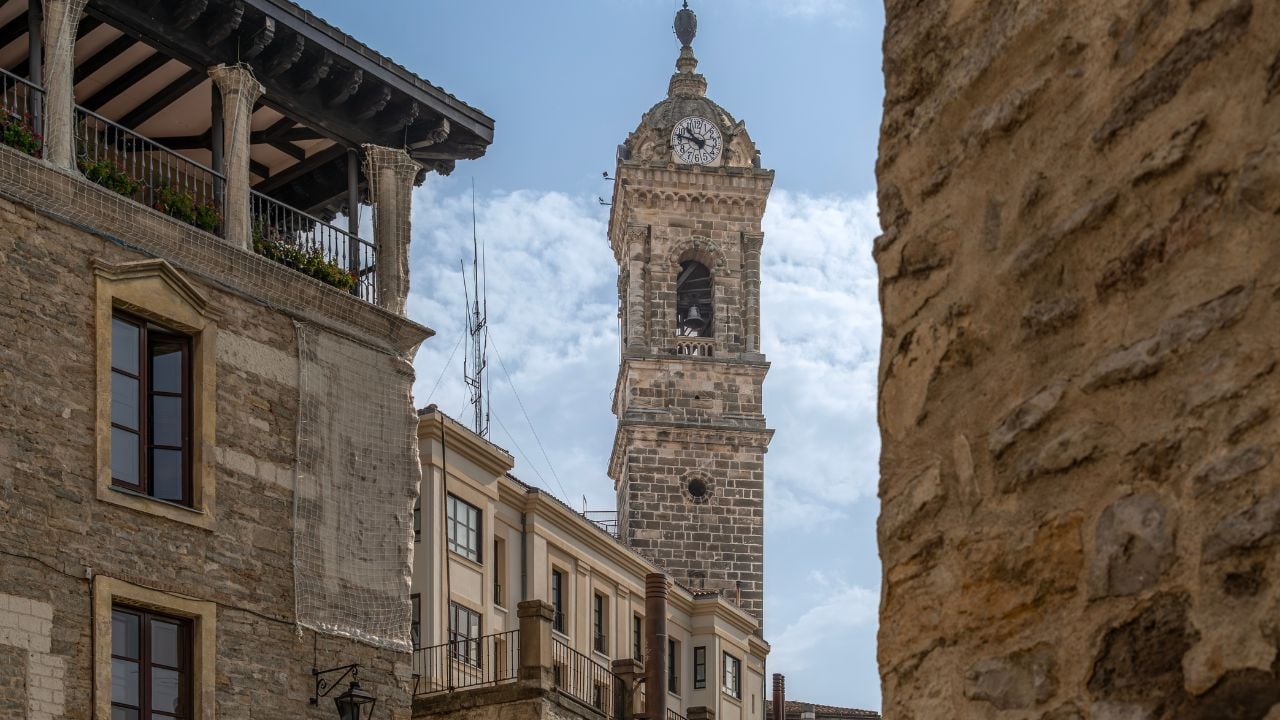
Vitoria-Gasteiz greets visitors with stone streets and green edges rather than noise. In the Medieval Quarter, old walls, church towers, palaces, religious buildings, and narrow lanes keep the Basque capital tied to its older shape. The streets feel lived-in, with café stops and pintxo bars close enough to keep the walk from becoming only a history route.
The city also has one of its strongest surprises outside the old lanes. Vitoria-Gasteiz’s Green Ring circles the urban area through parks and natural spaces, giving visitors a quick break from stone streets without leaving the city behind. That contrast matters on a short stay: a morning among medieval façades, then an afternoon with trees, wetlands, paths, and quieter air.
Food keeps the center lively after the daytime walk. The city’s tourism site suggests going for pintxos in the Medieval Quarter and the center, where visitors pass historic streets while stopping for small plates. Instead of one formal dinner, the evening may move from counter to counter: a glass of wine, a bite of tortilla, a skewer, a warm bar, then another doorway a few steps away.
Vitoria-Gasteiz feels cheerful because its pleasures stay close but not repetitive. Medieval streets, green routes, pintxos, parks, and old towers create a city break with several moods inside one manageable day.
2. Olomouc, Czech Republic
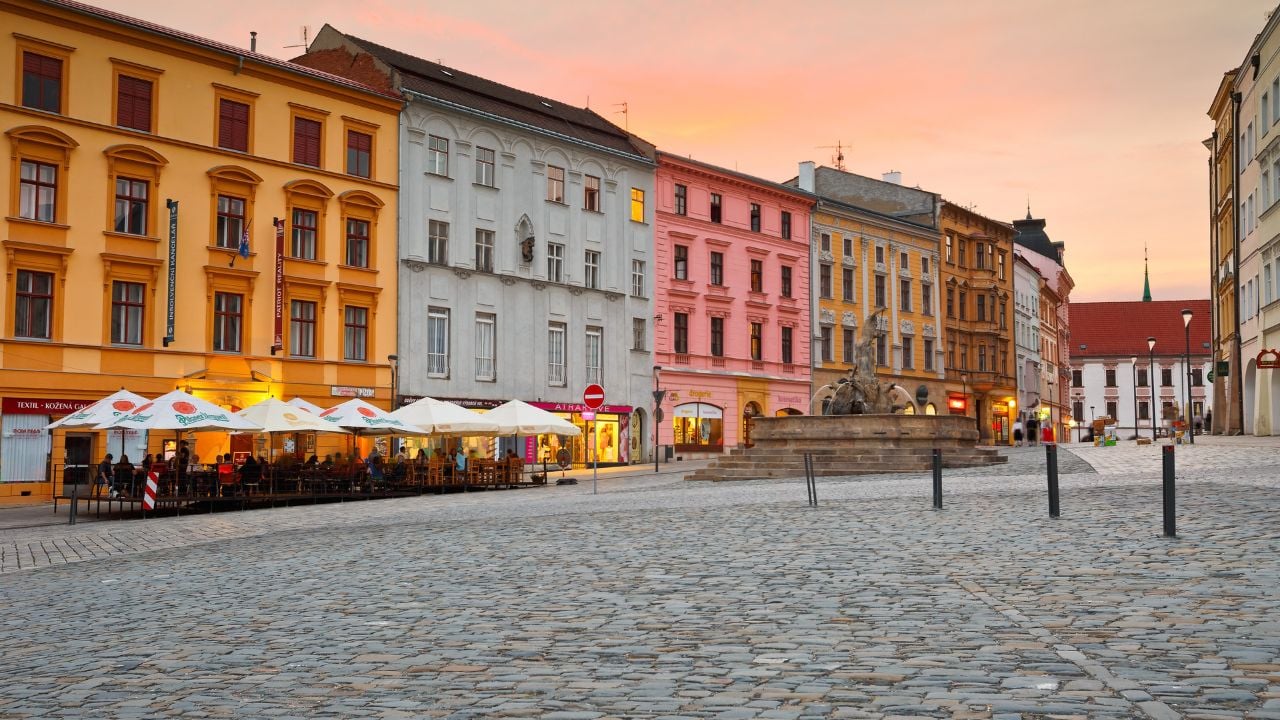
Olomouc starts with a proper Central European square: wide paving, historic façades, café tables, church towers, fountains, and the Holy Trinity Column rising above the center. It has scale, but not the shoulder-to-shoulder pressure that often comes with Prague or Vienna.
UNESCO describes the Holy Trinity Column as an outstanding Central European Baroque monument. Around it, the city keeps enough daily movement to stop the square from feeling frozen. Students cross between cafés, locals pass through the center, and the surrounding streets lead toward churches, courtyards, museums, and smaller places to eat.
Olomouc also has a food detail that immediately separates it from a generic pretty city break: tvarůžky, the strong Moravian cheese associated with the region. The local tourism site promotes an annual cheese festival in the center, and even outside festival dates, the cheese gives the city a sharper local flavor than visitors may expect from such an elegant square.
A good afternoon here moves slowly around the square, fountains, astronomical clock, and nearby lanes. Stop for coffee, look closely at the column, then leave room for a pub, a cheese dish, or a second walk when the buildings catch softer evening light.
3. Leeuwarden, Netherlands
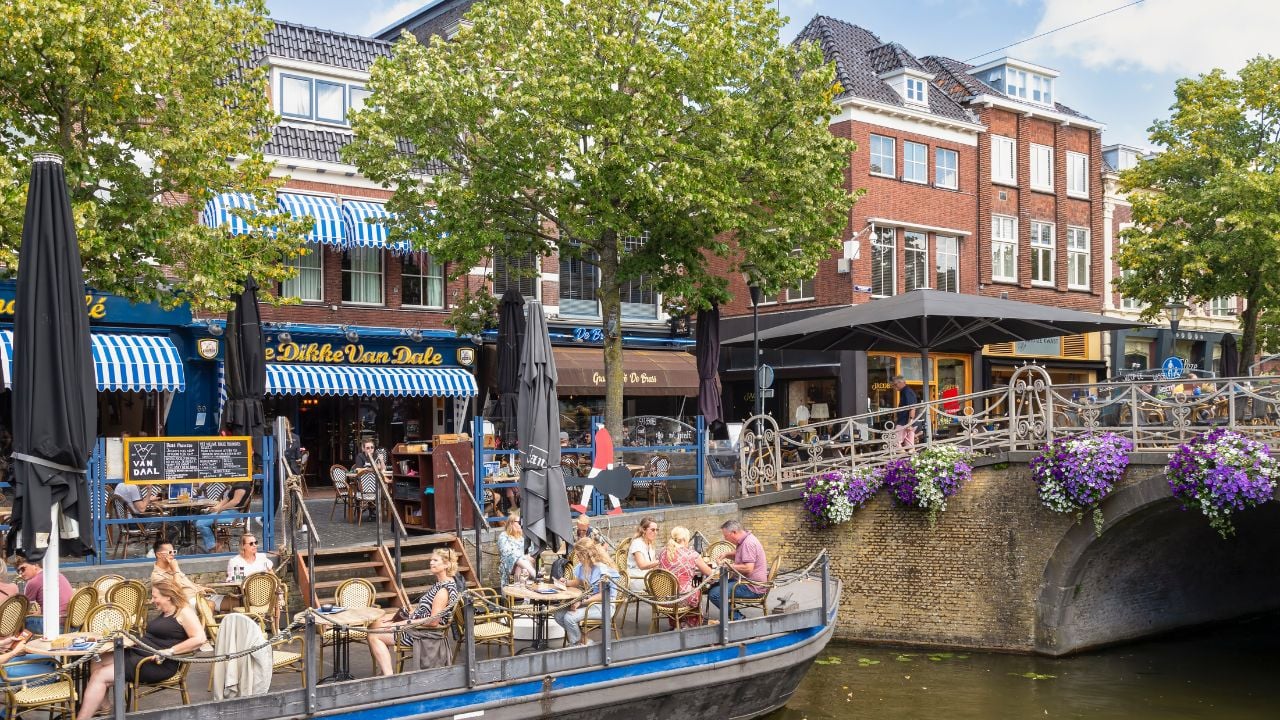
Leeuwarden has the familiar Dutch ingredients—canals, brick buildings, bridges, terraces, bikes, shopping streets—but the city also carries a Frisian identity that sets it apart from the usual Netherlands route. The center feels compact enough for wandering, with water and cafés appearing often enough to keep the walk relaxed.
The Netherlands’ official tourism site notes that Frisian, the country’s second official language, is spoken here. It also describes Leeuwarden as one of the eleven Frisian cities, with attractive city canals and inviting places to sit.
The museums give the city more depth than a canal stroll alone. Visit Leeuwarden points visitors toward the Fries Museum, the Frisian Museum of Natural History, and other arts and culture venues. A visitor might begin with water and terraces, then step indoors for regional history, natural history, or art before returning to the streets for dinner.
Leeuwarden’s charm is quiet rather than decorative. Canal reflections, shop windows, bikes near bridges, Frisian signs, museum doors, and waterside tables build the day in small pieces. The city feels local before it feels touristy.
4. Timișoara, Romania
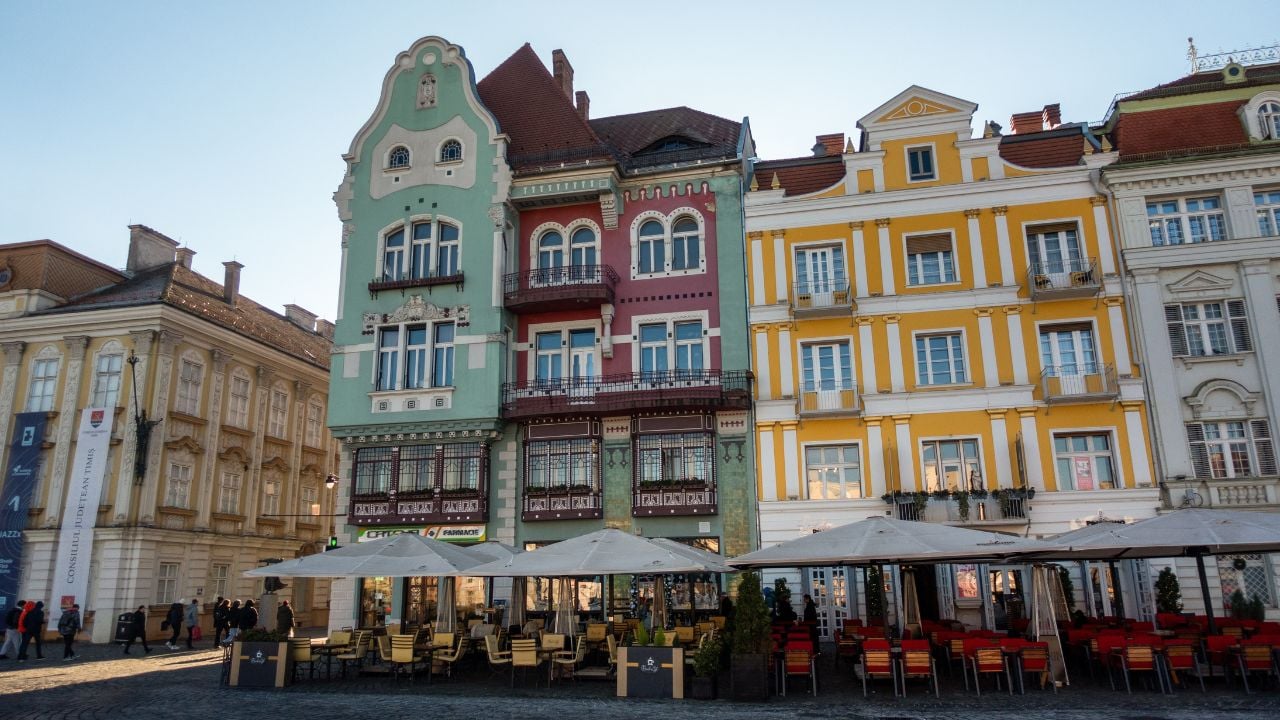
Timișoara shows its personality in color and public space. Union Square has Baroque buildings in soft shades, terraces around the edges, a park-like center, church façades, and enough room for people to sit, cross, meet friends, or drift toward another café.
The official tourism site describes Unirii Square as one of the city’s most effervescent spots, with inviting terraces and brightly colored restored buildings. Romania Tourism also notes that Timișoara is easy to explore on foot and has many public squares and green retreats.
The city’s cultural side has become more visible since its 2023 European Capital of Culture year. Visitors move between Union Square, Victory Square, parks, churches, galleries, restaurants, and evening terraces without needing a rigid route. The appeal sits in the sequence of squares: one broad and colorful, another formal and central, another quieter when the streets empty slightly after lunch.
Timișoara feels brightest when the day stays outside for as long as the weather allows. Painted façades, tramlines, fountains, café umbrellas, park paths, and restored buildings give the center a warm, open quality that suits slow walking.
5. Kaunas, Lithuania
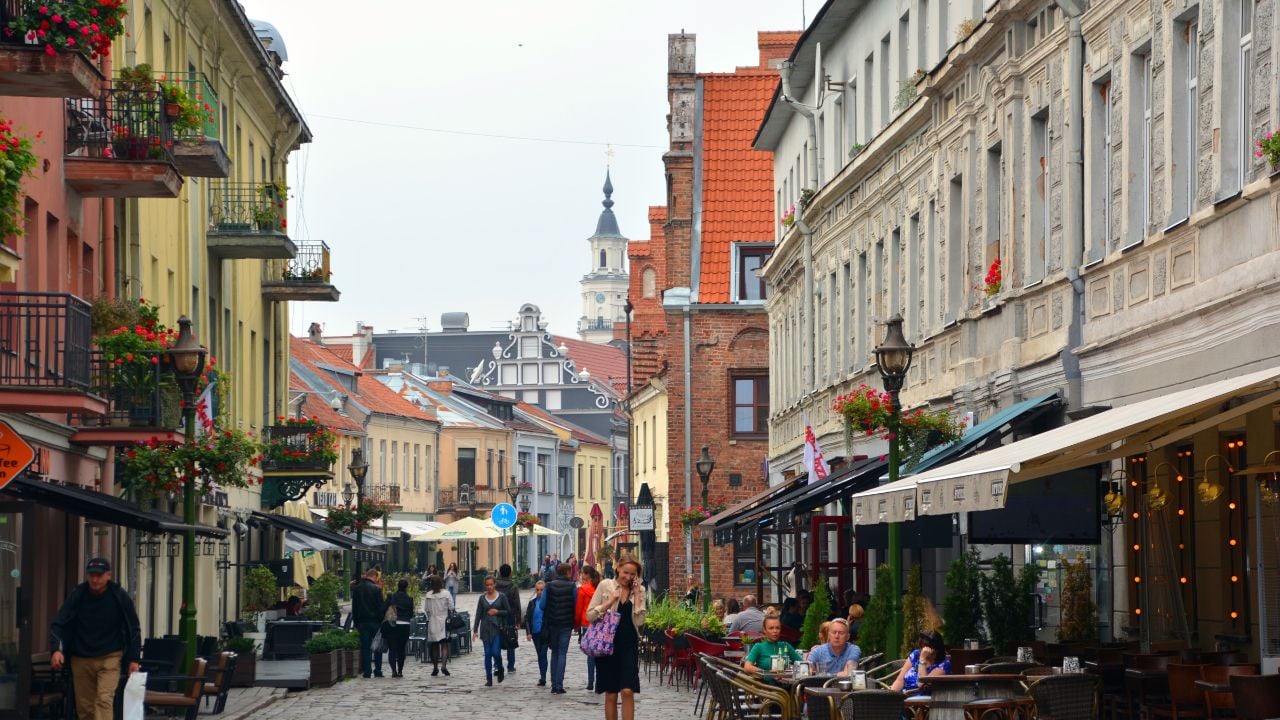
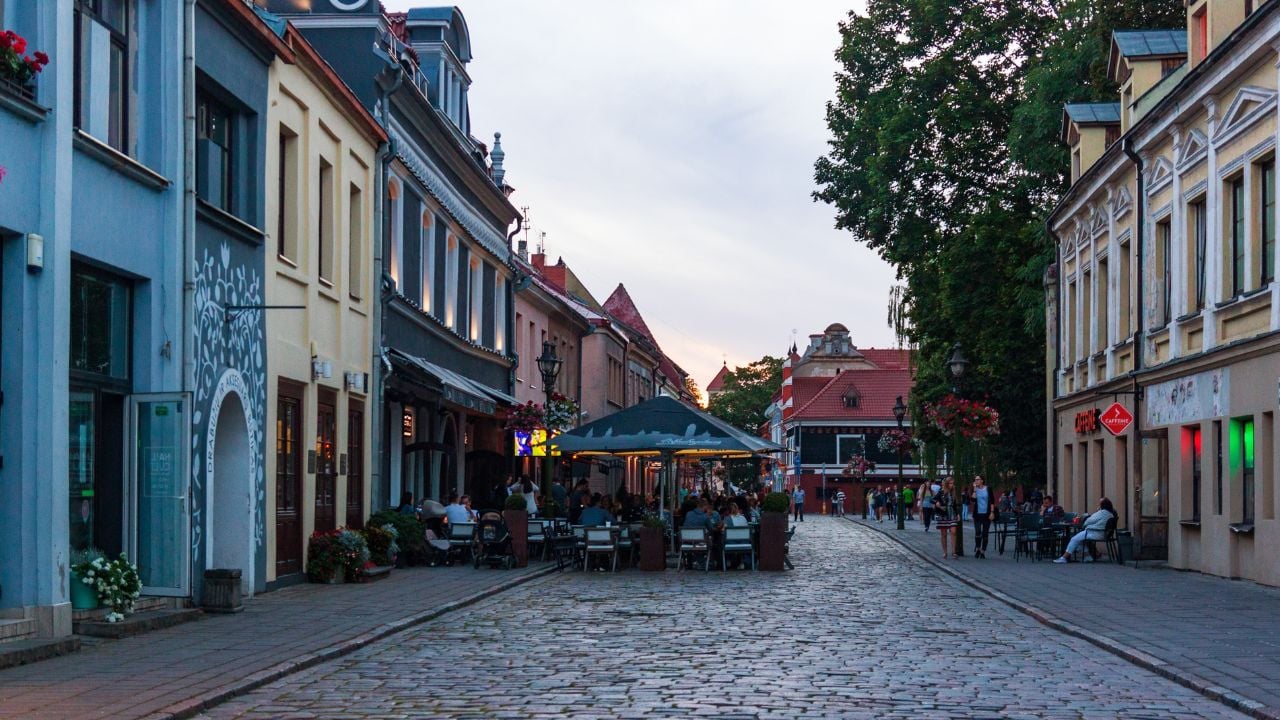
Kaunas rewards people who look above shop level. Interwar façades, balconies, public buildings, painted walls, street art, riverside spaces, and old streets give the city a different kind of visual interest from a standard medieval old town.
Lithuania Travel highlights Kaunas Modernism as a UNESCO heritage site, with 20th-century architecture tied to Lithuania’s cultural and historic development. Kaunas IN also points visitors toward events, festivals, creative initiatives, parks, cycling paths, and street art.
The city’s best discoveries often arrive between planned stops. A walk may pass a modernist building with clean lines, then a mural, then an older street, then a café or gallery. The result feels less polished than some capital-city breaks, but more personal: a city still showing its layers through architecture, public art, and everyday movement.
Kaunas deserves a loose route through both its historic and modern sides. Leave time for façades, murals, museums, riverside areas, and a meal rather than treating the city as a quick stop. Its surprise comes from accumulation: one building, one wall, one square, one café, then another reason to keep walking.