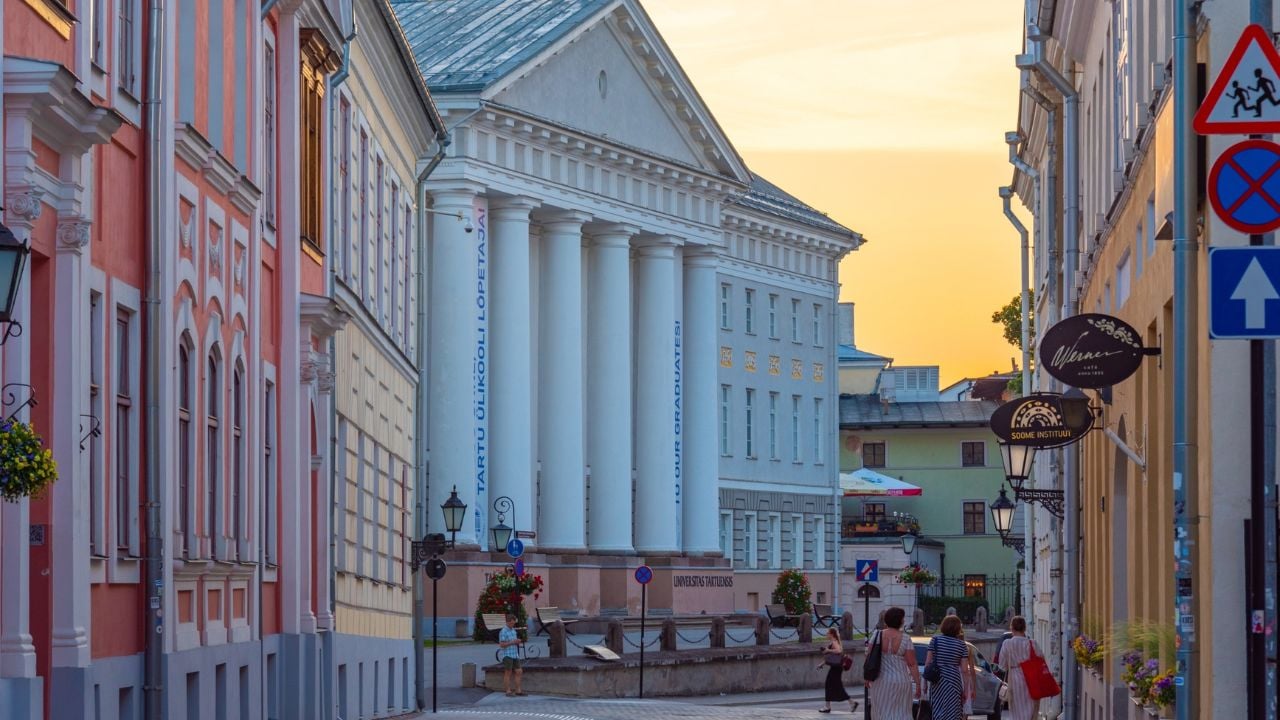
Some cities catch attention quickly, then become better once the obvious view is behind you. A canal frontage leads into restaurant lanes. A sea-facing square opens toward bookshops and old cafés. A Roman arena sits a few streets from markets and shaded terraces. The strongest city breaks have that second layer: not just one photo, but enough streets, buildings, food, and local movement to keep the day changing.
Ghent, Trieste, Nîmes, Kaunas, Olomouc, and Tartu all have compact centers with visible character. Their best details are not hidden behind luxury experiences or long transfers. They sit in canal bends, stone squares, university paths, old markets, Baroque monuments, interwar façades, and cafés that make a short stay feel fuller than the map suggests.
These places are especially good for travelers who like cities with texture. They offer water, towers, Roman stone, painted façades, literary cafés, student streets, and historic routes that make walking feel like part of the discovery, not just a way to get between attractions.
1. Ghent, Belgium

Ghent’s first impression usually begins along the water. At Graslei and Korenlei, old guild houses stand above the canal, bridges frame the view toward the towers, and café terraces sit close enough to make the historic center feel active rather than staged. It has the beauty people expect from Belgium, but it does not feel sealed off from daily life.
Visit Gent lists a first-time city walk of 4.2 kilometers through the historic center, with the Castle of the Counts, Graslei and Korenlei, the three towers, the city pavilion, and Patershol among the highlights. That route gives newcomers a clear path through the old core without reducing the city to one canal photo.
Patershol adds older lanes and restaurants after the main waterfront view. Groentenmarkt brings food stalls and local products, while the student presence keeps the cafés, squares, and evening streets busy after the daytime tours thin out. The details change quickly: water, stone, towers, narrow streets, then dinner in a quarter that still feels lived in.
Ghent needs more than a transfer stop between Brussels and Bruges. A full day and evening allow time for the canals, one museum or church, a café break, and a slow walk back through the old center after dark.
2. Trieste, Italy

Trieste does not open like Florence, Rome, or Venice. Piazza Unità d’Italia faces the Adriatic, with pale civic buildings around the square and open water beyond them. The first impression is broad and maritime: stone paving, sea air, café tables, and the feeling of an Italian city looking outward rather than inward.
Discover Trieste describes Piazza Unità d’Italia as the largest square facing the sea in Europe. From there, the route into the city stays clear: Molo Audace for the water, Canal Grande for reflections and church views, then bookshops and historic cafés in the streets behind the waterfront.
Turismo Friuli Venezia Giulia describes Trieste through its Central European character, multicultural atmosphere, historic cafés, varied architecture, art, and sea views. Those traits are visible in a short walk. Habsburg façades sit near Italian coffee rituals, the Adriatic light changes the color of the stone, and the city’s literary links with James Joyce and Italo Svevo give the cafés more than decorative value.
Miramare Castle, the Karst, and coastal excursions belong to another part of the trip. The opening day has enough material near the center: Piazza Unità d’Italia, Canal Grande, Molo Audace, historic cafés, bookshops, and dinner within walking distance of the waterfront.
3. Nîmes, France
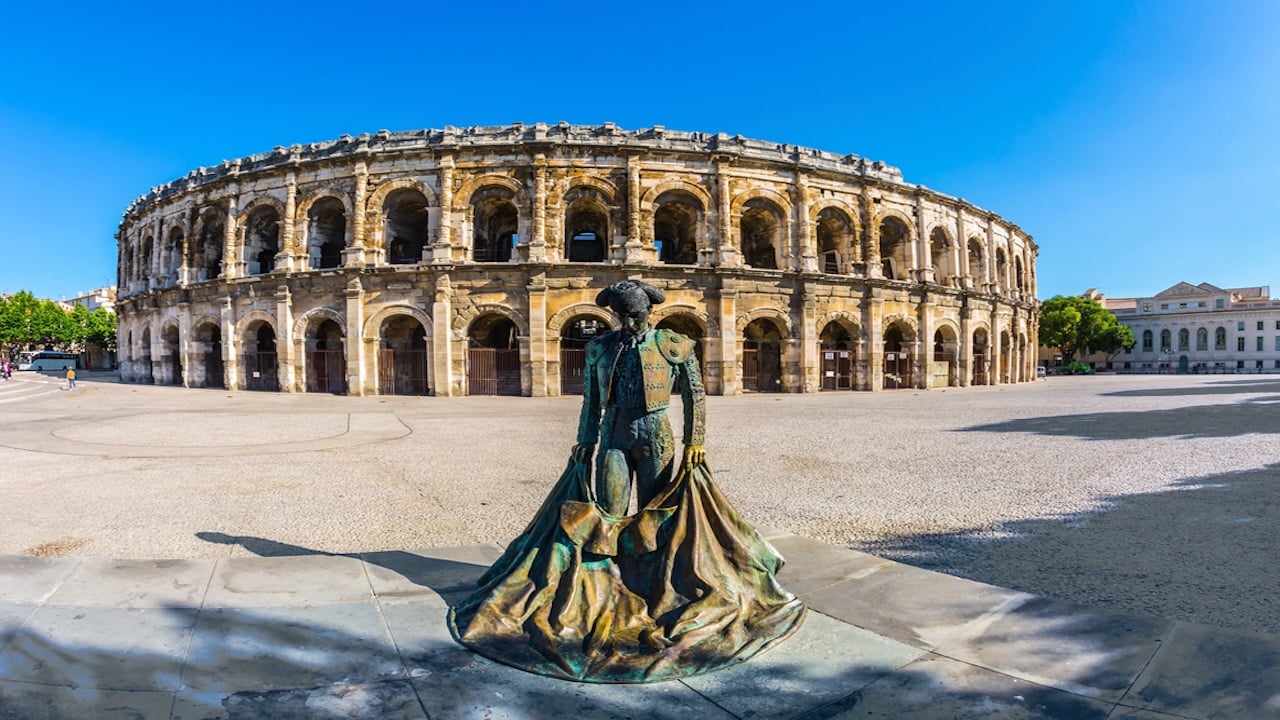
Nîmes puts Roman stone directly into the modern city. The arena stands near cafés and ordinary street life, the Maison Carrée rises in the center, and Tour Magne marks the old Roman enclosure from higher ground. The monuments are not distant ruins on the edge of town; they shape the way the center looks and moves.
Nîmes Tourism presents the city through its famous Roman monuments, museums, terraces, and lively streets. France.fr also calls Nîmes the “French Rome,” known for some of the world’s best-preserved Roman monuments.
The city becomes more than an ancient-history stop once the walk moves between monuments. Terraces fill in the sun, narrow streets lead toward shops and market areas, and the pale southern stone gives the center a warmer texture than a formal museum district. The Roman sites provide the drama; the cafés, markets, and shaded streets make the stay feel like a city break.
A short visit should leave space between the arena, Maison Carrée, museum time, and Tour Magne. Nîmes has enough concentrated heritage for a focused day, but the streets between the major sites are part of the experience.
4. Kaunas, Lithuania
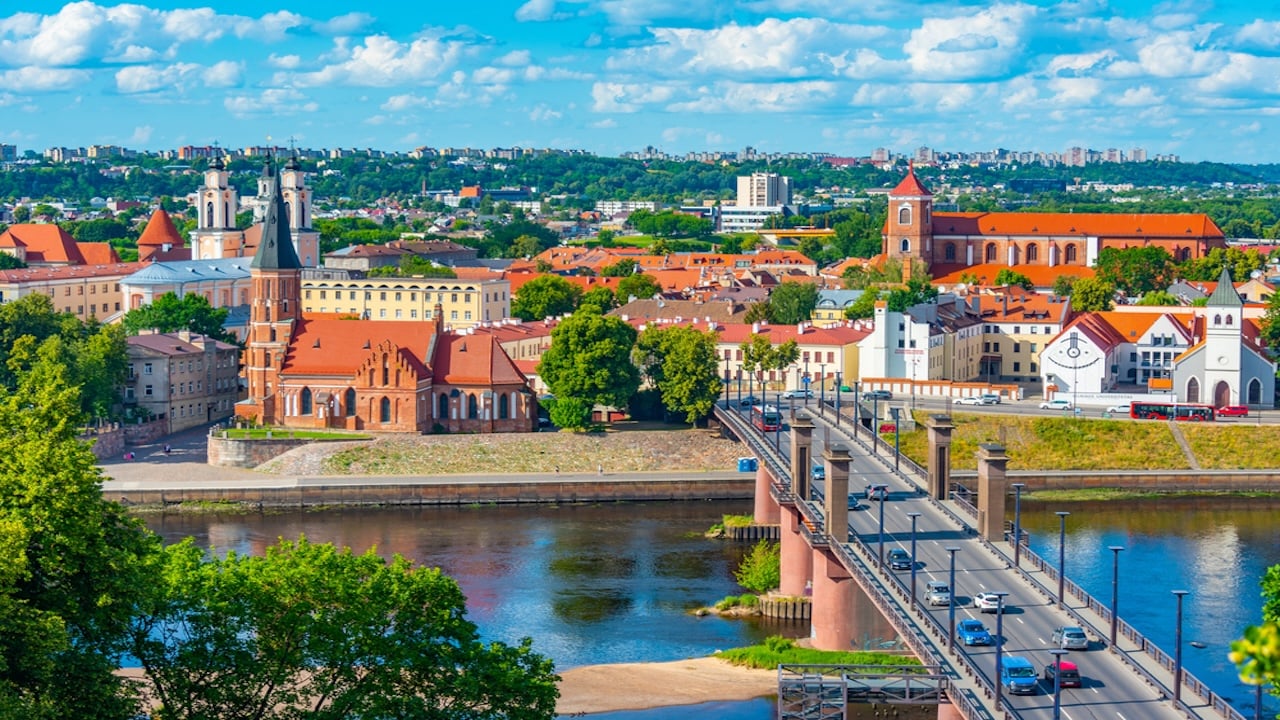
Kaunas is a city of façades, murals, museum stops, river edges, and interwar confidence. It does not rely on one famous square to explain itself. The interest builds as visitors notice how modernist buildings, older streets, creative spaces, and public art sit beside each other.
UNESCO lists Modernist Kaunas: Architecture of Optimism, 1919–1939 as a World Heritage property tied to the city’s rapid transformation when it became Lithuania’s provisional capital between the world wars. The designation gives the architecture a clear historical frame: these were not just stylish buildings, but part of a city trying to define itself quickly.
Lithuania Travel points visitors toward Kaunas highlights such as interwar modernist architecture, Art Deco, Bauhaus influences, street art, museums, Kaunas Castle, and Pažaislis Monastery. That mix gives the city several angles in one day: a modernist building on one street, a mural on another, a museum after lunch, then a river or castle view later on.
Kaunas rewards travelers who look up as much as forward. Balconies, stairwells, windows, painted walls, and civic buildings carry much of the story, especially for visitors interested in architecture and twentieth-century history.
5. Olomouc, Czech Republic
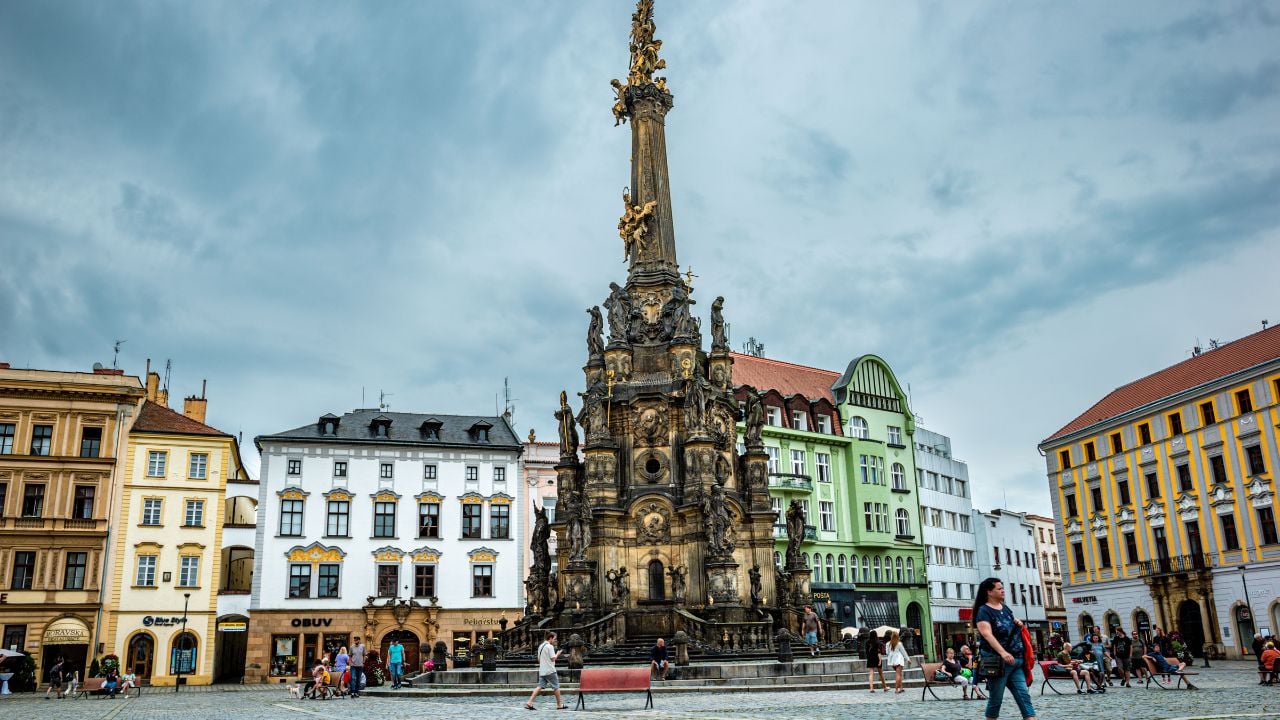
Olomouc introduces itself through its squares. The Holy Trinity Column rises above the center, fountains break up the open space, church towers appear over the rooftops, and tram lines bring regular city movement through the historic setting. It feels grand, but not frozen.
Olomouc Tourism says the Holy Trinity Column has been a UNESCO World Heritage Site since 2000 and describes it as the largest grouping of Baroque statues within a single sculpture in Central Europe. UNESCO calls it an outstanding example of a Central European memorial column in the regional Olomouc Baroque style.
The surrounding center gives the column context. Upper Square and Lower Square keep cafés, fountains, façades, shops, restaurants, and university life within a compact walk. Visitors get Baroque detail at the center, then smaller streets and church interiors a few minutes away.
Olomouc has enough architecture and daily movement for a proper Czech city break without Prague’s scale. A good visit pairs the Holy Trinity Column with the fountains, town squares, churches, cafés, and evening streets instead of treating the UNESCO monument as a single stop-and-leave attraction.
6. Tartu, Estonia
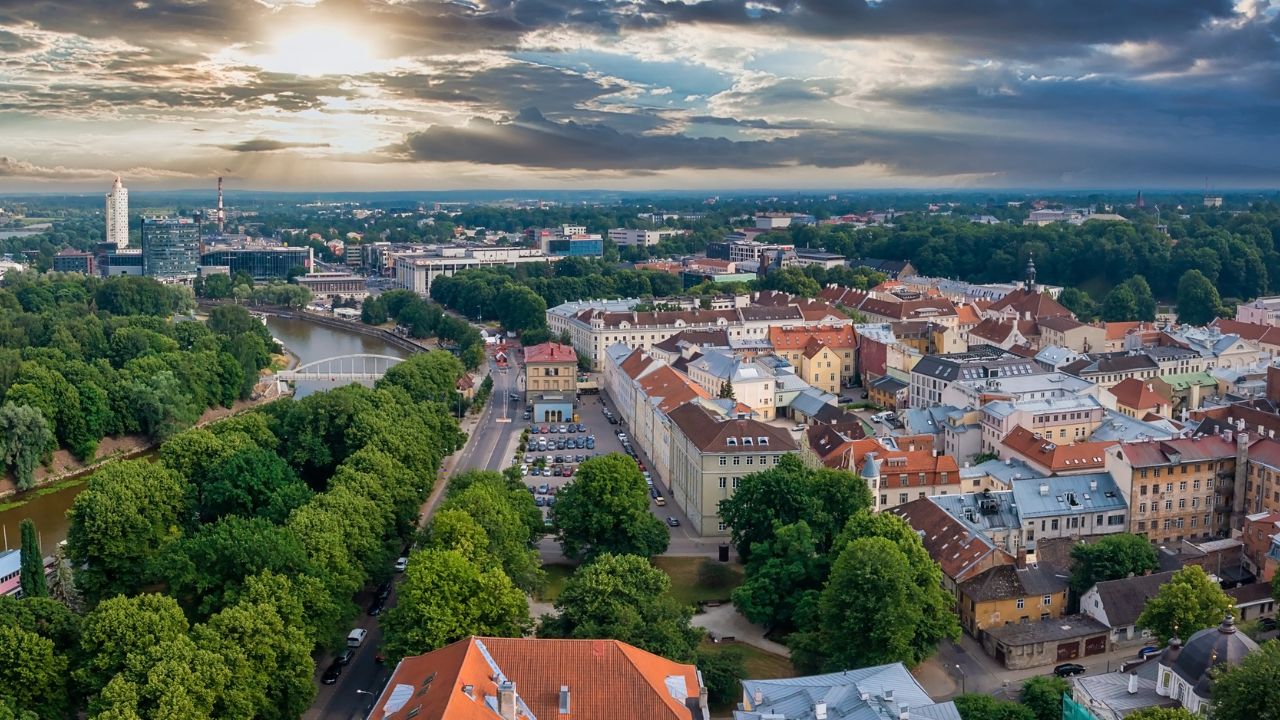
Tartu starts quietly, then gains detail through the walk. The Emajõgi River gives the city a soft edge, the Market Hall brings morning movement, the old town adds civic squares and cafés, and Toomemägi rises above the center with paths, trees, and university history.
Visit Estonia lists a guided morning walk in Tartu that follows the Emajõgi River, visits the Market Hall as vendors prepare for the day, and continues into the Old Town and Toomemägi. Visit Tartu also highlights culture, nature, wellness, the historic old town, museums, shopping, and dining.
A strong route begins near the river, passes the market, moves into the old town, then climbs toward Toomemägi for greenery and university buildings. That sequence gives the day visible changes in texture: water, food, stone streets, then leafy paths above the center.
Tartu should not be treated only as a smaller alternative to Tallinn. It has its own pace and subject: a student city where the river, market, museums, cafés, and hilltop paths give travelers a quieter but more layered Baltic stop.