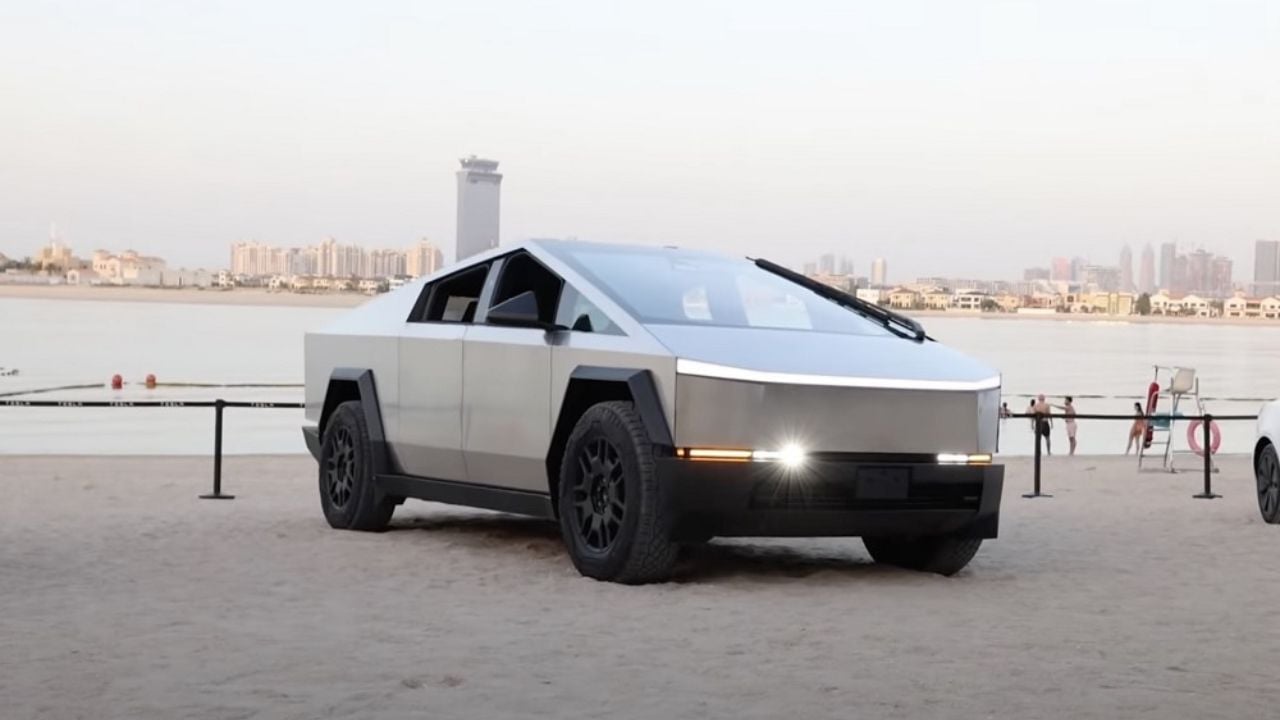
Tesla is recalling a small batch of rear-wheel-drive Cybertrucks over a defect that could eventually lead to wheel separation. The issue centers on cracking brake rotors that may fail under repeated stress loads, according to a filing submitted to the National Highway Traffic Safety Administration.
The recall applies to just 173 trucks, making it one of the smallest Tesla recalls in recent memory. Despite the low volume, the campaign has drawn attention because it offers a rare glimpse into how poorly the rear-drive Cybertruck appears to have sold.
Tesla launched the rear-wheel-drive Cybertruck as a lower-cost alternative to the dual-motor and Cyberbeast models. It sacrificed equipment, range, and performance in exchange for a lower starting price, though buyers largely seemed uninterested in the stripped-back configuration.
Importantly, the recall does not affect every Cybertruck on the road. Tesla says only 2024–2026 rear-wheel-drive trucks equipped with the standard 18-inch steel wheels are included, while models fitted with optional 20-inch wheels are unaffected.
Caused By Cracking Rotors
According to Tesla’s recall filing, the defect originates in the brake rotors rather than the wheels themselves. The wheel stud holes in the rotors can begin to crack after repeated impacts from rough roads and high cornering loads.
If the cracking worsens over time, the wheel studs could eventually separate from the hub assembly. In the worst-case scenario, the wheel could detach from the vehicle while driving.
Tesla says owners may notice warning signs before a failure occurs. Brake pulsation, vibration, or unusual noises are among the symptoms mentioned in the filing.
The Problem Was Found Beyond the Factory
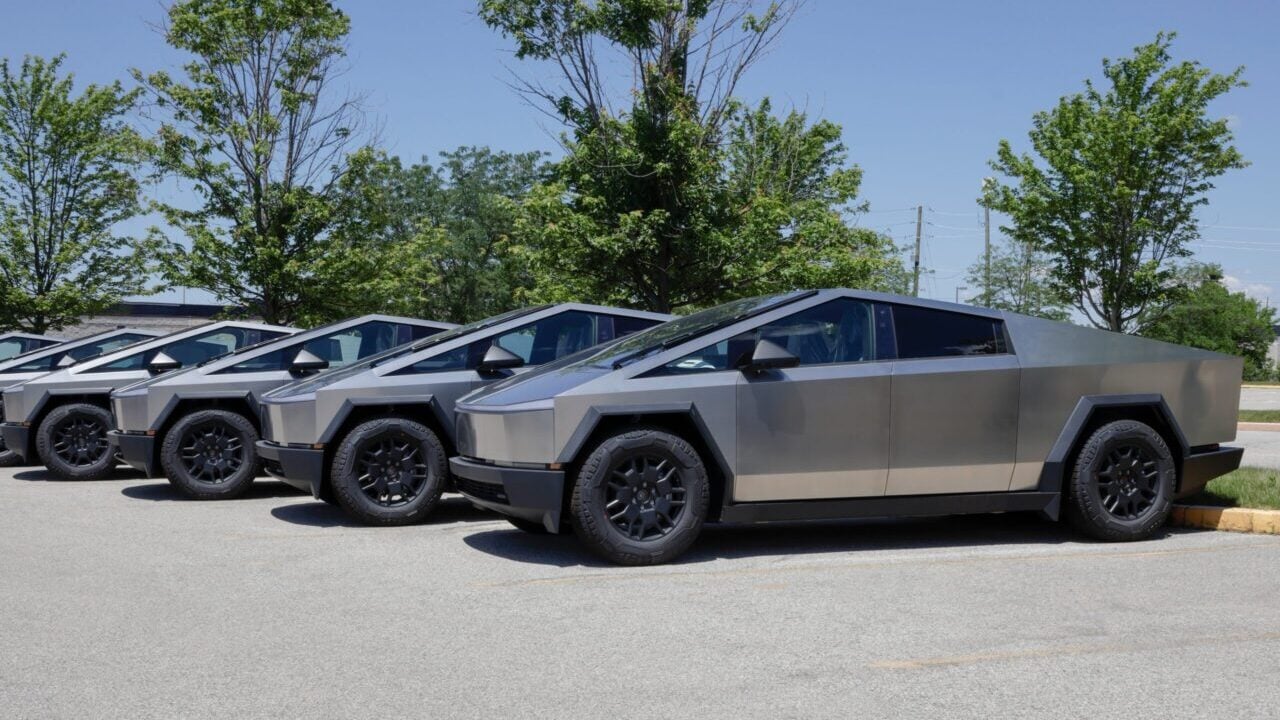
The issue was not isolated to trucks leaving Gigafactory Texas with defective parts already installed. Tesla says the same rotor design was also distributed to service centers and installed during repair work.
Some owners reportedly received replacement rotors after complaining about brake pulsation or cracking in the original components. That means trucks repaired before the recall could still carry the defective hardware.
Tesla says it is aware of three warranty claims that may be related to the issue. The automaker also states it has no reports of crashes, injuries, or fatalities tied to the defect.
A Recall That Reveals Weak Demand
The tiny size of the recall may be the most surprising part of the entire situation. Tesla does not provide detailed Cybertruck sales figures, instead grouping the pickup together with the Model S and Model X in quarterly delivery reports.
Because of that reporting structure, the 173-unit recall offers one of the clearest indicators yet of demand for the rear-wheel-drive Cybertruck with steel wheels. The number strongly suggests the configuration sold in extremely limited quantities before Tesla discontinued it.
The rear-drive Cybertruck was intended to serve as a more affordable entry point into the lineup. In reality, it arrived with notable compromises and still carried a price tag that many buyers likely found difficult to justify compared to better-equipped all-wheel-drive versions.
Tesla Has a New Fix Ready

Tesla says it has developed redesigned brake rotors and wheel hubs to address the problem. The updated parts increase the contact area between the hub, rotor, and wheel in an effort to reduce stress concentrations.
The company is also introducing revised lug nuts featuring a higher-friction coating intended to improve torque retention. Tesla believes the updated hardware will better withstand the heavy loads generated by the Cybertruck.
Owners began receiving recall notifications in April, though remedy parts are not expected to be fully available until later in June. As with all safety recalls, repairs will be performed free of charge.