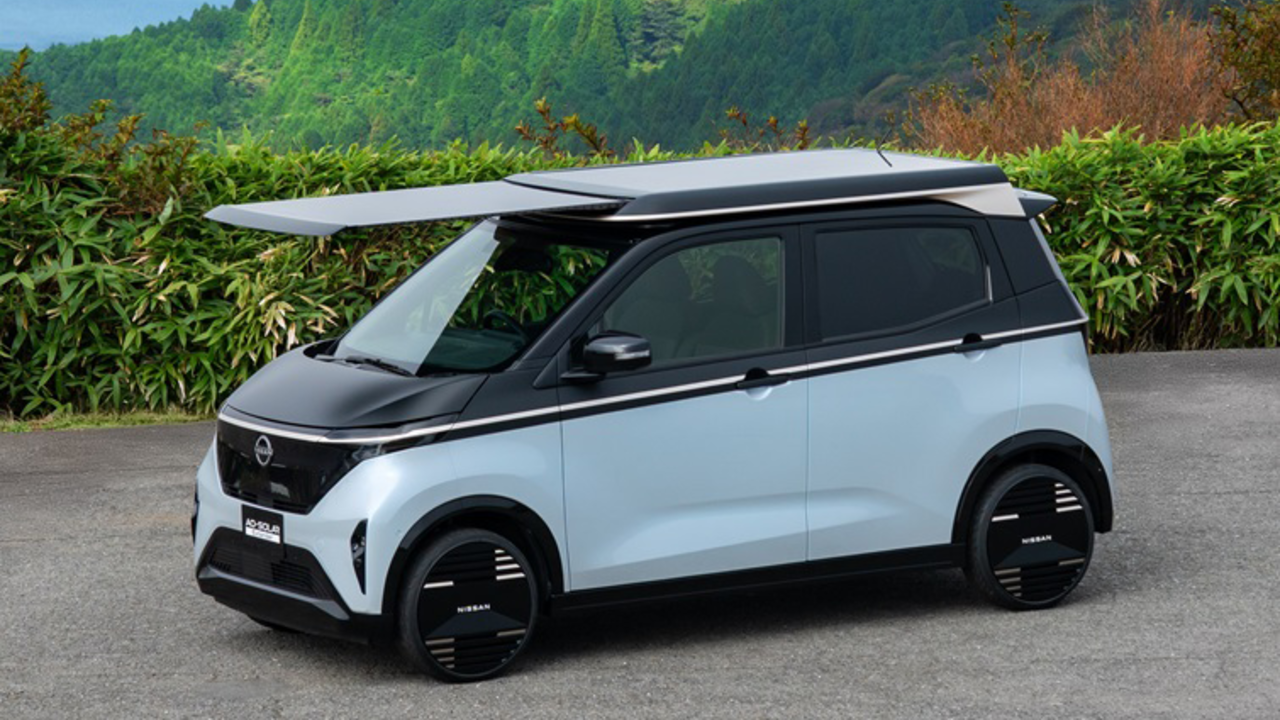
Nissan has unveiled a clever new solar charging system for its tiny Nissan Sakura that could dramatically reduce how often some EV owners need to plug into the grid. Called the “Ao-Solar Extender,” the prototype technology was revealed ahead of the 2025 Japan Mobility Show and is designed specifically for Japan’s urban-focused kei car market.
The roof-mounted system combines fixed and extendable solar panels capable of generating enough electricity to provide up to 3,000 kilometers (1,864 miles) of driving range annually. Nissan says the setup was created to simplify EV ownership while reducing dependence on public charging infrastructure and household charging.
Unlike many solar car concepts that remain experimental showpieces, Nissan says the Ao-Solar Extender is planned for future commercialization. The project originally began as part of an internal company idea contest back in 2021 and has since evolved into a production-intended technology showcase.
The concept also corresponds with Nissan’s broader “Re:Nissan” strategy, which focuses heavily on improving the ownership experience through practical innovation. In this case, the company believes solar integration could offer meaningful real-world benefits for drivers who mainly use their EVs for short daily trips.
Extendable Solar Roof Adds Charging While Parked
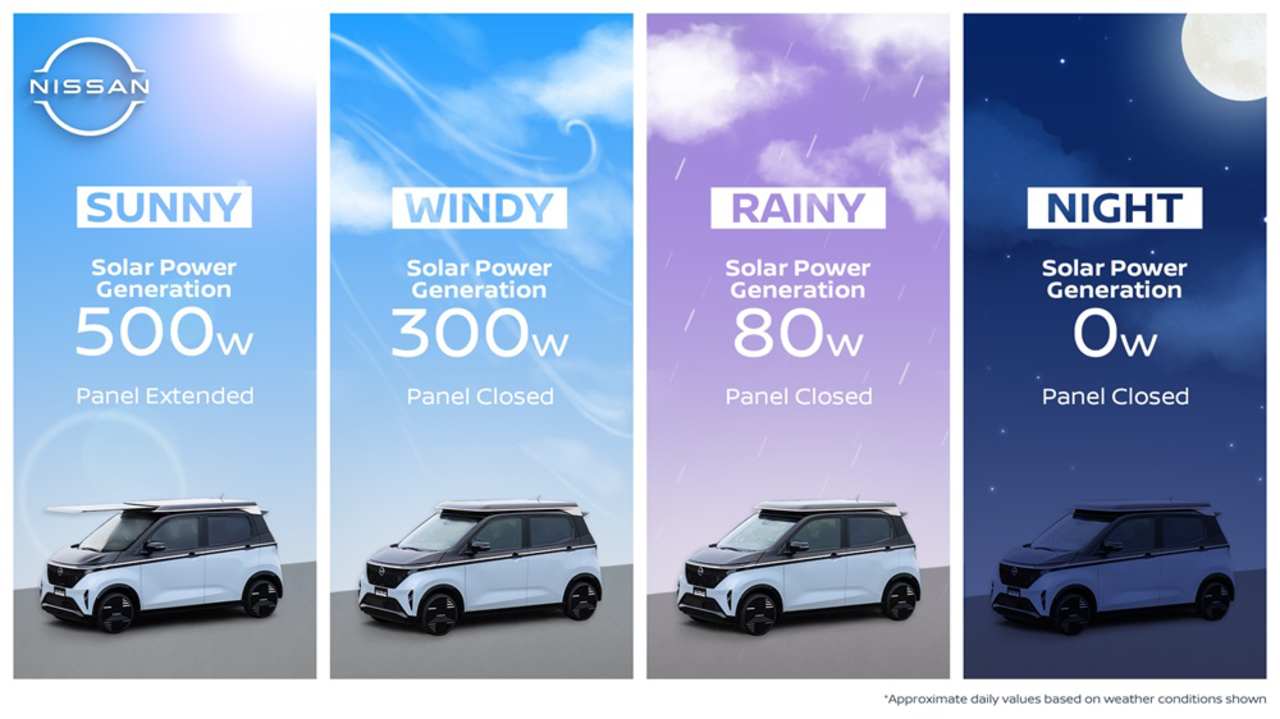
The Ao-Solar Extender features a roof-mounted solar array that works both while driving and when parked. Fixed solar panels remain active throughout the day, while an additional retractable panel slides outward over the windshield once the vehicle is stationary.
When fully extended, the system increases total solar collection area and boosts output to roughly 500 watts depending on weather conditions. Nissan says the deployable section also acts as a sunshade that helps keep cabin temperatures lower during hot weather, potentially reducing air conditioning usage and improving overall efficiency.
The retractable panel automatically stows itself before driving and can also retract during strong winds to avoid damage. Engineers designed the entire system to remain aerodynamic and visually integrated into the Sakura’s compact kei car styling.
Nissan believes the technology could be particularly effective in Japan, where many kei car owners travel relatively short distances for errands, commuting, and school runs.
Some Owners May Rarely Need To Plug In
According to Nissan’s analysis of Sakura owner driving habits, a significant number of drivers could potentially eliminate regular grid charging almost entirely under favorable conditions. Because the average daily driving distance for many kei car owners is relatively low, the solar-generated electricity may cover much of their routine usage.
The company also says the solar setup could serve as an emergency power source during natural disasters or power outages, an important consideration in Japan where emergency preparedness remains a major focus.
The Sakura has already established itself as Japan’s best-selling EV for three consecutive years thanks to its compact dimensions, city-friendly practicality, and affordable operating costs. Nissan appears to see the Ao-Solar Extender as a way to push the kei EV concept even further by reducing charging inconvenience for urban owners.
Nissan’s Solar EV Development Goes Beyond The Sakura
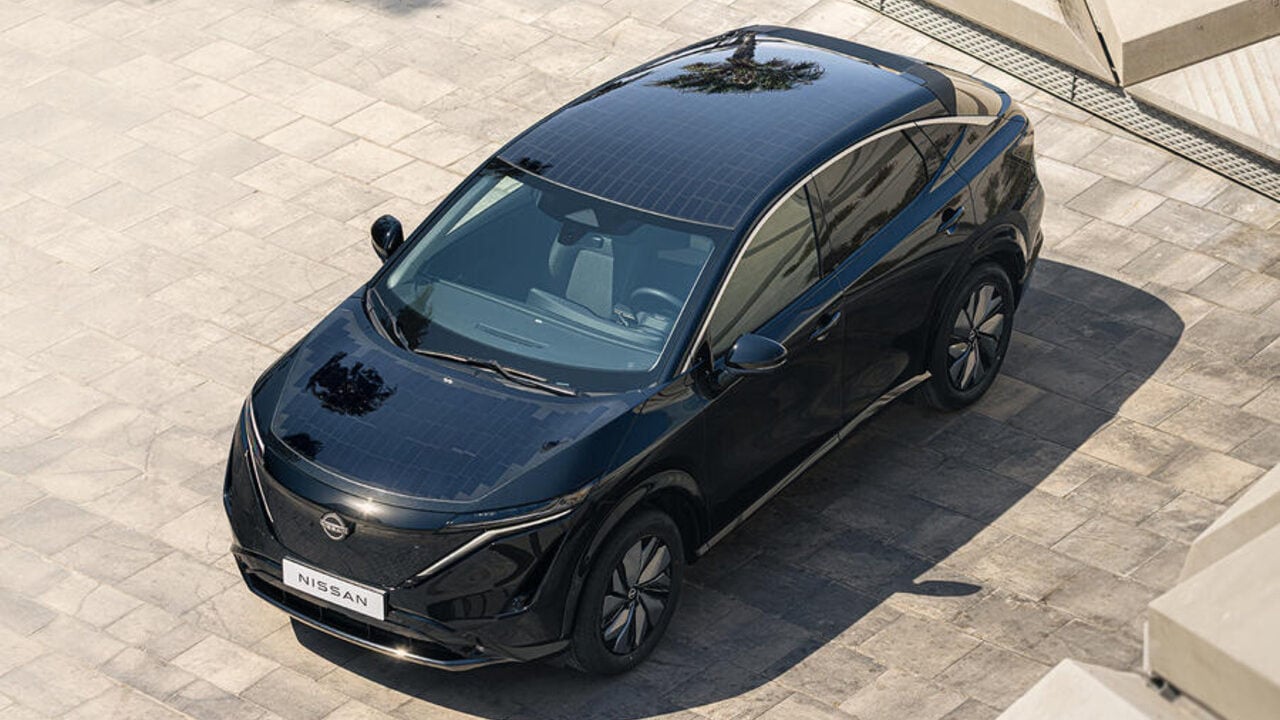
The Sakura project is not Nissan’s first attempt at integrating solar charging technology into an EV. Earlier this year, the automaker showcased a solar-equipped Nissan Ariya developed in partnership with Dutch solar mobility company Lightyear.
That experimental Ariya used solar panels integrated across 3.8 square meters of the vehicle’s bodywork and managed to add up to 14 miles of driving range during sunny-day testing. Nissan estimated that in sunny regions such as Barcelona, the system could provide an average of 11 miles of additional daily range.
Long-distance testing between the Netherlands and Spain also suggested solar integration could reduce annual charging stops for some commuters from 23 visits to just eight. While the gains remain modest compared to traditional charging speeds, Nissan views solar power as a useful supplement that can continuously generate electricity whenever the vehicle is exposed to sunlight.
For now, the Sakura’s Ao-Solar Extender represents Nissan’s most practical application yet. Instead of chasing futuristic solar-only mobility, the company appears focused on using photovoltaic technology to make small EV ownership simpler, cheaper, and more convenient in everyday driving conditions.