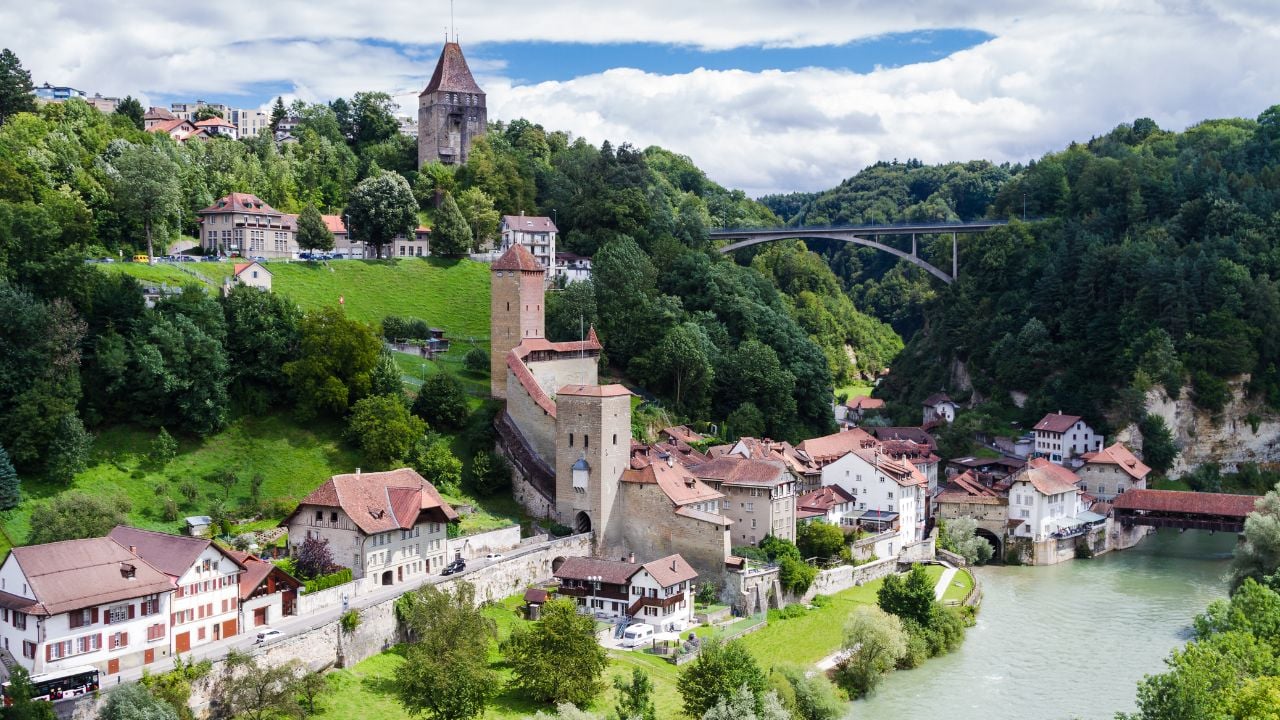
Some trips do not need a museum-heavy plan to feel complete. A town gate, a river path, a cobbled slope, a harbor wall, or a morning market can give the day a clear route before any ticketed attraction enters the picture.
Dinan, Mdina, Korčula Town, Évora, Fribourg, Takayama, and Guanajuato are strong choices for travelers who like to see places on foot. Their main sights sit inside old lanes, fortified walls, bridges, courtyards, markets, waterfronts, and viewpoints rather than far outside the center.
These places still need practical planning. Weather, hill climbs, ferry schedules, market hours, midday heat, and crowd timing all affect the visit. The difference is that the route itself carries much of the experience: stone underfoot, water below, towers above, and façades changing color through the day.
A good day in these destinations starts with one clear area and leaves room for detours. The visible details do the work: timbered houses in Brittany, Maltese limestone behind city gates, Adriatic lanes on Korčula, whitewashed Alentejo walls, Swiss Gothic façades, Japanese market stalls, and the steep colored streets of Guanajuato.
1. Dinan, France
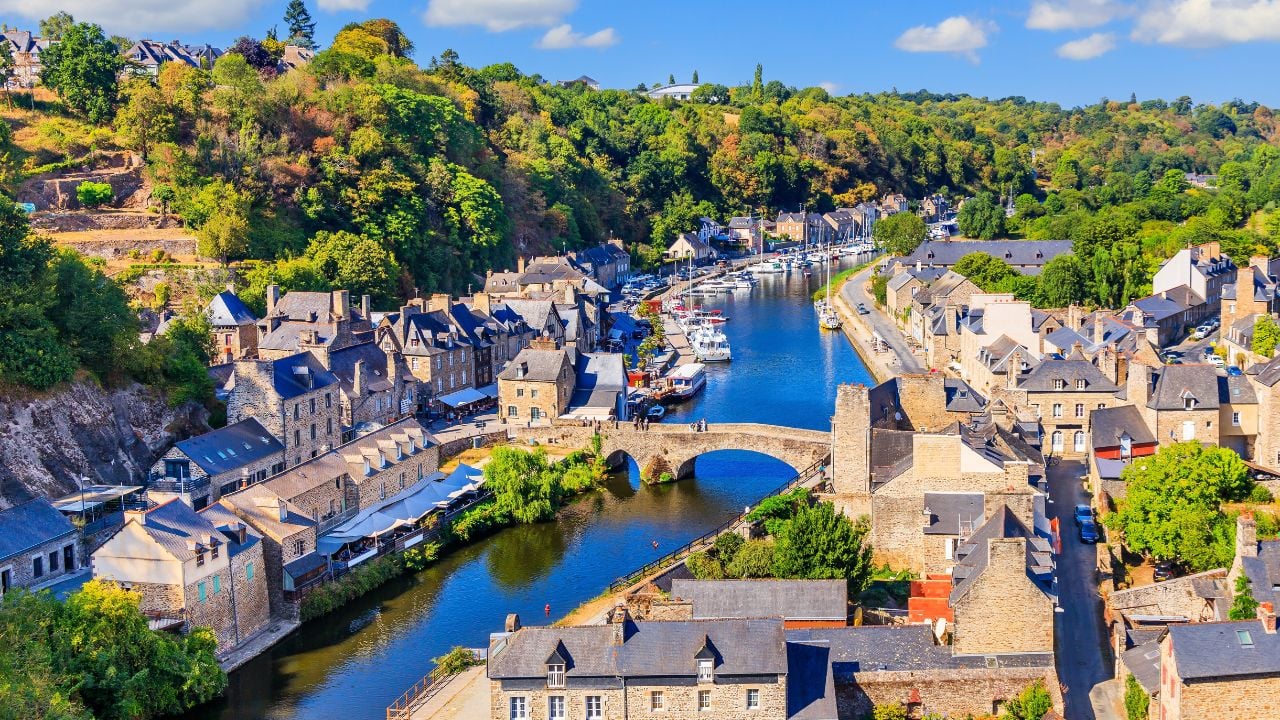
Dinan changes sharply between upper town and river. The upper streets hold half-timbered houses, stone façades, ramparts, gates, and old squares. Below them, the port sits beside the Rance River, with boats, waterside restaurants, stone buildings, and quay walls close to the water.
Brittany Tourism describes Dinan as a medieval city between land and sea, set above the Rance River and enclosed by nearly three kilometers of ramparts, with a 14th-century castle, half-timbered houses, cobbled lanes, and a small marina below.
Rue du Jerzual gives the walk its clearest transition. The steep cobbled street drops from the old town toward the port, passing stone walls, shopfronts, galleries, timbered upper floors, and small windows before the river comes into view.
The climb back up deserves time, especially in warm weather. Dinan should not be reduced to a castle-and-photo stop. The port, ramparts, old gates, Rue du Jerzual, and riverbank give travelers several different views of the town within one day on foot.
2. Mdina, Malta

Mdina begins at the gate. Once inside the fortified walls, the streets narrow into honey-colored limestone passages, carved balconies, noble houses, church façades, shaded doorways, and small squares where sound drops quickly.
Visit Malta notes that Mdina has around 4,000 years of history. That long timeline gives the compact city unusual density: medieval walls, aristocratic palaces, religious buildings, and viewpoints across Malta all sit within a short walk.
The Silent City nickname makes sense in the side streets. Limited vehicle access keeps the walk slower, and the high stone walls turn footsteps, voices, and church bells into part of the setting. Early morning and late afternoon are the best windows, when the limestone shifts from pale cream to gold and the lanes feel less crowded.
A short route works well here: enter through the gate, follow the narrow streets toward the cathedral area, turn into quieter side lanes, and finish near the bastion viewpoints. The city is small, but the limestone walls, carved details, doorways, and views give each turn something specific to notice.
3. Korčula Town, Croatia

Korčula Town sits on a small peninsula with the Adriatic on almost every side. Stone houses, towers, churches, palaces, narrow lanes, shutters, steps, and sea-facing edges make the old town compact without feeling plain.
The local tourist board describes Korčula’s streets as arranged in a herringbone pattern, a layout that gives the old town its distinctive shape. That pattern changes the walk in practical ways: lanes draw visitors inward toward the spine of the town, then open back toward water, boats, and light.
A short route can start at the land gate, continue toward St. Mark’s Cathedral, then slip into smaller side streets that lead back toward the waterfront. One lane gives a church view, another shows laundry, stone steps, and shutters, and another ends with blue water between buildings.
The old town’s scale allows a slow circuit before dinner. Leave time for a swim, a glass of local wine, or a harbor-side meal after the stones cool in the evening.
4. Évora, Portugal
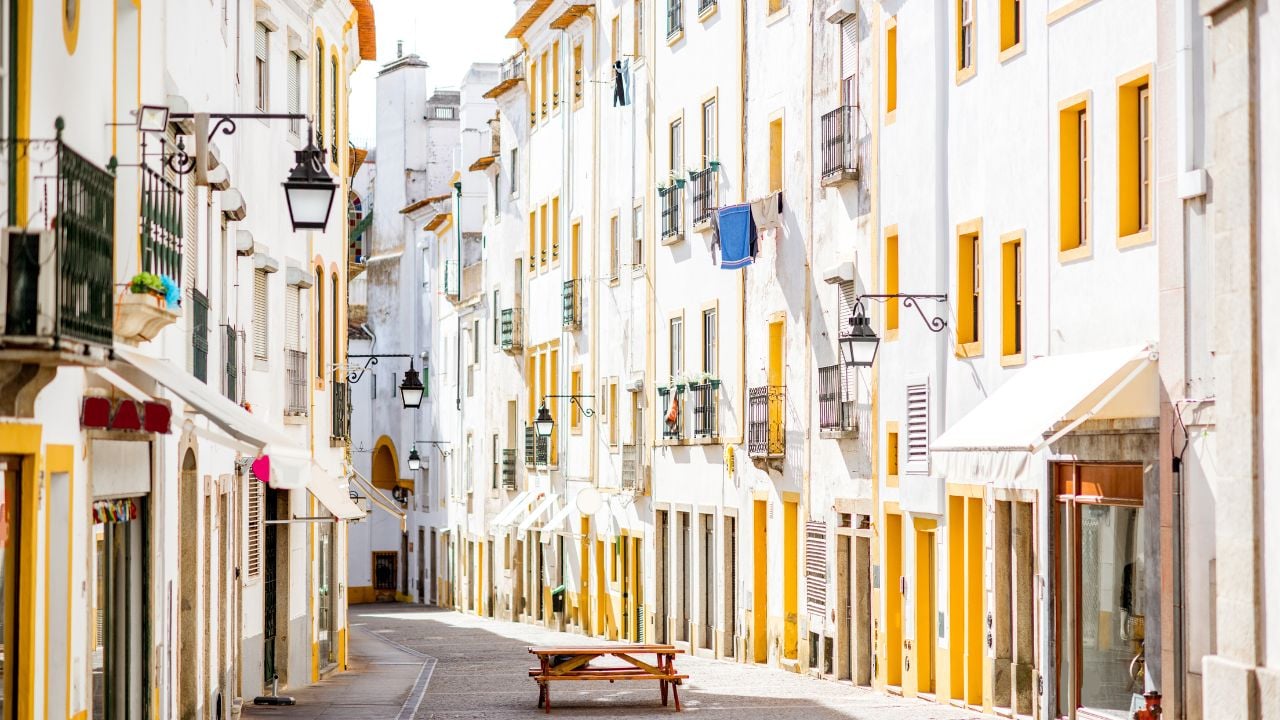
Évora puts Roman stone, whitewashed walls, old squares, courtyards, churches, and Alentejo light inside one walkable historic center. The streets feel quieter than Portugal’s busier coastal cities, but the amount of history inside the walls is substantial.
UNESCO describes the historic center of Évora as a museum-city with roots going back to Roman times and a golden age in the 15th century, when it became a residence of Portuguese kings. That explains why the walk shifts so quickly between Roman remains, medieval streets, religious buildings, and later noble houses.
The Roman Temple area is the most direct place to start. From there, travelers can move toward narrow lanes, shaded corners, white façades with yellow trim, small cafés, courtyards, and the cathedral area without rebuilding the route.
Midday heat can make the old center feel exposed, especially in summer. Évora is better with an early walk, a long lunch, and a slower return to the streets later in the afternoon, when the walls and stone lanes carry warmer color.
5. Fribourg, Switzerland
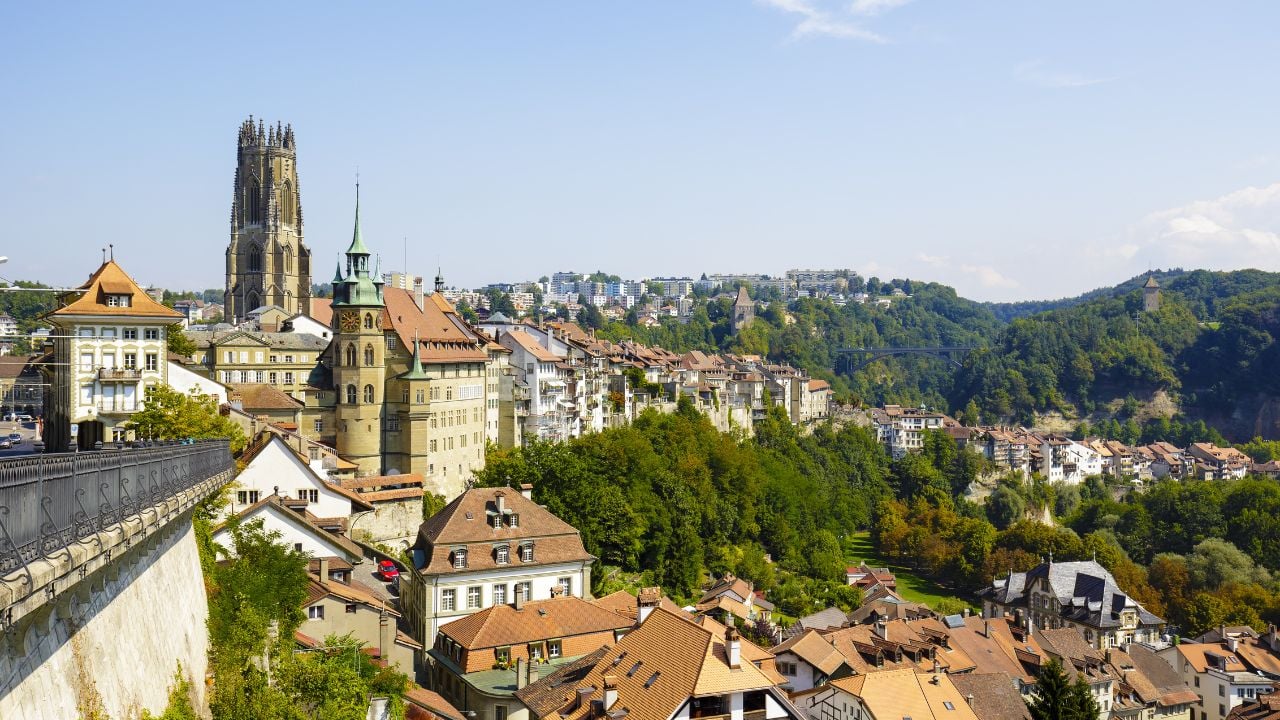
Fribourg’s streets climb and drop around the Sarine River. Bridges cross the valley, church towers rise above rooftops, and Gothic façades line the lower town. The walk changes constantly because the city is built across slopes, riverbanks, and higher streets.
Fribourg Tourism says the Old Town is best discovered on foot and notes that more than 200 Gothic façades line the walk through the lower town. That makes the city especially satisfying for travelers who like architecture built into the everyday route rather than kept behind museum doors.
A walk through Fribourg should include the lower town, river views, bridges, and the climb back toward the higher streets. One section keeps the Sarine close; another opens onto rooftops, towers, and a wider look across the city.
Comfortable shoes matter here. Fribourg is polished and historic, but the slopes and bridges ask for more effort than a flat old town. The payoff is concrete: riverbank, bridge, tower, façade, stairway, and viewpoint in the same route.
6. Takayama, Japan
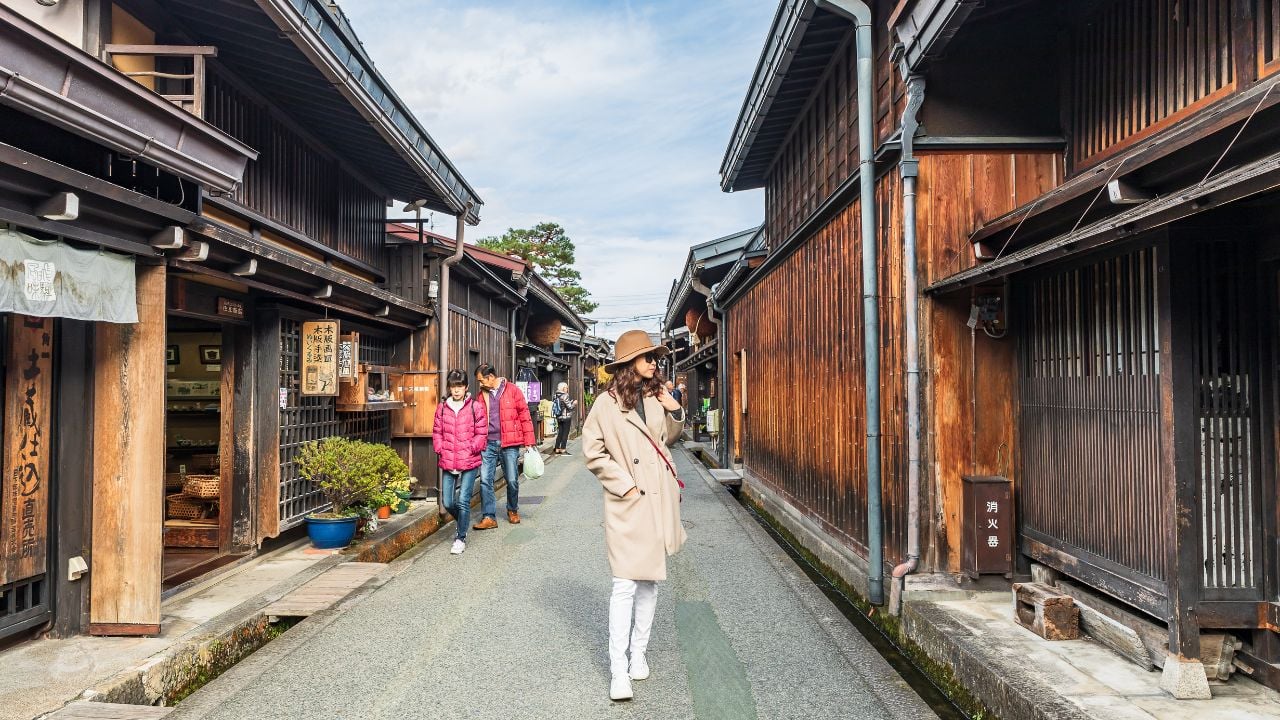
Takayama’s best walking hours start early. The Miyagawa River, morning market stalls, dark wooden shopfronts, sake breweries, noren curtains, small bridges, and mountain-town air give the center a quiet but detailed start.
Hida Tourism describes Takayama’s morning markets as among the biggest in Japan, held in two locations in town. At the Miyagawa Morning Market, stalls sell local produce, pickles, spices, sweets, crafts, and other small goods along the river in the center of Takayama.
Start beside the Miyagawa River, continue through the market, then move into the preserved old streets. Dark timber façades, traditional shopfronts, sake signs, food stalls, and narrow lanes give travelers enough detail without a crowded schedule.
Takayama should not be treated only as a gateway to mountain villages. The old town and morning market deserve their own slow block of time, especially before the main visitor flow arrives and the shopfronts become busier.
7. Guanajuato, Mexico

Guanajuato turns a walk into constant changes in level, color, and sound. Bright houses climb the hillsides, plazas appear between alleys, stairways cut through the city, and tunnels carry parts of the traffic below the historic center.
UNESCO describes the historic town of Guanajuato and adjacent mines as a World Heritage Site shaped by its silver-mining past, with Baroque and Neoclassical monuments, tunnels, roads, bridges, and natural features tied to its dramatic topography.
The hills, tunnels, alleys, and stairways decide how the walk feels. A traveler might begin in a central plaza, follow a narrow alley, climb toward a viewpoint, then return through a tunnel or another stairway that gives the same city a different angle.
Guanajuato rewards unhurried walking, but the slopes are real. Daylight helps with orientation, and comfortable shoes make the difference between enjoying the hills and feeling trapped by them. The city’s colors, music, plazas, tunnels, and stairways give the walk its energy from one turn to the next.